Bogotá / Jerusalem — In a development that signals a profound realignment of Colombia’s foreign policy, the Government of Israel officially confirmed that Colombia has formally withdrawn its intervention in the high-profile genocide case brought by South Africa against Israel at the International Court of Justice (ICJ).
The decision officially brings to a close the contentious legal intervention initiated in April 2024 under former President Gustavo Petro. The move underscores a sweeping pivot by the current administration of President Abelardo De La Espriella, which has made the restoration of historic diplomatic, security, and intelligence ties with Israel a core strategic priority.
Main Facts: A Decisive Break with the Past
The announcement was initially brought to light by Israel’s Minister of Foreign Affairs, Gideon Sa’ar, who took to social media to publicly express his gratitude to Colombian President Abelardo De La Espriella. The diplomatic maneuver terminates Colombia’s formal status as a third-party participant in the proceedings concerning alleged violations of the 1948 Convention on the Prevention and Punishment of the Crime of Genocide stemming from Israeli military operations in the Gaza Strip.
Minister Sa’ar welcomed the development warmly, framing it as a complete rejection of the previous administration’s stance. "I extend my gratitude to my friends, and to the President of Colombia, Abelardo De La Espriella, for the official announcement regarding Colombia’s withdrawal of its membership from South Africa’s false and malicious lawsuit against Israel before the ICJ, which was launched during the antisemitic era of Petro," Sa’ar stated in a public post.

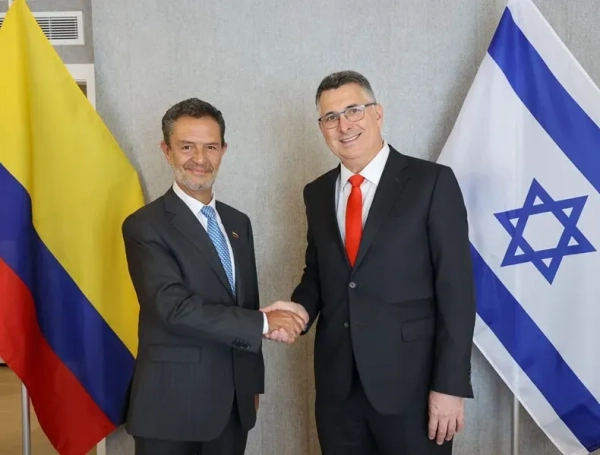
The Israeli Foreign Minister noted that the breakthrough originated from preparatory diplomatic channels, specifically a pivotal conversation held in July in Washington, D.C., between himself and his Colombian counterpart, Foreign Minister Omar Bula. "The friendship between Israel and Colombia is stronger than ever," Sa’ar concluded.
The sentiment was swiftly echoed by Israel’s Ambassador to Colombia, Vivian Aisen, who commended the decision as an act of diplomatic courage. "I join my minister, Gideon Sa’ar, in thanking the Government of Colombia for choosing the right side of history and withdrawing its intervention in the case promoted by South Africa against Israel before the International Court of Justice. It is a brave and responsible decision that we deeply value," Aisen declared.

Chronology of Events: From Intervention to Reversal
To fully understand the magnitude of this policy reversal, it is essential to trace the diplomatic timeline that transformed Colombia from a staunch historic ally of Israel into a vocal critic, and finally back to a partner seeking rapprochement.
- December 2023: South Africa formally institutes proceedings against Israel at the International Court of Justice (ICJ) in The Hague, alleging that Israel’s military campaign in Gaza violates obligations under the 1948 Genocide Convention. Pretoria requests urgent provisional measures to protect Palestinian civilians.
- April 2024: Under the administration of leftist President Gustavo Petro, Colombia formalizes its application to intervene in the ICJ proceedings. Aligning itself with South Africa’s legal framework, the Petro government officially asks the tribunal to issue binding provisional measures against Israel, deepening a severe diplomatic rupture between Bogotá and Jerusalem that eventually led to a suspension of bilateral ties.
- July 2026: Newly minted diplomatic channels open between the incoming administration of President Abelardo De La Espriella and the Israeli government. Israeli Foreign Minister Gideon Sa’ar meets with Colombian Foreign Minister-designate Omar Bula in Washington, D.C., laying the groundwork for a complete restoration of strategic cooperation.
- August 2026: Abelardo De La Espriella assumes the presidency of Colombia, immediately signaling a departure from the foreign policy doctrines of his predecessor. The new executive branch prioritizes rebuilding relations with traditional Western and Middle Eastern allies, focusing heavily on security architecture.
- September 2026: Foreign Minister Omar Bula testifies before the Second Commission of the Senate, outlining the administration’s pragmatic foreign policy objectives. Shortly thereafter, the Israeli government officially confirms that Colombia has formally deposited its withdrawal from the ICJ proceedings, effectively ending its status as an interceder in the South African suit.
Supporting Data and Congressional Testimony: The Rationale Behind the Pivot
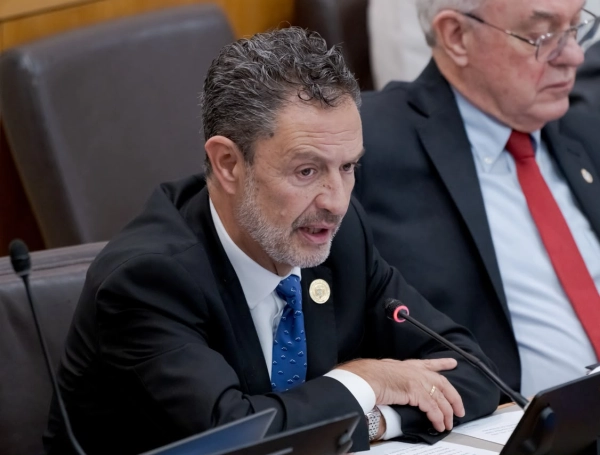
The legal and diplomatic retreat was not handled in a vacuum; it was methodically previewed and defended before the Colombian legislative branch. Speaking before the Second Commission of the Senate of the Republic, Foreign Minister Omar Bula provided an extensive breakdown of the motivations driving the administration’s foreign agenda.
Bula emphasized that the sweeping reorientation of Colombian diplomacy is anchored entirely in the necessity of "protecting national interests." For decades, Colombia and Israel maintained a robust, multifaceted partnership that transcended standard trade, deeply embedding itself in national security, intelligence sharing, and defense procurement.
According to the Ministry of Foreign Affairs, the core interests necessitating the restoration of ties include:

- Strategic Intelligence Cooperation: Re-establishing high-level channels for sharing critical data regarding transnational threats and regional stability.
- Counter-Terrorism and Transnational Crime: Reopening cooperative frameworks geared toward dismantling international criminal syndicates and terrorist organizations operating across borders.
- Cybersecurity Capacity Building: Leveraging advanced Israeli technological capabilities to bolster Colombia’s national digital infrastructure and defend against sophisticated cyberattacks.
- Financial and Illicit Network Disruption: Cooperating on the exchange of financial intelligence to combat money laundering networks and prevent illicit actors from accessing global weapons markets and financial systems.
"This government considered that this historic relationship must be recovered, and that Israel must once again occupy a relevant place in terms of its strategic relationship with Colombia," Bula asserted during his legislative defense. The minister made it clear that ideological alignments would no longer dictate national security imperatives, substituting them instead with a rigid focus on state capability and pragmatic international partnerships.
Official Responses and Diplomatic Fallout
The reaction to Colombia’s withdrawal has exposed deep political divides domestically, even as it has been hailed as a diplomatic triumph internationally.

Internationally, the Israeli government views the move as a major moral and diplomatic victory. By shedding its status as an intervener in the Hague proceedings, Colombia has stepped back from a global coalition seeking to hold Israel legally culpable for its military actions in Gaza. For Jerusalem, the reversal validates its diplomatic outreach to the new conservative administration in Bogotá and signals that traditional geopolitical alliances in Latin America can be successfully repaired in the post-Petro era.
Domestically, however, the decision has drawn sharp criticism from opposition legislators and human rights advocates who supported the previous administration’s intervention. Critics argue that withdrawing from the ICJ case damages Colombia’s moral standing on the global stage and turns a blind eye to humanitarian concerns in the Middle East. They contend that participating as a third party in the Genocide Convention proceedings allowed Colombia to project an independent foreign policy grounded in international humanitarian law.
Conversely, supporters of President De La Espriella have strongly defended the measure, arguing that the Petro administration’s foreign policy alienated vital security partners for purely ideological reasons. Proponents of the current administration maintain that maintaining a hostile posture toward Israel compromised Colombia’s access to high-end defense technology, intelligence sharing, and counter-terrorism resources that are vital for combating internal security threats.
Geopolitical Implications: What Next for Colombia and The Hague?
Colombia’s formal exit from the South African lawsuit carries significant ramifications both for bilateral relations and international jurisprudence.

From a bilateral perspective, the restoration of full diplomatic normalcy between Bogotá and Tel Aviv is now virtually complete. With the contentious ICJ intervention cleared from the table, both nations can move forward with high-level bilateral visits, trade agreements, and defense dialogues. Ambassadors from both nations are expected to focus heavily on modernizing cooperation agreements signed decades ago, adapting them to contemporary challenges such as cyber warfare and hybrid threats.
From the perspective of the International Court of Justice, Colombia’s departure slightly alters the landscape of third-party interveners supporting South Africa’s application. While numerous other nations maintain their interventions or declarations of intervention, the loss of Colombia—a prominent Latin American middle power—deprives the pro-Palestinian legal coalition of a vocal state actor from the Western Hemisphere.

As the legal proceedings in The Hague continue to unfold over the coming months and years, Colombia’s official posture will now be one of strict neutrality regarding the specific allegations of genocide, aligning instead with a broader diplomatic strategy centered on traditional alliances, national security optimization, and pragmatic statecraft.