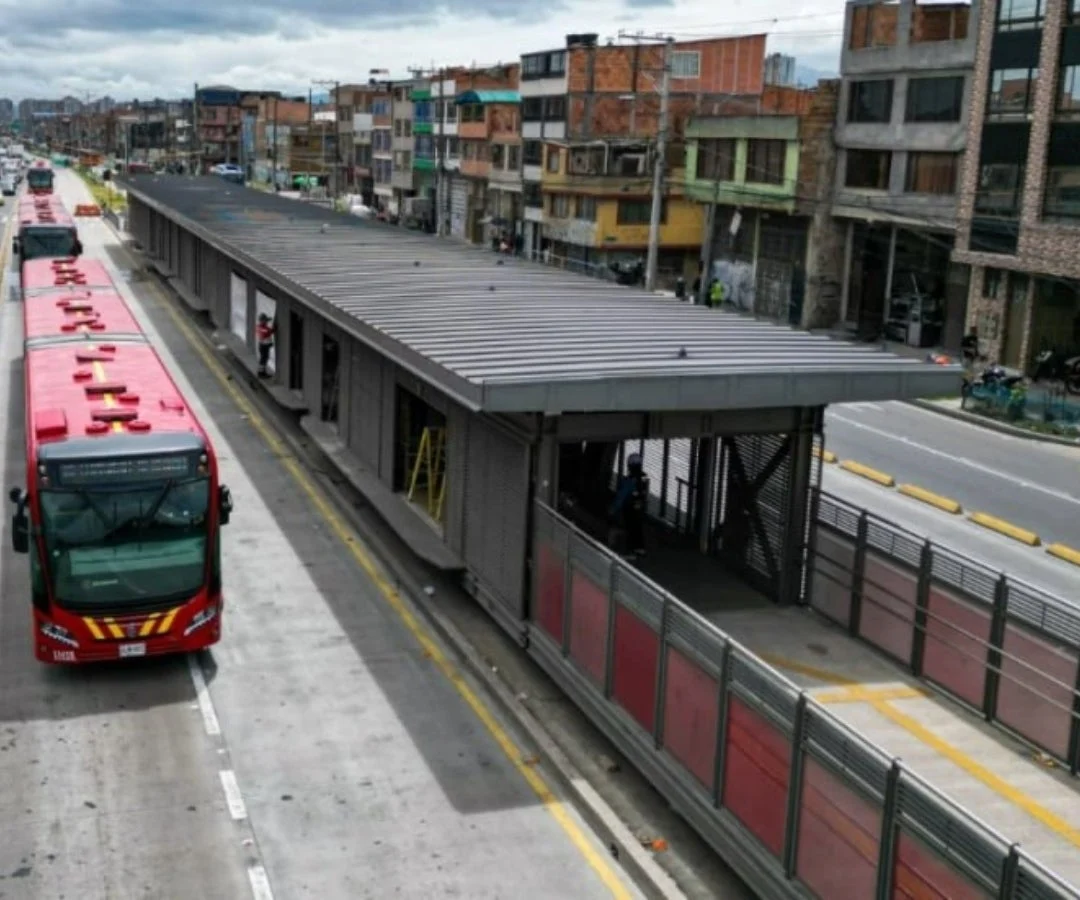
BOGOTÁ, Colombia — In what has been heralded as a major milestone for the capital’s mass transit network, the District Administration and TransMilenio S.A. officially announced the reopening of the Patio Bonito trunk station. Following a complex, multi-year closure that tested the patience of daily commuters, the newly expanded and modernized station is back in service. The infrastructure overhaul directly benefits more than 13,000 daily users residing in the bustling, densely populated locality of Kennedy, injecting renewed efficiency and connectivity into Bogotá’s southwestern corridor.
The reopening marks the culmination of an intensive engineering and urban development effort coordinated by the District. Closed for approximately 24 months to accommodate extensive infrastructure works along the critical Avenida Ciudad de Cali corridor, Patio Bonito has evolved from a constrained legacy stop into a high-capacity transit hub designed to meet the growing demands of modern urban mobility.
1. Main Facts: The Scope of the Patio Bonito Reopening
The revitalization of the Patio Bonito station is not merely a cosmetic update; it represents a comprehensive structural reconfiguration designed to integrate seamlessly with Bogotá’s evolving multimodal transit matrix.
Starting today, the station resumes operations with a robust portfolio of 12 trunk services (routes). These routes re-establish vital, direct connections from the southwest of the city to major arterial corridors, including:
- The Autopista Norte
- Avenida Caracas
- Avenida NQS (Carrera 30)
- The Museo Nacional terminal station in downtown Bogotá
Key Infrastructure Upgrades
The modernized station features a completely reimagined layout. To achieve this, the project executed several heavy engineering milestones:
- Total Demolition and Reconstruction: The aging legacy vagons were completely demolished to make way for high-capacity boarding platforms compliant with modern accessibility and safety standards.
- Corridor Optimization: Works included the reconstruction of both exclusive bus-only lanes (carriles troncales) and mixed-traffic lanes along the Avenida Ciudad de Cali.
- Public Space Recovery: The surrounding urban landscape was reconfigured, integrating pedestrian-friendly zones, improved lighting, and enhanced visual integration with the neighborhood.
- Utility Overhauls: Subterranean public utility networks—including water, sewage, and telecommunications—were entirely modernized to support future urban growth in the sector.
2. Chronology: A Two-Year Timeline of Construction and Disruption
The path to the reopening of Patio Bonito has been defined by rigorous engineering phases, community engagement, and critical milestones tied to the city’s broader transit evolution.
Phase 1: The Closure and Demolition (Mid-2022)
The station’s doors were shuttered to the public to clear the way for foundational works linked to the extension of Avenida Ciudad de Cali. Commuters who relied on the station were forced to seek alternative boarding points at neighboring stations such as Biblioteca Tintal or Transversal 86, placing an additional burden on local feeder buses (alimentadores) and pedestrian pathways. During this initial phase, heavy machinery moved in to dismantle the old metallic and concrete structures that could no longer handle passenger demand.
Phase 2: Structural Civil Works and Utility Relocation (2023)
Throughout the following year, the corridor underwent massive subterranean transformations. The Instituto de Desarrollo Urbano (IDU) oversaw the relocation and reinforcement of public utilities. Simultaneously, the roadbed of Avenida Ciudad de Cali was widened, deepened, and reinforced with durable hydraulic concrete designed to withstand the continuous weight of articulating and bi-articulate TransMilenio buses.
Phase 3: Integration with the Metro Line 1 Ecosystem (Late 2023 – Early 2024)
A critical driver behind the Patio Bonito reconstruction was its strategic positioning relative to the future Metro of Bogotá. The Avenida Ciudad de Cali is designated as a primary feeder corridor for the upcoming First Line of the Bogotá Metro. Consequently, the civil works at Patio Bonito had to align with the geometric and operational requirements necessary to interface smoothly with the future intermodal transfer stations planned for the southwest.
Phase 4: Final Finishes and Operational Testing (Mid-2024)
As physical construction wrapped up in the second half of the year, TransMilenio S.A. conducted rigorous operational testing. This phase tested platform screen alignment, fare-collection turnstiles, optical fiber communications, security camera networks, and emergency response protocols. With technical benchmarks successfully met, the district authorized the commercial reopening of the station.
3. Supporting Data: Demographics, Ridership, and Operational Metrics
To fully understand the magnitude of the Patio Bonito reopening, it is essential to examine the socio-economic and transit metrics governing the Kennedy locality.
The Kennedy Transit Ecosystem
- Locality Population: Kennedy is one of the most populous sectors in Bogotá, housing well over one million residents. It acts as a primary economic engine and residential hub for the city’s working class.
- Direct Beneficiaries: TransMilenio estimates indicate that over 13,000 daily users will experience immediate time savings and route convenience thanks to the reinstatement of Patio Bonito.
- Trunk Integration: The 12 operating services connect the station directly to key employment, educational, and commercial centers across northern, central, and eastern Bogotá, reducing the need for cumbersome multi-transfer journeys.
Intermodal Synergy: The Avenida Ciudad de Cali Corridor
The investment in Patio Bonito forms a crucial component of a broader multi-billion-peso package aimed at transforming the western boundary of the city. The widening of Avenida Ciudad de Cali encompasses:
- Kilometers of newly constructed bicycle lanes (ciclorutas) encouraging active mobility.
- Expanded pedestrian sidewalks designed to universal accessibility standards.
- Direct physical and operational connections to the Troncal Américas, establishing a seamless grid of rapid transit pathways that disperse passenger congestion during peak morning and evening rush hours.
4. Official Responses and Stakeholder Perspectives
The restoration of public infrastructure of this scale inevitably draws scrutiny from citizens, local governance bodies, and transit authorities alike. District officials have emphasized a message of gratitude and accountability.
TransMilenio S.A.
Speaking on behalf of the mass transit operator, Carmen Rosales, General Submanager of TransMilenio, addressed the community during the inaugural walkthrough of the renovated facilities:
"This is exceptionally good news for the system’s users in the locality of Kennedy. We want to profoundly thank the community for their immense patience and reiterate that we hear their concerns. The reopening of Patio Bonito not only represents the delivery of brand-new, state-of-the-art infrastructure, but it also solidifies our unwavering commitment to continuously strengthening a trunk service that is more efficient, safer, and better connected for this vital sector of Bogotá."
The Community and Local Leadership
While the official tone is celebratory, community action groups and local council representatives have highlighted the hardships endured during the two-year hiatus. Local merchants along the Avenida Ciudad de Cali reported drops in commercial activity during the height of civil works due to restricted pedestrian access and dust accumulation.
However, neighborhood associations have expressed collective relief. Resident committees note that the return of the station will significantly mitigate the overcrowding previously observed at adjacent portal and station stops. Furthermore, the inclusion of enhanced lighting and active security surveillance points has been welcomed by citizens concerned about night-time safety in public spaces.
5. Implications for Bogotá’s Future Mobility
The reopening of the Patio Bonito station carries profound implications that extend far beyond the borders of the Kennedy locality, serving as a bellwether for Bogotá’s broader urban transformation strategy.
1. Decentralization of Congestion
By restoring a major trunk node in the southwest, transit planners anticipate a more balanced distribution of passenger boarding loads across the entire TransMilenio network. When key nodes like Patio Bonito are offline, the systemic pressure shifts disproportionately onto neighboring portals—such as Portal de las Américas—leading to longer queues, delayed boarding times, and compromised user experiences. The reactivation restores equilibrium to the western transit grid.
2. A Dry Run for the Metro Era
Bogotá is currently undergoing its most aggressive transit construction cycle in history. The physical integration seen at Patio Bonito—where an old trunk station is completely rebuilt to harmonize with an expanding arterial roadway and future metro feeder systems—serves as a template for upcoming urban interventions. It demonstrates how legacy Bus Rapid Transit (BRT) infrastructure can be successfully retrofitted to coexist with heavy rail transit systems.
3. Economic Rejuvenation
Infrastructure development acts as a powerful economic catalyst. The revitalization of public space around Patio Bonito is expected to stimulate local commerce, improve property values, and restore pedestrian vitality to a commercial corridor that experienced prolonged disruptions. Small businesses, informal vendors, and formal retail establishments stand to benefit from the steady foot traffic generated by thousands of daily commuters passing through the station.
Looking Ahead
As the gates of Patio Bonito open to welcome back the thousands of commuters who stood by the system through years of dust, detours, and delays, the focus shifts to maintenance and operational optimization. TransMilenio S.A. and the District Administration face the ongoing challenge of preserving these new assets against vandalism while continuously monitoring service frequencies to match the dynamic rhythms of Bogotá’s southwestern workforce. For now, however, the mood along Avenida Ciudad de Cali is one of hard-earned progress—a tangible sign that Bogotá’s mobility network is steadily building toward a more connected, resilient future.