
Main Facts
When students and families dream of pursuing higher education at the world’s most elite institutions, names like Harvard, MIT, and Stanford immediately come to mind. Yet, an analysis of undergraduate tuition rates for the 2026–2027 academic year reveals a surprising reality: none of these global academic heavyweights rank among the most expensive universities in the world.
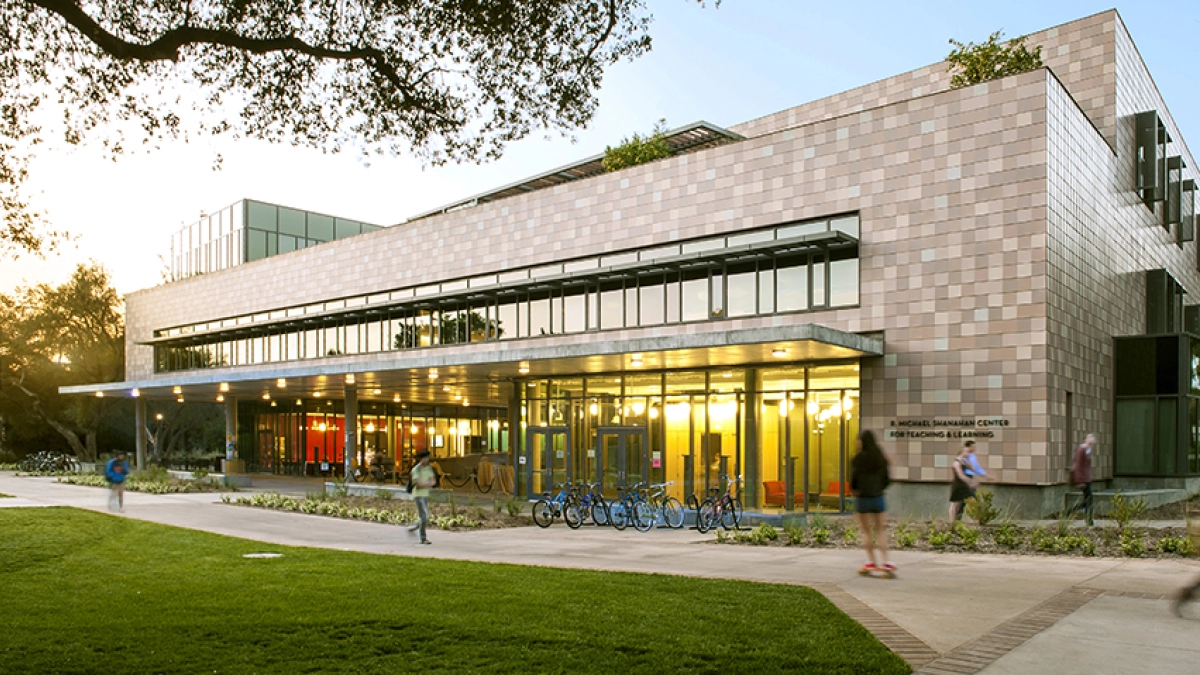
Instead, the global financial summit of higher education is dominated exclusively by American institutions—specifically boutique liberal arts colleges and select private research universities. At the apex of this exclusive and costly list is Harvey Mudd College, a small, highly selective science and engineering institution in Claremont, California. Harvey Mudd charges an astonishing $76,879 USD per year solely for undergraduate tuition, a figure that translates to roughly 260 million Colombian pesos annually.
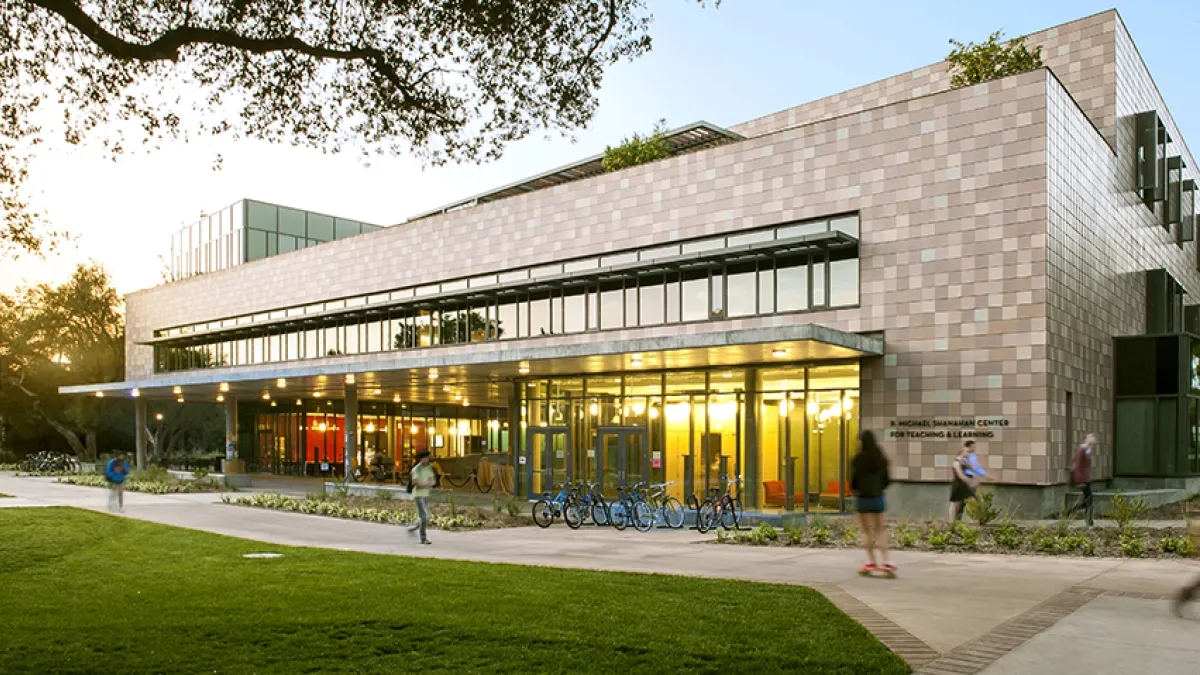
Close behind is Colgate University in New York, charging a mere $51 less than the top spot, while Cornell University anchors the bottom of a 22-institution list at $73,946 USD per year. To put these figures into perspective, the most expensive university tuition in Colombia—the Universidad de los Andes in Bogotá—charges roughly $16,000 USD annually (approx. 53.7 million COP) for non-medical undergraduate programs. Harvey Mudd charges nearly five times that amount, while even the most affordable institutions on the list exceed Colombian peaks by a factor of four.
Furthermore, these staggering tuition fees represent only the baseline. When factoring in mandatory fixed costs such as on-campus housing, meal plans, health insurance, and academic materials, the total annual price tag routinely crosses the $100,000 USD threshold (more than 300 million pesos per year). Despite these astronomical and continuously rising costs—with annual tuition hikes fluctuating between 2.5 percent and 7 percent across the board—these institutions remain heavily oversubscribed, often boasting highly competitive admissions rates.

Chronology of Elite Higher Education Costs
The modern landscape of ultra-expensive tuition did not emerge overnight; it is the result of decades of compounding economic shifts, increased investments in campus technology, and heightened operational costs within private American higher education.
- Late 18th to Late 19th Century (Foundational Era): Many of the institutions populating the 2026–2027 cost list were established during this period—such as Williams College (1793), Colgate University (1819), and Harvey Mudd College much later in 1955. They were originally conceived to provide intimate, high-contact education rooted in the European liberal arts tradition.
- Late 20th Century (The Shift to Specialized Facilities): As scientific research advanced and technology integrated into classrooms, small colleges began heavily investing in specialized laboratories, student support networks, and lower student-to-faculty ratios. These investments structurally increased per-student operational expenses.
- The 2010s (Breaking the $50,000 Barrier): During this decade, annual tuition across elite private colleges officially crossed the symbolic $50,000 mark. Institutions argued that inflation, competitive faculty compensation, and enhanced campus services justified the continuous upward trajectory.
- Post-Pandemic Era (2021–2025) (Surging Inflationary Pressures): Following global economic disruptions, universities faced soaring labor and maintenance costs. Annual tuition increases accelerated, regularly outpacing general consumer inflation. Elite colleges implemented hikes averaging 4 percent to 7 percent annually.
- The 2026–2027 Academic Year (The Six-Figure Reality): Total Cost of Attendance (COA)—incorporating room, board, and fees—officially breaches the six-figure mark ($100,000+ USD) across multiple institutions on the list. Simultaneously, public-facing initiatives, such as the University of Chicago’s announcement of tuition-free attendance for families earning under $250,000 starting in fall 2027, begin redefining how elite pricing interacts with accessibility.
Supporting Data: The 22 Most Expensive Universities (2026–2027)
To fully comprehend the scale of modern undergraduate investment, the following institutions represent the 22 most expensive universities in the world by annual undergraduate tuition, alongside their core profiles:

- Harvey Mudd College (California): $76,879 USD/year. Focuses on science and engineering within the Claremont Colleges consortium. Serves around 900 undergraduate students. Tuition increased by ~5.2% last year.
- Colgate University (New York): ~$76,828 USD/year. Founded in 1819, offering 56 undergraduate programs to roughly 3,200 students. Tuition increased by ~4.95%.
- Williams College (Massachusetts): Frequently ranked as the top liberal arts college in the U.S. by U.S. News & World Report. Educates ~2,100 students. Tuition rose by ~4.3%.
- Vassar College (New York): Established in 1861, formerly all-female, now coeducational with 2,500 students. Tuition increased by a modest ~2.5%.
- University of Chicago (Illinois): A massive research institution enrolling ~7,500 undergraduates, scaling toward 9,000. Tuition grew by ~6.5%. (Notable: announced free tuition for families making under $250,000 starting Fall 2027).
- Wesleyan University (Connecticut): Founded in 1831, serving ~2,800 undergraduates across 45 specializations. Tuition increased by ~4.8%.
- Colby College (Maine): Founded in 1813, features a hyper-selective 6% admission rate alongside robust financial aid. Serves ~2,000 students. Tuition rose by ~5%.
- Colorado College (Colorado): Known for its unique "Block Plan" academic scheduling. Selectivity stands at 11% for its ~2,000 students. Tuition increased by ~4%.
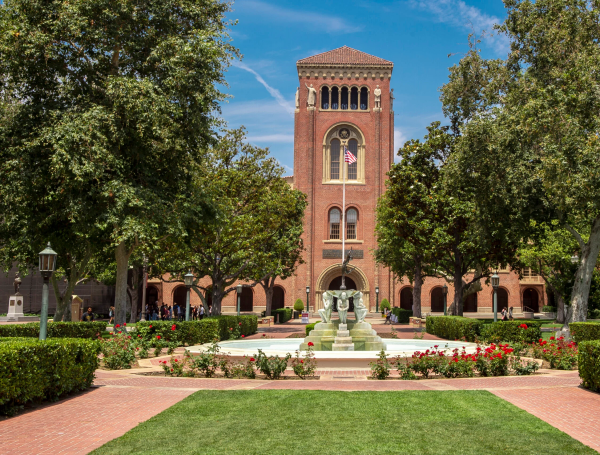
- University of Southern California (USC): A giant among the list with 20,700 undergraduates, renowned for film programs and athletics. Tuition increased by ~2.9%.
- Amherst College (Massachusetts): Founded in 1821 with an open curriculum model. Serves ~1,900 students. Noted a steep tuition increase of ~7%.
- Claremont McKenna College (California): Specializes in political science, economics, and business, housing 11 specialized research centers. Tuition rose by ~5%.
- Hamilton College (New York): Established in 1793, offering over 50 areas of study to ~2,000 undergraduates. Tuition increased by ~4.5%.
- Carleton College (Minnesota): Founded in 1866, supporting 2,100 students with customized academic pathways. Tuition rose by ~4.6%.
- Boston College (Massachusetts): A large Jesuit institution supporting 15,000 students with comprehensive liberal arts frameworks. Tuition increased by ~4%.
- Haverford College (Pennsylvania): A small community of 1,400 students prioritizing debate and discussion-based learning. Tuition increased by ~6.4%.
- Franklin & Marshall College (Pennsylvania): Traces roots back to Benjamin Franklin (1787). Serves 2,400 undergraduates across 60 fields of study. Tuition rose by ~3%.
- Brown University (Rhode Island): An Ivy League institution founded in 1764, housing ~7,000 undergraduates. Tuition increased by ~4%.
- Georgetown University (Washington D.C.): The oldest Catholic and Jesuit university in the U.S., enrolling ~7,800 undergraduates. Tuition rose by ~4.75%.
- Macalester College (Minnesota): Exclusively undergraduate liberal arts college enrolling ~2,100 students. Tuition increased by ~4%.
- Pepperdine University (California): Features multiple global campuses, educating 3,600 undergraduates and 6,300 postgraduates. Tuition rose by ~5%.
- Reed College (Oregon): Founded in 1908 in Portland, emphasizing small seminar groups and low student-faculty ratios for its 1,400 students. Tuition rose by ~6.6%.
- Cornell University (New York): An Ivy League powerhouse in Ithaca, enrolling ~16,000 undergraduates with a selective 7% admission rate. Tuition rose by ~3.7% to settle at $73,946 USD.
Official Responses and Institutional Justifications
The justification provided by university administrators and institutional boards for these towering costs generally centers on three core pillars: faculty compensation, institutional financial aid, and specialized facilities.
Administrators from institutions like Harvey Mudd and Williams College emphasize that maintaining low student-to-faculty ratios—often 8:1 or 10:1—requires substantial financial investment to attract world-class researchers and educators who prefer teaching smaller cohorts over massive lecture halls. Unlike mega-universities where a single professor might lecture to 500 students in an auditorium, liberal arts colleges prioritize intimate seminar-style discussions.
Furthermore, university spokespersons consistently highlight the distinction between sticker price and net price. Many of these expensive colleges operate under robust "need-blind" admission policies coupled with "full-need" financial aid commitments. Representatives from institutions like Colby College and Amherst argue that their high tuition rates act as a progressive pricing mechanism: wealthy students (or those paying full freight) heavily subsidize generous scholarship packages for low- and middle-income students, many of whom attend virtually tuition-free.
However, consumer advocacy groups and higher-education economists frequently push back against these justifications. Critics argue that administrative bloat—specifically the proliferation of non-teaching administrative staff, executive salaries, and luxury campus amenities designed to attract affluent applicants—drives cost increases far beyond the rate of standard inflation.

Implications of Skyrocketing Tuition Costs
The reality that studying at a top-tier U.S. undergraduate institution now routinely demands upwards of $100,000 annually carries profound socioeconomic, cultural, and international implications.
1. The Socioeconomic Divide and Student Debt
While full-need financial aid protects the poorest students, a vast demographic of middle-income families—those earning too much to qualify for institutional grants but far too little to comfortably shell out $300,000+ for a four-year degree—are squeezed out. For these families, funding an elite education often requires taking on crushing commercial loans, dipping into retirement funds, or abandoning the prospect entirely. This threatens to turn elite higher education into a binary ecosystem accessible only to the ultra-wealthy or the economically marginalized who receive heavy aid.

2. The Absence of Global Brand Names
The conspicuous absence of Harvard, MIT, Stanford, Oxford, and Cambridge from this list highlights a structural difference in institutional funding models. Massive research universities often possess astronomical endowments (sometimes exceeding $50 billion in Harvard’s case) and derive substantial revenue from state appropriations, federal research grants, and vast postgraduate programs. Conversely, small liberal arts colleges rely far more heavily on undergraduate tuition revenue to sustain their day-to-day operations, making their sticker prices significantly higher.
3. International Competitiveness and Brain Drain
For international students—particularly from developing nations in Latin America, Asia, and Africa—these costs are virtually insurmountable without elite sponsorships or external scholarships. As U.S. tuition scales higher, promising global talent may increasingly bypass American institutions in favor of more affordable, high-quality alternatives in Europe (such as public universities in Germany or France) or domestic institutions that offer a fraction of the cost while maintaining rigorous academic standards.

Ultimately, while institutions like Harvey Mudd and Colgate offer transformative educational experiences, the trajectory of their pricing forces a global reckoning over the true value, accessibility, and financial sustainability of elite higher education.