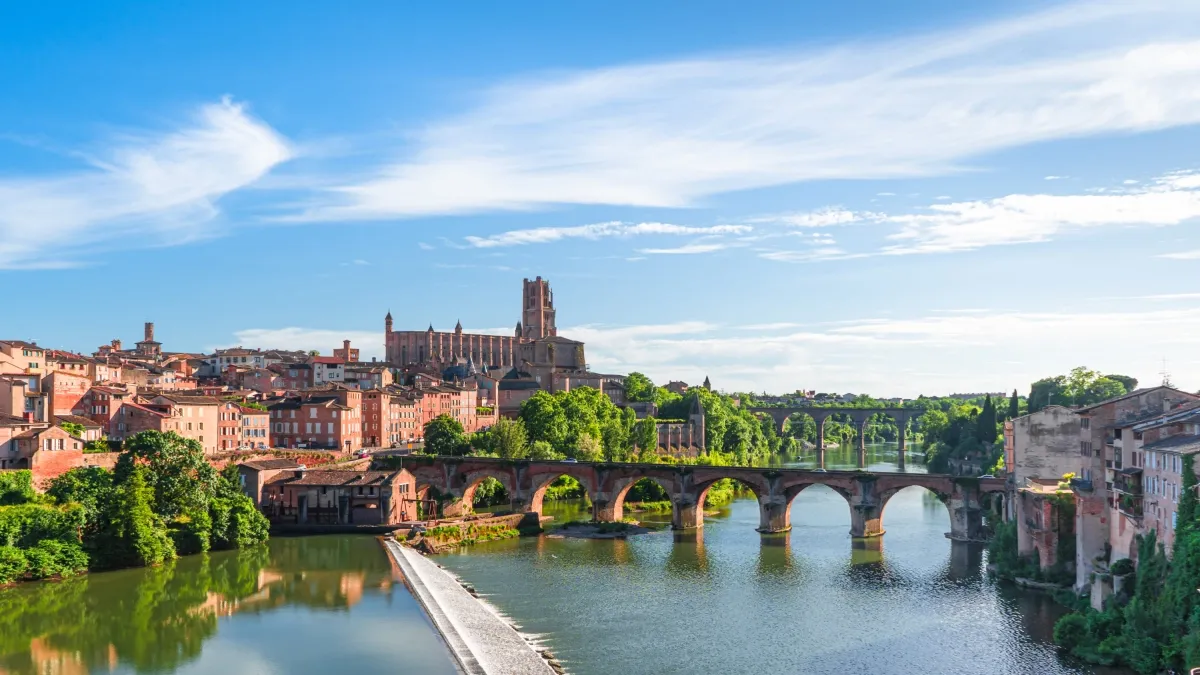
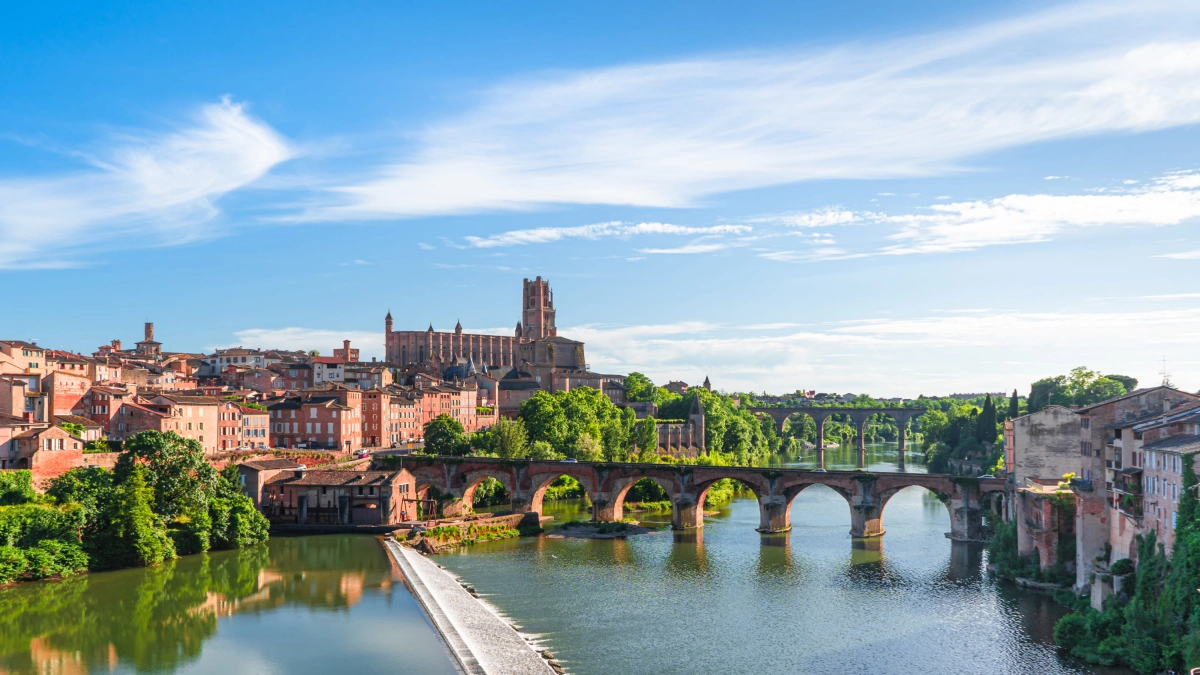
Nestled in the lush river valley of the Tarn in southern France, Albi stands as a testament to medieval ingenuity, artistic mastery, and enduring architectural grandeur. Situated in the region of Occitania, cradled geographically between the towering Pyrenees and the sun-drenched Mediterranean, this compact yet monumental city offers an atmosphere reminiscent of the Tuscan hills.
Despite boasting world-class accolades—including the world’s largest brick cathedral and a designation as a UNESCO World Heritage site since 2010—Albi remains a remarkably well-kept secret, often bypassed by international tourists flocking to more heavily trafficked French landmarks. For the discerning traveler, however, Albi presents an immersive journey into the heart of medieval and Renaissance European history, all easily navigated on foot amidst a vibrant culture deeply rooted in wine-making and natural beauty.
Main Facts: A Symphony of Clay and Culture
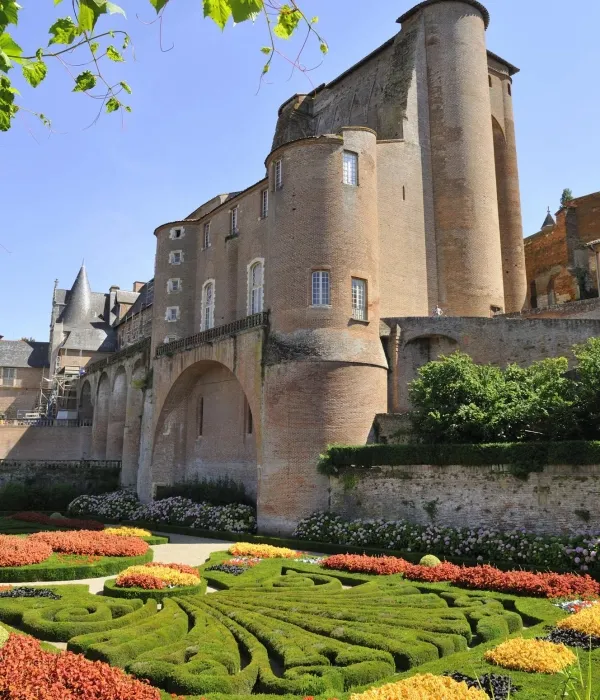
Albi’s urban identity is defined by its distinct warm terracotta palette. Because the local geography lacked accessible stone quarries during its medieval expansion periods, master builders turned to the rich clay of the Tarn River. They perfected the art of brickmaking, utilizing the material to construct a cityscape characterized by russet facades, hidden courtyards, cloistered gardens, and imposing fortifications.
Home to a population of approximately 50,000 residents, Albi enjoys a high quality of life framed by historical preservation and proximity to nature. Just beyond its historic gates lie the rolling hills of the Gaillac wine region, a celebrated Denominación de Origen Controlada encompassing roughly 400 independent wine estates and vineyards.

Architectural Marvels and UNESCO Treasures
The city’s crown jewel is the Cathédrale Sainte-Cécile, universally recognized as the largest brick cathedral in the world. Rising abruptly from the landscape, its massive bell tower reaches an altitude of 78 meters. Inside, the visitor experience is equally breathtaking: the sanctuary houses 18,000 square meters of deep blue Renaissance frescos and intricate decorative motifs, making it the largest painted cathedral in all of Europe.
Equally significant is Albi’s housing of the ‘Mappa Mundi’, an exceptionally rare 8th-century document inscribed on parchment. Recognized as one of the earliest surviving graphic representations of the known world covering 25 distinct territories, this manuscript stands as a monumental milestone in the history of human cartography and spatial documentation.
Chronology: From Ancient Foundations to UNESCO Recognition
To understand Albi’s unique aesthetic and cultural weight, one must trace its evolution across the centuries:
- 8th Century: Creation of the Mappa Mundi, establishing Albi early on as a node of preserved knowledge and cartographic importance.
- 13th Century: Construction begins on the Palais de la Berbie (Palace of the Berbie) and the Cathédrale Sainte-Cécile, establishing the city’s formidable defensive and religious architecture during the height of the Albigensian Crusades.
- 15th to 16th Century: The Palais de la Berbie undergoes a dramatic architectural transformation. Under the influence of the Amboise family—bishops originally hailing from the Loire Valley—the stern medieval fortress is softened, incorporating Loire-style slate roofs and refined interior elements that bridge medieval militarism with Renaissance elegance.
- 1864: Henri de Toulouse-Lautrec is born in Albi into an aristocratic, land-owning family of the French southwest, destined to chronicle the grit and glamour of the Belle Époque.
- 1862: The Palais de la Berbie is officially classified as a French Historic Monument, cementing its status for future conservation.
- 2010: UNESCO officially inscribes the Episcopal City of Albi onto its World Heritage list, recognizing its exceptional universal value, intact urban fabric, and unique brick gothic architecture.
Supporting Data and Geographical Context
Albi’s structural and cultural footprint is defined by specific figures that underscore its monumental scale within a relatively small geographic footprint:
- Geographical Location: The Tarn River Valley, Occitania, France (situated between the Pyrenees and the Mediterranean Sea).
- Demographics: A tight-knit community of approximately 50,000 inhabitants.
- Wine Industry: Anchor to the Gaillac AOC, supporting over 400 active wine-producing properties and cellars.
- Sainte-Cécile Cathedral Statistics: World’s largest brick cathedral; bell tower height of 78 meters; interior fresco coverage totaling 18,000 square meters.
- Toulouse-Lautrec Museum Holdings: Housed within the Palais de la Berbie, the institution safeguards the world’s most comprehensive collection of the artist’s work, including:
- Over 220 paintings spanning his entire career.
- 560 rare drawings.
- 185 original lithographs, featuring iconic posters from the Moulin Rouge and Parisian cabarets.
Official Responses and Cultural Stewardship
Preserving a city built largely of river clay presents unique structural challenges, requiring continuous oversight from municipal and international heritage organizations. French cultural authorities, alongside UNESCO monitoring bodies, have maintained stringent preservation guidelines for Albi’s historic core.
Local municipal officials emphasize that Albi’s designation as a World Heritage site is not merely a marketing accolade, but a binding responsibility to maintain the integrity of its urban landscape. Restoration projects on both the Cathédrale Sainte-Cécile and the Palais de la Berbie are executed using traditional materials—specifically matching the composition and firing techniques of historical regional bricks—to ensure seamless continuity.

Furthermore, the curation of the Toulouse-Lautrec Museum within the historic bishops’ palace represents an official commitment to honoring the city’s most famous son. Regional tourism boards frequently position Albi as an antidote to over-tourism, promoting sustainable, pedestrian-friendly exploration that respects both the local residents and the fragile medieval infrastructure.
Implications: Tourism, Preservation, and the Future of Albi
The growing global interest in secondary European destinations holds profound implications for Albi. As travelers increasingly seek authentic, less-crowded alternatives to iconic hubs like Paris, Rome, or Avignon, Albi faces the delicate task of balancing economic growth driven by cultural tourism with the preservation of its tranquil, small-town character.

Economic and Cultural Impact
The city’s integration into global travel itineraries highlights a broader trend: the decentralization of tourism. Visitors drawn by the allure of the Mappa Mundi, the staggering artistry of the Toulouse-Lautrec collection, and the sensory experiences of the Gaillac vineyards contribute significantly to the regional economy of Occitania. Local artisans, boutique hoteliers, and independent winemakers benefit directly from this steady influx of culturally curious travelers.
Urban Planning and Sustainability
To protect its UNESCO status, Albi’s urban planners maintain a strictly regulated pedestrian zone throughout the historic center. Vehicular traffic is restricted, encouraging visitors to explore the labyrinthine brick streets on foot—perhaps while savoring local culinary specialties, such as pastries flavored with marron glacé (sweet chestnut purée).

Ultimately, Albi serves as a living classroom. It demonstrates how a city defined by an unconventional building material—ordinary river clay transformed into extraordinary art and architecture—can transcend its geographic obscurity to claim a permanent, revered place in global cultural history.