BUENOS AIRES — In an era defined by geopolitical volatility, rapid technological disruption, and widespread civic alienation, two prominent former Ibero-American leaders have stepped forward to issue a stark warning regarding the future of global governance.
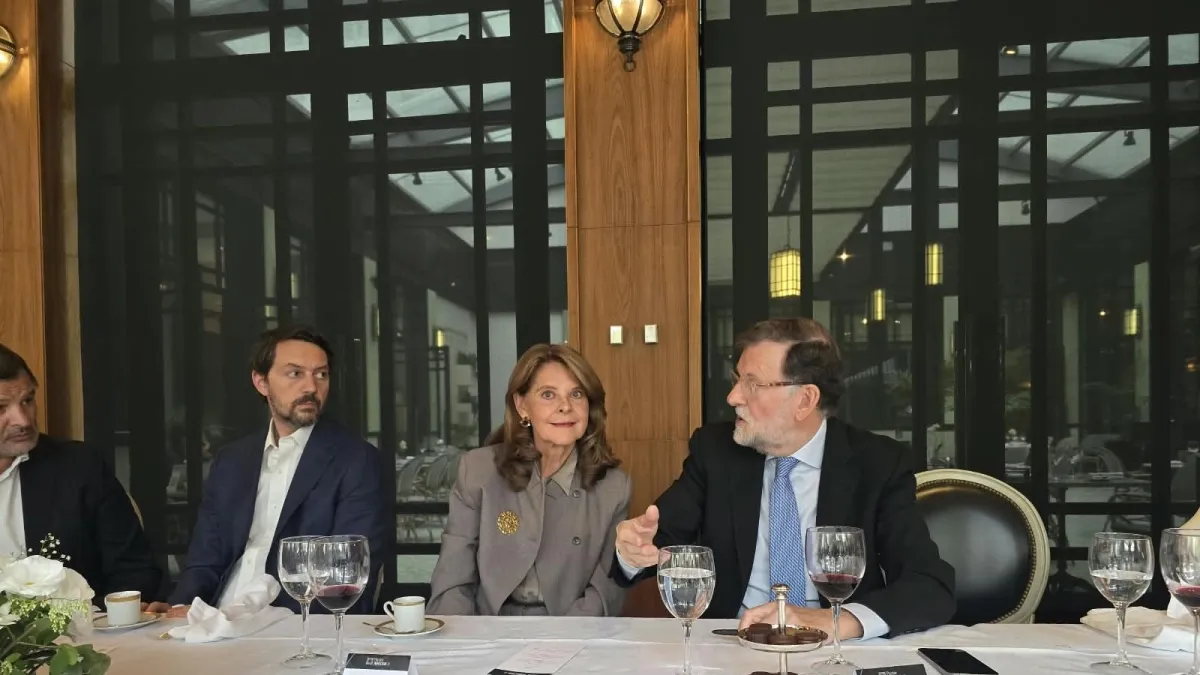
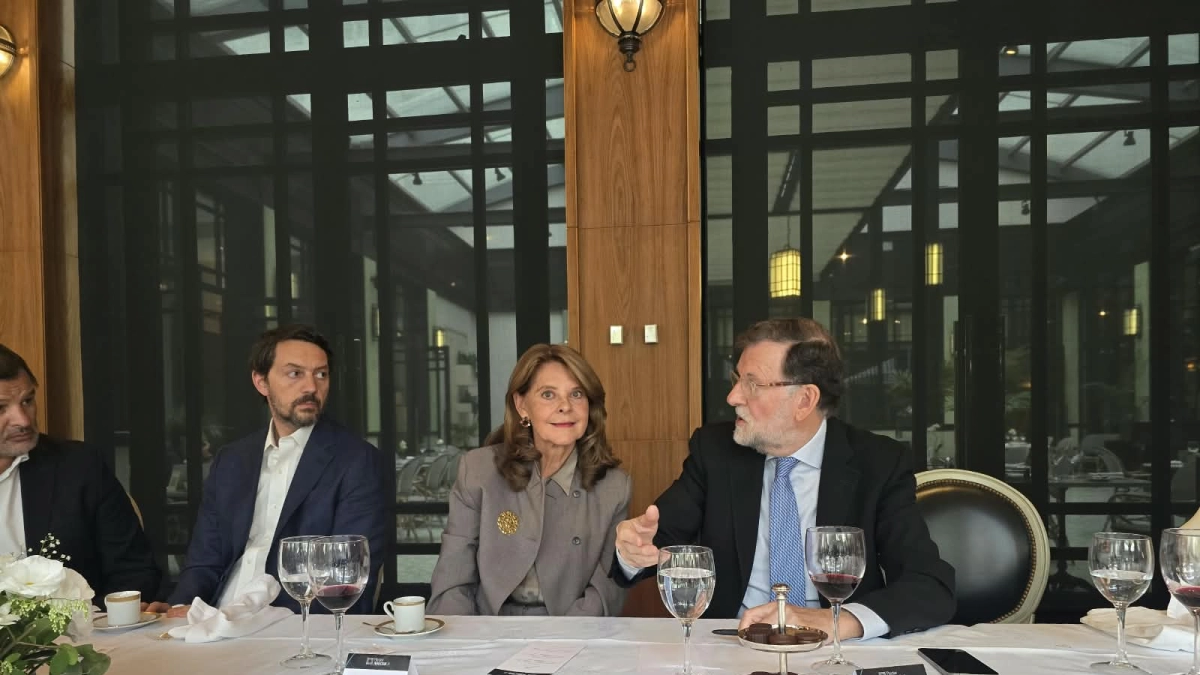
During the 16th Abeceb Forum, held at the prestigious Faena Art Center in Buenos Aires, former Colombian Vice President Marta Lucía Ramírez and former Spanish Prime Minister Mariano Rajoy took center stage to dissect the mounting pressures eroding modern democracies. Under the overarching theme "Radar: From Noise to Signal," the high-profile gathering brought together international economists, business leaders, and political figures to address how institutions can survive an increasingly unpredictable world.
For roughly 40 minutes, Ramírez and Rajoy—moderated by Inés Capdevila, CNN’s Director of News for Latin America—engaged in a profound dialogue titled "Leaders’ Conversation: Governing When the Rules Change." Their intervention mapped out a sobering reality: traditional political structures are failing to keep pace with a transforming global landscape, leaving a vacuum that is rapidly being filled by populist figures and dangerous technological forces.
Main Facts: A Crossroads for Global Leadership
The central thesis emerging from the panel was clear: the foundational pillars of liberal democracy are buckling under the weight of simultaneous global crises.
Marta Lucía Ramírez opened the discussion by zeroing in on the alarming decline of public trust in governments and traditional political parties. According to Ramírez, the global rise of unpredictable, populist leaders is not a random historical anomaly, but rather the direct consequence of mainstream political classes abandoning their posts and failing to address the fundamental needs of the citizenry.
"Those unpredictable leaders are guiding citizens today because they are filling a space that the traditional politicians have failed to fill," Ramírez told an auditorium packed with business and economic leaders.
To substantiate her diagnosis, the former Colombian vice president cited sobering data from the Organisation for Economic Co-operation and Development (OECD) and the World Economic Forum (WEF). Statistics indicate that a mere 40 percent of citizens within the OECD—often referred to as the "club of the best-governed nations"—place their trust in their national governments.
"If this is happening inside the club of the best nations, what must it be like in the rest of the world?" Ramírez asked rhetorically, highlighting a global crisis of representation.
Beyond political disillusionment, Ramírez raised urgent concerns regarding artificial intelligence (AI) as an unprecedented destabilizing force for institutional stability. Sharing insights from a recent conversation with renowned historian and author Yuval Noah Harari, Ramírez conveyed the historian’s chilling forecast.
"He told me that it terrifies him because he feels artificial intelligence is going to produce entirely new mathematics in less than two years," Ramírez warned. This looming technological leap, she argued, demands immediate global consensus on who will regulate these technologies and under what strict ethical frameworks.

Chronology and Context: The 16th Abeceb Forum in Buenos Aires
The dialogue between Ramírez and Rajoy was the crown jewel of the 16th Abeceb Forum, an annual event designed to help businesses navigate structural changes in the global economy. Operating under the banner "Radar: From Noise to Signal," the 2026 edition focused on the premise that the geopolitical and economic rules of the past have vanished, leaving corporations and governments scrambling to adapt to a new paradigm.
The forum’s dense agenda featured heavyweights from international politics and economics. Alongside Ramírez and Rajoy, speakers included former Argentine President Mauricio Macri, former Brazilian Economy Minister Paulo Guedes, Argentine Minister of State Deregulation and Transformation Federico Sturzenegger, and former European Central Bank Vice President Luis de Guindos.
The day’s panels consistently circled back to a common denominator: the friction between rigid institutional frameworks and a hyper-accelerated, digitized society. Against this backdrop, the session featuring the Colombian and Spanish leaders provided a masterclass in the realities of executive decision-making during times of profound turbulence.
Supporting Data: The Erosion of Trust and the Digital Echo Chamber
The assertions made by Ramírez and Rajoy were underpinned by profound structural transformations across the West.
The Crisis of Representation
The collapse of public confidence in governance is well-documented. As Ramírez emphasized, when trust in institutions drops below 50 percent in developed economies, the social contract begins to fray. This disillusionment breeds fertile ground for radical political agendas that promise simple solutions to complex, systemic failures.

Mariano Rajoy on the "Paradise of Zealots"
Building directly upon Ramírez’s concerns regarding public discourse, Mariano Rajoy shifted the spotlight to the digital ecosystem, delivering a fierce defense of the regulation of social media platforms by liberal democracies.
"Networks have become the paradise of zealots," Rajoy declared bluntly, drawing upon his years leading Spain through severe economic turmoil (2011–2018).
Rajoy, a veteran conservative leader of the Partido Popular, identified three destructive mechanisms driven by unregulated digital platforms:
- The amplification of radical messaging.
- The industrial-scale propagation of fake news.
- The deliberate fuel provided to extremist political movements.
To illustrate the tangible geopolitical dangers of digital disinformation, Rajoy pointed to the 2017 Catalan independence referendum. During that crisis, his government faced a coordinated, malicious disinformation campaign originating from hubs as distant as Caracas and Moscow.
"They were saying that we were fascists who wouldn’t let the people vote," Rajoy recalled, detailing how foreign state actors and local separatists weaponized social media to undermine constitutional order.

"It seems that the opinion of a zealot matters more than that of a Nobel Prize winner. And the more zealous the zealot, the more support they receive," Rajoy lamented. He argued that any future regulatory framework must strictly aim to protect individual rights, establish boundaries on unchecked power, and explicitly prohibit criminal activities online.
Official Responses and Perspectives: Principles of Courageous Governance
When pressed on how contemporary leaders can successfully govern amidst intense social polarization, economic hardship, and relentless public protest, Rajoy offered an uncompromising philosophy of leadership.
"The best way to make a decision is by fulfilling your duty and doing what you have to do," he stated categorically.
Rajoy warned that leaders who shirk difficult decisions out of fear of losing votes inflict profound damage on their nations—and rarely save themselves from electoral defeat in the long run.
To anchor his argument, Rajoy reflected on his own inauguration in December 2011, when he inherited a Spanish economy suffering from a budget deficit exceeding 10 percent, more than six million unemployed citizens, and a deep economic contraction. Facing immediate resistance, his administration implemented sweeping fiscal adjustments that triggered two general strikes.

"Three years later, Spain became the European Union’s country with the highest economic growth, and we began creating 500,000 jobs a year," Rajoy asserted proudly.
Furthermore, the former prime minister drew a sharp conceptual line between firmness—acting with responsibility in the face of harsh facts—and obstinacy, which he defined as blindly clinging to a policy against all evident proof to the contrary.
"The most important thing is information when making a decision. Above all, knowing the consequences of what you are going to enact," he noted.
Complementing this perspective, Rajoy outlined the dual crises defining the modern geopolitical era:
- Political Transformation: Characterized by the return of Russia as a revisionist power, the economic and strategic rise of China, and the relentless creep of domestic populism.
- Technological Transformation: Driven by powerful digital and algorithmic monopolies that operate largely outside traditional national jurisdiction.
To combat these threats, Rajoy urged Western nations to fiercely defend liberal democracy as a system built on superior values: human rights, the rule of law, and the separation of powers. He also stressed the urgent need to invest in digital education, citing a glaring structural deficit in Europe: in Spain alone, six out of every ten digital job openings remain vacant simply due to a lack of properly trained personnel.

Implications: A Multi-Front Global Crisis
As the panel drew to a close, both Marta Lucía Ramírez and Mariano Rajoy converged on a sobering conclusion: the defining danger of the contemporary global landscape is the simultaneity of crises.
Modern leaders are no longer dealing with isolated regional issues; rather, they must navigate an overlapping matrix of threats that test the limits of human governance. Ramírez enumerated at least eight major open fronts straining international stability, including:
- The war in Ukraine and its severe energy and economic fallout.
- Persistent conflicts in the Middle East.
- Escalating violence and instability in Sudan and parts of Africa.
- The accelerating existential emergency of climate change.
- The borderless expansion of transnational organized crime.
This unprecedented convergence of security, environmental, technological, and institutional breakdowns means that the traditional playbooks of governance are no longer fit for purpose. For business executives, economists, and political leaders gathered in Buenos Aires, the message from Ramírez and Rajoy was an urgent call to action.
Democracy can no longer be taken for granted. If institutions fail to reclaim their authority, regulate the digital frontier responsibly, and confront complex realities with courage rather than populism, the rules of global order will continue to collapse under the weight of their own inertia.