Managua, Nicaragua – July 21, 2026 – Nicaragua’s National Assembly, a body widely regarded as subordinate to the executive, announced today its formal intent to enact President Daniel Ortega’s recent directive to prohibit general elections within the Central American nation. This move, declared amidst escalating international criticism, marks a significant and definitive step towards solidifying an authoritarian, dynastic rule, effectively dismantling any remaining pretense of democratic processes in Nicaragua.
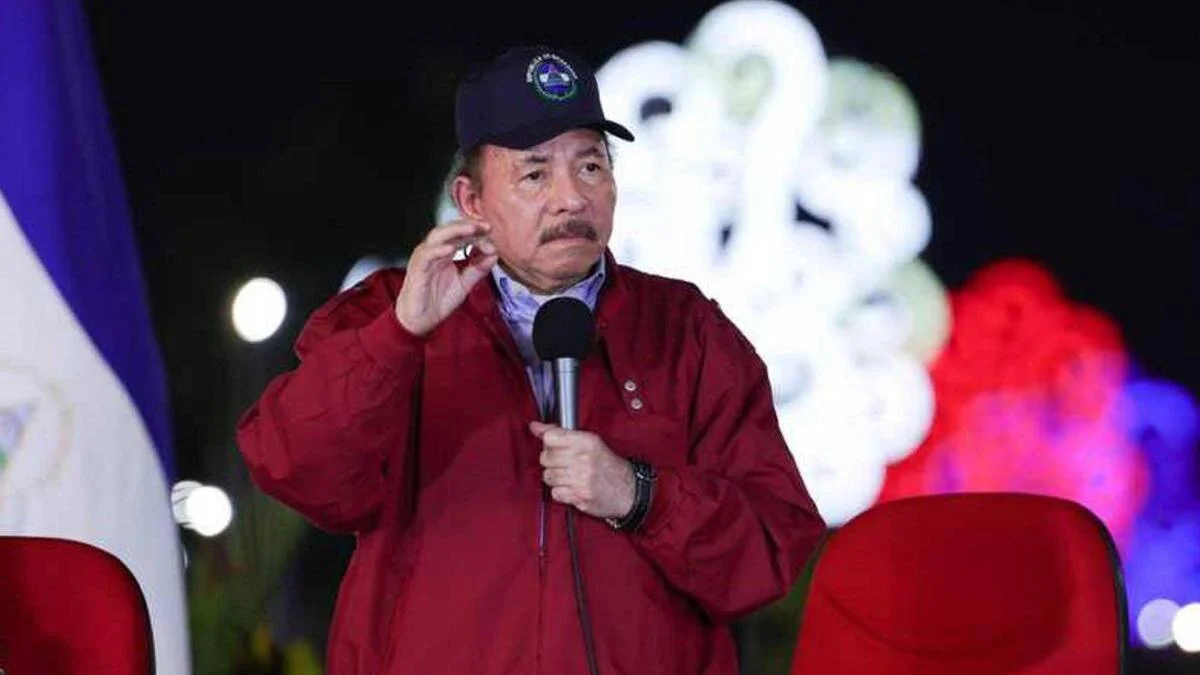
The Parliament’s declaration comes in the wake of President Ortega’s pronouncement during the 47th anniversary commemoration of the Sandinista Revolution on July 19. In a speech that reverberated globally, Ortega unequivocally stated his regime would not permit electoral processes that could jeopardize the ruling Sandinista National Liberation Front’s (FSLN) absolute control. The National Assembly, in its Tuesday statement, confirmed it has initiated the "necessary analyses" to develop a comprehensive work plan aimed at fulfilling these presidential "orientations."
According to the legislative body, these efforts are designed to "ensure peace, security, stability, and the continuity of achievements against poverty," framing the elimination of elections as a measure to safeguard national interests against perceived threats. Critics, however, view this as a thinly veiled justification for the complete suppression of political dissent and the entrenchment of a single-family dynasty.
A Retreat from Democratic Pretense: The Legislative Mechanics
The announcement from the National Assembly underscores the deep integration and subordination of state institutions to the executive branch in Nicaragua. The legislative process, far from being an independent check on power, is now openly functioning as a mechanism to formalize presidential decrees, even those that fundamentally alter the constitutional fabric of the nation.
The National Assembly’s Swift Compliance
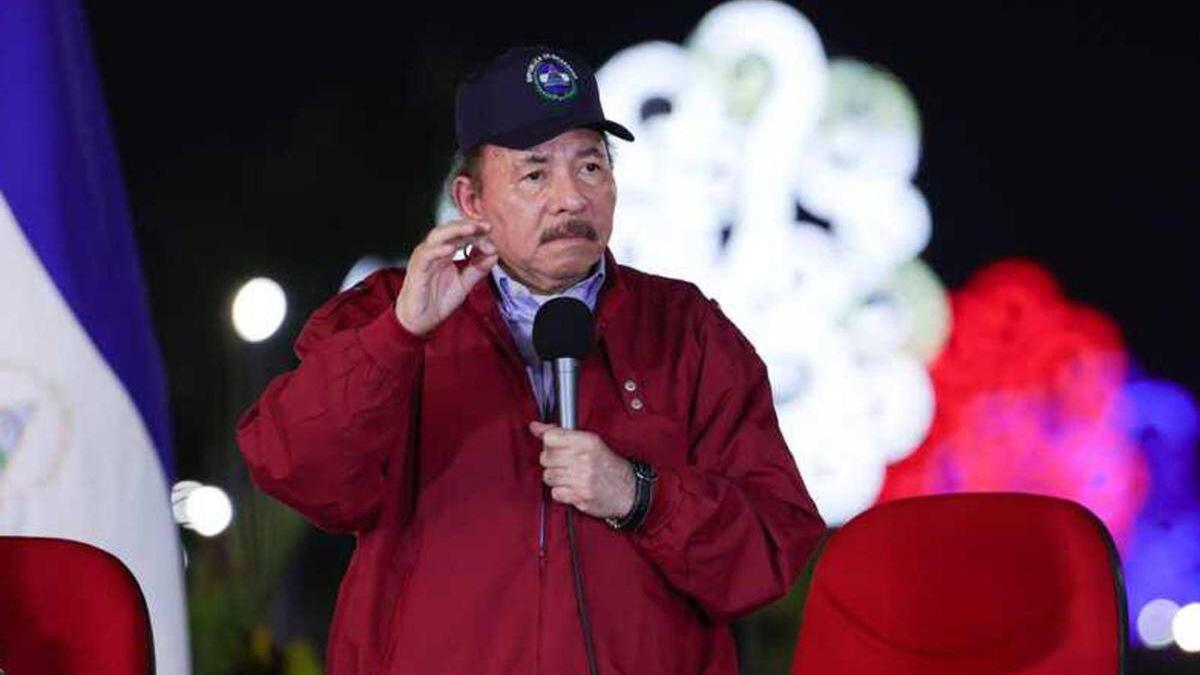
The Parliament’s statement explicitly detailed its immediate actions: "Based on the declarations of Ortega ‘on the political processes proper to Nicaragua and Nicaraguans, to ensure peace, security, stability, and the continuity of achievements against poverty,’ it is initiating the necessary analyses to elaborate a work plan that complies with presidential orientations." This wording leaves no room for interpretation regarding the legislative body’s autonomy or its role in challenging the executive’s mandate. Instead, it positions the Assembly as a direct instrument for implementing Ortega’s vision of governance, irrespective of constitutional norms or democratic principles.
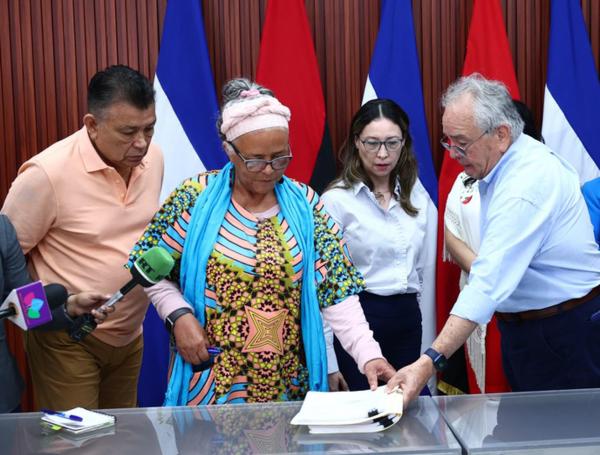
The Speaker of the Parliament, Gustavo Porras, a staunch loyalist, is expected to spearhead these efforts, ensuring a swift and uncontested passage of the necessary legal and constitutional amendments. The image of Porras receiving a constitutional reform proposal from a Presidency legal team member in November 2024, as depicted in past media reports, serves as a stark reminder of the long-standing practice of the executive dictating legislative agenda.
The "Constitutional and Legal Steps"
Crucially, the National Assembly also announced plans to hold "special sessions" with the Supreme Electoral Council (CSE). This body, like the Parliament, is widely perceived as being entirely subordinated to the executive. The purpose of these joint sessions is "to ensure the constitutional, legal, and formal steps that underpin the reforms, for a State and paths that guarantee the legal bases of this transcendent aspect of institutionality." Furthermore, these sessions are intended to "sustain the political, democratic, sovereign, and free practices of our processes of national and local election of authorities."
This phrasing is a masterclass in Orwellian doublespeak. By framing the abolition of elections as a means to "sustain democratic practices" and "guarantee legal bases," the regime attempts to legitimize an inherently anti-democratic act. The collaboration with the CSE is particularly alarming, as it signals that the very institution designed to oversee free and fair elections will now be instrumental in their eradication. This move will likely involve a series of constitutional amendments or new electoral laws that explicitly eliminate or severely restrict the possibility of competitive multi-party elections, thereby institutionalizing the FSLN’s permanent hold on power. The regime’s consistent use of the term "sovereignty" – as in "The sovereignty of our people, and of our country, is a matter for Nicaraguans" – is a well-worn tactic to deflect international criticism and rally domestic support, portraying external pressure as an infringement on national self-determination.
Chronology of Erosion: Ortega’s Path to Perpetual Power
The current move to ban elections is not an isolated incident but the culmination of a systematic and gradual erosion of democratic institutions that has characterized Daniel Ortega’s rule since his return to power in 2007. His trajectory, from revolutionary hero to entrenched autocrat, is a case study in how a government can dismantle a nascent democracy from within.
The Return to Power and Initial Maneuvers (2007-2014)
Daniel Ortega, a key figure in the 1979 Sandinista Revolution that overthrew the Somoza dictatorship, first governed Nicaragua in the 1980s. After losing the 1990 election, he spent years in opposition before securing the presidency again in 2006. His return was initially met with cautious optimism by some, but it quickly became clear that his second tenure would be defined by a relentless drive to consolidate power.
Early constitutional reforms were instrumental. In 2009, a Supreme Court ruling, controversial and widely criticized for its dubious legality, allowed Ortega to bypass a constitutional prohibition on consecutive presidential terms. This was followed by more comprehensive constitutional amendments in 2014, which formally removed presidential term limits and granted the president increased control over the military and police, effectively paving the way for indefinite re-election. Simultaneously, the Supreme Electoral Council (CSE), which had historically been a more independent body, gradually saw its autonomy chipped away. Key appointments ensured that the CSE was staffed by loyalists, transforming it into a tool for validating FSLN victories and disqualifying opposition candidates. These early maneuvers laid the groundwork for the current scenario, demonstrating a clear pattern of manipulating legal frameworks to serve political ambitions.
Escalating Repression and the 2018 Crisis
The year 2018 marked a critical turning point. Widespread protests erupted across the country, initially triggered by social security reforms but quickly escalating into a broader movement against Ortega’s authoritarianism, corruption, and the erosion of democratic freedoms. The regime responded with brutal force, unleashing police and paramilitary groups against demonstrators. Hundreds were killed, thousands injured, and tens of thousands fled the country. This violent crackdown drew widespread international condemnation and led to the first significant wave of sanctions from the United States and the European Union.
In the aftermath of the 2018 crisis, the regime intensified its efforts to silence dissent. Civil society organizations, independent media outlets, and human rights groups were systematically targeted. Numerous NGOs had their legal status revoked, their assets seized, and their members forced into exile. Journalists were harassed, arrested, or compelled to leave the country, effectively eliminating independent reporting. A raft of repressive laws was enacted, including the "Foreign Agents Law," which forced any individual or organization receiving foreign funding to register as a foreign agent, effectively criminalizing independent civic activity. The "Cybercrimes Law" was used to suppress online speech, while the "Law for the Defense of the Rights of the People to Independence, Sovereignty, and Self-determination for Peace" allowed for the disqualification of citizens from running for office based on vaguely defined "treasonous" acts. These laws created a chilling effect, transforming Nicaragua into a state where dissent is equated with treason.
Consolidating Dynastic Control (2019-Present)
The period leading up to the 2021 general elections saw a further tightening of the regime’s grip, characterized by the systematic elimination of all credible political opposition. Several prominent opposition leaders, presidential pre-candidates, journalists, and activists were arrested on fabricated charges, often under the newly enacted repressive laws. These individuals were subsequently disqualified from participating in the elections, ensuring Ortega’s victory in a process widely denounced as a sham by the international community.
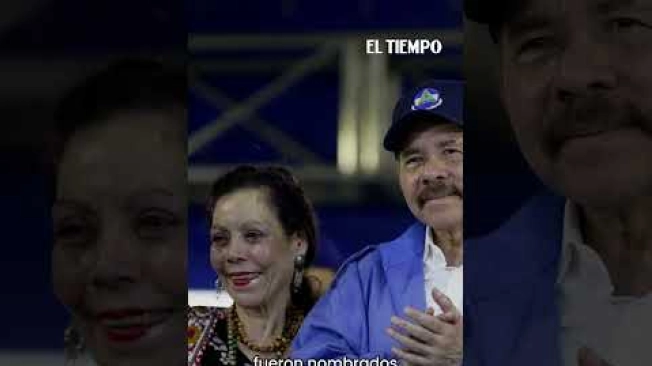
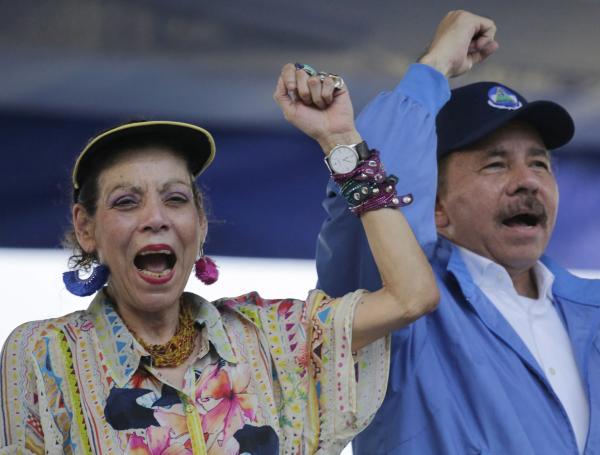
Central to this consolidation of power has been the increasing role of Daniel Ortega’s wife, Rosario Murillo. Initially serving as the First Lady and later as Vice President, Murillo has steadily accumulated power and influence, becoming a central figure in the regime’s public image and internal operations. In February 2025, following a new constitutional reform that further expanded her attributes, Murillo was officially designated as Co-President of Nicaragua. This move formalized a power-sharing arrangement that had long been evident, cementing the control of the Ortega-Murillo family over all branches of government and public life. This dynastic succession plan ensures that even in the event of Ortega’s incapacitation, the family’s grip on power would remain unbroken, effectively establishing a political monarchy.
Supporting Data and Context: The Human Cost of Authoritarianism
The decision to abolish elections is not merely a political maneuver; it has profound and devastating consequences for the Nicaraguan people, economy, and its standing in the international community.
The Economic Landscape
Nicaragua, already one of the poorest countries in the Western Hemisphere, has seen its economic prospects severely curtailed by the regime’s authoritarianism and subsequent international sanctions. The initial sanctions imposed by the United States and the European Union targeted individuals and entities associated with human rights abuses and corruption. However, the broader deterioration of the rule of law and political stability has created an environment hostile to foreign investment. Many international businesses have pulled out, and new investments are virtually non-existent.
The "brain drain" phenomenon has accelerated dramatically, with skilled professionals, entrepreneurs, and educated youth fleeing the country in search of stability and opportunity elsewhere. This exodus further cripples the economy, as it loses its most dynamic human capital. Remittances from Nicaraguans abroad have become a vital lifeline for many families, highlighting the economic desperation within the country. While the regime often touts its "achievements against poverty," independent analyses from organizations like the World Bank and the IMF often paint a bleaker picture, indicating that the economic benefits of any growth are largely concentrated within the regime’s inner circle, while the general population struggles with high unemployment, inflation, and limited access to basic services. The formal ban on elections is likely to trigger further international economic isolation, exacerbating an already dire situation.
Human Rights and Civil Liberties
The human rights situation in Nicaragua has steadily deteriorated since 2018, reaching critical levels. Reports from organizations such as Amnesty International, Human Rights Watch, and the Inter-American Commission on Human Rights consistently document a pattern of systemic abuses. These include arbitrary detentions, torture, politically motivated trials lacking due process, and the suppression of freedom of expression, assembly, and association.
Estimates vary, but hundreds of political prisoners have been held by the regime, often in inhumane conditions. Thousands more have been forced into exile, with many seeking refuge in neighboring Costa Rica or the United States. Independent media has been virtually eradicated, with critical journalists either imprisoned or forced to flee, leaving a landscape dominated by state-controlled propaganda. Any attempt at public protest or organized dissent is met with immediate and often violent repression. The regime’s move to ban elections is the ultimate expression of this human rights crisis, as it removes the most fundamental right of a citizen in a democracy: the right to choose their leaders. It signifies a complete abandonment of civil liberties in favor of absolute state control.
The "Sovereignty" Narrative
The Ortega-Murillo regime frequently invokes the concept of "sovereignty" to justify its actions and deflect international criticism. This narrative draws on Nicaragua’s historical struggle against foreign intervention, particularly from the United States, a powerful rhetorical tool that resonates with some segments of the population. By framing any international concern about human rights or democratic backsliding as an "imperialist" attempt to undermine Nicaragua’s self-determination, the regime seeks to delegitimize its critics and consolidate nationalist support.
However, this appropriation of sovereignty fundamentally misrepresents its meaning. True national sovereignty implies the right of a people to govern themselves, which includes the right to choose their leaders through free and fair elections, to express dissent without fear of reprisal, and to enjoy fundamental human rights. When a regime systematically denies these rights to its own citizens, its claims of defending sovereignty become hollow and self-serving, aimed solely at preserving its own power rather than protecting the well-being and rights of its people.
International Outcry and Diplomatic Ramifications
The announcement of the election ban has predictably ignited a firestorm of international condemnation, signaling a deepening of Nicaragua’s diplomatic isolation.
United States’ Stern Warning
The United States was among the first and most vocal critics. Secretary of State Marco Rubio, in a statement diffused by the Department of State, minced no words: "The statements by Daniel Ortega that, under his family’s dictatorship, Nicaragua will never again hold elections expose his true authoritarian nature." Rubio further asserted that Ortega and Co-President Rosario Murillo have "abandoned even the appearance of popular consent," arguing that Nicaraguans possess an inalienable right to elect their leaders through democratic means.

Rubio’s statement went beyond mere condemnation, issuing a direct call to action: "The United States calls on the international community to join forces and demonstrate to the Murillo-Ortega dictatorship that it cannot expect to maintain a habitual relationship with other nations while undermining the fundamental principles of our democratic hemisphere." This strong language suggests that the U.S. will advocate for further punitive measures, including expanded sanctions targeting key individuals, state entities, and potentially even broader economic restrictions. The U.S. has consistently maintained that a return to democracy and respect for human rights are prerequisites for any normalized relations with Nicaragua, and this latest move by Ortega further entrenches the adversarial posture.
Regional Alarm: Costa Rica and Beyond
Neighboring Costa Rica, which shares a long border with Nicaragua and has historically been a haven for Nicaraguan exiles, expressed "deep concern" through its Ministry of Foreign Affairs. The statement highlighted "the systematic closure of civic spaces and the persecution against dissenting voices" in Nicaragua. This concern is particularly acute for Costa Rica, which bears the brunt of increased migration flows from Nicaragua, placing significant strain on its social services and resources. The elimination of elections is likely to exacerbate this migration crisis, as more Nicaraguans lose hope for a future in their homeland.
Other regional bodies, such as the Organization of American States (OAS), are expected to weigh in with similar condemnations. The OAS has previously adopted resolutions criticizing the Nicaraguan government’s human rights record and electoral abuses, and this latest development will likely lead to calls for Nicaragua’s further diplomatic isolation within the hemisphere. European Union nations, along with Canada, are also likely to issue strong statements and consider additional targeted sanctions, reinforcing the international consensus that Ortega’s regime is an outlier in a democratic world.
Nicaraguan Opposition’s Desperate Plea
For the beleaguered Nicaraguan opposition, both within and outside the country, Ortega’s declaration represents a profound blow but also a renewed call for international solidarity. Opposition leaders have repeatedly urged the international community "not to allow this regime to continue acting with total impunity." They have implored global powers "to act now, backing the Nicaraguan people and exerting maximum political and diplomatic pressure to open a path to democracy in our homeland."

The opposition’s plea underscores their increasingly precarious position. With all avenues for internal political participation systematically shut down, they are left with little recourse but to appeal to external actors for support. This situation highlights the tragic reality that the Nicaraguan people, stripped of their democratic rights, are now largely dependent on international pressure to challenge a regime that has clearly demonstrated its intent to remain in power indefinitely, by any means necessary.
Implications: A Future Without Choice
The formal prohibition of general elections in Nicaragua represents a critical juncture, not only for the country but for the broader principles of democracy and human rights in the Western Hemisphere.
The End of Electoral Democracy
This legislative maneuver marks the definitive end of electoral democracy in Nicaragua. It formalizes a reality that has been evident for years: that elections under the Ortega regime are mere formalities designed to legitimize pre-determined outcomes. By removing even the facade of electoral competition, the regime solidifies a single-party, dynastic rule that leaves no room for political pluralism or peaceful transitions of power. The future of political participation for Nicaraguans will be limited to subservience to the FSLN or facing the full force of state repression. This sets a dangerous precedent, signaling that authoritarian regimes can systematically dismantle democratic institutions without significant internal or external consequences beyond rhetoric and targeted sanctions.
Deepening International Isolation
The move is poised to plunge Nicaragua into even deeper international isolation. While some countries, particularly Cuba, Venezuela, and Russia, may continue to offer diplomatic and economic support, the vast majority of democratic nations are likely to intensify their pressure. This could translate into more comprehensive economic sanctions, impacting Nicaragua’s ability to access international financing, conduct trade, and attract foreign investment. Such isolation will further exacerbate the country’s economic woes, driving up poverty and creating more instability. Nicaragua risks becoming a pariah state, shunned by international organizations and bilateral partners that uphold democratic values.

Impact on Nicaraguan Society
For the average Nicaraguan citizen, the implications are dire. The absence of elections means a complete lack of accountability from their government. Repression is likely to intensify, as the regime faces no electoral checks on its power. Freedoms of speech, assembly, and association will be further curtailed. This environment will inevitably lead to a continued and possibly accelerated exodus of Nicaraguans, particularly the youth and educated professionals, who see no future for themselves in a country without fundamental rights or economic opportunity. The social fabric will be strained, and the long-term effects on education, healthcare, and public services will be devastating, as resources are diverted to maintain state control rather than improve the lives of citizens.
Regional Instability
The formal establishment of an absolute dictatorship in Nicaragua also carries significant implications for regional stability. It sets a concerning precedent for other authoritarian-leaning governments in Latin America, demonstrating that a regime can systematically eliminate democratic processes without facing overwhelming consequences. The resulting increase in migration flows will strain the resources of neighboring countries like Costa Rica and Honduras. Moreover, the presence of an openly autocratic state in Central America, potentially fostering ties with other adversarial global powers, could become a source of regional geopolitical tension and security concerns.
Conclusion: A Dark Chapter for Central America
Daniel Ortega’s directive to ban general elections, now being formalized by Nicaragua’s subservient National Assembly, marks a profoundly dark chapter in the country’s history and for the cause of democracy in Central America. It is a definitive declaration that the regime has abandoned any pretense of democratic governance, opting instead for an autocratic and dynastic rule.
The international community faces a critical challenge: to move beyond rhetorical condemnations and forge a robust, unified strategy to pressure the Ortega-Murillo regime. Without sustained and concerted international action, the Nicaraguan people risk being trapped in a future without choice, their fundamental rights extinguished, and their nation cemented as a stark reminder of democracy’s fragility when confronted by unchecked power. The world watches as Nicaragua’s institutions are systematically dismantled, raising urgent questions about the effectiveness of international mechanisms to safeguard democratic principles against an increasingly brazen authoritarian tide.