WASHINGTON — In a fiery intervention that once again fuses geopolitical strategy with high-stakes technology policy, U.S. President Donald Trump has forcefully pushed back against calls for sweeping new regulations and safety "guardrails" in the artificial intelligence sector.
Weighing in on a heated global debate regarding the existential risks of advanced AI models and the exponential energy demands of massive data centers, Trump took direct aim at Dario Amodei, the chief executive officer of prominent AI safety lab Anthropic. The president argued that additional legislative or bureaucratic controls are not only redundant, but actively harmful to American technological supremacy—contending instead that the ultimate safeguard for the industry is a decisive U.S. commander-in-chief.

The remarks, delivered via social media on Monday, September 14, 2026, signal an aggressive approach by the White House to balance national security, domestic energy expansion, and the fiercely contested global race for artificial intelligence dominance against strategic rivals like China.
Main Facts
The core of the recent policy clash centers on a fundamental philosophical and regulatory divide over how humanity should manage the rapid acceleration of artificial intelligence:

- The Presidential Stance: President Donald Trump asserted that the executive branch already possesses sufficient criminal and regulatory oversight to curb potential abuses by tech firms without stifling innovation or halting the rapid expansion of critical data centers.
- Rejection of New Guardrails: Dismissing calls from industry leaders for standardized regulatory guardrails, Trump claimed that "the only guardrail AI needs is a smart, strong president."
- Direct Criticism of Anthropic: Trump specifically targeted Dario Amodei, CEO of Anthropic—one of the leading artificial intelligence research companies—who has publicly advocated for slowing down the deployment of frontier models due to mounting societal and security risks. Trump sarcastically referred to Amodei as a "perfect little angel."
- The "Conspiracy" Allegation: The president warned of an "unhealthy conspiracy" against the artificial intelligence sector and its supporting infrastructure, alleging that domestic efforts to slow down development or restrict data center growth primarily serve the geopolitical interests of China.
- Geopolitical Stakes: Reinforcing his administration’s "America First" technological doctrine, Trump reiterated the high-stakes mantra that "whoever wins AI, wins," maintaining that the United States currently leads the global race and intends to aggressively preserve that advantage.
Chronology of Events
The escalating friction between government leaders, tech executives, and safety advocates unfolded across a tense sequence of events in mid-September 2026:
Friday, September 11 – Saturday, September 12, 2026: The Warning Signs
Industry anxiety began spilling into the public sphere as top artificial intelligence executives and ethics researchers openly debated the necessity of deceleration. Prominent voices within the tech community converged on the idea that frontier models were advancing at a pace that outstripped institutional safety testing, triggering early jitters across global financial markets.

Sunday, September 13, 2026: International Countermeasures
The pressure intensified globally when international competitors made moves of their own. Notably, Chinese regulators announced a formalized "safety barrier" framework for artificial intelligence, designed to navigate mounting political, social, and technological risks within the nation’s borders while aggressively scaling national tech capabilities. This development amplified Washington’s sensitivity regarding any slowdown in American innovation.
Monday, September 14, 2026: Market Turbulence and Presidential Retaliation
- Morning: Financial markets absorbed the shockwaves of the ongoing debate, resulting in a notable downturn in AI-linked stocks as investors weighed the economic impact of potential regulatory bottlenecks and safety warnings.
- Midday: Dario Amodei and other industry figures faced mounting scrutiny for pushing public narratives about the inherent dangers of unchecked AI scaling.
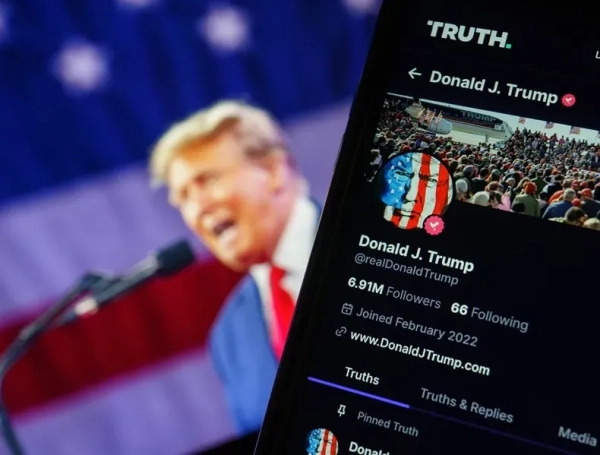
- Afternoon (14:37 – 16:33 EST): President Trump took to Truth Social to issue a blistering public response. In a multi-part post, he dismissed the warnings, attacked Amodei by name, accused domestic critics of working against national interests, and framed the debate as an existential conflict with Beijing.
Supporting Data and Context
To fully understand the gravity of President Trump’s intervention, it is necessary to examine the underlying pressures facing the artificial intelligence ecosystem in late 2026:

- The Infrastructure Bottleneck: Artificial intelligence models do not operate in a vacuum; they require unprecedented amounts of computational power. This has triggered a massive real estate and energy boom centered on the construction of next-generation data centers. These facilities demand staggering quantities of electricity and cooling water, sparking localized environmental debates and regulatory friction across various U.S. states.
- Market Sensitivity: Wall Street has grown increasingly reactive to regulatory rhetoric. As highlighted by recent market shifts, any indication that the federal government might impose restrictive compliance frameworks or slow down data center permitting causes immediate volatility in tech sector valuations.
- The Global Superpower Race: The race for Artificial General Intelligence (AGI) is widely viewed by defense analysts and policymakers as the defining geopolitical struggle of the 21st century. With billions of dollars in private and public capital flowing into U.S. and Chinese labs, American leadership views any self-imposed regulatory handicap as an unforced error that could hand dominance to Beijing.
Official Responses and Stakeholder Positions
The ideological chasm separating Silicon Valley safety researchers from the White House highlights deep divisions over how to govern a technology capable of reshaping global labor, defense, and information systems.
The White House Perspective
The Trump administration’s official posture is rooted in executive agility and free-market dominance. By arguing that a strong president serves as the ultimate regulatory check, the administration is signaling a preference for direct, swift oversight rather than entangled, slow-moving bureaucratic frameworks. Trump maintains that his administration has already successfully neutralized potential harms without resorting to heavy-handed legislative blockades that would deter venture capital and engineering talent. Furthermore, the administration views safety-first advocacy by certain executives not as altruism, but potentially as regulatory capture—a strategy used by established firms to pull up the drawbridge and lock out smaller competitors.

The AI Safety Advocacy View
On the other side of the debate, figures like Dario Amodei and various research collectives argue that advanced AI models present unique, non-linear risks that cannot be safely managed through traditional political oversight alone. These concerns range from the automated generation of cyberweapons and biological threats to profound socio-economic destabilization driven by widespread job displacement. Proponents of "guardrails" argue that proactive, binding international and domestic safety standards are essential to prevent a catastrophic failure in autonomous systems before they achieve recursive self-improvement capabilities.
Implications
President Trump’s rejection of new AI guardrails and his sharp rebuke of Anthropic’s leadership carry profound implications for the trajectory of technology, economics, and geopolitics:
- Regulatory Uncertainty: Tech companies operating in the United States now face a complex landscape where federal legislative intervention appears unlikely under the current administration, placing the onus of safety entirely on corporate self-governance and existing executive enforcement mechanisms.
- The Geopolitical Imperative: By explicitly linking AI regulation to the strategic rivalry with China, the White House has framed the debate in zero-sum terms. This posture makes it exceedingly difficult for domestic lawmakers to pass restrictive compliance laws, as any impediment to technological velocity can be successfully framed as a national security vulnerability.
- Venture Capital and Investment Confidence: While safety advocates may lament the absence of formal guardrails, venture capitalists and major tech conglomerates will likely view the president’s stance as a green light for accelerated infrastructure investment, particularly in the construction and power-scaling of massive data centers.
- Corporate Accountability: The direct targeting of specific executives signals a warning shot to Silicon Valley. Tech leaders who publicly lobby for constraints or raise alarms about the societal impacts of their own technologies risk drawing the ire of the executive branch, transforming corporate risk management into a politically charged arena.
As the race toward more advanced autonomous systems continues at breakneck speed, the clash between precautionary safety models and aggressive geopolitical acceleration remains one of the defining narratives of the modern technological age.