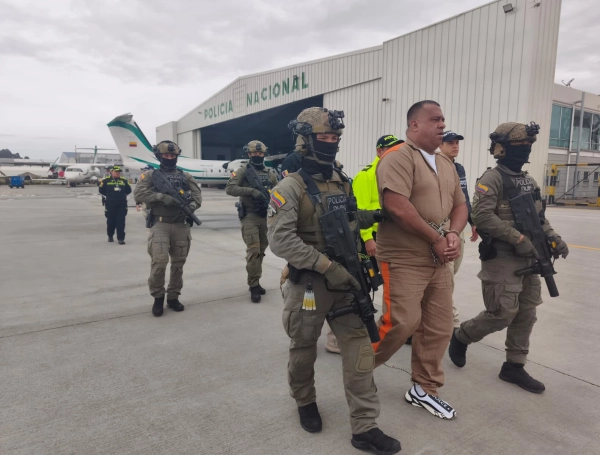
BOGOTÁ, COLOMBIA — In a stern policy address delivered on Friday, September 25, 2026, Colombian President Abelardo De La Espriella drew a hard line against transnational organized crime. The announcement coincided with the high-security extradition of Geovany Andrés Rojas, alias “Araña,” to the United States. Utilizing the momentum of the successful transfer, the president issued a chilling, unequivocal warning to Luciano Marín Arango, better known as “Iván Márquez,” the supreme leader of the criminal dissident structure known as the "Segunda Marquetalia."
The declaration marks a significant escalation in Colombia’s posture toward former guerrilla commanders turned drug traffickers, signaling an aggressive alignment with international law enforcement partners—specifically the United States Department of Justice—to dismantle narcotics networks operating within and beyond Colombian borders.
Main Facts
The core developments of Friday’s announcement center on a dual approach of aggressive domestic security operations and international extraditions:
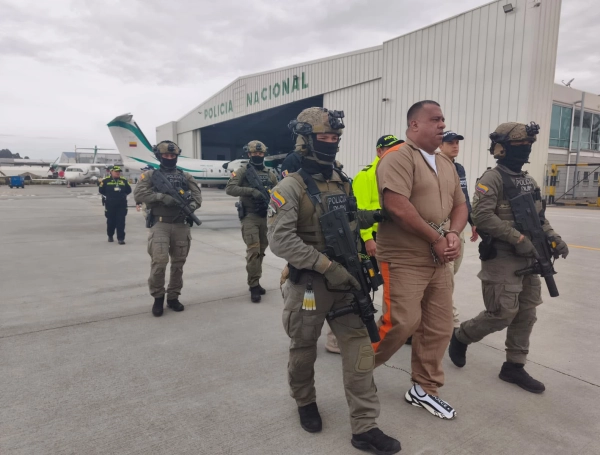
- The Extradition of Alias ‘Araña’: Geovany Andrés Rojas, alias “Araña,” a high-value target linked to multi-ton cocaine trafficking operations, was officially transferred to U.S. custody during a morning operation on Friday, September 25, 2026.
- Direct Warning to ‘Iván Márquez’: President De La Espriella explicitly targeted Luciano Marín Arango (‘Iván Márquez’), stating publicly that the high-ranking Segunda Marquetalia leader will either be "neutralized (given ‘de baja’) or extradited" to face charges of narcoterrorism and conspiracy in the United States.
- Milestone in Extraditions: During his address, President De La Espriella highlighted that his administration has successfully authorized and completed 94 extraditions to date.
- Legal Authorization for Segunda Marquetalia Members: Hours before his public address, the president signed an official resolution approving the extradition of Allende Perilla Sandoval, another active operative of the Segunda Marquetalia.
- State Objective: The administration maintains that these measures are designed to disrupt the entire criminal chain—from illicit crops and laboratories to international smuggling routes, financial networks, and top-tier leadership.
Chronology of Events
The events leading up to and unfolding on Friday, September 25, 2026, reflect a meticulously coordinated effort by the executive branch and national security forces:

Early Hours of Friday, September 25, 2026
- 06:00 AM – 10:00 AM: High-security logistics operations are mobilized to execute the transfer of Geovany Andrés Rojas (alias “Araña”) from detention facilities to an awaiting aircraft bound for the United States. Visual media and security updates are shared in real-time through official government channels and public broadcasts.
- Morning Update: President De La Espriella uses his official social media channels, specifically X (formerly Twitter), to publish images and operational footage of the extradition, utilizing the moment to critique past administrations for soft-on-crime policies and outlining his current metrics.
Midday, September 25, 2026
- Official Pronouncement: Addressing the nation, President De La Espriella formalizes the administration’s stance on transnational cartels. He signs the resolution approving the extradition of Allende Perilla Sandoval.
- The Ultimatum: During the policy briefing, the head of state singles out Luciano Marín Arango (‘Iván Márquez’). He delivers the explicit threat regarding the dual paths awaiting the guerrilla leader: capture for extradition or neutralization by state security forces.
Evening, September 25, 2026
- 10:21 PM – 10:37 PM: Official news agencies and digital descriptors timestamp the formal release of the communications, consolidating the total number of processed extraditions under De La Espriella’s presidency at 94. The narrative pivots toward future operations aimed at retaking rural regions from dissident groups.
Supporting Data and Context
To understand the weight of President De La Espriella’s statements, it is necessary to examine the historical and operational landscape of the actors involved:
- The Scope of 94 Extraditions: Reaching 94 completed extraditions in a relatively short operational window demonstrates a drastic departure from previous diplomatic and security approaches. The administration views extradition not merely as a judicial transfer, but as a strategic disruption of the command-and-control capabilities of major cartels.
- The Legacy of ‘Iván Márquez’: Luciano Marín Arango was one of the chief negotiators for the FARC during the 2016 Havana peace talks before abandoning the peace process, returning to arms, and forming the Segunda Marquetalia alongside other dissident commanders. Long sought by U.S. federal courts for orchestrating vast shipments of cocaine into North America, Márquez has continuously operated from hidden sanctuaries, exploiting regional instability.
- Alias ‘Araña’ (Geovany Andrés Rojas): Long identified as a pivotal transnational kingpin, Rojas managed sophisticated maritime logistics and drug routes, feeding the international narcotics trade and laundering capital through complex fronts. His removal to the U.S. severs a critical link between domestic production cells and foreign distribution syndicates.
- Allende Perilla Sandoval: As another key financial and operational asset within the Segunda Marquetalia, Perilla Sandoval’s signed extradition order underscores the systematic targeting of the organization’s mid-to-high-tier leadership framework.
Official Responses and Rhetoric
The tone of the current administration marks a profound rhetorical shift toward uncompromising state authority. President De La Espriella has repeatedly emphasized that security cannot be negotiated or delegated.

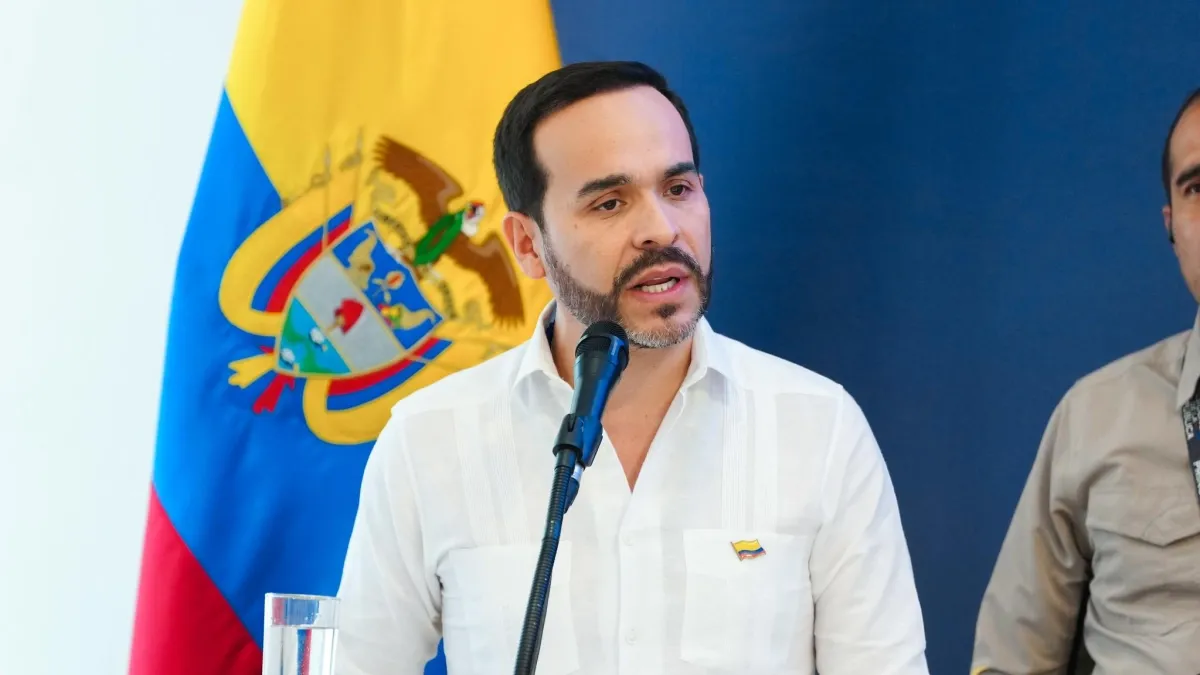
"Another narcoterrorista that we are going to take down or extradite is ‘Iván Márquez,’ because the government of the United States requires him for narcoterrorism and conspiracy to commit a crime," President De La Espriella stated firmly during his address.
Elaborating on the broader philosophy driving these security initiatives, the president noted that the cocaine trade has financed decades of domestic terror, suffering, and societal decay.

"We are acting against the entire criminal chain: illicit crops, laboratories, routes, finances, and the kingpins who enrich themselves at the expense of the blood and tranquility of our citizens," he wrote via his official X account.
He reinforced the message that Colombia will no longer serve as a safe haven for international fugitives:
"Those who intend to use our territory to produce, transport, or commercialize cocaine must face justice and the full, legitimate weight of the State… Our security is not delegated. It is exercised with authority, with determination, and within the law."
Implications for National Security and Geopolitics
The hardening stance of the Colombian government carries profound domestic, regional, and international implications:
1. Reassertion of State Sovereignty in Conflict Zones
For decades, rural departments in Colombia have suffered from power vacuums filled by dissident FARC factions, the Segunda Marquetalia, the ELN, and various criminal syndicates (BACRIM). By vowing to "recover the territory," the administration is signaling an intensification of offensive military and police campaigns. The goal is to dismantle the territorial control these groups exercise over local populations and illicit economies.
2. Strengthening Bilateral Ties with Washington
The aggressive push for extraditions solidifies Bogotá’s strategic partnership with the United States. By actively cooperating with U.S. federal agencies (such as the DEA and the Department of Justice), the De La Espriella administration proves its reliability as a frontline ally in the war on drugs. This cooperation may yield deeper intelligence-sharing agreements, increased military aid, and coordinated cross-border operations.

3. Escalation of Asymmetric Threats
While the state’s aggressive posture projects strength, it also carries inherent risks. High-value targets like ‘Iván Márquez’ operate within heavily fortified, clandestine networks often shielded by local sympathizers or cross-border safe havens (such as neighboring Venezuela). Direct threats of neutralization or extradition could provoke retaliatory asymmetric attacks—such as localized bombings, targeted assassinations of local officials, or increased pressure on vulnerable rural communities.
4. The Future of Dissident Structures
With key financiers and logistics coordinators like alias ‘Araña’ and Allende Perilla Sandoval removed from the equation—and a direct bounty or capture order hanging over supreme leaders like Márquez—the Segunda Marquetalia and the Estado Mayor Central face unprecedented existential pressure. The erosion of their leadership hierarchy threatens to fracture these organizations into uncoordinated criminal cells, which, while dangerous, are structurally easier for state intelligence agencies to infiltrate and neutralize.

As the De La Espriella administration presses forward with its zero-tolerance doctrine, the coming months will test the operational capacity of Colombia’s armed forces to make good on these high-stakes ultimatums, permanently reshaping the security landscape of the Andean nation.