By International Desk Analysis Published: September 26, 2026
Main Facts: The Rejection of the Political Center
Germany, long considered the bedrock of political stability and the primary containment wall against extremist movements in post-World War II Europe, is undergoing a profound tectonic shift. Recent regional elections across several German states have revealed a stark, unmistakable reality: the traditional political center is collapsing, making way for radical forces from both ends of the ideological spectrum.
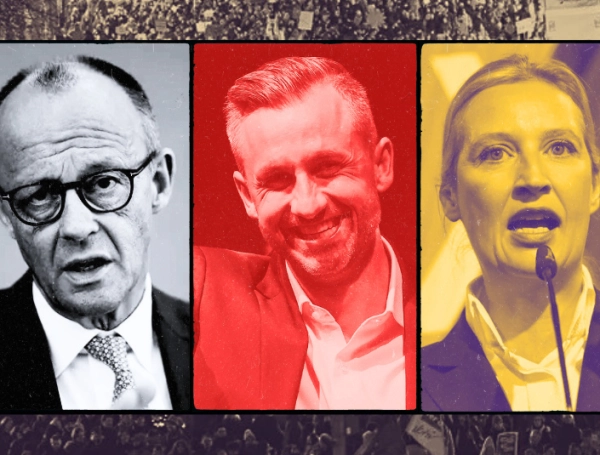
Two states, two distinct electoral contests, and two opposing verdicts share a single, undeniable denominator—a fierce rejection of moderate governance. On September 20, the far-left party Die Linke achieved a stunning triumph in Berlin, capturing 25.8% of the vote. Simultaneously, hundreds of kilometers to the north in the state of Mecklenburg-Western Pomerania, the radical-right Alternative for Germany (AfD) surged to victory with an impressive 37.8%.
These seemingly antagonistic outcomes tell a cohesive story. Coming on the heels of a political earthquake on September 6 in Saxony-Anhalt—where the AfD nearly secured an absolute majority with 43.8% of the ballots—the 3.8 million voters who turned out in mid-September delivered a resounding message. Amid surging voter turnout, the electorate signaled that Germany is desperate to turn the page, yet deeply fractured over the direction it should take.
Chronology of Events: A Month of Electoral Upheaval
The acceleration of Germany’s political crisis unfolded across a tense three-week window in September 2026, fundamentally altering the country’s domestic landscape and sending shockwaves throughout the European Union.
September 6, 2026: The state of Saxony-Anhalt votes in regional elections. The right-wing populist AfD stuns the nation by capturing 43.8% of the vote, nearly reaching absolute majority status and pushing traditional parties to the brink. Copresident Ulrich Siegmund initiates exploratory talks that threaten to break the long-standing political taboo against far-right governance.
September 20, 2026: A dual electoral showdown takes place. In Berlin, the far-left Die Linke surges to 25.8% under the leadership of Elif Eralp, fueled by a campaign laser-focused on housing crises and cost-of-living pressures. Meanwhile, in Mecklenburg-Western Pomerania, the AfD claims 37.8% of the vote, narrowly defeating the incumbent Social Democratic Party (SPD) at 36.3%.
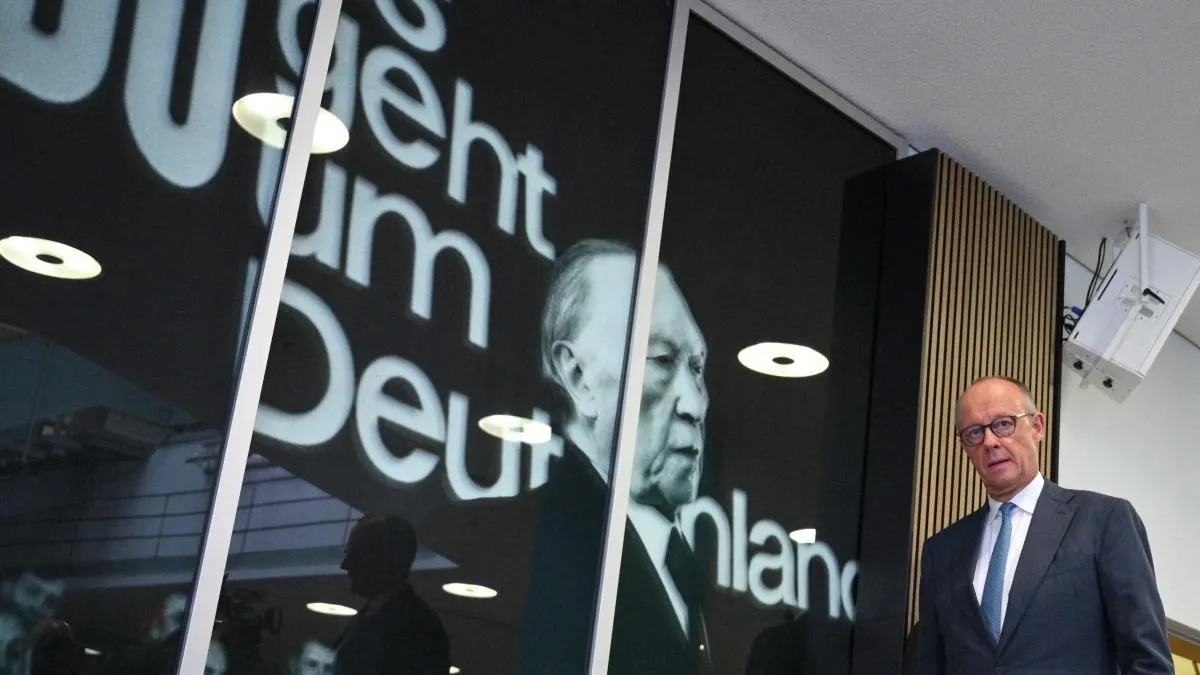
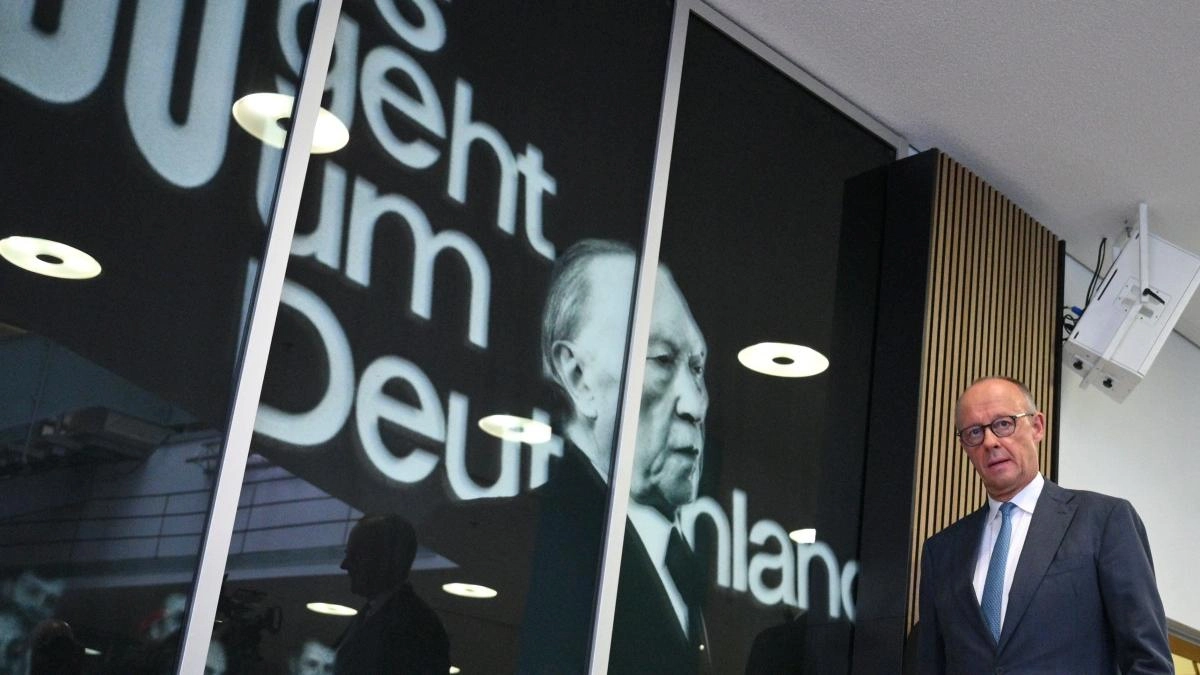
Post-Election Week (Late September 2026): Chancellor Friedrich Merz faces an existential crisis within the Christian Democratic Union (CDU). Following catastrophic results—including a historic wipeout in Mecklenburg-Western Pomerania where the CDU plunged below the 5% threshold—Merz cancels an upcoming diplomatic trip to the United Nations General Assembly in New York to hold emergency crisis talks in Berlin. Rumors of a Kanzlerwechsel (a change of chancellor) reach a fever pitch.
Supporting Data: The Numeric Breakdown of an Institutional Crisis
The depth of the crisis is vividly illustrated by the statistical collapse of Germany’s governing parties and the unprecedented normalization of extremist alternatives:
Saxony-Anhalt (Sept 6): The AfD dominates with 43.8%, pushing hard toward absolute majority control and leaving traditional parties struggling to cobble together defensive alliances.
Berlin (Sept 20):Die Linke secures 25.8% of the vote, nearly doubling its 2023 performance. The party paves the way for an unprecedented left-radical municipal coalition alongside the SPD and the Greens.
Mecklenburg-Western Pomerania (Sept 20):
AfD captures 37.8% (more than double its 16.7% share in 2021).
The SPD follows closely at 36.3%.
Die Linke registers 6.2%, and the Greens score 5.5%.
The CDU Catastrophe: The Christian Democratic Union crashes to 4.9%, falling short of the 5% parliamentary threshold and rendering the party entirely absent from the regional parliament for the first time since its post-war foundation in 1945.
Official Responses and Political Reactions
As the political establishment reels from the ballot box, leaders from Berlin to Brussels have scrambled to interpret the results and formulate a defense for democratic institutions.
Chancellor Friedrich Merz, whose leadership of the CDU is now hanging by a thread, acknowledged the gravity of the situation in blunt terms. “It is a disaster,” Merz conceded to emergency party delegates. Despite widespread speculation regarding his resignation and intense internal pressure, Merz rejected calls to step down immediately. “The reforms must be carried out. I assume that responsibility because I want to move our country forward,” he stated.
However, political rivals were quick to smell blood. Leif-Erik Holm, the AfD candidate in Mecklenburg-Western Pomerania, didn’t hesitate to deliver a harsh prediction: “The chancellor will not reach the end of the year.”
In Berlin, potential mayor Elif Eralp sought to project reassurance amid internal party friction regarding foreign policy and accusations of rising antisemitism within certain progressive ranks. Following her historic win, Eralp declared:
"I will do all I can to ensure that Jews, Muslims, queer people, and all the inhabitants of our city can feel safe."
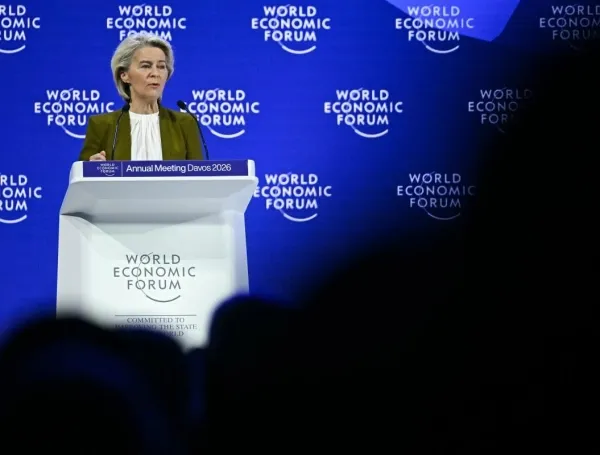
At the European level, alarm bells are ringing loudly. European Commission President Ursula von der Leyen issued a stern warning regarding the resurgence of ultranationalist and anti-European factions, accusing them of actively eroding the foundational cohesion of the EU block.
Echoing these concerns, former German Vice-Chancellor Joschka Fischer reflected on the psychological impact of the vote:
"Political stability and predictability have always been fundamental pillars of Germany’s post-war democracy, both before and after reunification in 1990. There is no longer any certainty whether Germany will remain firmly integrated with Europe and NATO, or whether, once again, it will follow a separate national course."
Implications: A Shaken Nation and a Nervous Europe
The events of September 2026 have broad implications that stretch far beyond Germany’s borders, threatening to rewrite the geopolitical architecture of Europe.
1. The Erosion of the Brandmauer
For decades, German democracy relied heavily on the Brandmauer (cordon sanitaire)—an unwritten institutional agreement ensuring that mainstream parties would never cooperate or form coalitions with extremist movements on either the far-left or the far-right. Today, that firewall is under immense strain. While regional politicians continue to construct defensive three-party coalitions (such as the anticipated SPD-Linke-Greens alliance in Schwerin) to lock the AfD out of executive power, the sheer electoral weight of the radical right makes total exclusion increasingly difficult to sustain without paralyzing local governance.
2. The Vulnerability of the Federal Government
Chancellor Friedrich Merz’s administration, installed in May 2025, is facing the deepest crisis of its tenure. The combination of a fractured CDU, a hemorrhaging SPD partner, and rebellious local chapters has transformed the federal government into a reactive entity. The viability of Merz’s leadership will be tested week by week as coalition management becomes an uphill battle against surging anti-establishment sentiment.
3. The European Domino Effect
Because Germany functions as Europe’s economic engine and its primary political stabilizer, its internal instability reverberates across the continent. Neighboring nations scheduled to hold elections—such as Spain, France, Poland, and Italy—are watching closely as their own extremist and populist formations draw inspiration and momentum from the German ballot box. While right-wing factions in countries like Spain (Vox) openly celebrate the AfD’s milestones, traditionalist capitals like Paris view the German political shift with mounting anxiety.
Ultimately, Germany has crossed a historical Rubicon. The post-war consensus that successfully kept political extremes at bay for nearly a century is fracturing under the weight of socioeconomic pressures, housing shortages, inflation, and polarized identity debates. Whether German democracy can adapt and reforge a cohesive center without sacrificing its core values remains the definitive question for the remainder of the decade.
International Desk – EL TIEMPO With information from EFE Main Facts The ongoing conflict in the Middle East has taken a dramatic and dangerous turn. Yemen’s Houthi movement claimed responsibility for a sweeping barrage of…
Washington D.C., July 16, 2026 – A severe outbreak of cyclosporiasis, a parasitic infection, has swept across the United States, sickening thousands and prompting a nationwide investigation. A key ingredient used by the popular fast-food…
MEXICO CITY, July 23, 2026 – The vibrant world of social media has been plunged into mourning following the sudden passing of prominent Mexican influencer Adriana García. At just 30 years old, García, known for…