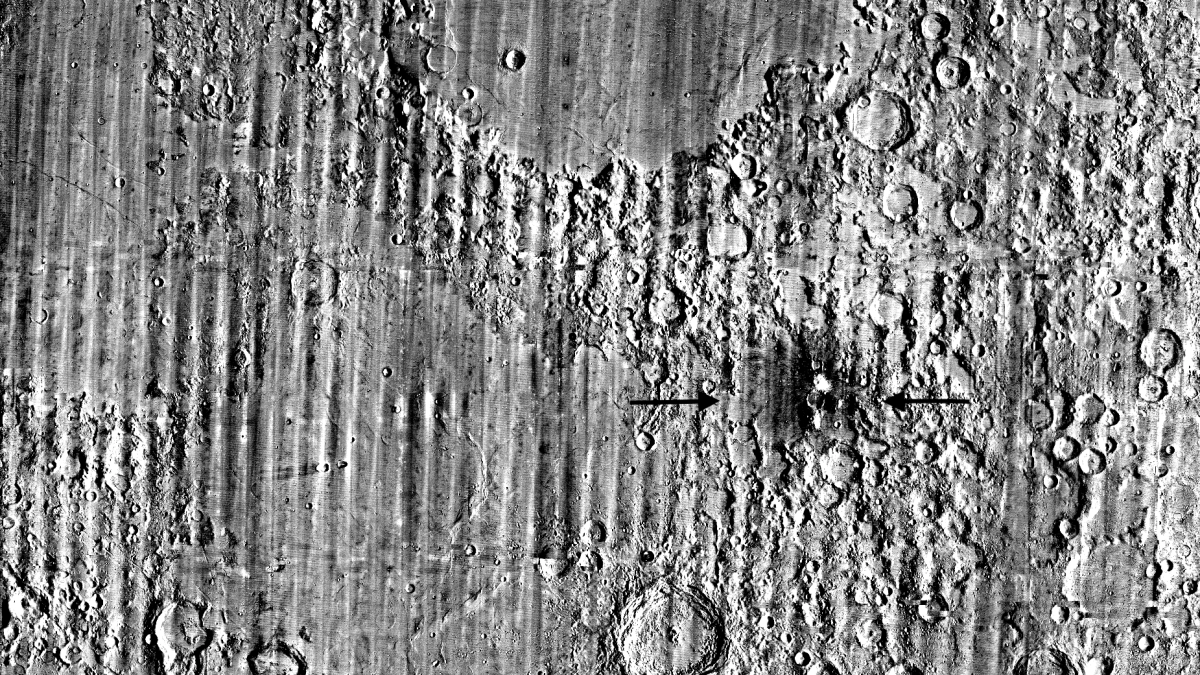
WASHINGTON — In what celestial mechanics experts are describing as an astronomical event of rare and profound magnitude, the National Aeronautics and Space Administration (NASA) has announced the discovery of a massive, newly formed crater on the Moon. Measuring an impressive 222 meters (728 feet) in width, the impact structure has been officially designated as "McGetchin."
According to planetary scientists, the cataclysmic event that birthed the crater is a phenomenon that occurs on our lunar satellite roughly "once per century, or even less." The discovery not only provides researchers with a pristine, real-time look at planetary geology in action, but it also offers crucial data as space agencies worldwide prepare for a new era of crewed lunar exploration.
Main Facts: The Discovery of Crater McGetchin
The monumental find was brought to light by Robert Wagner, a researcher working with NASA’s Lunar Reconnaissance Orbiter (LRO) mission. While conducting routine, high-resolution scans of the lunar landscape, Wagner noticed an anomalous feature that stood out sharply against the surrounding regolith: a massive, brilliant splash mark characterized by a prominent bright center encircled by a dark, sweeping halo.
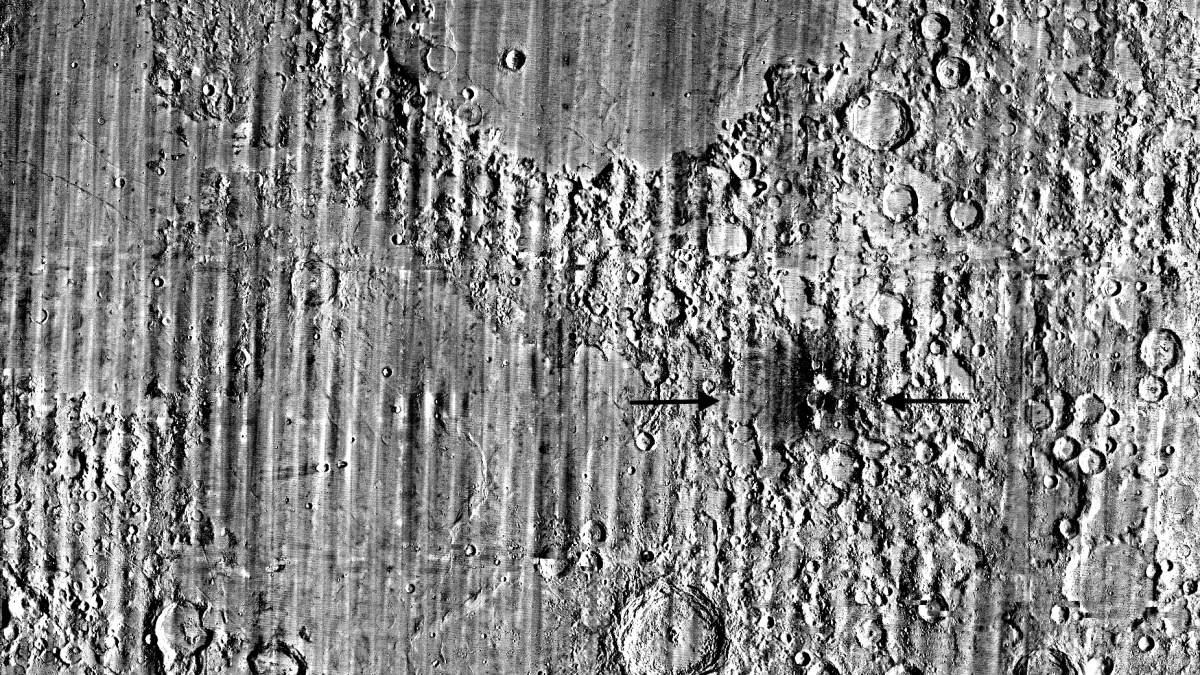
Subsequent analysis confirmed that this striking visual signature was the calling card of a high-velocity impact. A study detailing the findings was published in the peer-reviewed scientific journal Science Advances, confirming that McGetchin stands as the largest newly formed impact crater discovered to date within our solar system during the modern era of planetary observation.
Scientific models indicate that the impactor responsible for McGetchin was no ordinary space rock. Researchers estimate the colliding body—likely an asteroid or a spent cometary fragment—was comparable in size to a mid-rise building, measuring roughly between three and six stories in height.
Because the Moon lacks a dense, protective atmosphere, it acts as a cosmic shield that absorbs continuous impacts from space debris. However, bodies of this monumental scale colliding with the lunar surface are extraordinarily scarce. The resulting crater, stretching 222 meters across, has upended traditional timelines regarding the frequency of large-scale impacts on planetary bodies lacking atmospheric shielding.

Chronology: From Spring 2024 Impact to Orbiting Detection
Piecing together the timeline of how Crater McGetchin came to be and how it was ultimately found highlights the meticulous nature of modern planetary surveillance:
- Spring 2024: Planetary scientists believe the impact occurred during this period, triggered by the collision of a building-sized asteroid or comet with the lunar surface. The violent explosion excavated hundreds of thousands of tons of material, spraying ejecta across the surrounding terrain and creating the distinct thermal and optical anomalies observed later.
- July 2009 – Present: NASA’s Lunar Reconnaissance Orbiter (LRO) maintains its relentless vigil from lunar orbit. Armed with a suite of seven specialized scientific instruments, the spacecraft continuously maps the Moon’s topography, monitors radiation levels, analyzes surface composition, and measures thermal properties.
- The Intervening Years: Over more than 17 years of continuous observation, the LRO has documented a dynamic, ever-changing lunar surface, logging over 1,000 newly formed smaller craters and nearly 100,000 distinct surface alterations caused by impacts and seismic shifts.
- Recent Scans and Identification: During routine analysis of fresh LRO imagery, researcher Robert Wagner flagged the unusual "bright spot with a dark halo." Comparative temporal analysis revealed the feature was absent in older imagery, confirming its recent origin.
- Wednesday Publication: A comprehensive study outlining the discovery and analysis of Crater McGetchin is officially published in Science Advances, cementing its status as the largest new impact crater recorded in the solar system.
- Post-Discovery Thermal Analysis: Following the visual identification, mission scientists deployed the Diviner Lunar Radiometer Experiment—a thermal instrument aboard the LRO—to study the physical properties of the impact zone, uncovering unique temperature differentials across a 6.4-kilometer area.
Supporting Data: The Dynamic Lunar Bombardment Environment
To truly grasp the significance of Crater McGetchin, scientists point to the broader statistical reality of lunar bombardments cataloged by NASA over nearly two decades of LRO operations.
While impacts the size of McGetchin are generational events—occurring perhaps once every hundred years—the Moon is subjected to a constant, relentless barrage of smaller objects. According to mission data, the LRO has successfully mapped at least 1,000 new impact craters since it began operations in 2009. Furthermore, the spacecraft’s high-resolution cameras have registered roughly 100,000 localized surface changes, which include secondary craters, shifting regolith, and ballistic blankets of ejecta hurled across vast distances by impacts.

To put the scale of these impacts into perspective, NASA provides the following data points regarding lunar bombardments:
- Smallest Detectable Craters: The limit of optical resolution for the LRO cameras allows scientists to identify impact craters down to approximately 9 meters (30 feet) in diameter.
- The Impactor Scale: These 9-meter craters are typically excavated by smaller space rocks measuring roughly 1.1 meters (3.6 feet) wide—roughly the size of a heavy-duty monster truck tire.
- Annual Frequency of Small Impacts: Calculations suggest that impacts capable of generating 9-meter craters occur with surprising frequency, creating approximately 140 new structural scars on the lunar surface every single year.
- Sub-Resolution Impacts: The vast majority of incoming space debris consists of micrometeoroids and microscopic dust particles. These leave microscopic scars that cannot be resolved from lunar orbit, yet they collectively contribute to the slow, continuous "gardening" and pulverization of the lunar soil (regolith).
Thermal Anomalies and the Diviner Instrument
Following the visual confirmation of McGetchin, the research team utilized the LRO’s Diviner Lunar Radiometer Experiment to peer beneath the optical surface. Diviner measures solar radiation reflection and thermal infrared emission from the lunar surface.
The thermal data revealed a surprising physical footprint: a vast circular region spanning approximately 6.4 kilometers (4 miles) in diameter centered on the crater exhibits unusual thermodynamic properties. During the freezing lunar night, temperatures within this 6.4-kilometer zone drop to levels approximately 9 degrees Celsius colder than the surrounding undisturbed terrain.

Scientists theorize that the massive explosive excavation pulverized the local rock and soil into a fine, highly insulating layer of ejecta (or drastically altered the density and porosity of the upper regolith), which radiates heat much faster than the dense, older rock formations outside the impact zone.
Official Responses and Perspectives from the Scientific Community
The discovery has generated considerable excitement within the global planetary science community, validating long-held theoretical models about impact mechanics and regolith evolution.
NASA spokespersons and participating researchers emphasize that studying a crater of this magnitude formed in "real time" (on a geological timescale) is an unprecedented gift to science. For decades, scientists have relied on statistical models, laboratory hypervelocity impact experiments, and the study of ancient, heavily degraded craters to understand how planetary surfaces evolve under asteroid bombardment.

"Having the opportunity to observe the birth and immediate aftermath of a major impact structure like McGetchin allows us to calibrate our models with absolute precision," noted planetary geologists associated with the LRO team. "We are no longer guessing how energy couples with the lunar surface during a multi-hundred-meter impact; we have empirical data down to the thermal signature of the ejecta blanket."
Furthermore, academic institutions and space agencies have noted that the publication of the findings in Science Advances underscores the critical importance of long-term planetary monitoring missions. Without the sustained, multi-decade presence of orbiters like the LRO, transient events such as the formation of Crater McGetchin would go completely unnoticed, blending seamlessly into the ancient, crater-pocked topography of our nearest celestial neighbor.
Implications for Future Lunar Exploration and Manned Missions
Beyond pure academic curiosity, the discovery of Crater McGetchin carries significant practical implications for the immediate future of human spaceflight.

Both the United States (via NASA’s Artemis program) and China (with its ambitious Chang’e lunar exploration initiatives) are actively developing plans to establish permanent human presence, robotic outposts, and crewed surface bases on the Moon. Understanding the mechanics of lunar impacts and the frequency of high-energy debris strikes is no longer just an academic exercise—it is a critical safety parameter for mission architects.
The implications of the McGetchin discovery and ongoing LRO data collection span several vital areas:
- Habitat and Infrastructure Safety: Knowing that impactors the size of a multi-story building strike the Moon on a roughly centennial basis helps risk-assessment teams calculate the probability of structural hazards for long-term lunar bases. While the statistical risk to a specific site remains low, understanding the kinetic energy released by such impacts ensures that habitats are engineered with adequate shielding against seismic tremors and secondary ejecta showers.
- Resource Mapping and Regolith Geology: The explosive force of impacts like McGetchin excavates deep subsurface material, bringing ancient geological strata to the surface. By analyzing these fresh excavations, scientists can better map the distribution of subsurface volatiles, minerals, and potential water-ice reserves trapped in permanently shadowed regions or buried beneath the regolith.
- Surface Operations and Communications: The discovery of localized thermal anomalies, such as the 9-degree temperature drop observed across the McGetchin impact zone, proves that localized surface properties can vary wildly due to recent impacts. Future Artemis and international astronauts, as well as autonomous rovers, must account for variations in thermal retention, surface stability, and traction when navigating across recently modified terrains.
- Planetary Defense Insights: While the Moon serves as a passive witness and recorder of the inner solar system’s impact history, the data gathered from lunar craters directly feeds into Earth-defense calculations. By tracking the size-frequency distribution of impactors hitting the Moon, scientists gain a clearer picture of the population of near-Earth objects (NEOs) traversing the inner solar system, refining our ability to monitor and mitigate potential threats to our own planet.
As humanity stands on the precipice of returning to the lunar surface, discoveries like Crater McGetchin serve as a humbling reminder of the dynamic, volatile, and deeply active nature of the cosmos—turning the Moon from a dead, unchanging rock into a living laboratory for the future of space exploration.