
By: Editor Vida
Published: September 24, 2026
As the global climate crisis continues to accelerate, putting intense pressure on governments, industries, and civil society, institutions of higher education are increasingly being called upon to lead by example. Higher learning is no longer confined to traditional classrooms and theoretical laboratories; rather, university campuses are rapidly transforming into living testbeds for ecological innovation, circular economies, and sustainable urban living.
The latest proof of this paradigm shift has just been unveiled with the release of the UI GreenMetric World University Rankings 2026. Established in 2010 by Universitas Indonesia, this prestigious global benchmark has spent over a decade measuring, evaluating, and publicly scoring the environmental footprints and institutional commitments of higher education facilities across the globe.
The 2026 edition of the index demonstrates unprecedented global engagement. A staggering 2,016 universities spanning 110 countries participated in this year’s evaluation, assessing their operational policies, physical infrastructure, academic curricula, and community outreach against stringent ecological metrics. From energy consumption and water conservation to advanced waste management and eco-friendly transportation networks, the UI GreenMetric offers a holistic portrait of how contemporary campuses are addressing planetary boundaries.
Main Facts: The Scope and Methodology of UI GreenMetric 2026
At its core, the UI GreenMetric World University Rankings operates on the philosophy that universities hold a vital responsibility in mitigating climate change. Because large campuses function essentially as small cities—consuming vast amounts of energy, managing thousands of daily commuters, and generating substantial waste streams—they carry both the opportunity and the duty to pioneer sustainable practices.
The methodology behind the ranking is comprehensive, translating qualitative institutional policies and quantitative performance indicators into a singular, standardized global score. The evaluation focuses on six core pillars:

- Setting and Infrastructure (SI): Evaluating the proportion of green space on campus, total campus area covered by vegetation, and the design and safety features of sustainable buildings.
- Energy and Climate Change (EC): Measuring energy efficiency policies, smart building implementation, total electricity usage reduction, renewable energy integration, and greenhouse gas footprint tracking.
- Waste (WS): Analyzing recycling programs, handling of toxic and organic waste, policies to reduce single-use plastics, and overall circular economy practices.
- Water (WR): Assessing water conservation programs, implementation of water recycling systems, reduction of piped water consumption, and the protection of local water resources.
- Transportation (TR): Reviewing policies that limit campus vehicle access, promotion of cycling and walking, implementation of campus shuttles, and incentives for public transport use.
- Education and Research (ED): Quantifying the number of environment- and sustainability-related courses, research funding dedicated to climate solutions, sustainability publications, and student-led environmental organizations.
Topping the global charts once again is the Universitas Indonesia, reinforcing its pioneering role in spearheading ecological transformations in the developing world and setting a high benchmark for campuses worldwide. However, the true story of the 2026 ranking lies in the decentralized surge of green initiatives rising across unexpected regions, particularly in Latin America and Colombia.
Chronology of Progress: A Decade of Environmental Evolution
To fully grasp the significance of the 2026 rankings, it is crucial to examine how the landscape of sustainable higher education has evolved since the inception of the UI GreenMetric index in 2010.
- The Inception Decade (2010–2020): In its early years, the ranking primarily featured institutions from Europe and North America that possessed legacy endowments explicitly dedicated to green retrofitting. Few institutions in the Global South participated due to technological and financial limitations. Over time, however, developing nations recognized the ranking not just as a competition, but as a vital framework for modernizing university infrastructure.
- The Post-Pandemic Pivot (2021–2023): Following the global disruptions of COVID-19, universities re-evaluated their physical operations. Many institutions utilized remote-learning transitions to overhaul their physical plants, optimizing energy loads and redesigning open spaces. In Colombia, institutions like the Universidad del Rosario began climbing the ranks exponentially, jumping from the 41st spot globally in 2021 to 28th in 2022, and securing 32nd place in 2023.
- Consolidation and Excellence (2024–2025): By 2024, the bar was raised even higher as over 1,500 institutions vied for global recognition. The Universidad del Rosario secured the 30th position globally in 2024, before achieving its historic peak in 2025 by landing at the 24th global spot. This milestone also crowned the institution as the leader in Colombia and the third most sustainable university across Latin America.
- The 2026 Milestone: The newly released 2026 index reflects a maturing global movement. With over 2,016 participating universities, the competition is fiercer than ever. Yet, Colombian institutions have firmly cemented their presence among the world’s elite green campuses, demonstrating that environmental stewardship is not bound by economic geography, but rather driven by institutional will and academic vision.
Supporting Data: Numbers That Define Sustainability Leadership
Statistics form the bedrock of the UI GreenMetric assessment. Declarations of green intentions are no longer sufficient; institutions must provide verifiable, objective data regarding their day-to-day operations. The leading institutions in the 2026 index excel by turning ecological theories into quantifiable metrics.

For instance, the Universidad del Rosario—which once again claimed the number one spot among Colombian universities in the 2026 ranking—has released a series of impressive operational metrics that explain its steady ascent in the global index:
- Water Conservation: The university has successfully reduced its per capita water consumption by nearly 50%, deploying smart metering, greywater recycling systems, and strict fixture retrofits across all its facilities.
- Circular Economy and Waste Management: By 2025, the institution reached a remarkable circularity rate of 58%, ensuring that more than half of all discarded materials, organic waste, and paper products are repurposed, composted, or recycled rather than sent to municipal landfills.
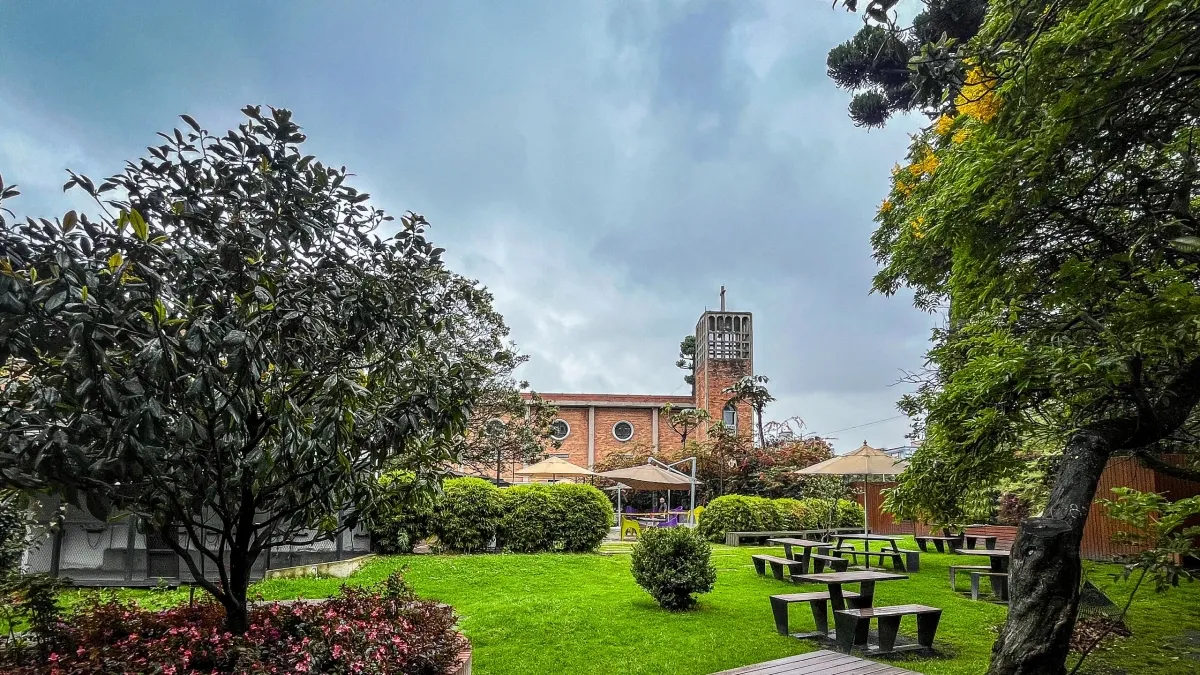
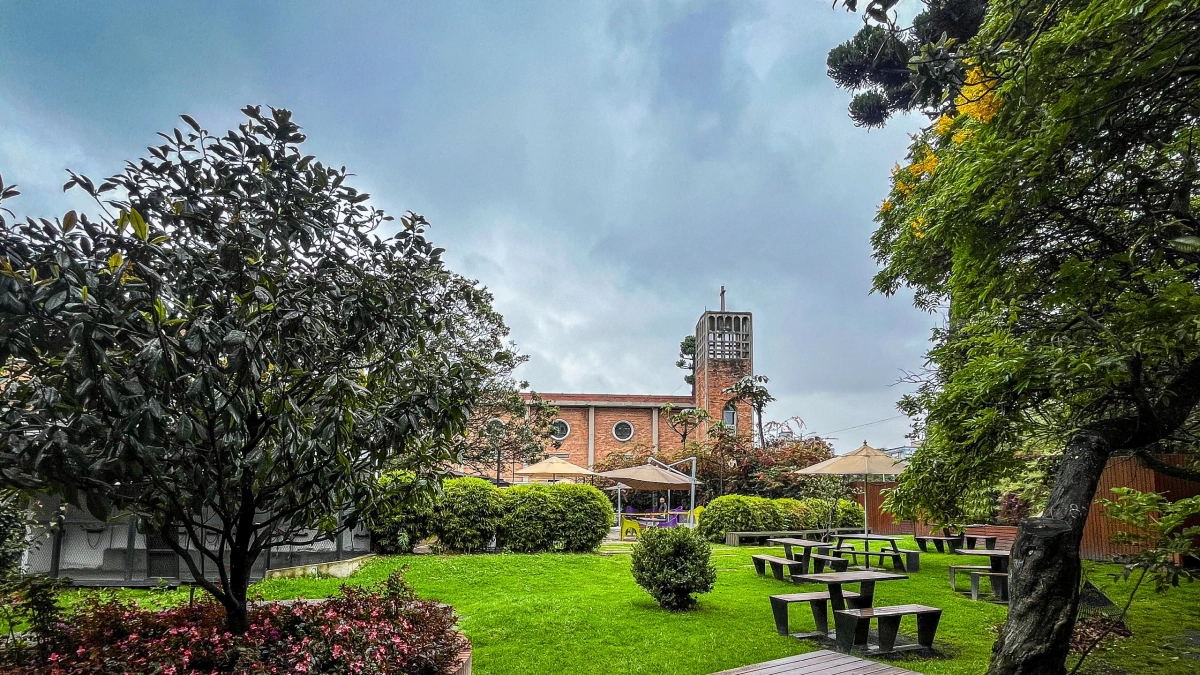
- Green Infrastructure: The campus environment integrates more than 200,000 square meters of designated green spaces, balancing dense urban learning hubs with rich biodiversity corridors that absorb carbon and improve microclimates.
These data points illustrate a broader trend within the 2026 results: top-tier universities are no longer reducing emissions merely as an auxiliary PR exercise. Instead, sustainability is deeply embedded into facilities management, supply chain procurement, and architectural design.
Official Responses: Voices from the Forefront of Eco-Academia
The transition from traditional campus administration to holistic ecological management requires visionary leadership. Academic authorities across Latin America have emphasized that these international rankings serve as validation of a deeply rooted cultural transformation within their institutions.

Reflecting on the consistent climb and the 2026 achievements of his institution, Benjamín Quesada, Dean of the School of Sciences and Engineering at the Universidad del Rosario, offered a candid perspective on what these accolades truly represent:
"We are working in our university just as we teach in our classrooms. We have numerous programs with strong environmental components, but we also translate this philosophy directly into physical infrastructure, governance, and rigorous scientific research. This recognition is entirely objective because it is built upon concrete, verifiable facts and measurable actions."
Dean Quesada’s remarks underscore a fundamental ethos shared by top-performing universities in the 2026 index: the alignment between curriculum and campus operations. When students walk across a campus that utilizes renewable energy, segregates waste meticulously, and protects local flora and fauna, the campus itself becomes an active pedagogical tool. Education extends far beyond lecture halls; the physical university serves as an immersive, living laboratory for sustainability.

Implications: What the 2026 Rankings Mean for the Future of Higher Education
The release of the UI GreenMetric World University Rankings 2026 carries profound implications for the global academic community, local governments, and future generations of students.
1. Redefining Academic Prestige
Historically, global university rankings have been dominated by metrics focused exclusively on research citations, endowment sizes, and Nobel laureates. While these remain important, the UI GreenMetric introduces a vital counter-balance: institutional ethics and planetary responsibility. Prospective students are increasingly voting with their feet, actively seeking out institutions that demonstrate authentic commitments to fighting climate change. In 2026, a university’s green credentials are just as crucial to its brand and prestige as its academic selectivity.
2. Catalyst for Public-Private Synergy
Universities do not exist in a vacuum. As urban centers grapple with mounting waste, water scarcity, and traffic congestion, high-performing green campuses often serve as pilot zones for municipal innovation. The strategies implemented by top universities—such as advanced bike-sharing integration, solar micro-grids, and zero-waste dining halls—can be scaled up and adopted by city planners to transform entire metropolitan regions.

3. Fostering Eco-Literacy Across Disciplines
A critical implication of the 2026 ranking criteria is the demand for multidisciplinary integration. Sustainability is no longer sequestered within environmental science or engineering departments. Business schools are now teaching circular economy finance; law schools are focusing on climate litigation; and humanities departments are exploring environmental ethics. The UI GreenMetric framework rewards institutions that weave sustainability across all faculties, ensuring that every graduate—regardless of their major—enters the workforce equipped with a foundational understanding of ecological limits and sustainable problem-solving.
4. A Call to Action for Emerging Economies
The strong showing of Colombian universities within the top 100 global spots demonstrates that developing nations can punch above their weight class in environmental governance. Despite resource constraints, strategic investments in green infrastructure, water conservation, and community engagement yield immense global recognition. This serves as an inspiring blueprint for universities across Latin America, Africa, and Asia, proving that systemic ecological transformation is achievable through clear vision, data-driven management, and persistent dedication.
As the UI GreenMetric looks toward the remainder of the decade, the 2026 results stand as a testament to what is possible when higher education aligns its intellectual capital with the preservation of the planet. Campuses are no longer just places where the future is discussed; through rigorous action, they are actively building it.