By Edwin Caicedo | Environmental and Health Journalist
Updated September 24, 2026
Main Facts
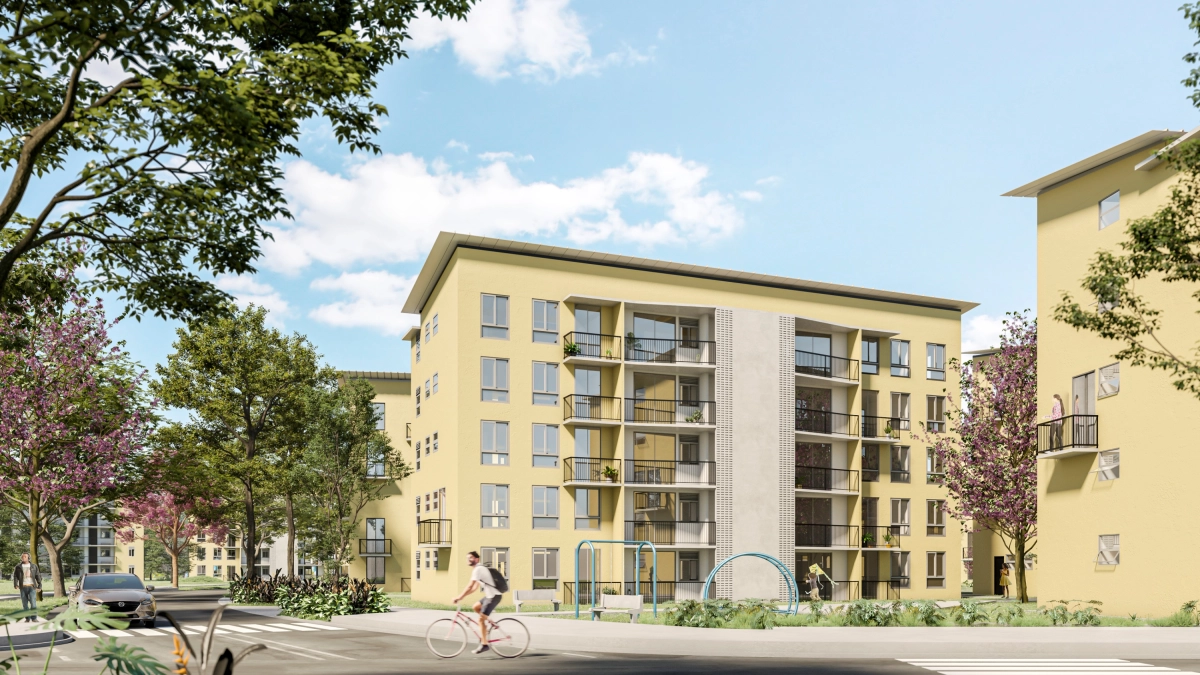
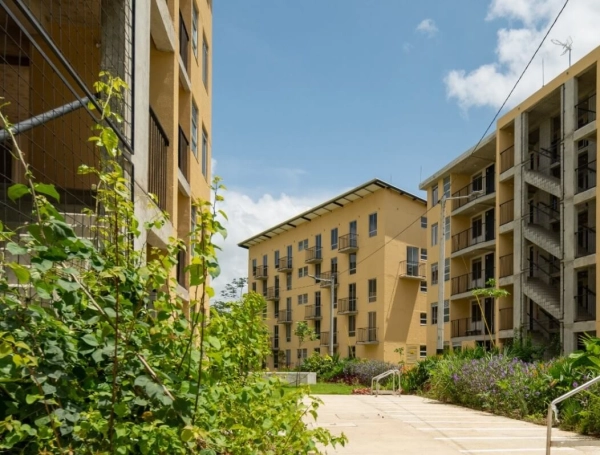
In the heart of the Urabá region in Colombia, the municipality of Apartadó has been chosen as the testing ground for a revolutionary urban and architectural prototype. Far from the conventional model of stacking concrete boxes that trap heat, the new housing development known as Jazmines 2 is redefining what sustainable social housing looks like in Latin America.
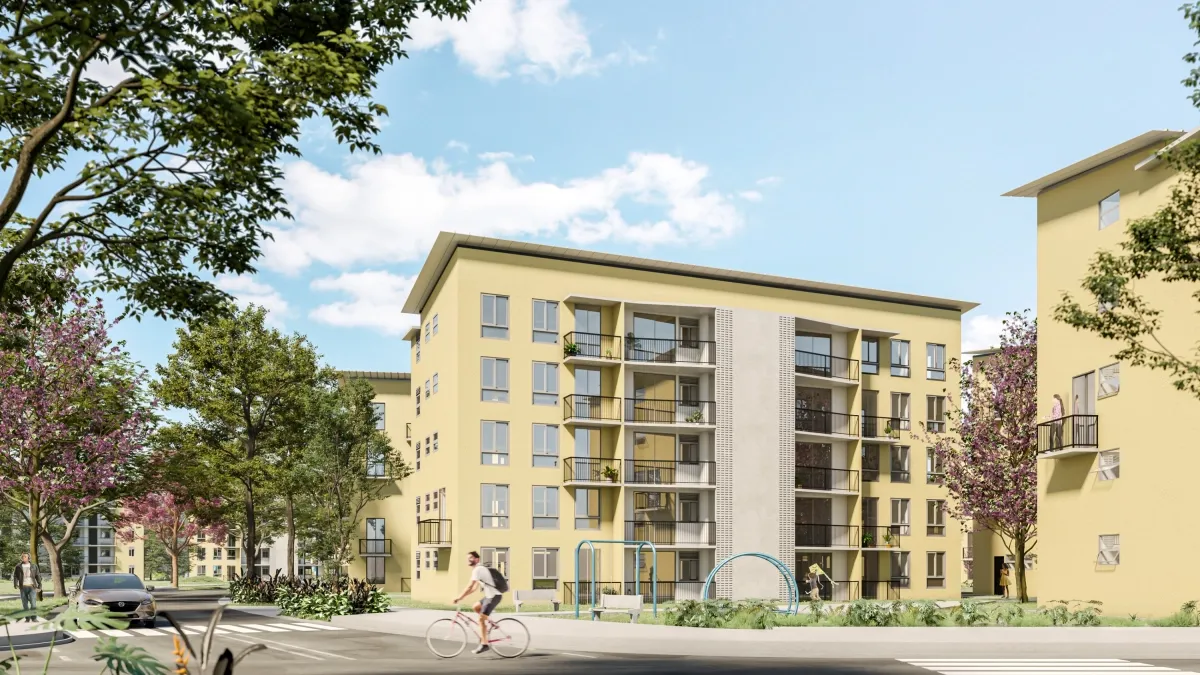
Consisting of 200 social interest housing units developed by the compensation fund Comfama, the project serves as the primary Colombian pilot for Minergie Barrio—a Swiss-origin sustainable neighborhood standard adapted for the Latin American climate under the umbrella of the CEELA Project (Building Energy Efficiency Capacities in Latin America).
Rather than focusing merely on individual building energy ratings, the CEELA initiative and the Minergie Barrio framework look at the entire ecosystem of a community: the interplay between architecture, microclimate, natural ventilation, shading, mobility, efficient water management, and community cohesion.

"The project is like a garden with housing, and not housing with a garden," says Ana Veliz, lead architect at Comfama. This philosophical shift highlights a growing consensus among urban planners across the region: as climate change accelerates and extreme weather events intensify, Latin American cities can no longer afford to rely on energy-intensive mechanical cooling systems to make homes habitable. Instead, the building design itself must work in harmony with nature.
Chronology: The Evolution of a Sustainable Vision
The journey toward realizing Jazmines 2 and implementing the CEELA-Minergie model in Colombia is part of a deliberate, multi-year progression toward climate resilience in the built environment:

- 2013: Comfama acquires the land in Apartadó, laying the conceptual groundwork for a master plan intended to eventually scale up to approximately 1,300 housing units designed to uplift the local community.
- The CEELA Rollout (Ongoing): Promoted by the Swiss Agency for Development and Cooperation (SDCO/Cosude), the CEELA Project initiates operations across Colombia, Ecuador, Mexico, and Peru. Its mission is to embed energy efficiency and adaptive comfort into regional construction practices, targeting warm climate zones where thermal comfort is critically difficult to achieve.
- Adoption of Minergie Barrio: The Swiss standard Minergie Barrio is rigorously adapted for Latin American conditions. Unlike certifications that analyze a single tower or house, this standard evaluates 19 specific requirements grouped across five categories, including greenhouse gas emissions, climate change adaptation, mobility, neighborhood comfort, and management.
- September 10, 2026: The IDEAM (Institute of Hydrology, Meteorology and Environmental Studies) releases critical climate projections warning of a severe El Niño phenomenon with a greater than 90 percent probability of reaching high intensity during late 2026 and early 2027, heightening the urgency for climate-adaptive architecture.
- Current Phase (September 2026): Jazmines 2 incorporates the final design phases of the CEELA and Minergie Barrio methodologies.
- Early 2027 (Projected): The first blocks of the 200 sustainable social housing units in Apartadó are scheduled for official delivery to families, marking a monumental milestone for scalable, climate-resilient social housing in Colombia.
Supporting Data and Technical Frameworks
The transition toward climate-adaptive housing is backed by robust international cooperation and scientific data regarding changing weather patterns in the region.
The Climate Pressure: El Niño and Rising Temperatures
The urgency of projects like Jazmines 2 is heavily underscored by meteorological forecasts. According to IDEAM’s September 2026 reports, the ongoing El Niño phenomenon carries a 75 percent probability of ranking among the most intense episodes recorded over the last 76 years.
While El Niño does not automatically mean a complete cessation of rainfall nationwide, it severely disrupts precipitation patterns, increases water stress, and triggers persistent above-average temperatures across several regions. In tropical and warm zones like Apartadó, these high temperatures pose a direct threat to public health and living standards. Traditionally, the default response to soaring indoor temperatures has been mechanical air conditioning—a solution that drives up household electricity bills, strains municipal power grids, and accelerates carbon emissions.
The CEELA and Minergie Barrio Criteria
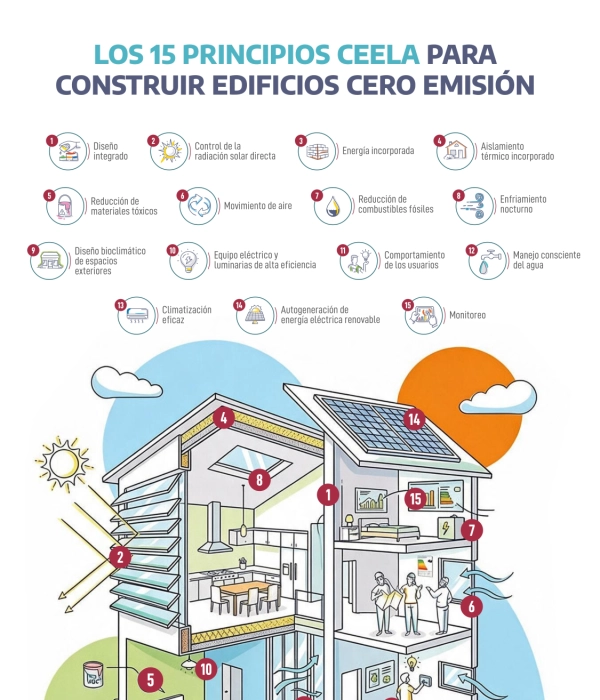
To break this cycle, the CEELA project leverages 15 core principles of energy efficiency and adaptive comfort. When applied through the Minergie Barrio standard, these principles are organized into 19 explicit requirements across five operational categories:
- Greenhouse Gas Management: Minimizing carbon footprints throughout the lifecycle of the materials and operations.
- Climate Change Adaptation: Designing structures that buffer extreme heat, heavy downpours, and shifting humidity.
- Sustainable Mobility: Prioritizing pedestrian pathways, cycling lanes, and non-motorized transport over vehicle-dominated infrastructure.
- Neighborhood Comfort: Maximizing public green spaces, community cohesion, and human well-being.
- Efficient Resource Management: Implementing advanced strategies for stormwater infiltration, waste reduction, and energy conservation.
In practical terms, these guidelines translate into passive architectural strategies. These include the strategic use of reflective paints on roofs and terraces, high-performance thermal insulation on upper-floor ceilings to block trapped heat, optimized building orientation to catch prevailing breezes, and deep window reveals or structural shading devices that keep direct sunlight off glass surfaces.
Official Responses and Expert Insights
The shift from isolated green buildings to holistic, neighborhood-wide ecological design requires a departure from traditional real estate development models. Key figures leading the initiative have shared critical perspectives on why this shift is vital for Latin America’s urban future:

-
Ana Veliz, Lead Architect at Comfama:
Emphasizing the philosophy of the Apartadó pilot, Veliz notes: "What is important and what is novel is that it looks at the neighborhood, it doesn’t just look at the building." She stresses that building a housing complex is vastly different from simply solving a shelter deficit. "The project is like a garden with housing, and not housing with a garden. The community, the neighborhood, is what takes care of the neighborhood." -
Stefanie Steiner, International Project Manager for Minergie:
Highlighting the regional adaptation of the Swiss standard, Steiner points out that scaling down European efficiency frameworks to fit tropical and warm Latin American microclimates requires focusing heavily on outdoor thermal comfort, shading, and natural ventilation systems rather than heavy winter insulation.
-
Antonio Espinoza, Leader of Model Buildings for the CEELA Project:
Espinoza emphasizes that sustainable design does not inherently require expensive, high-tech gadgets. The process begins during the initial integrated design phase, bringing together architects, budget planners, and engineers to evaluate the site’s natural assets. "Orientation, protection against the sun, ventilation, materials, and thermal insulation form part of the same conversation," Espinoza explains. By making the architecture work for the inhabitants, reliance on artificial energy systems plummets.
Architectural Innovation at Jazmines 2: Anatomy of a Climate-Adaptive Barrio
The 200-unit Jazmines 2 development in Apartadó stands as a masterclass in tropical passive design. Because the Urabá region experiences high ambient temperatures year-round, every square meter of the project has been engineered to counteract thermal stress without mechanical intervention.

Cross-Ventilation and "Aerial Streets"
Traditional multi-family housing blocks often feature dark, enclosed central corridors that trap stale, hot air. Jazmines 2 breaks this mold by introducing an innovative "aerial street" layout. Apartments are oriented to a single side of the circulation path, ensuring that every single housing unit features dual facades.
One facade opens toward the elevated pedestrian walkway, while the opposite facade opens directly toward private or communal green spaces. This layout allows prevailing breezes to sweep continuously through the living quarters via cross-ventilation, naturally purging warm indoor air and supplying fresh oxygen.

Vegetation as Infrastructure
Rather than treating landscaping as an afterthought—mere patches of grass rolled out after heavy machinery has stripped the soil—Jazmines 2 integrates vegetation as an active structural element.
- Low-lying garden beds are planted strategically to encourage rainwater infiltration, replenishing local aquifers and mitigating urban heat-island effects.
- Native shade trees are integrated throughout the pedestrian corridors. As these trees mature, they will cast deep canopies over pathways and building facades, shielding exterior walls from direct solar radiation.
- Non-motorized transit networks prioritize walking and bicycling, reducing vehicular asphalt heat absorption within the community.
Implications and the Path Forward
The successful deployment of the Minergie Barrio standard in Apartadó has profound implications for the future of urban policy and real estate development across Colombia and the broader Andean region.

Scaling Beyond the Pilot
Jazmines 2 is designed to be more than just a successful residential complex; it is an incubator for regulatory change. A core objective of the CEELA project is to translate lessons learned from these pilot initiatives directly into municipal and national building codes.
A prime regional precedent is already visible in Cali, where local authorities, with CEELA’s backing, established the "Sello Cali Sostenible" (Cali Sustainable Seal). This municipal recognition program rewards residential, commercial, and urban projects that incorporate energy efficiency, water stewardship, sustainable materials, and biodiversity protection. To date, 12 projects have achieved this distinction, proving that sustainable regulations can take root in Colombian cities.

Redefining Social Interest Housing
Historically, social interest housing (VIS in Colombia) has faced criticism for prioritizing quantity over quality, often resulting in monotonous, heat-trapping concrete complexes built far from urban centers with minimal regard for environmental comfort. Jazmines 2 shatters this paradigm by demonstrating that high environmental standards, natural thermal comfort, and lush community spaces can be successfully integrated into affordable housing projects.
As climate change accelerates and warm regions face increasingly punishing temperature spikes, the central question raised by the Apartadó experiment echoes far beyond Urabá: How should Colombian neighborhoods be designed if the climate they were built for no longer exists?

By proving that a housing project can function as a living garden rather than an energy-guzzling enclosure, Jazmines 2 offers a compelling, scalable answer for the future of Latin American cities.