By: Vida de Hoy Redaction Desk
Published: October 26, 2026
Main Facts
For generations, official scientific literature and ecological documents portrayed Colombia as a sanctuary housing between 500 and 600 species of bees. However, a sweeping, five-year scientific audit published in the peer-reviewed journal PeerJ has shattered these baseline estimates. The comprehensive inventory officially confirms the presence of 738 distinct bee species across the nation—a staggering upward revision of more than 20% compared to historical counts.
Spearheaded by an international collaborative network of 46 researchers from Colombia, the United States, Brazil, and Mexico, this milestone achievement represents the first rigorous, museum-backed checklist of bees for any country in the Western Hemisphere. Led by Dr. Margarita López Uribe, a Colombian professor at Pennsylvania State University, alongside doctoral student Rubén Darío Martín Rojas and Instituto Humboldt curator Jhon César Neita, the exhaustive review examined more than 62,000 specimens across 18 regional and national entomological collections between 2019 and 2025.
Rather than pointing to a sudden evolutionary surge or the spontaneous appearance of new insects, scientists emphasize that the dramatic jump stems from meticulous scrutiny. Out of roughly 88,000 initial historical records, researchers distilled a highly vetted database of 69,439 verified entries after purging duplicates, spatial errors, and unverified accounts. The resulting inventory identified 246 species never before recorded in Colombia, while simultaneously striking 109 species off past checklists due to a complete absence of physical or documentary proof.
Crucially, the study highlights that 140 of the identified species are endemic, meaning they exist nowhere else on Earth, accounting for roughly 19% of the country’s total verified bee fauna. Moreover, statistical modeling suggests that Colombia’s true bee wealth may stretch to 1,035 species, indicating that more than a quarter of the nation’s native pollinators remain entirely undescribed or unrecorded by science. With this baseline established, Colombia now secures the fourth position in South America for documented bee diversity, trailing only Brazil (1,985 species), Argentina (1,183 species), and Peru (779 species), while outranking Bolivia, Ecuador, Chile, and Paraguay.
Chronology
The monumental undertaking to accurately map Colombia’s bee population was not born overnight. It represents the culmination of half a decade of intense, methodical detective work across archives, rainforests, and high-altitude Andean ecosystems.

- 2019: The collaborative research initiative officially commences. Recognizing that historical biodiversity records were fragmented, scattered, and often plagued by misidentifications, an interdisciplinary team sets out to build a centralized, verifiable database. The coalition includes researchers from institutions such as the Alexander von Humboldt Biological Resources Research Institute, the National University of Colombia, the SINCHI Amazonian Institute of Scientific Research, and Agrosavia.
- 2019 – 2025: Over a six-year window, the research team travels across the country to physically inspect 18 institutional and regional entomological collections. They review over 62,000 individual specimens, cross-referencing physical insect bodies with 77 scientific publications and public databases. Regional collections prove to be an invaluable anchor, ultimately contributing 64% of the verifiable data.
- October 1, 2026: The exhaustive study is officially published in the scientific journal PeerJ. It introduces the first-ever consolidated checklist for Colombia where every single species entry is backed by preserved physical specimens housed in scientific museums, establishing a gold standard for future tropical biodiversity research.
- October 26, 2026: The findings are publicly disseminated, shedding light on the alarming gaps in national environmental monitoring and launching a renewed conversation regarding the conservation needs of Neotropical pollinators.
Supporting Data
The depth of the PeerJ study goes far beyond a single national total, offering a granular breakdown of geographical distributions, ecological habits, and methodological metrics that reshape our understanding of tropical entomology.
Geographic Distribution and Biases
The research revealed stark disparities in how bee populations are documented across Colombia’s varied landscapes. Unsurprisingly, collection efforts heavily mirror the locations of major academic centers and metropolitan hubs:
- Antioquia and Cundinamarca alone account for 41% of all historical records.
- Antioquia leads all departments with 269 registered species, followed by Meta (220 species), Cundinamarca (207 species), and Valle del Cauca (200 species).
- At the regional level, the Andean region dominates with 483 known species, followed by the Orinoquía (280), the Amazon (265), the Caribbean (222), and the Pacific (169).
- Conversely, departments like La Guajira and Arauca report fewer than 35 species each. Researchers caution that this low number does not reflect true biological scarcity; rather, it highlights a severe lack of field sampling in arid and remote zones, which likely harbor rich, undocumented bee communities.
Evolutionary and Behavioral Divergence
When compared to temperate zones in North America and Europe, Colombian bees exhibit fascinating ecological adaptations driven by tropical climates:
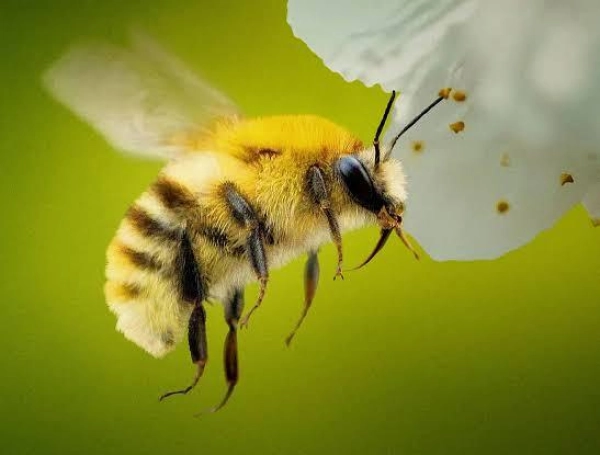
- Social Structure: Approximately 25% of Colombian bee species possess social habits, living in complex, organized colonies. In stark contrast, social species account for only 4% of the bee fauna in the United States and 5% in Europe.
- Nesting Habits: While roughly 70% of North American bees nest underground, 57% of Colombian species build their nests above ground—on soil surfaces, inside rotting tree trunks, along branches, or within natural cavities. Scientists attribute this behavioral shift to tropical humidity, which accelerates food decomposition for larvae underground, alongside intense predation pressures from tropical ants.
- Continental Milestones: Among the standout taxonomic discoveries is the documentation of Osmia azteca in Antioquia, marking the first time a native bee from this genus has ever been officially recorded in South America.
Official Responses and Expert Perspectives
The academic and institutional community has universally praised the study as a long-overdue correction, while simultaneously sounding the alarm over the threats facing these vital insects.
Jhon César Neita, curator of Entomology and Invertebrates at the Humboldt Institute and a co-author of the study, emphasized that the shift in numbers is a victory of rigorous science over historical guesswork. "The leap is not due to new bees suddenly appearing, but rather to the unprecedented level of detail with which this investigation was carried out," Neita explained. He noted that out of nearly 88,000 initial raw data points, the team rigorously filtered out errors to arrive at a definitive core.
Neita also pointed out the urgent need to expand exploration into neglected regions like the Chocó and various National Natural Parks. Furthermore, he drew attention to the socio-ecological synergy observed in rural communities—such as those in Putumayo—where locals actively manage and harvest resources from at least 35 native bee species. These sustainable practices not only inject financial resources into local economies but also foster a deeper cultural stewardship of the land.
Lead author Dr. Margarita López Uribe and student researcher Rubén Darío Martín Rojas underscored that the inventory serves as an indispensable blueprint. Without knowing precisely which species exist, their geographic limits, and their population health, designing effective public policies or conservation corridors remains an impossible guessing game.
Implications
While the publication of 738 species is a triumph for taxonomy, the study’s underlying warnings carry profound implications for agriculture, ecosystem stability, and national environmental policy.
The True Value of Pollination
When the general public pictures bees, attention almost universally drifts to the European honeybee (Apis mellifera), an introduced species valued primarily for commercial honey production. However, native Colombian bees perform silent, irreplaceable ecological labor:

- Global and national studies indicate that approximately 90% of wild flowering plants rely heavily on bee pollination to reproduce.
- Roughly one-third of global agricultural crops depend directly on bees to set fruit and yield marketable harvests.
- On a planetary scale, the annual economic value of this vital ecosystem service is calculated at a staggering $235 billion USD.
Conservation Deficits and Emerging Threats
Despite their ecological and economic centrality, native bees in Colombia face severe, unmonitored threats. The study reveals that only 12 species of Colombian bees currently hold any official threat category, and even these classifications are based primarily on perceived rarity rather than empirical population tracking.
"In our country, there are no long-term bee monitoring programs," Neita warned. "Without them, it is impossible to know which species are silently disappearing."
Compounding the lack of monitoring is the alarming proliferation of commercial bumblebees imported from other continents to pollinate industrial greenhouse crops. In neighboring South American countries, the introduction of these non-native commercial species has been definitively linked to the rapid, localized extinction of native pollinators through competition and disease transmission.

Ultimately, the PeerJ inventory transforms from a mere academic catalog into an urgent call to action. By establishing a modern, verified baseline, Colombian scientists have given the nation a fighting chance to understand, value, and protect its invisible workforce before it is too late.