Maintaining a clean, inviting, and fresh-smelling home is a universal priority for households worldwide. However, despite rigorous cleaning routines, everyday life inevitably introduces lingering challenges to indoor air quality. Whether it is the aromatic aftermath of an ambitious culinary experiment, the stagnant air resulting from prolonged periods with windows sealed against inclement weather, or the subtle, pervasive mustiness that accompanies high humidity, homes frequently accumulate stubborn odors.
For decades, the standard consumer response to these olfactory nuisances has involved turning to commercial air fresheners, aerosol sprays, and plug-in synthetic diffusers. While these products promise instant relief, an increasing body of consumer awareness highlights their potential drawbacks—ranging from volatile organic compounds (VOCs) that can irritate sensitive respiratory tracts to artificial fragrances that merely mask foul odors rather than neutralizing them at the molecular level.
In response to these concerns, a growing movement toward sustainable, non-toxic home maintenance has brought traditional, botanical solutions back into the spotlight. Among the most effective, economical, and aromatic remedies gaining popularity is a remarkably simple homemade infusion utilizing two common kitchen staples: fresh rosemary and whole cloves. By harnessing the natural power of plant-based essential oils through a gentle boiling process, homeowners can effectively purify their indoor air without introducing a single harsh chemical into their living spaces.
Main Facts: The Science and Simplicity of Botanical Neutralization
At the core of this natural method is the synergistic relationship between the volatile compounds found in rosemary (Salvia rosmarinus) and cloves (Syzygium aromaticum). Far from acting as a heavy perfume, this botanical pairing targets and breaks down unpleasant ambient odors while imbuing the atmosphere with clean, herbaceous notes.

The Power of Rosemary and Cloves
- Rosmarinus officinalis (Rosemary): Renowned in both culinary and herbal traditions, rosemary contains potent aromatic compounds, notably cineole, camphor, and alpha-pinene. When exposed to heat, these compounds are released as vapors that possess natural antimicrobial and deodorizing properties, helping to cleanse the air and impart an invigorating, forest-like freshness.
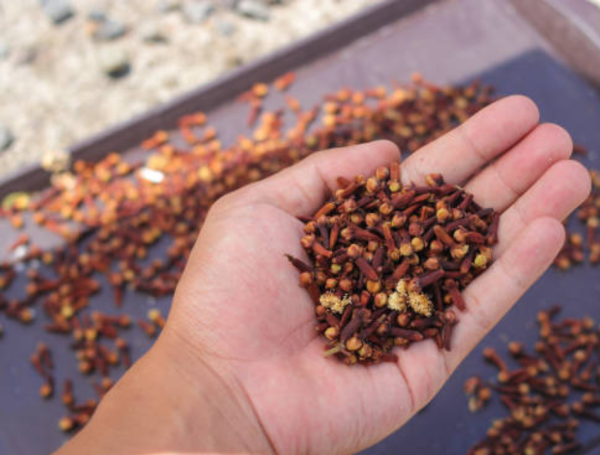
- Syzygium aromaticum (Cloves): The distinctive, warm aroma of cloves stems primarily from eugenol, a powerful natural essential oil with strong antiseptic and odor-neutralizing capabilities. Eugenol is exceptionally effective at binding to and neutralizing sulfur compounds and organic molecules responsible for stubborn household smells, such as cooking grease and dampness.
Why Avoid Synthetic Alternatives?
Traditional air fresheners frequently rely on chemical propellants, phthalates, and synthetic musks to disperse fragrances. According to indoor air quality specialists, these chemical agents can exacerbate asthma, trigger allergic reactions, and contribute to indoor air pollution. In contrast, a water-based botanical infusion releases pure plant essences, ensuring a hypoallergenic approach that is safe for children, pets, and individuals with chemical sensitivities.
Chronology: The Evolution of Natural Home Deodorizing
While the viral popularity of botanical room sprays is a modern social media trend, the practice of using aromatic plants to purify indoor environments spans centuries across diverse cultures.

Historical Roots and Early Practices
- Ancient Civilizations and Antiquity: Long before the invention of synthetic aerosols, ancient Egyptians, Greeks, and Romans burned aromatic herbs, resins, and spices such as rosemary, frankincense, and cloves in domestic and sacred spaces. They understood intuitively that certain plants could "purify" the air, a practice often intertwined with hygiene and spiritual cleansing.
- The Medieval Era: During periods of plague and poor sanitation, Europeans relied heavily on aromatic pomanders—oranges or lemons studded with dried cloves—and burning herbs to ward off foul odors and what they believed were disease-bearing miasmas. Rosemary branches were frequently strewn across floors or hung in doorways to freshen sickrooms.
- The 20th Century Shift to Synthetics: The mid-20th century marked a massive pivot toward industrial manufacturing, introducing mass-market aerosol sprays and petroleum-based air fresheners. Convenience overshadowed traditional methods, leading generations to rely on synthetic chemicals for quick freshness.
- The Contemporary Revival (2020s–Present): In recent years, a heightened focus on wellness, sustainability, and chemical-free living has sparked a renaissance of interest in ancestral home-care hacks. Digital platforms have amplified these time-tested recipes, allowing millions of households to rediscover the economic and health benefits of boiling natural botanicals.
Supporting Data: The Practical Guide to Crafting the Infusion
Transitioning from chemical sprays to a botanical infusion requires minimal time, effort, and financial investment. Below is the step-by-step protocol for preparing and utilizing this natural air-renewal treatment in any residential space.
Ingredients and Equipment
- Fresh Rosemary: 3 to 4 sprigs (fresh provides superior essential oil yield compared to dried).
- Whole Cloves: 1 to 2 tablespoons of whole cloves.
- Water: Approximately 2 to 3 cups.
- Standard Cooking Pot: Stainless steel or enamel.
- Spray Bottle: For secondary application (optional).
Step-by-Step Preparation Process
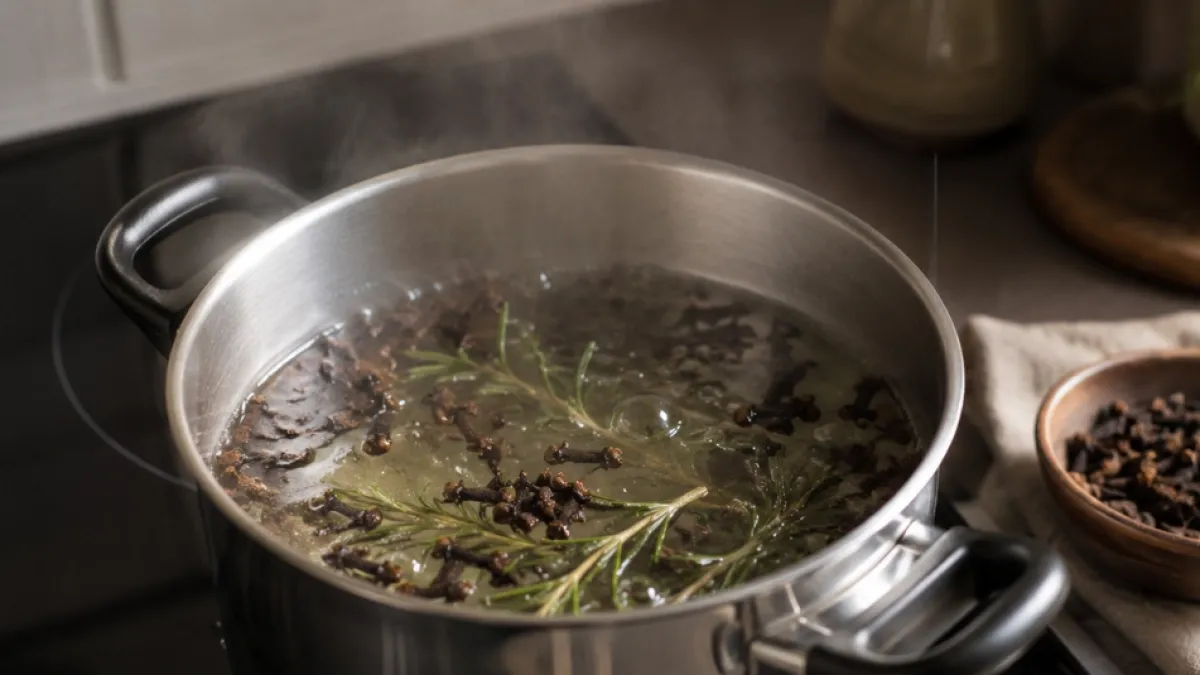
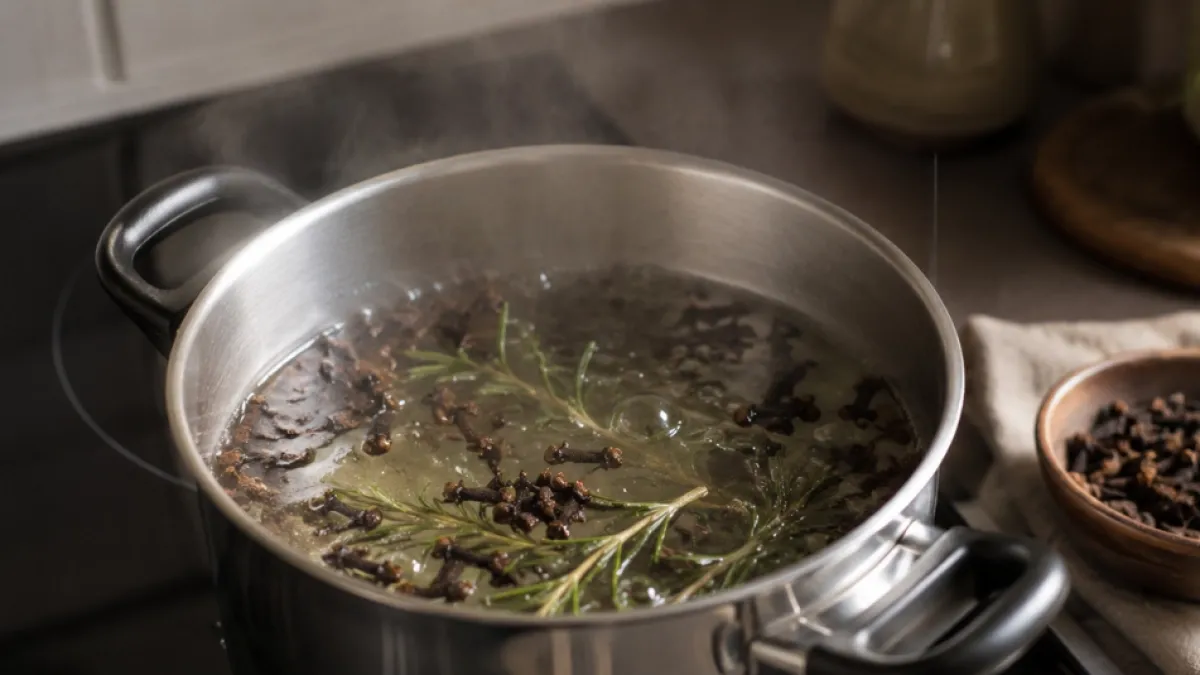
- Water Activation: Pour the water into the pot and place it on the stove, bringing it to a rolling boil.
- Botanical Infusion: Once boiling, reduce the heat slightly and add the fresh rosemary sprigs and whole cloves directly into the water.
- Simmering Phase: Lower the heat to a gentle simmer. Allow the mixture to cook uncovered for approximately 25 to 30 minutes. This sustained, low-heat process ensures that the cellular walls of the plant material break down, releasing their concentrated essential oils into the rising steam.
- Vapor Dispersion: Turn off the heat source. Allow the fragrant steam to circulate naturally through the kitchen and drift into adjacent corridors and living areas, actively neutralizing trapped odors.
- Repurposing as a Room Spray: Once the liquid has completely cooled to room temperature, pass it through a fine-mesh strainer or cheesecloth to remove plant debris. Pour the clear, aromatic liquid into a clean spray bottle. This homemade room spray can be misted over fabrics, carpets, or directly into the air whenever an immediate refresh is needed.
Official Responses and Expert Perspectives: What Do Cleanliness and Health Specialists Say?
The shift toward natural cleaning solutions has caught the attention of environmental health advocates, indoor air quality researchers, and professional organizers.
The Environmental Health Perspective
Dr. Elena Vance, a specialist in indoor environmental health, notes that modern homes are often built to be highly energy-efficient, meaning they trap indoor pollutants efficiently. "When people spray chemical air fresheners in sealed rooms, they are effectively adding VOCs to a closed container," Dr. Vance explains. "Boiling natural botanicals like rosemary and cloves releases water-soluble aromatic compounds that do not leave harmful chemical residues on household surfaces or in human airways."
Culinary and Botanical Insights
Master herbalists emphasize that the integrity of the ingredients matters significantly. Choosing fresh, organic rosemary ensures that no residual agricultural pesticides are aerosolized during the boiling process. Furthermore, whole cloves retain their natural oils far longer than pre-ground powders, making them the superior choice for both culinary and domestic applications.

Professional Organization Trends
Professional home economists and decluttering experts frequently recommend simmer pots—often referred to in the lifestyle sector as "stovetop potpourri"—as a cost-effective staging tool. Beyond removing odors, the psychological impact of natural, earthy aromas creates an immediate sense of warmth, cleanliness, and tranquility for residents and visitors alike.
Implications: Economic, Ecological, and Lifestyle Impacts
The widespread adoption of simple, plant-based cleaning alternatives carries profound implications that extend far beyond a pleasant-smelling living room.

Economic Benefits
In an era marked by rising consumer costs, commercial household cleaning products represent a continuous, recurring expense. Purchasing specialized air fresheners, continuous plug-in refills, and single-use aerosol cans adds up significantly over the course of a year. By contrast, a bunch of fresh rosemary and a small bag of bulk cloves cost a fraction of a single commercial product and can yield multiple batches of air-refreshing solutions.
Ecological and Zero-Waste Impact
The ecological footprint of traditional air fresheners is considerable. Aerosol cans require metal extraction, pressurized propellants, and complicated recycling protocols, while plastic plug-ins contribute directly to landfill waste. Utilizing fresh herbs and spices generates virtually zero non-compostable waste. Once the rosemary and cloves have served their purpose on the stove, the organic remnants can be safely discarded in a home compost bin or buried in garden soil.

Enhanced Indoor Wellness
Ultimately, the transition to natural air care encourages a more mindful approach to domestic life. By eliminating synthetic irritants from the home environment, families can breathe easier, reduce their chemical load, and enjoy a healthier living space. The ritual of simmering a botanical infusion turns a mundane chore into a sensory experience, reconnecting modern households with time-honored traditions of natural wellness.