By Edwin Caicedo, Environmental and Health Correspondent
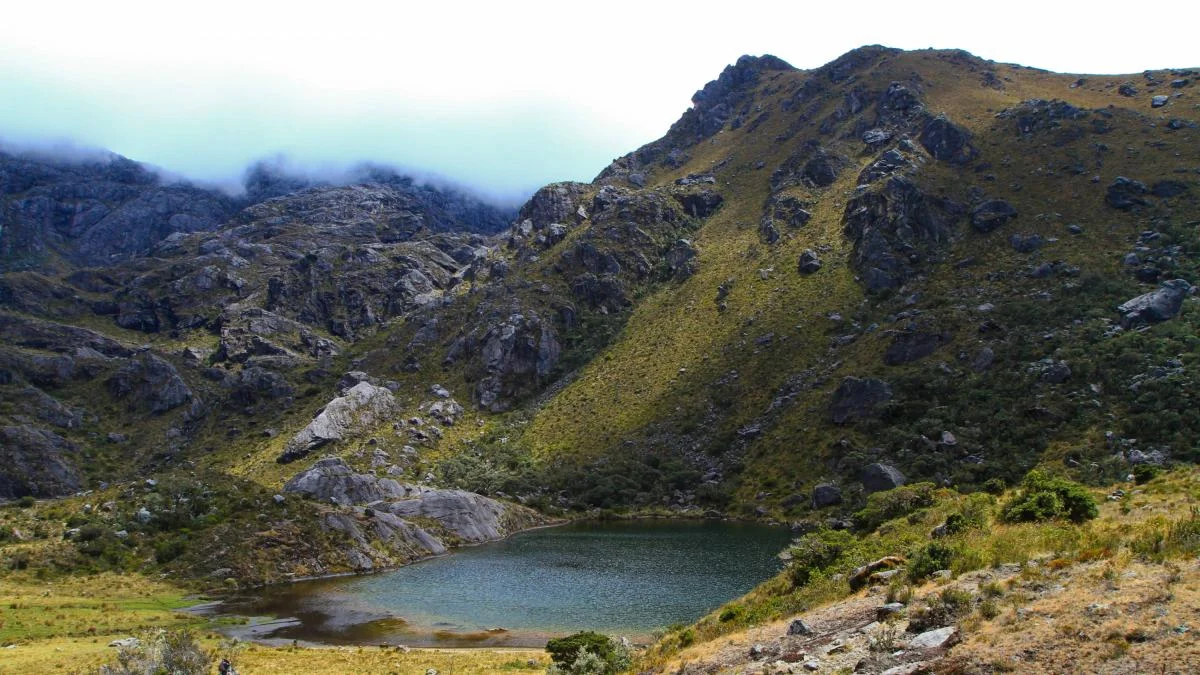
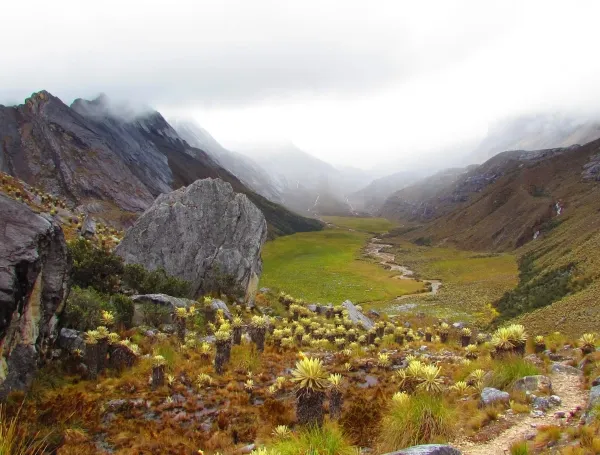
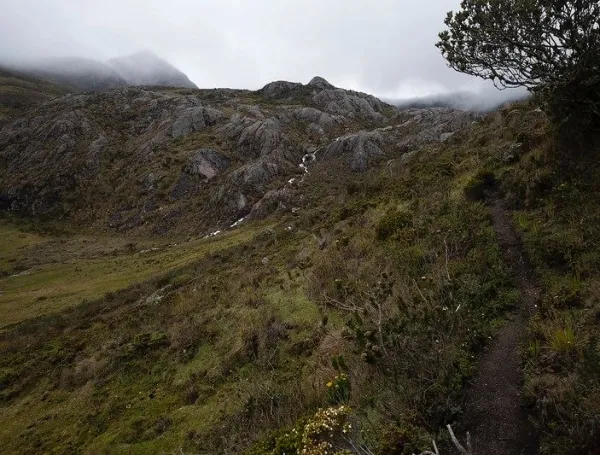
The future of the Santurbán Páramo—a high-altitude moorland ecosystem essential for the water security of millions of Colombians—has been plunged into a state of profound legal and administrative flux. In a lightning-fast sequence of events spanning just 48 hours, the administration of President De La Espriella dismantled two key regulatory pillars established during the previous government of Gustavo Petro.
On September 29 and 30, 2026, the Ministry of Environment issued two resolutions that effectively revoked the extension of a temporal protection zone and struck down a partial delimitation of the páramo. While government officials argue that these moves are necessary to correct procedural errors and ensure compliance with Constitutional Court mandates, the decisions have ignited a firestorm of debate among environmentalists, local authorities, and legal scholars.
The Core Facts: A Regulatory Reset
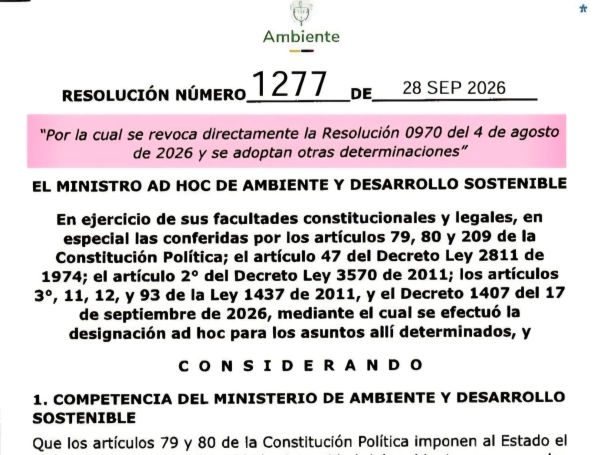
The two-day administrative pivot began with Resolution 1277, issued on September 28, 2026. This act revoked in its entirety Resolution 0970, which had been signed in August to update the geographic area, map the temporal reserve, modify the implementation schedule, and extend its validity until 2029. By annulling this extension, the Ministry reverted to the legal framework established by Resolutions 0221 and 0239 of 2025.

Barely 24 hours later, the Ministry issued Resolution 1278, which struck down Resolution 0992—an act from August that had attempted to implement a "partial delimitation" of the Jurisdicciones-Santurbán-Berlín páramo complex.
Crucially, the Ministry maintains that these revocations do not leave Santurbán unprotected. Instead, they argue that the previous administration’s "progresive delimitation" methodology failed to meet the rigorous standards of citizen participation and territorial consultation required by the Constitutional Court’s landmark Sentence T-361 of 2017. According to the Ministry, the previous process ignored the necessity of broad, effective deliberation across all 40 municipalities involved in the páramo’s influence zone.
A Chronology of Conflict
The struggle for Santurbán is a long-standing saga of competing interests—environmental conservation versus economic survival. To understand the current impasse, one must look at the timeline of the last decade:
- 2017: The Constitutional Court issues Sentence T-361, ordering the state to conduct a new, transparent, and participatory delimitation process.
- 2025: The government attempts to establish firmer boundaries through Resolutions 0221 and 0239, seeking a balance between ecological preservation and mining rights.
- August 2026: Under the final weeks of the Petro administration, the Ministry of Environment pushes through Resolution 0970 (extending the temporal reserve to 2029) and Resolution 0992 (a partial, localized delimitation).
- September 28-29, 2026: The De La Espriella government, citing procedural failures and lack of community consensus, revokes both resolutions.
This rapid-fire reversal marks a return to "square one" for one of the most sensitive ecological issues in Colombia.
The Legal Tightrope: Can the Government Sustain Its Decision?
The legal foundation of the Ministry’s recent actions is already under intense scrutiny. Juan Pablo Sarmiento, a professor at the Faculty of Legal, Political, and International Studies at the University of La Sabana, suggests that the government may be on shaky ground.
"The Ministry justified the direct revocation on the grounds that Resolution 0970 was issued while a recusal was pending, claiming this constituted a ‘manifest opposition’ to the law," Sarmiento explains. However, he warns that the Council of State has traditionally interpreted "manifest opposition" as a flagrant and direct violation. Simply proceeding during a recusal period may constitute a procedural error, but it may not reach the threshold of illegality required for such a drastic administrative revocation.
Furthermore, Sarmiento raises the specter of the Principle of Non-Regression in Environmental Law. By returning to the older, more limited protections of the 2025 resolutions, the government might inadvertently reduce both the geographical scope of protection and the duration of these safeguards. "We are likely to see a wave of litigation," Sarmiento notes, "including nullity actions based on faulty motivation and popular actions aimed at defending the right to a healthy environment."
Official Responses and the "Participation" Mandate
For the Ministry of Environment, the decision is not a retreat, but a recalibration. The government argues that it is impossible to protect a complex ecosystem like Santurbán through "partial" measures that alienate the very people living within its boundaries.

The Ministry identifies three major flaws in the previous approach:
- Deficient Citizen Participation: The failure to include all 40 affected municipalities in the dialogue.
- Improper Assessment of Observations: A lack of transparency in how local community feedback was integrated (or ignored) in the final maps.
- Non-Compliance with T-361: The "progresive" methodology was deemed a violation of the spirit of the Constitutional Court’s ruling, which demands a holistic, not piecemeal, approach.
Perspectives from the Ground: The Case of Vetas
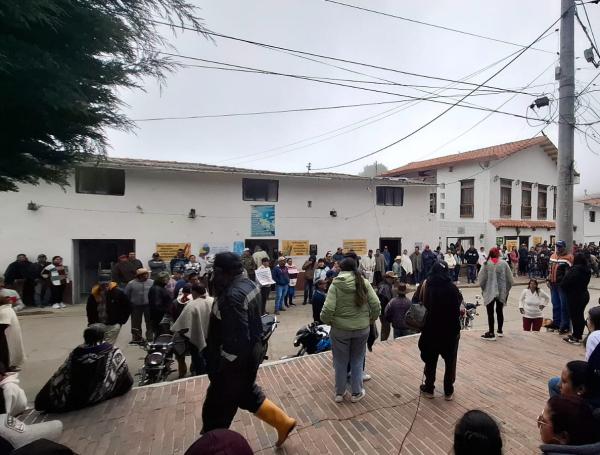
In the municipality of Vetas, local leaders view the government’s reversal as a victory for territorial sovereignty. Mayor Angélica María García argues that for years, the central government has imposed rules on the region without understanding the local reality.
"We celebrate that the government is finally recognizing that administrative acts must be birthed through participation," García states. For Vetas, the stakes are existential. The municipality hosts four legal small-scale mining titles and eleven others currently suspended, often amidst informal mining operations. None of these, according to the mayor, lie within the core páramo or the Regional Natural Park, yet they remain trapped in a state of legal limbo.
"Our mining tradition spans 470 years," García adds. "You cannot simply dictate a transition to agriculture overnight in a high-mountain climate where such crops are not viable. We need legal security to formalize the miners and a long-term plan for economic coexistence."

The Environmentalist Outcry
Conversely, the Comité Santurbán, a prominent environmental advocacy group, sees the revocations as a deliberate weakening of environmental safeguards. They argue that the timing is suspicious, particularly as international mining interests like Aris Mining prepare to seek new environmental licenses next year.
The Committee has set a November 13 deadline for the government to initiate a public consultation on the natural reserve. They have warned of nationwide mobilizations if the state continues to strip away protections. Their message is clear: while the government talks about "procedural errors," they see a pattern of prioritizing economic interests over the water supply of 2.5 million people.
Implications: A Future in Suspension
The current situation leaves the country in a state of high uncertainty. By revoking the recent resolutions, the De La Espriella administration has effectively cleared the board, but it has not yet placed any new pieces.
The path forward is fraught with challenges:

- Administrative: The Ministry must now restart a massive, nationwide consultation process that has failed to satisfy all stakeholders for over a decade.
- Judicial: With experts predicting a flurry of lawsuits, the courts will likely have the final word on whether the government’s revocations were legally sound or a regression in environmental policy.
- Social: The divide between the mining communities of Soto Norte and the environmental movements in urban centers remains as wide as ever.
The fundamental tension—how to protect a fragile, water-producing ecosystem while providing economic stability to its inhabitants—remains unresolved. The government’s move to "start over" may be an attempt to find a more robust legal path, but it risks creating a power vacuum that could lead to increased deforestation, illegal mining, and intense social unrest.
As the dust settles, one thing is certain: the eyes of the nation remain fixed on Santurbán. The coming months will be a litmus test for the De La Espriella administration’s ability to turn rhetoric about "participatory governance" into a concrete reality that can reconcile the competing demands of development and survival. Whether this reset leads to a sustainable resolution or a deepening crisis remains to be seen.