By María Alejandra Mesa Munévar / Edited by Breaking News Desk
Updated: September 16, 2026, 2:54 P.M. PST
Main Facts
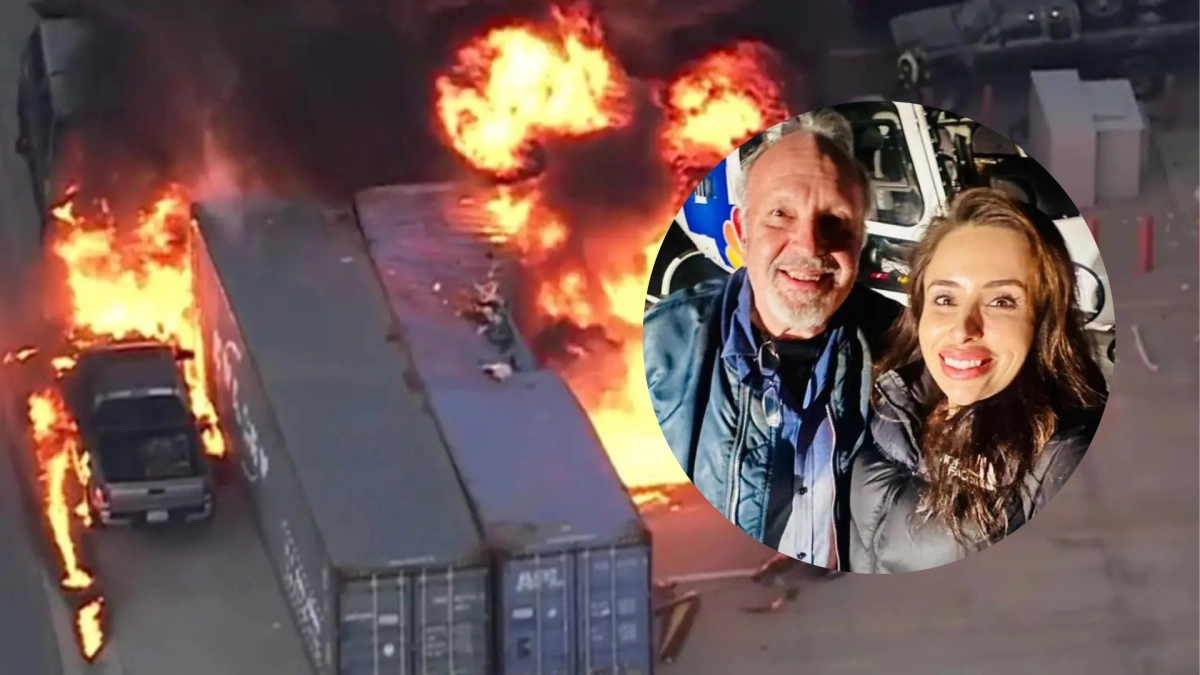
LOS ANGELES, CALIFORNIA — A routine news reporting assignment transformed into an unimaginable tragedy on Tuesday evening when a news helicopter belonging to NBC and Telemundo Los Angeles suffered a catastrophic mechanical failure and crashed in the residential and commercial neighborhood of Chatsworth. The fatal incident occurred shortly before 7:00 P.M. local time as the aircraft was hovering above a ground traffic accident involving a bus and a passenger vehicle on Mason Avenue.
The crash resulted in three confirmed fatalities on board and on the ground: the veteran reporter Eliana Moreno, the highly experienced pilot George Marciniw, and an unidentified pedestrian who was struck by flying debris as the helicopter plummeted between two commercial buildings. At least one additional person sustained severe injuries and was rushed to a nearby regional trauma center, according to the Los Angeles Fire Department (LAFD).
Live-streaming feeds and recordings captured by witnesses reveal a harrowing final moments sequence. An audible, piercing engine loss alarm blared in the cockpit as the aircraft’s rotor sound abruptly shifted. Journalist Eliana Moreno could be heard asking the pilot in a voice marked by panic, "¿No puedes subir?" ("Can’t you climb?"). Moments later, the video feed shows the camera spinning violently out of control before the transmission cuts to absolute blackness upon impact.
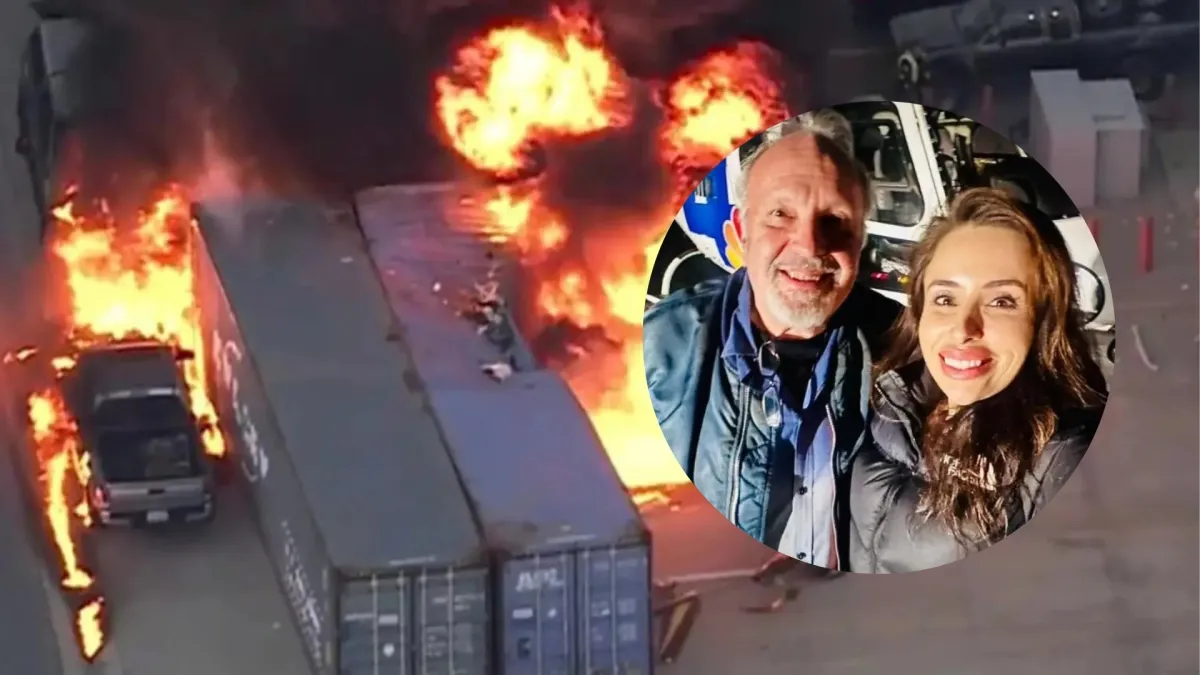
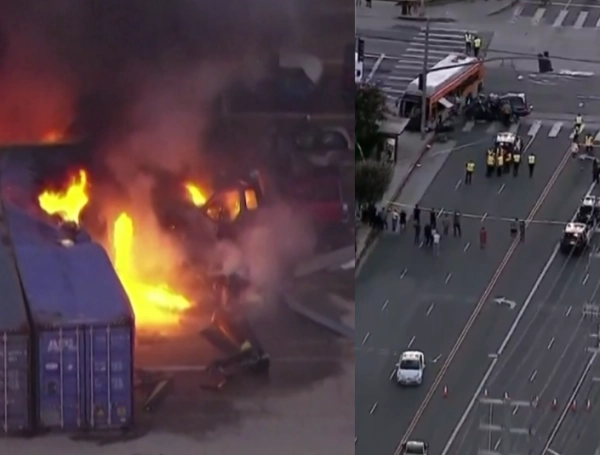
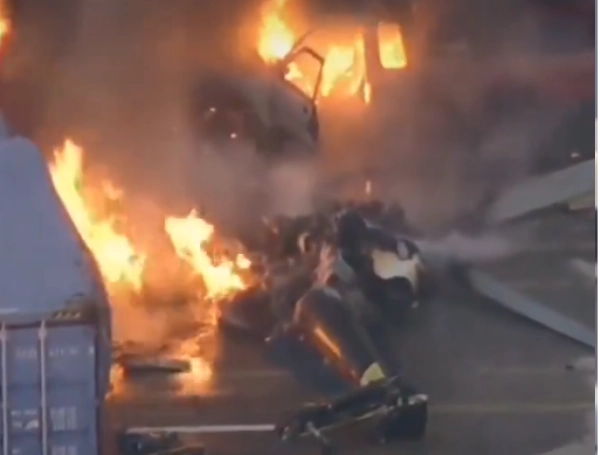
The resulting collision triggered a massive explosion, consuming four passenger vehicles and two commercial storage containers in a roaring inferno. More than 50 firefighters responded to the scene, battling what eyewitnesses described as one of the most violent fires they had ever witnessed.
Chronology of Events
To fully understand the sequence of events that led to the catastrophe in Chatsworth, aviation safety experts and investigators have pieced together a timeline based on air traffic telemetry, police dispatch logs, witness accounts, and the live broadcast feed:
1. The Initial Assignment (Approx. 6:30 P.M. – 6:50 P.M.)
The news helicopter, tasked with airborne traffic and breaking news observation for NBC and Telemundo Los Angeles, was dispatched to cover a multi-vehicle collision involving a transit bus and a standard automobile on Mason Avenue in the Chatsworth district of the San Fernando Valley. Pilot George Marciniw maneuvered the aircraft into a standard hovering and orbiting pattern to capture aerial footage for the evening news broadcast.
2. The Critical Failure (Approx. 6:58 P.M.)
While maintaining an aerial view of the traffic incident, the aircraft experienced an abrupt mechanical anomaly. Cockpit audio captured the sudden sounding of a low-rotor RPM and engine loss warning horn. The distinctive rhythmic thrum of the helicopter’s turbine engine noticeably changed pitch, indicating a sudden drop in power or catastrophic mechanical failure.
3. The Final Desperate Seconds (Approx. 6:59 P.M.)
As the helicopter began losing altitude and spinning uncontrollably, reporter Eliana Moreno voiced her alarm, asking if the aircraft could gain altitude. With over 14,000 flight hours under his belt, pilot George Marciniw fought desperately against the aerodynamic forces pulling the aircraft down. However, the loss of lift rendering the tail rotor or main rotor ineffective made autorotation nearly impossible given their low altitude and urban surroundings. The camera feed began an uncontrolled rotational spin.
4. The Impact and Explosion (7:00 P.M.)
The helicopter dropped rapidly, clearing major power lines by narrow margins before slamming into the ground tightly wedged between two commercial properties on Mason Avenue. The fuel tanks ruptured instantaneously upon impact, sending a massive fireball skyward. The ensuing explosion engulfed four nearby parked vehicles and two industrial containers, showering the surrounding street with burning debris and striking a pedestrian on the ground.
5. Emergency Response (7:05 P.M. Onward)
Within minutes, emergency dispatch centers were flooded with calls reporting an explosion and aircraft crash. More than 50 LAFD firefighters arrived at the scene, deploying hose lines to contain the roaring flames and searching the wreckage for survivors. Paramedics treated multiple individuals for smoke inhalation, shock, and severe trauma, transporting at least one critical survivor to a local hospital.
Supporting Data and Technical Analysis
As federal investigators comb through the charred wreckage on Mason Avenue, aviation analysts have begun dissecting the available visual and auditory evidence to determine what went wrong in the final seconds of flight.
The Warning Alarm
According to aviation mechanics and veteran pilots who reviewed the recovered broadcast audio, the blaring sound heard on the tape matches the characteristic audio warning for a loss of lift or low rotor RPM. This emergency tone typically activates when a helicopter’s engine experiences a sudden loss of power, fuel starvation, or a catastrophic failure in the transmission system connecting the turbine to the rotor blades.
When a helicopter suffers a total or partial loss of power at low altitudes, the pilot has mere seconds to execute an autorotation—a maneuver where the upward flow of air through the rotor system keeps the blades spinning, allowing the pilot to glide down and cushion the landing. However, executing this maneuver successfully requires sufficient altitude and forward airspeed, both of which may have been compromised during the sudden descent over a congested urban corridor.
Pilot Experience and Aircraft Profile
Pilot George Marciniw was far from a novice. Industry colleagues and aviation records confirmed that Marciniw was a seasoned aviator with more than 14,000 logged flight hours, a substantial portion of which had been spent navigating the complex airspace and notorious traffic patterns of the greater Los Angeles metropolitan area.
A veteran helicopter pilot interviewed by the New York Post noted that while Marciniw’s extensive experience makes pilot error less likely, the suddenness of mechanical failures—such as a catastrophic gearbox seizure, tail-rotor drive failure, or sudden fuel line obstruction—can overwhelm even the most capable aviators in a matter of seconds.
The Ground Impact Zone
The crash site itself presented unique hazards for first responders. Confined between two commercial buildings on Mason Avenue, the limited space concentrated the force of the explosion. The burning wreckage destroyed four vehicles completely, complicating rescue efforts and destroying vital physical evidence that investigators must now painstakingly piece together.
Official Responses and Institutional Reactions
The loss of three lives sent profound shockwaves through the Southern California journalistic community, local government, and emergency services.

Local and State Leadership
Los Angeles Mayor Karen Bass held an emotional press conference addressing the tragedy, describing the evening as "a heartbreaking night for our city." Mayor Bass extended her deepest condolences to the families of those lost in the helicopter crash, while also acknowledging the separate victims of the bus collision that the news crew had originally been dispatched to cover.
California Governor Gavin Newsom released an official statement expressing sorrow on behalf of the state. Newsom praised the unwavering dedication of local news crews who put their lives on the line daily to keep the public informed, while thanking the rapid response units of the LAFD and the Los Angeles Police Department (LAPD) for their valor at the disaster site.
Network and Media Statements
Executives at NBC and Telemundo Los Angeles released joint statements mourning the loss of their colleagues. Eliana Moreno was remembered as a passionate, fearless journalist dedicated to uncovering the truth and serving the Spanish- and English-speaking communities of Southern California with integrity. George Marciniw was honored as a consummate professional whose steady hands safely navigated thousands of missions across decades in the skies above Los Angeles.

"Our newsroom is devastated," a network spokesperson stated. "Eliana and George were integral members of our family. Our thoughts, prayers, and complete support are with their loved ones during this unimaginably difficult time."
Implications for Aerial Journalism and Aviation Safety
The Chatsworth tragedy has reignited intense conversations surrounding the safety protocols, maintenance standards, and regulatory oversight governing newsgathering helicopters operating in densely populated urban environments.
The Risks of Urban Air Journalism
Major metropolitan areas like Los Angeles rely heavily on helicopters for traffic reporting, breaking news coverage, and emergency documentation. However, hovering at low altitudes over congested streets, power lines, and commercial buildings exposes air crews to inherent physical risks. Unlike fixed-wing aircraft, which can glide considerable distances if an engine fails, helicopters operating at low speeds and low altitudes have a notoriously narrow "height-velocity diagram" (often referred to by pilots as the "dead curve"), meaning that a sudden power loss leaves virtually zero margin for error.

Regulatory Scrutiny: NTSB and FAA Investigations
The National Transportation Safety Board (NTSB) and the Federal Aviation Administration (FAA) have assumed full control of the investigation. A specialized team of NTSB investigators arrived at the Mason Avenue crash site to map the debris field, recover any onboard flight data or avionics components (if equipped), and impound maintenance logs for the aircraft.
Investigators will examine multiple hypotheses:
- Mechanical Failure: Did a turbine component, transmission gear, or rotor linkage fail catastrophically?
- Fuel Starvation or Contamination: Was there an issue with fuel delivery to the engine?
- Environmental Factors: Did wind shear, thermal updrafts from the surrounding urban structures, or unexpected aerodynamic disturbances contribute to the loss of control?
- Maintenance Records: Were all scheduled inspections and part replacements meticulously performed and documented prior to the flight?
A preliminary report from the NTSB is expected within 30 days, though a comprehensive final investigation into the root cause of the crash could take anywhere from 12 to 24 months.

A Lasting Legacy
As Los Angeles mourns the lives lost on Mason Avenue, the tragedy serves as a solemn reminder of the profound sacrifices made daily in the pursuit of public information. The images captured in the final seconds of the broadcast will remain etched in the collective memory of the city, serving both as a haunting final testament to a crew committed to their craft and as a catalyst for renewed safety standards in commercial aviation.