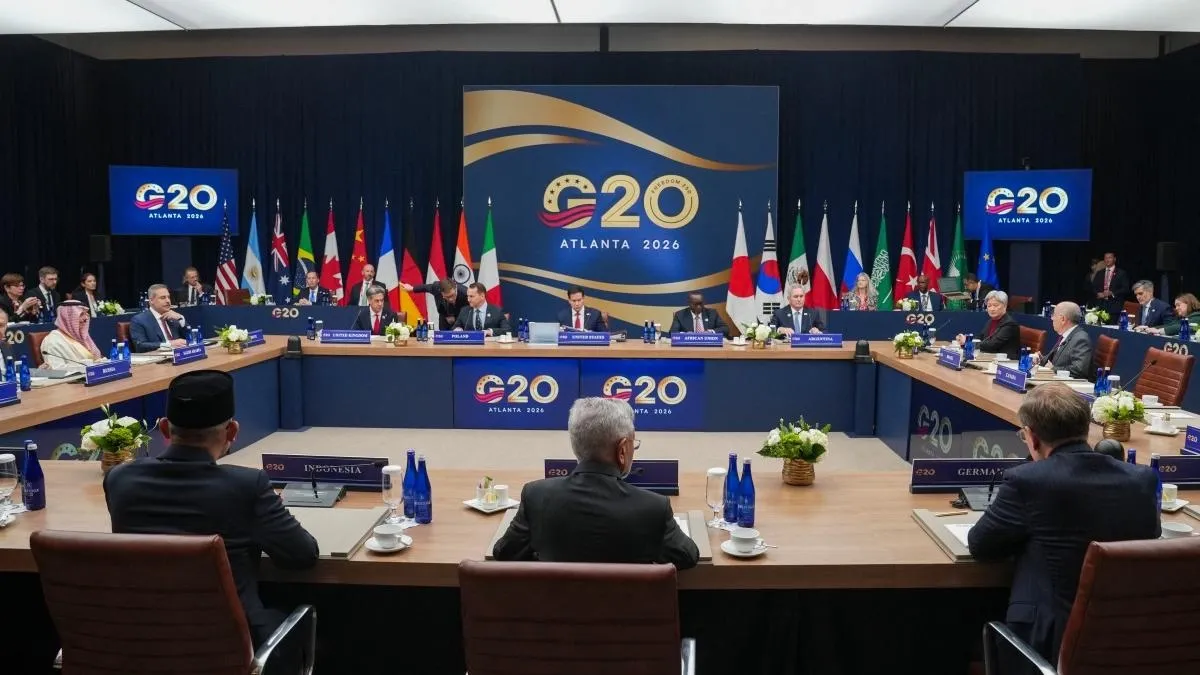
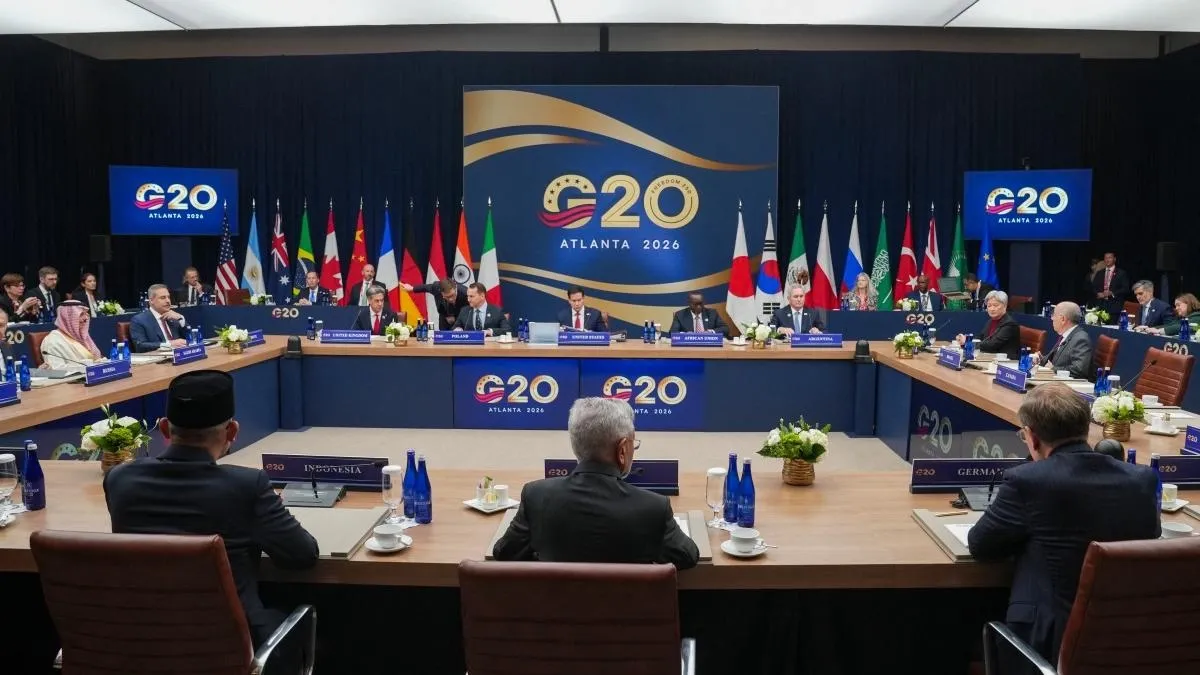
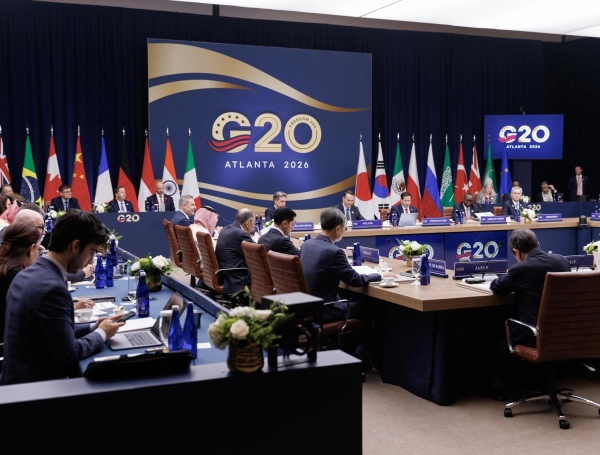
ATLANTA, GEORGIA — In a major development that underscores the complex geopolitical balancing act defining contemporary international relations, the United States Department of State officially authorized the sale of 500 Patriot air defense missiles to Ukraine. Valued at $2.1 billion, the high-stakes military transaction was formally announced on Friday during the ministerial meetings of the Group of 20 (G20) in Atlanta, Georgia.
The announcement pierced through a summit already fraught with profound diplomatic fractures, escalating global conflicts, and fierce resistance from European allies regarding the presence of top Russian diplomatic officials. While the military package directly addresses Kyiv’s urgent calls for enhanced aerial protection against relentless ballistic missile attacks, the broader backdrop of the G20 summit highlighted deepening global divisions over the ongoing war in Ukraine, escalating tensions in the Middle East, and shifting diplomatic postures under the administration of U.S. President Donald Trump.
Main Facts
The core of Friday’s announcement centers on a substantial bolstering of Ukraine’s defensive architecture. According to the U.S. Department of State, Washington greenlit the commercial foreign military sale of 500 interceptor missiles designed specifically for the advanced Patriot air defense systems.
The Financial Mechanism: Notably, the $2.1 billion price tag is entirely funded through international coalition support rather than direct U.S. budgetary appropriations. The procurement is being financed collaboratively by Germany, Canada, and Norway.
The Manufacturer: The missiles will be manufactured by U.S. defense contractor Lockheed Martin, reinforcing the industrial pipeline supporting Eastern European defense.
The Strategic Necessity: The decision follows weeks of mounting frustration from Ukrainian leadership, led by President Volodymyr Zelensky, who repeatedly underscored that chronic delays in ammunition replenishment severely compromised the nation’s capacity to shield civilian infrastructure and military installations from high-speed Russian ballistic threats.
The Diplomatic Venue: The rollout was purposefully synchronized with the gathering of G20 foreign ministers in Atlanta, presided over by U.S. Secretary of State Marco Rubio, setting the stage for December’s upcoming summit of global leaders in Miami.
Chronology of Events and Tensions
The timeline leading up to the Atlanta G20 ministerial and the subsequent Patriot missile authorization reflects a volatile period of diplomatic friction, battlefield pressures, and shifting alliances.
Early 2026: Kyiv escalates warnings regarding the depletion of its Patriot interceptor inventory. Ukrainian officials express growing anxiety over reported delays in allied military supply chains, which coincide with subtle diplomatic shifts in Washington, including exploratory moves by the Trump administration to recalibrate certain aspects of U.S. sanctions policy toward Moscow.
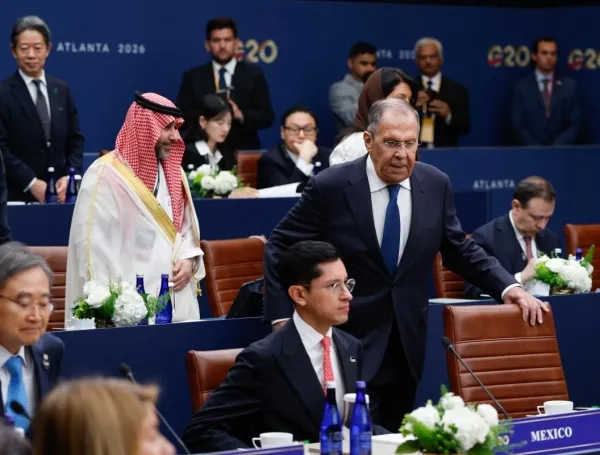
Late October 2026 (Days Preceding the Summit): Preparations for the Atlanta G20 ministerial immediately encounter diplomatic roadblocks. The confirmed attendance of Russian Foreign Minister Sergey Lavrov sparks immediate outrage among European Union delegations. Calls to isolate Moscow’s top diplomat dominate pre-summit discussions.
Friday, October 30, 2026 — Morning: The deep-seated animosities erupt into full view before the official agenda even begins. Citing the unyielding war in Ukraine, European delegations firmly refuse to participate in any official photo-op alongside Lavrov. To avert a complete diplomatic boycott and prevent the protocol event from devolving into a public relations crisis, the U.S. State Department takes the unprecedented step of canceling the traditional G20 "family photo."
Friday, October 30, 2026 — Afternoon: Amid the tense atmosphere, Secretary of State Marco Rubio officially announces the $2.1 billion Patriot missile package, funded by European and North American partners, offering a concrete deliverable that reassures Kyiv while maintaining the fragile momentum of the summit.
Saturday, October 31, 2026: Ministerial panels conclude in Atlanta. Discussions pivot toward mitigating global supply chain vulnerabilities, navigating energy market volatility fueled by the broader U.S.-Israeli conflict with Iran, and laying the groundwork for the December G20 Leaders’ Summit in Miami.
Supporting Data and Economic Context
The G20 forum brings together the world’s most influential economies—including the United States, China, Russia, the European Union, the African Union, Japan, Brazil, India, Germany, and others—representing the lion’s share of global gross domestic product and international trade. However, the Atlanta ministerial laid bare how interconnected economic stability has become hostage to localized geopolitical conflicts.
$2.1 Billion: The total valuation of the Patriot missile procurement approved by the U.S. State Department.
500 Interceptors: The exact quantity of advanced surface-to-air missiles destined to reinforce Ukraine’s depleted stocks.
Energy and Commodity Shocks: The ongoing military engagements, particularly the protracted war in Eastern Europe and the widening conflict involving Iran, have exerted severe upward pressure on international energy prices. These disruptions have directly impacted inflation trajectories across G20 member states.
Supply Chain Vulnerabilities: Trade routes, maritime security, and energy corridors featured prominently in the economic assessments presented during the ministerial sessions, highlighting risks to global food and fuel security.
Official Responses and Diplomatic Fallout
The intersection of military aid and high-level diplomacy generated starkly contrasting reactions from key global actors present in Atlanta.
The United States
Opening the summit, Secretary of State Marco Rubio delivered a sobering assessment of the global landscape, emphasizing that the international community stands at a perilous crossroads.
"We find ourselves at a critical moment not only for my country, the United States, but, quite frankly, for the entire world," Rubio stated during his inaugural address. "We are facing a series of interconnected economic and geopolitical crises, many of which pose severe threats to the essential foundations of the global economic order."
Rubio’s leadership as host required a delicate tightrope walk: managing domestic political shifts under the Trump administration—which recently extended an invitation to Russian President Vladimir Putin for the upcoming December summit in Miami—while assuring traditional European allies of Washington’s continued commitment to collective security.
European Allies
European ministers made their refusal to normalize relations with Moscow abundantly clear. German Foreign Minister Johann Wadephul pulled no punches when addressing reporters prior to the meetings.
"There can be no normalcy in relations with Russia," Wadephul warned. "There will be no family photo in which our European partners appear alongside Mr. Lavrov."
Echoing these sentiments, Polish Foreign Minister Radoslaw Sikorski affirmed his solidarity with the boycott, noting sharply: "I am not the only one who does not want to be photographed with Lavrov."
Despite the bitter boycott of ceremonial events, European diplomats did engage in the substantive working sessions, recognizing the necessity of addressing global economic stabilization alongside transatlantic security frameworks.
The Russian Federation
For his part, Russian Foreign Minister Sergey Lavrov sought to project an image of diplomatic composure. Speaking to the press following a brief, tightly managed interaction with Secretary Rubio, Lavrov characterized their exchange as civil.
"For understandable reasons, he has many obligations as a host," Lavrov commented, describing their brief dialogue as a "decent conversation."
The Kremlin has yet to formally confirm whether President Vladimir Putin will accept President Trump’s invitation to attend the upcoming G20 leaders’ gathering in Miami, leaving open the question of whether a broader diplomatic thaw is genuinely within reach.
Global Implications and Strategic Outlook
The convergence of the Patriot missile sale and the turbulent G20 ministerial in Atlanta reveals the paradoxical nature of current international relations. On one hand, Western allies are hardening their military commitments to ensure Ukraine can withstand sustained aerial bombardments. The financial underwriting of the $2.1 billion missile package by Germany, Canada, and Norway demonstrates that transatlantic burden-sharing remains robust, even as political dynamics in Washington evolve.
On the other hand, the deep institutional friction visible in Atlanta—highlighted by the unprecedented cancellation of the group photo over Russia’s participation—signals that the global diplomatic architecture is increasingly strained. The fractures caused by the war in Ukraine, coupled with the economic fallout from Middle Eastern conflicts and energy volatility, threaten to paralyze multilateral consensus-building.
As attention shifts toward the December G20 Leaders’ Summit in Miami, the international community faces an arduous path. The juxtaposition of multi-billion-dollar military reinforcements for active warzones alongside attempts to broker high-level diplomatic engagement illustrates that navigating the remainder of the decade will require an extraordinary degree of crisis management from the world’s leading economic powers.
By Editorial Staff, International Desk The Venezuelan humanitarian landscape remains fragile as the nation continues to grapple with the aftermath of a catastrophic dual-earthquake event that struck the region on June 24, 2026. Amidst the…
By Breaking News & International Desk Published: October 26, 2026 | Updated: October 26, 2026 Main Facts The political landscape of Venezuela has entered a volatile and high-stakes new phase following the high-profile return of…
CARACAS, VENEZUELA — In what international observers are calling a delicate yet significant development in Venezuela’s post-Maduro political landscape, a fresh wave of political prisoners was quietly released from various penitentiary facilities across the country…