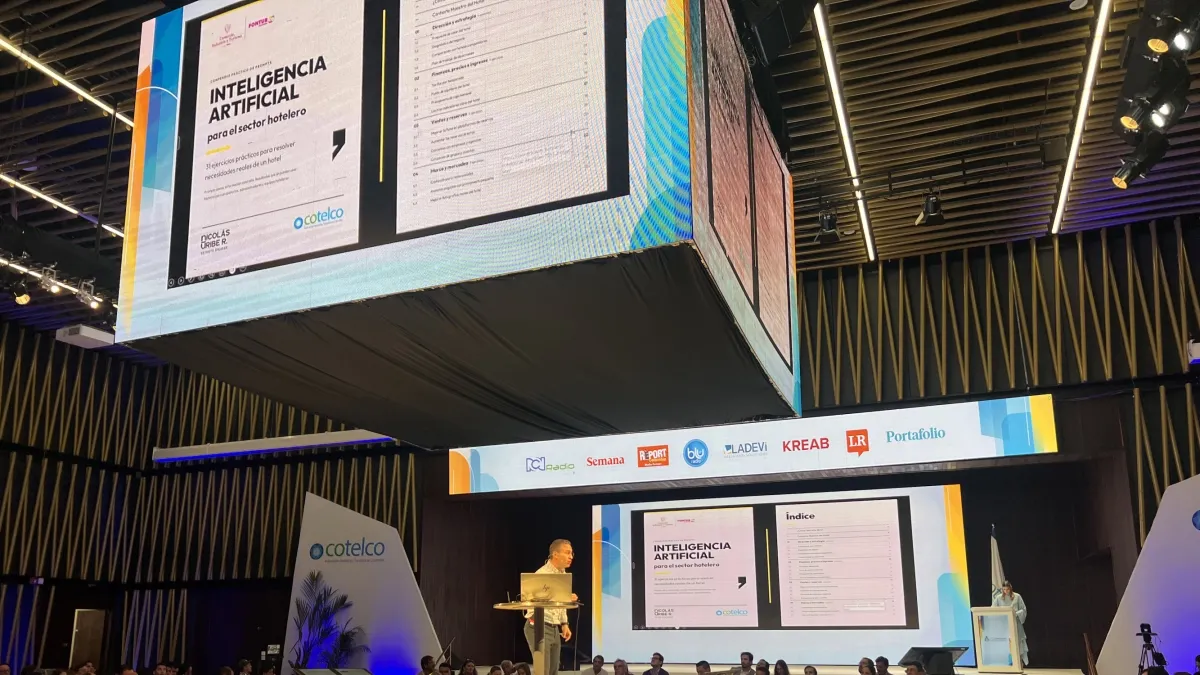
BUCARAMANGA, COLOMBIA — During the second day of the National Hotel Congress, organized by Cotelco in the vibrant city of Bucaramanga, the intersection of advanced technology and traditional hospitality took center stage. Among the standout presentations was a masterclass delivered by expert Nicolás Uribe Rueda, who captivated industry leaders with a deep dive into generative artificial intelligence (AI) and its practical applications for reshaping the hotel sector.
As global industries race to adapt to the digital age, the hospitality sector—traditionally dependent on high-touch, human-centric service—is discovering that AI is not a threat to its core values, but rather a powerful catalyst for efficiency, market expansion, and personalized guest experiences.
Main Facts
The core narrative of Uribe Rueda’s address at the Cotelco congress centered on the democratization of advanced technology. No longer restricted to software engineers or tech conglomerates, artificial intelligence has evolved into an accessible utility for business owners across the board.
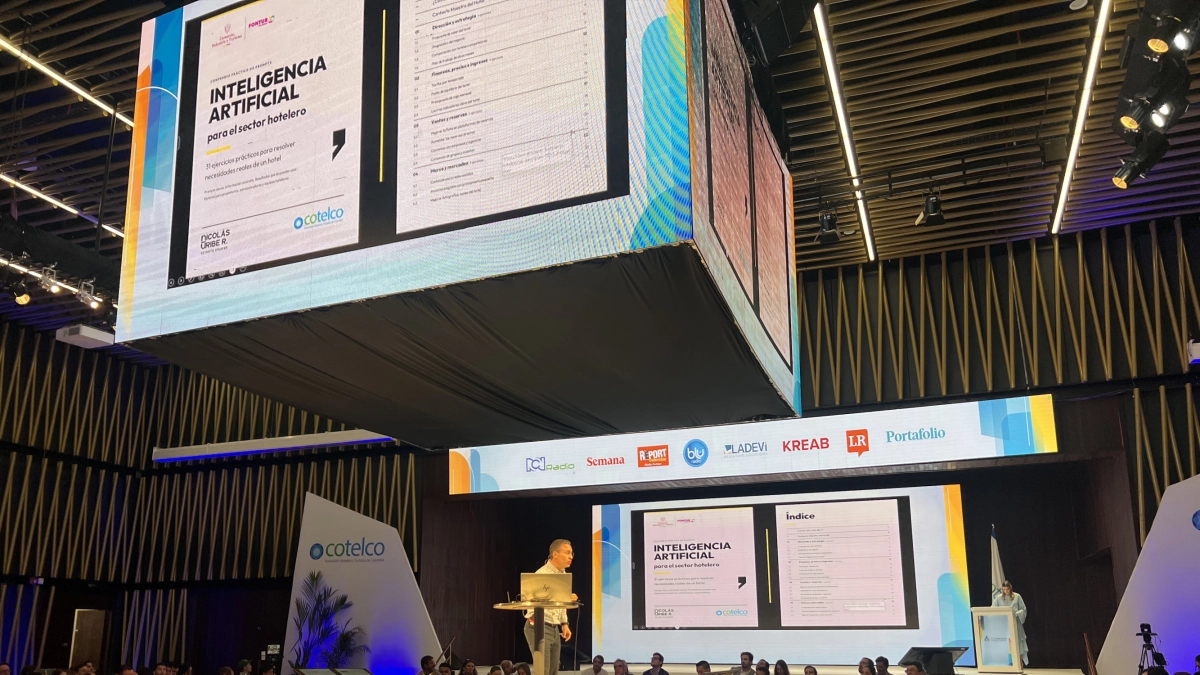
According to Uribe Rueda, AI functions as a force multiplier for human capability. "A good prompt, a well-thought-out instruction of what I require, and AI just did something that not even in my dreams I could have done before," he remarked during his panel. However, he was quick to establish boundaries regarding the technology’s autonomy, emphasizing a vital principle: "AI works with you, but not for you."
Rather than replacing critical thinking or cognitive effort, these tools elevate productivity to unprecedented levels, enabling hoteliers to tackle complex operational, financial, and marketing hurdles with unprecedented speed and precision.
Furthermore, the integration of AI allows independent and mid-sized hotels to democratize their operations. Historically, sophisticated market analytics, dynamic pricing structures, and global marketing campaigns were luxuries reserved for large hotel chains with massive corporate budgets. Today, generative AI bridges that gap, empowering local properties to target international markets and scale their services efficiently.

Chronology of the Event
The presentation unfolded during a packed morning session on the second day of the National Hotel Congress in Bucaramanga:
- Morning Session Kickoff: Industry stakeholders, hotel owners, and tourism executives gathered at the main auditorium to explore modern challenges facing the Colombian and regional hospitality sectors.
- The Introduction of Uribe Rueda: The speaker took the stage to address the digital transformation curve, shifting the conversation from abstract technological theories to concrete, actionable strategies for hoteliers.
- The Core Demonstration: Uribe Rueda illustrated how a simple, well-crafted prompt can outperform traditional administrative workflows, handling tasks from drafting marketing plans to setting localized room rates.
- The Launch of the AI Guide: The event culminated in the official presentation of a practical document containing 31 tailored AI exercises, developed through a collaborative institutional effort to guide hoteliers step-by-step.
Supporting Data and Practical Applications
To demystify artificial intelligence for traditional hoteliers, Uribe Rueda outlined specific, highly functional areas where AI can immediately optimize hotel management:
- Marketing and Brand Strategy: Generating comprehensive marketing frameworks, defining unique value propositions, and streamlining the creation of promotional copy and website structures.
- Dynamic Pricing and Revenue Management: Analyzing seasonal trends, competitor pricing, and local demand to recommend optimized room tariffs that maximize profitability.
- Guest Experience and Personalization: Crafting tailored communication strategies, anticipating guest preferences, and refining the overall customer service journey from booking to check-out.
The practical nature of the discussion was solidified with the unveiling of a specialized compendium: a collection of 31 practical AI exercises designed specifically to resolve everyday challenges in the hospitality sector.

This manual was brought to life through a strategic partnership between the Ministry of Commerce, Industry and Tourism, Fontur (Fondo Nacional de Turismo), and Cotelco (Asociación Hotelera y Turística de Colombia).
Addressing the audience on how to use the guide, the introductory notes specify: "Each exercise can be used independently. Consult the index, choose the problem you wish to solve, and follow the proposed prompts. To obtain a useful response, provide the requested information and the particular context of your hotel."
The document is meticulously structured to cover nearly every facet of modern hotel administration, focusing on:

- Direction and overall strategy
- Finances, pricing, and revenue optimization
- Sales and reservation pipelines
- Brand identity and marketing
- Guest relations and behavioral insights
- Food and beverage management
- Day-to-day hotel operations
- Human resources and team leadership
- Responsible business practices and corporate sustainability
Official Responses and Institutional Support
The collaboration between government entities and trade associations like Cotelco underscores a national commitment to modernizing Colombia’s tourism infrastructure. By backing initiatives that bring artificial intelligence into the hands of regional hotel owners, entities like Fontur and the Ministry of Commerce are ensuring that the nation’s tourism sector remains competitive on a global scale.
Industry leaders present at the congress noted that the availability of structured prompts tailored to local realities removes the intimidation factor often associated with adopting new technologies. Instead of viewing AI as an enigmatic black box, hotel owners now possess a structured roadmap—backed by public-private coordination—to experiment safely and effectively.
Implications for the Future of Hospitality
The integration of artificial intelligence into daily hotel operations carries profound implications for the industry’s future.

1. Leveling the Playing Field
Smaller, boutique, and family-run hotels have long struggled to compete with multinational hospitality conglomerates due to resource disparities. By leveraging generative AI for website development, digital marketing, and targeted advertising, smaller properties can project a global brand image and capture niche markets that were previously out of reach due to prohibitive agency and software costs.
2. Redefining Human Roles
Uribe Rueda’s assertion that "AI works with you, but not for you" highlights a crucial evolution in workplace dynamics. Administrative bottlenecks are being automated, freeing up human staff to focus on what technology cannot replicate: genuine, empathetic, high-touch hospitality. Front-desk personnel and managers, unburdened by repetitive data processing and routine drafting tasks, can dedicate more time to direct guest interaction and creative problem-solving.
3. Sustainability and Resource Management
With specific modules dedicated to sustainable practices and efficient operations, AI can assist hotels in monitoring resource consumption, minimizing food waste, and optimizing energy usage. This aligns with global consumer trends demanding greener, more eco-conscious travel options.

As the National Hotel Congress in Bucaramanga demonstrated, the future of hospitality in Colombia—and across the broader Latin American region—is not about choosing between human warmth and machine efficiency. Rather, it is about harmonizing the two to create a smarter, more resilient, and deeply competitive tourism ecosystem.