CARACAS, VENEZUELA — In what international observers are calling a delicate yet significant development in Venezuela’s post-Maduro political landscape, a fresh wave of political prisoners was quietly released from various penitentiary facilities across the country between Friday and Saturday. The developments coincide directly with the closure of the second formal cycle of political negotiations between the government led by interim leader Delcy Rodríguez and the fractured Venezuelan opposition—a high-stakes political process heavily backed and mediated by the United States.
According to verification reports issued by prominent human rights organizations, approximately 30 individuals detained for political reasons have finally recovered their freedom. While civil society groups and families celebrate the return of their loved ones, they maintain that these incremental releases fall short of addressing the massive structural injustices of a penal system long weaponized for political control.
Main Facts
The latest string of excarcerations involves roughly 30 individuals who spent years behind bars under contentious, politically motivated charges. Human rights NGOs, notably Justicia, Encuentro y Perdón, confirmed through independent monitoring that at least 29 prisoners walked free from multiple detention centers. Among those released are at least eight women who had been imprisoned since 2021, enduring years of pre-trial detention under severe accusations, including alleged "narcoterrorism."
These releases occurred precisely as government and opposition delegations wrapped up their second major cycle of political talks. This diplomatic track forms part of an ongoing, fragile stabilization process following the dramatic geopolitical earthquake of January, when former leader Nicolás Maduro was captured during a high-precision U.S. military operation inside Venezuelan territory.
Despite the passage of a controversial amnesty law promulgated by the Rodríguez administration in February—designed to clear the slate for certain politically charged cases—human rights defenders emphasize that the release mechanism remains frustratingly slow, opaque, and highly selective.
Prominent figures among the newly freed include six individuals previously prosecuted in connection with the infamous "Operation Gedeón," a botched 2020 armed incursion that the Maduro regime heavily publicized to implicate both domestic dissidents and foreign actors, including U.S. nationals. Despite these releases, high-profile political prisoners remain incarcerated; notably, Josnars Baduel—the son of the late General Raúl Isaías Baduel, a former defense minister under Hugo Chávez—remains behind bars under the same umbrella of charges.
Furthermore, the NGO Foro Penal verified the liberation of Frank Cabañas, an individual tied to the case of Óscar Pérez, the rebellious former police inspector who defied the socialist government and was killed alongside his squad during a violent 2018 military raid. That operation remains a heavy stain on Venezuela’s human rights record, with international tribunals later classifying the raid as an extrajudicial execution after evidence surfaced that Pérez and his comrades attempted to surrender.
Chronology of Events
To understand the weight of these recent releases, it is vital to trace the compounding political and humanitarian events that have reshaped Venezuela over the past decade:
January 2018: Rogue police inspector Óscar Pérez and members of his insurgent cell are killed during a heavily militarized security operation in El Junquito, an event later denounced by human rights bodies as an extrajudicial execution.
May 2020: The Rodríguez/Maduro administration foils "Operation Gedeón," an amphibious, poorly organized paramilitary raid launched from Colombia. Dozens of domestic and foreign combatants are arrested, kicking off years of arbitrary detentions.
January 2026: A sweeping U.S. military operation inside Venezuela results in the capture of Nicolás Maduro, abruptly ending his long tenure and plunging the nation into an unprecedented geopolitical transition. Delcy Rodríguez assumes executive control, initiating a complex web of domestic restructuring and international diplomacy.
February 2026: Under intense pressure from Washington and domestic political forces, the Rodríguez administration passes a restricted amnesty law aimed at neutralizing international sanctions and fostering a domestic dialogue.
September 18, 2026:Foro Penal publishes its latest definitive census, documenting 344 remaining political prisoners languishing in Venezuelan jails, a number that did not yet reflect the upcoming weekend releases.
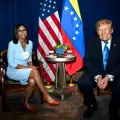
Late September 2026: Delegations from the government and the opposition convene for the second cycle of structured negotiations, running parallel to high-level diplomatic outreach—including communications between U.S. leadership and Delcy Rodríguez regarding future electoral roadmaps.
September 25–26, 2026: Human rights organizations confirm the liberation of roughly 30 political prisoners, including eight women jailed since 2021 and several individuals tied to Operation Gedeón and the Óscar Pérez case.
Supporting Data and Statistics
The quantifiable scale of political imprisonment in Venezuela remains a central point of contention between civil society and the state.
344: According to the baseline metrics published by Foro Penal on September 18, 2026, exactly 344 political prisoners were still behind bars prior to the latest round of releases. This figure highlights the heavy baseline burden of state repression, even after the political transition triggered by Maduro’s removal.
30: The approximate number of prisoners freed between Friday and Saturday, as documented collectively by monitoring NGOs.
29: The precise number of individuals whose releases were independently and physically verified by the NGO Justicia, Encuentro y Perdón.
8: The count of female political prisoners among the freed cohort, many of whom had endured more than five years of imprisonment without a definitive sentence since their arrest in 2021.
1: The singular focus maintained by families and advocacy networks who, despite sporadic releases, continue daily protests demanding a 100% empty-cell policy for all prisoners of conscience.
Official Responses and Civil Society Reactions
The response to the weekend’s releases has exposed deep divisions between the optimism of the negotiating table and the raw skepticism of grassroots human rights defenders.
Speaking on behalf of the Venezuelan civil rights community, Óscar Murillo, coordinator of the prominent NGO Provea, issued a stern statement following the announcements. Murillo acknowledged the individual relief experienced by the freed prisoners and their families, but sharply criticized the piecemeal nature of the process.
"We demand the absolute and unconditional liberation of every single person who remains arbitrarily detained," Murillo asserted. "A true transition cannot be measured by tactical concessions made to appease international negotiators; it requires a systemic dismantling of political persecution and ironclad guarantees for fundamental human rights."
Meanwhile, government officials have framed the releases as an act of good faith and tangible proof that the executive-led dialogue framework is bearing fruit. However, independent analysts note that the state continues to use prisoner releases as political currency—dispensing them selectively to leverage diplomatic breathing room with the United States and blunt international criticism at the United Nations.
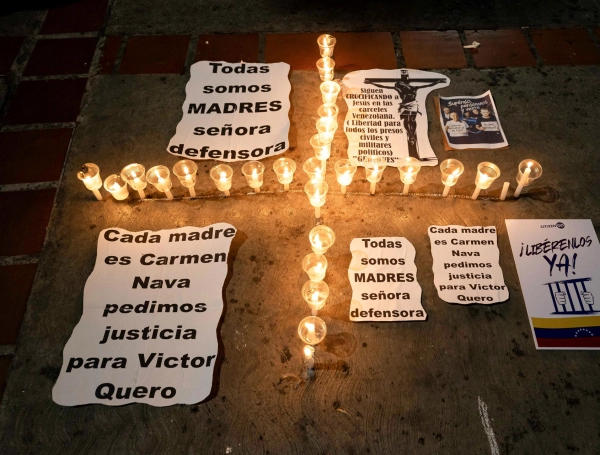
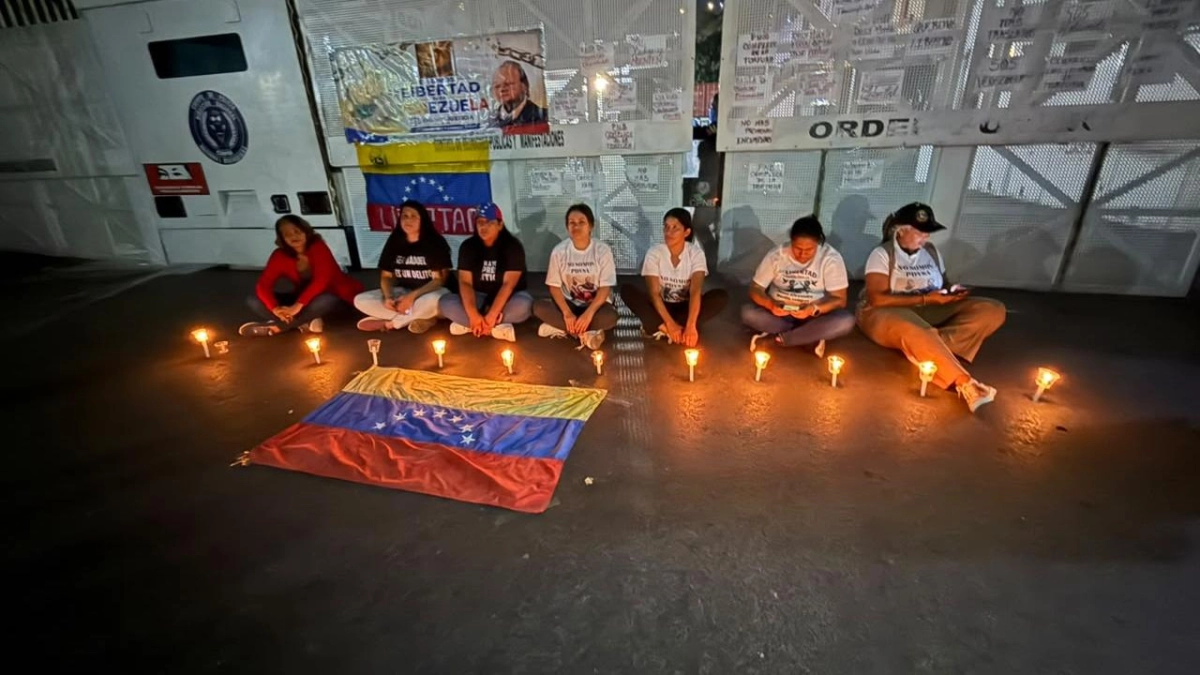
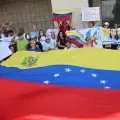
On the streets, the mood is far from celebratory. Families of those still detained have maintained continuous, high-visibility protests. Vigils and demonstrations have sprung up across Caracas, most notably concentrated near the U.S. Embassy and outside the infamous El Rodeo I prison. The latter facility has been repeatedly flagged by international fact-finding missions and local NGOs as a site characterized by systemic overcrowding, psychological terror, and documented instances of torture and cruel treatment.
Geopolitical and Domestic Implications
The timing of these prison releases is far from coincidental; it serves as a critical pressure valve in a much larger geopolitical chess match.
With Nicolás Maduro removed from power by U.S. forces, Delcy Rodríguez has sought to recalibrate Venezuela’s international standing without surrendering total control of the state apparatus. The U.S. government, while maintaining pragmatic channels of communication—as underscored by recent public confirmations of direct dialogue regarding future democratic transitions and electoral calendars—has made the amelioration of human rights abuses a baseline benchmark for long-term sanctions relief.
Domestically, the negotiations between the Rodríguez government and the fragmented opposition face an uphill battle. For the opposition, the humanitarian plight of political prisoners is a non-negotiable moral litmus test. If the government uses releases merely as a revolving-door tactic—freeing one batch of dissidents while arresting or maintaining others—the entire dialogue process risks collapsing under the weight of its own cynicism.
Ultimately, while the freedom of 30 individuals marks a moment of profound personal joy for their families, it underscores a harsher structural reality. Venezuela remains a nation caught in the crucible of transition, where the basic liberty of its citizens continues to be treated as a political commodity rather than an inviolable human right.
NEW YORK — Amidst the high-stakes diplomatic choreography of the United Nations General Assembly, a high-profile parallel summit captured the attention of international observers on Tuesday, September 22, 2026. Colombian Vice President José Manuel Restrepo…
By International Desk July 22, 2026 In a move that signals a profound transformation in Middle Eastern geopolitical dynamics, the United States government officially confirmed this Wednesday the signing of a comprehensive civil nuclear cooperation…
By International Desk July 19, 2026 The eyes of the world are fixed firmly on the New York/New Jersey stadium this weekend as the 2026 FIFA World Cup reaches its dramatic conclusion. In a final…