By Breaking News Desk
Published: November 9, 2026 | Updated: November 9, 2026
Introduction: A Preventable Tragedy in Calceta
The escalating crisis of violence against journalists in Latin America reached a grim new milestone on the night of Sunday, November 8, 2026, with the assassination of Ecuadorian journalist Tomás Alfonso Beltrán Conforme. Beltrán, the director and owner of the digital news outlet Calcetines, was gunned down outside his residence in Calceta, the municipal seat of Bolívar Canton in the coastal province of Manabí.

Despite operating under known threats, featuring prominently in risk assessments, and being formally integrated into state protection mechanisms, Beltrán’s life could not be saved. According to local witnesses cited by the Ecuadorian broadcaster Ecuavisa, the communicator was simply parking his vehicle when a group of heavily armed assailants ambushed him, opening fire in a sustained, point-blank attack before fleeing the scene into the night.
The murder of Beltrán has ignited profound outrage and renewed international scrutiny regarding the safety of reporters in Ecuador. Organizations such as the Mesa de Articulación para la Protección de Periodistas (MAPP) and the Inter American Press Association (IAPA) have issued vehement condemnations, underscoring that Beltrán’s death was not merely an isolated criminal act, but the tragic culmination of months of unheeded warnings, institutional failures, and a hostile environment cultivated by high-stakes local investigative reporting.

1. Main Facts: The Attack and Immediate Aftermath
The targeted execution of Tomás Alfonso Beltrán Conforme unfolded with chilling precision. At approximately the time of his arrival home on Sunday evening, surveillance and witness accounts indicate that multiple armed individuals lay in wait or quickly intercepted him as he maneuvered his vehicle. The barrage of gunfire left the journalist with fatal wounds, giving him no chance of survival.
When emergency services and local police arrived at the scene, the perpetrators had already vanished. The immediate perimeter was cordoned off as criminalistics units began collecting ballistic evidence and interviewing witnesses. However, as of Monday, November 9, authorities have yet to establish a definitive motive or formally identify the suspects behind the trigger, though investigative bodies are heavily prioritizing his journalistic endeavors and recent anti-corruption complaints.
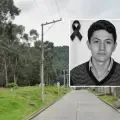
Beltrán was well-known in the region for his tenacious reporting through Calcetines, a digital portal that frequently tackled local governance issues, public administration controversies, and accountability in Bolívar Canton. His work had transformed the outlet into an essential watchdog for the local populace, but it also made him a prime target for powerful adversaries threatened by his investigations.
2. Chronology of a Foretold Death: Threats, Filers, and Failed Protection
The violent end to Tomás Alfonso Beltrán’s life was preceded by a prolonged, well-documented campaign of intimidation, harassment, and escalating physical danger. A comprehensive timeline compiled by press freedom organizations illustrates a steady erosion of his safety, culminating in his tragic demise.

- 2023: Early Escalation. The threats against Beltrán were not new. Years prior to his murder, in 2023, his personal vehicle was intentionally targeted and vandalized with chemical products—a clear message intended to intimidate him into abandoning his reporting.
- May 2025: Entry into State Protection. Due to the persistent gravity of the threats he faced, Beltrán was formally incorporated into the Victim and Witness Protection System (SPAVT) managed by the Ecuadorian Attorney General’s Office (Fiscalía General del Estado).
- April 2, 2026: The Catalyst Denunciation. The risk matrix surrounding Beltrán reached critical mass when he formally filed a confidential legal complaint alleging illicit enrichment against Ledy Muñoz, the mayor of Bolívar Canton.
- Early April 2026: The Leak and Smear Campaign. Despite the confidential nature of the legal filing, the document was systematically leaked. This breach triggered a coordinated digital smear campaign across social media platforms designed to discredit Beltrán’s professional and personal reputation.
- April 4 and 8, 2026: Intimidation at the Doorstep. The harassment quickly escalated from the digital realm to physical spaces. On April 4 and again on April 8, threatening pamphlets bearing explicit warnings were left directly at the journalist’s residence. In response to this acute danger, Beltrán was temporarily relocated to a secure, undisclosed location.
- April 2026 Onward: MAPP’s Public Alarms. The Mesa de Articulación para la Protección de Periodistas (MAPP) issued public statements condemning a severe surge of violence directed at Calcetines. The organization noted with horror that two separate collaborators associated with the digital outlet had already been assassinated prior to Beltrán’s death, framing the director’s situation as an emergency of the highest order.
- November 8, 2026: The Assassination. Despite his inclusion in SPAVT and the interventions of local law enforcement, the protective measures proved tragically hollow. Police officers assigned to monitor his safety ultimately confessed their inability to guarantee his survival, urging him to flee Calceta entirely. Hours later, he was murdered outside his home.
3. Supporting Data: The Plight of Calcetines and the Climate of Impunity
The assassination of Tomás Beltrán highlights a devastating pattern of violence directed not just at individual reporters, but at entire independent media ecosystems operating outside major metropolitan hubs in Ecuador.
According to records from the Attorney General’s Office, multiple formal denunciations filed by Beltrán regarding ongoing intimidation remained active in public consultation registries. Yet, systemic bottlenecks and an overwhelming climate of insecurity rendered these legal safeguards functionally useless.

The collateral damage sustained by Calcetines underscores the extreme perils of provincial journalism. MAPP’s April 2026 reports explicitly noted that two other individuals working with or contributing to the digital portal had been murdered in the lead-up to Beltrán’s death. This systematic decimation of a newsroom points directly to organized retaliation against investigations that touched upon local political power structures—specifically, the explosive allegations of illicit enrichment involving municipal leadership.
Furthermore, the unchecked leakage of a confidential legal complaint filed with the prosecutor’s office demonstrates a dangerous compromise within institutional information channels. When state mechanisms designed to protect whistleblowers and journalists leak sensitive data, they effectively hand targets over to criminal networks or aggrieved political actors on a silver platter.

4. Official Responses and Institutional Condemnations
The international and domestic outcry following the murder of Tomás Alfonso Beltrán has been swift, unified, and uncompromising. Press freedom organizations and global watchdogs have placed the burden of accountability squarely on the Ecuadorian state.
The Stance of the Mesa de Articulación para la Protección de Periodistas (MAPP)
In its urgent post-assassination briefing, MAPP demanded that the Attorney General’s Office launch an immediate, transparent, and comprehensive investigation into multiple facets of the case: the assassinations of Calcetines collaborators, the threats against Beltrán, and—crucially—the criminal leak of the confidential anti-corruption complaint filed against Mayor Ledy Muñoz.

Furthermore, MAPP called upon the Ministry of Interior and the National Police to radically overhaul and strengthen protective protocols for journalists and their families. The organization also urged the Council of Communication to activate its dormant or sluggish protection mechanisms.
“The Ecuadorian state is directly responsible for guaranteeing the life and safety of those who exercise journalism and civic oversight,” MAPP declared in a statement echoed by regional media outlets.

The Inter American Press Association (IAPA) Condemnation
From its headquarters in Miami, the Inter American Press Association (IAPA) issued a blistering condemnation on Monday, November 9, labeling the murder an unacceptable failure of the state’s security apparatus.
“It is inadmissible that a journalist who had formally denounced threats and ostensibly counted on state protection measures has been murdered. The authorities must act with urgency, investigate to the ultimate consequences, and determine if there was a direct nexus between the prior intimidations and this heinous crime,” stated Carlos Jornet, President of the IAPA.

Martha Ramos, President of the IAPA’s Commission on Freedom of the Press and Information, reinforced this sentiment, emphasizing systemic failures:
“His assassination once again lays bare the urgent necessity for protection mechanisms to be genuinely effective and for risk warnings to be met with timely, life-saving responses.”
The IAPA specifically demanded an independent inquiry into whether institutional negligence, administrative delays, or security protocol failures contributed to leaving Beltrán completely exposed during his final weeks in Calceta.
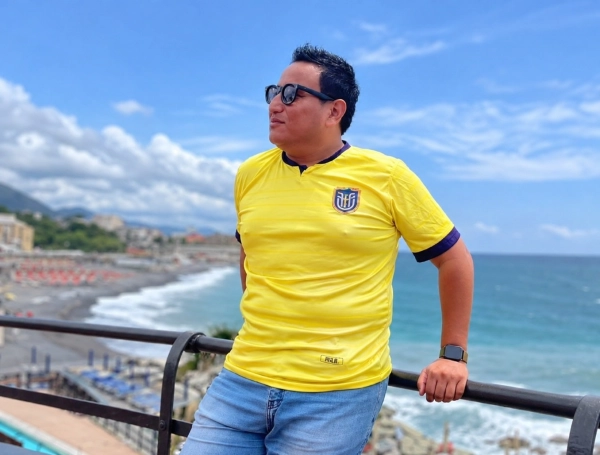
5. Implications: The Chilling Effect on Investigative Journalism in Ecuador
The murder of Tomás Alfonso Beltrán Conforme transcends a localized homicide; it represents a profound systemic threat to the foundations of democracy, free expression, and investigative reporting in Ecuador.
When a journalist operating within the state’s official Witness Protection System is hunted down and executed despite prior warnings and police advisories telling him to flee his own city, a chilling message is sent to every independent reporter in the country: no one is safe, and state institutions cannot protect you.

Provincial journalism in Ecuador is already under siege from organized crime syndicates, drug-trafficking corridors, and corrupt local political elites. Digital native portals like Calcetines often serve as the sole remaining check against municipal corruption, filling the void left by under-resourced traditional media. When these small-scale watchdogs are systematically silenced through lethal violence—as seen in the killing of Beltrán and his newsroom collaborators—entire communities are plunged into information darkness.
The impunity that frequently shrouds crimes against press workers creates a vicious cycle of self-censorship. Investigative reporters are forced to weigh the pursuit of truth against the high probability of execution, knowing that institutional safeguards may offer little more than paperwork and empty promises.

As international bodies like the IAPA and domestic coalitions like MAPP continue to apply pressure, the government of Ecuador faces a critical test. The investigation into the assassination of Tomás Alfonso Beltrán Conforme cannot be allowed to stall in bureaucratic inertia. True accountability requires not only identifying and prosecuting the hired guns who pulled the trigger outside his home in Calceta, but aggressively dismantling the intellectual authors, exposing the source of the confidential leaks, and fundamentally restructuring a broken protection system that failed a brave journalist when he needed it most.