International Desk Published: September 28, 2026 Updated: September 28, 2026, 5:25 PM
Main Facts
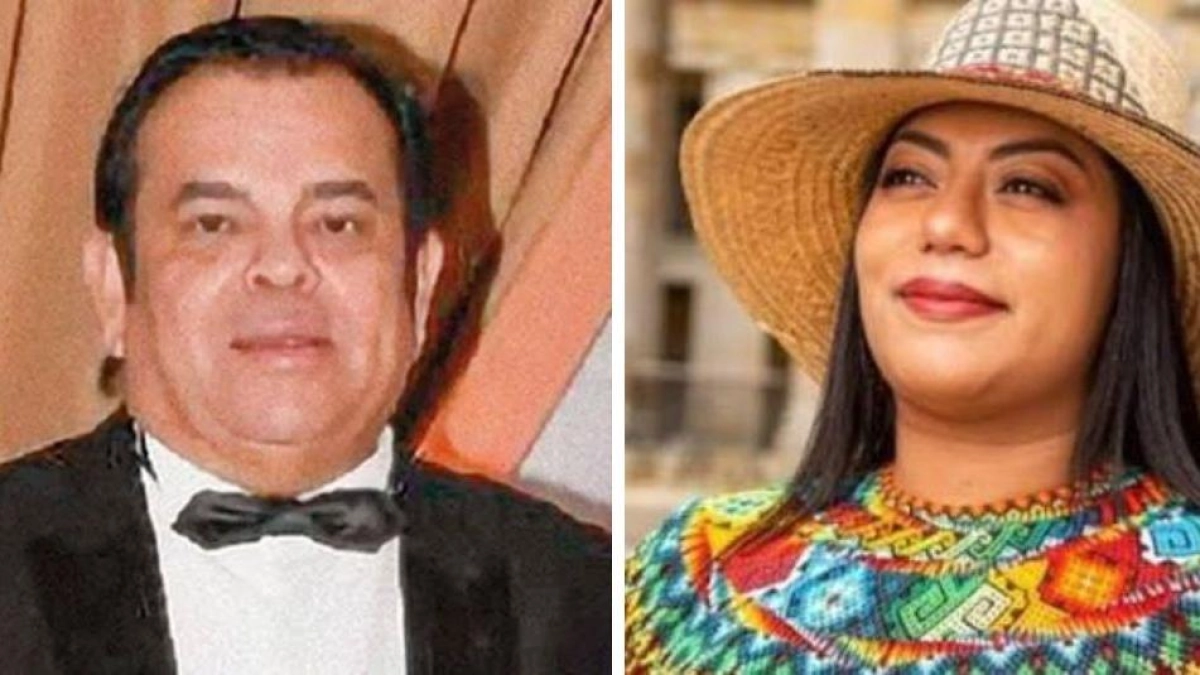
In a sweeping escalation of its regional foreign policy, the United States Department of State has officially revoked the visas of several high-profile foreign figures, including prominent Colombian personalities Euclides Torres and Martha Peralta. The sweeping migratory restrictions target individuals whom Washington accuses of "undermining" democratically elected governments, promoting systemic corruption, and facilitating transnational crime across the Western Hemisphere.
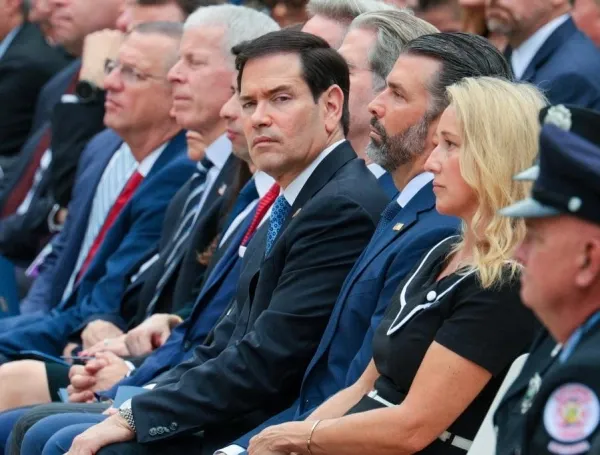
The announcement, communicated through an official press statement, falls directly under the aggressive diplomatic and security framework of the "Shield of the Americas" initiative and the commitments forged during the Doral Summit. Under the administration of U.S. President Donald Trump, and spearheaded by U.S. Secretary of State Marco Rubio, Washington has signaled a hardline zero-tolerance policy toward foreign actors deemed to threaten democratic governance, stability, and rule of law in Latin America.
The enforcement actions are anchored legally in Section 212(a)(3)(C) of the Immigration and Nationality Act (INA). This provision explicitly bars entry to individuals whose presence or proposed activities in the United States could generate potentially severe adverse foreign policy consequences for the nation.
While the measures encompass targeted actions against citizens spanning Bolivia, Peru, Ecuador, and Colombia, the inclusion of figures tied directly to major political and judicial scandals during the administration of Colombian President Gustavo Petro has generated immediate international shockwaves.
Chronology of Events
The events leading up to the Department of State’s sweeping visa revocations trace a complex path through regional politics, high-stakes investigations, and changing U.S. foreign policy dynamics:
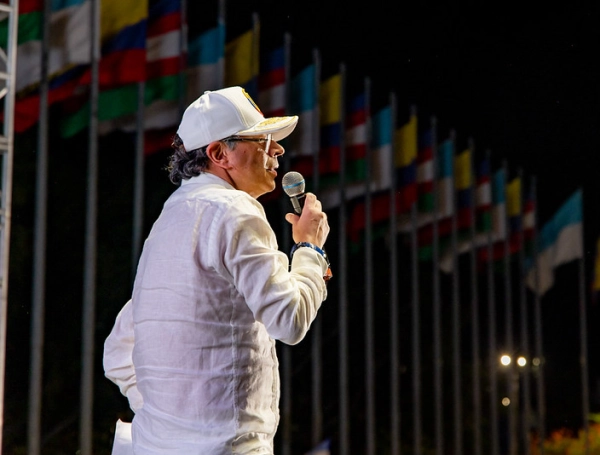
September 2021: Prominent Caribbean businessman and contractor Euclides Torres allegedly helps finance a high-profile political rally for then-Senator and presidential candidate Gustavo Petro in Barranquilla, featuring a distinct stage shaped like the letter "P"—expenses that were reportedly omitted from official campaign financial reports.
May 2022 – August 2022: The Petro presidential campaign secures victory in Colombia. Subsequent investigations by the Prosecutor General’s Office (Fiscalía) and journalistic exposés begin unearthing digital communications from Daysuris Vásquez, ex-partner of Nicolás Petro Burgos (the president’s son), pointing to hidden financial backing and asset arrangements, including an exclusive apartment in Bogotá’s upscale Rosales neighborhood provided by Torres.
Late 2024 – Early 2025: The sprawling corruption scandal within the National Unit for Disaster Risk Management (UNGRD) breaks into the public sphere. Former UNGRD director Olmedo López begins cooperating with justice authorities, implicating numerous political figures.
May 2026: Colombia’s Supreme Court of Justice formally opens an investigation against Senator Martha Peralta, calling her to a formal inquiry (indagatoria) over alleged crimes of undue influence and improper bribery connected to UNGRD contract allocations.
June – September 2026: The Trump administration ramps up hemispheric pressures, culminating in the Doral Summit and the formalization of the "Shield of the Americas" initiative. U.S. intelligence and diplomatic apparatuses focus heavily on regional corruption networks tied to drug trafficking and democratic erosion.
September 28, 2026: The U.S. State Department officially announces the revocation of visas for Euclides Torres, Martha Peralta, and dozens of other officials, judges, and business leaders across Bolivia, Peru, and Ecuador.
Supporting Data and Profiles of the Accused
The U.S. government’s decision targets individuals caught in the crosshairs of severe domestic and international scrutiny. In Colombia, the targeted figures are central characters in the most damaging legal controversies faced by the leftist administration.
Martha Peralta and the UNGRD Scandal
Senator Martha Peralta’s political trajectory was severely fractured by explosive testimonies from Olmedo López, the disgraced former director of the National Unit for Disaster Risk Management (UNGRD). According to López’s cooperative testimonies with the Colombian justice system, Peralta allegedly intervened directly in the strategic assignment of public contracts in her native department of La Guajira.
The quid pro quo, investigators claim, involved securing local political backing and legislative votes for President Gustavo Petro’s controversial structural reforms in Congress.
Specific judicial findings highlight a targeted contract valued at over 2,210 million Colombian pesos intended for the firm Inversiones IRL SAS. The public funds were earmarked for heavy machinery and dump truck rentals meant for infrastructure work in Riohacha. The Prosecutor General’s Office asserts that Peralta acted as a vital bridge between López and private contractors seeking lucrative state agreements. Consequently, the Supreme Court initiated formal proceedings against her for unlawful lobbying and bribery. Peralta has consistently denied all allegations, branding them as politically motivated attacks.
Euclides Torres: Business Power and Campaign Entanglements
Euclides Torres represents a different pillar of influence: a powerful Caribbean-region entrepreneur and mega-contractor whose financial empire spans public lighting, energy, road signage, and urban illumination. Beyond his commercial footprint, Torres wielded profound behind-the-scenes clout in regional politics.
Torres became a primary focal point in investigations probing the illegal financing of Gustavo Petro’s 2022 presidential bid. Beyond the infamous "P"-shaped stage event in Barranquilla—whose logistics investigators argue went underreported to electoral authorities—Torres’s name surfaced repeatedly in the criminal case against Nicolás Petro Burgos.
Forensic extractions from the mobile phone of Daysuris Vásquez revealed encrypted chats indicating that Torres placed an exclusive apartment in the elite Rosales district of Bogotá at the disposal of the president’s son. Prosecutors argue that these unlisted real estate benefits and financial infusions constituted an unjustified patrimonial enrichment, operating outside the legal boundaries of campaign reporting laws.
Hemispheric Scope: Bolivia, Peru, and Ecuador
The U.S. measures were far from isolated to Colombia. The State Department’s sweeping order targeted a broad network of judicial, executive, and commercial figures across the Andes:
Bolivia: Washington revoked the visas of 12 citizens alongside their immediate family members. The list includes prominent prosecutors (Martín Daniel Irusta Flores, Alberto Zeballos Flores), sitting judges (Albania Chane Caballero Saavedra, Rosario Ximena Flores Paniagua, Rodrigo Aldo Vedia Espinoza), former Minister of Justice Iván Manolo Lima Magne, and constitutional magistrate Israel Ramiro Campero Méndez, alongside businessman José Luis Iriarte Cussi. An additional nine Bolivian nationals were blocked from future visa issuance. Furthermore, the U.S. publicly designated Bolivia’s Attorney General, Roger Mariaca, accusing him of accepting bribes to facilitate drug trafficking and shield criminals from prosecution.
Peru: The punitive migratory actions directly targeted Constitutional Court Judge Juan Carlos Núñez Matos of the First Circuit of Lima and his family.
Ecuador: Two Ecuadorian citizens and their respective families had their travel documents revoked, though their identities were withheld in the initial diplomatic release.
Official Responses and Diplomatic Posture
The tone emanating from Washington leaves no ambiguity regarding the underlying philosophy of the current U.S. administration. The Department of State’s communique explicitly tied the actions to the broader geopolitical strategy championed by the White House:
"Under the administration, corrupt foreign officials can no longer freely enter the United States. Today, the Department of State is taking action to fulfill commitments to defend democratic governance throughout our hemisphere against corruption and drug trafficking—commitments made at the Doral Summit and reaffirmed in the declaration of the leaders of the Shield of the Americas initiative."
The strategic enforcement mechanism—utilizing immigration law as an active instrument of foreign policy—underscores an ideological shift. Rather than relying solely on formal extraditions or lengthy criminal trials abroad, Washington is leveraging its sovereign right to control entry into its borders as an immediate deterrent against systemic corruption and democratic backsliding.
In Colombia and the broader Andean region, reactions have been sharply polarized. Supporters of the targeted politicians have condemned the move as an overreach of imperialist foreign policy and an unwarranted intrusion into domestic judicial processes. Conversely, local opposition parties, anti-corruption watchdogs, and independent legal experts have viewed the U.S. decisions as a validating external pressure check, highlighting the fragility of local accountability mechanisms when dealing with entrenched political elites.
Implications for Regional Stability and Bilateral Relations
The revocation of visas for high-ranking political figures like Martha Peralta and influential contractors like Euclides Torres carries profound implications that extend far beyond travel restrictions:
Erosion of Political Impunity: By denying safe harbor and travel privileges to individuals linked to financial scandals and electoral fraud, Washington is signaling that local political power does not shield individuals from international consequences. This creates a chilling effect for political networks accustomed to operating without fear of external sanctions.
Strain on Diplomatic Ties: The aggressive application of the "Shield of the Americas" framework introduces friction into bilateral relations between the United States and left-leaning governments in Latin America, particularly Gustavo Petro’s administration in Colombia. It deepens ideological divides and complicates cooperation on security, intelligence sharing, and anti-narcotics efforts.
Legal Pressure on Domestic Courts: The explicit U.S. recognition of these individuals as threats to regional democracy exerts implicit pressure on local judicial bodies—such as Colombia’s Supreme Court and Prosecutor General’s Office—to accelerate ongoing domestic investigations and pursue concrete legal outcomes.
A Blueprint for Future Interventions: The coordinated nature of the sanctions—hitting multiple countries simultaneously (Colombia, Bolivia, Peru, and Ecuador)—establishes a blueprint for future U.S. foreign policy in the hemisphere. It demonstrates that migration policy will increasingly be weaponized to enforce anti-corruption and anti-trafficking standards abroad.
As local legal proceedings continue to unfold and the diplomatic fallout reverberates through capitals from Bogotá to La Paz, the international community watches closely to see how targeted nations will respond to Washington’s muscular reassertion of hemispheric influence.
This is a developing story. Further updates will be provided as additional details emerge from diplomatic and judicial sources.
WASHINGTON D.C. — In a striking dual development that underscores the volatile intersection of emerging technology, executive power, and constitutional rights, the administration of U.S. President Donald Trump has initiated a sweeping ban on journalists…
INTERNATIONAL DESK Updated: September 9, 2026 — 1:45 PM Main Facts The ongoing, volatile security crisis surrounding Ukrainian leadership experienced a perilous escalation when high-ranking European officials confirmed a major near-miss incident involving the personal…
By Raúl Andrés García Suárez / International Desk (Adapted and Expanded) Updated: September 18, 2026 Main Facts The vibrant and bustling neighborhoods of Mexico City turned into a scene of profound grief and mystery following…