By María Paula Lozano
Digital Reach News Desk
Published: September 28, 2026 | Updated: September 28, 2026
Main Facts: Nature’s Fury Exposes Maritime History
A ferocious nor’easter storm that recently lashed the northeastern coast of the United States has inadvertently unlocked a chapter of long-buried maritime history. The violent weather system triggered intense coastal erosion along the southern shore of Nantucket, Massachusetts, specifically stripping away vast layers of sand at Miacomet Beach near Point of Breakers—locally known as “the sewer beds.”
Amid the shifting dunes and battered coastline, the storm exposed a substantial fragment of ancient wooden architecture embedded with oxidized iron hardware. Consisting of thick, weather-beaten timber beams and heavy metallic fasteners, the artifact immediately captured the attention of local historians, marine archaeologists, and beachgoers alike.
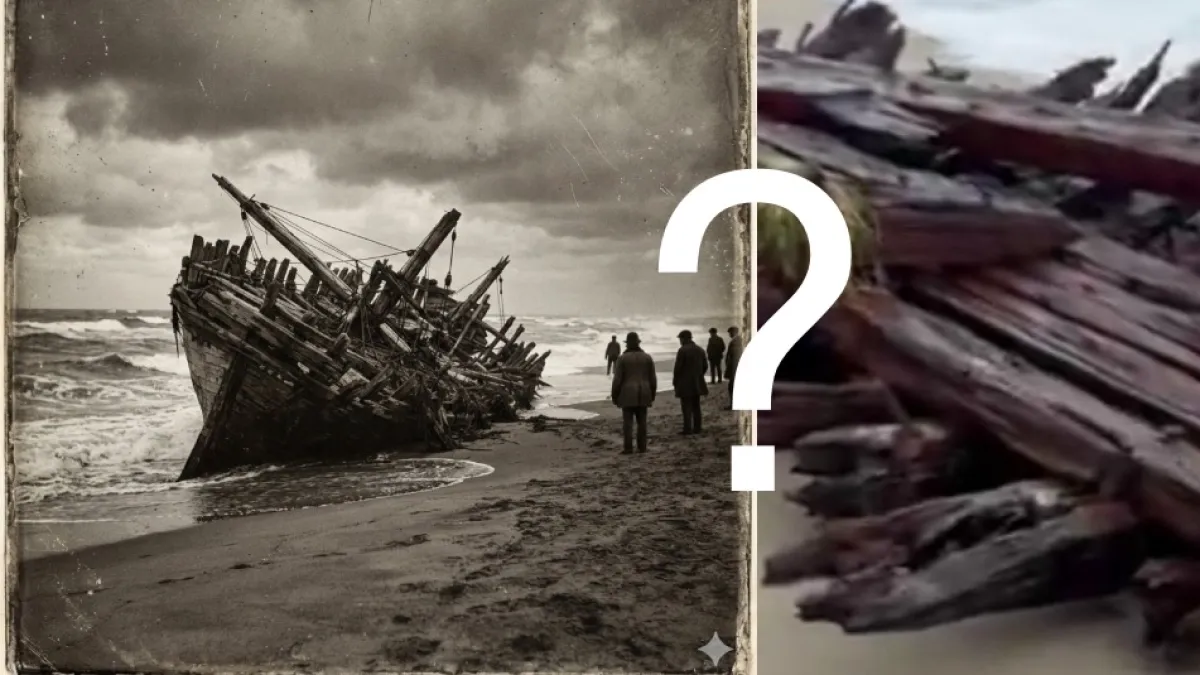
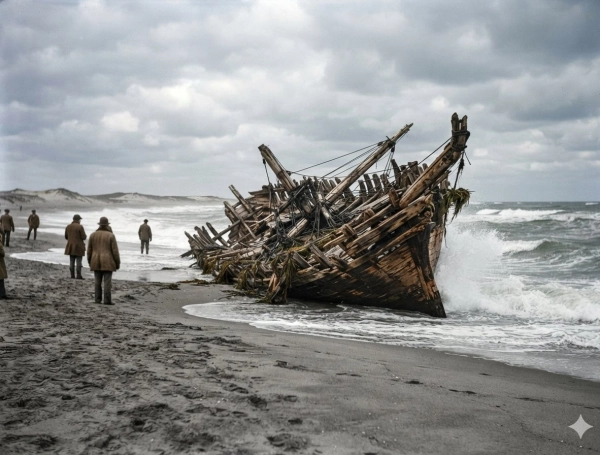
Initial expert assessments suggest that this newly revealed timber framework could very well belong to the Warren Sawyer, a historic three-masted wooden schooner that met a dramatic and tragic end off the coast of Nantucket more than 140 years ago. However, despite the strong geographical and chronological correlations, maritime researchers emphasize that definitive confirmation remains elusive, as the shifting sands of time—and the treacherous waters of the Atlantic—keep their secrets guarded.
The discovery highlights the fragile and dynamic nature of coastal archaeology, where severe weather events act as both destroyers of modern infrastructure and accidental curators of ancient history. As experts rush to document and analyze the exposed structure before the next high tide or storm reburies or destroys it, the island of Nantucket finds itself once again reflecting on its rich, perilous, and tragic maritime legacy.
Chronology: The Ill-Fated Voyage of the Warren Sawyer
To understand the significance of the recent discovery, historians must look back more than a century to the final voyage of the Warren Sawyer.

Departure and Disaster (December 1884)
The story of the Warren Sawyer began in the bustling port of New Orleans, Louisiana, where the three-masted goleta (schooner) was loaded with a valuable, albeit heavy, commercial cargo consisting primarily of raw cotton and scrap iron. Bound for Boston, Massachusetts, the vessel embarked on what was expected to be a routine commercial transit along the eastern seaboard.
However, mid-winter conditions in the North Atlantic are notoriously unforgiving. As the Warren Sawyer neared the waters south of Cape Cod, it encountered fierce gale-force winds and violent seas that severely compromised its navigation. The relentless weather pushed the vessel far off its intended course, driving it inexorably toward the perilous sandbars and surf of Nantucket’s southern shore.
The Wreck off Miacomet Beach
On December 22, 1884, the inevitable occurred. Trapped by heavy gales and mountainous seas, the Warren Sawyer ran aground near Miacomet Beach.

A gripping contemporary account published in The Inquirer and Mirror in January 1885 documented the harrowing ordeal. According to the chronicle, the schooner was battered by "merciless waves" that crashed relentlessly over its decks, eventually snapping one of its towering masts like a twig. Helpless against the fury of the elements, the vessel rapidly began to break apart in the surf.
A Miraculous Rescue
Despite the horrific conditions, the disaster did not end in total human tragedy. From the safety of the shore, horrified onlookers watched as the ship fought for survival, while local United States Life-Saving Service personnel courageously maneuvered to render aid.
In a display of remarkable heroism, a surfman managed to launch a lifeline across the churning gap between the shore and the crippled vessel. The secure line allowed the captain and all seven members of the crew to be hauled safely to dry land one by one. Miraculously, all eight men survived the ordeal, and a portion of the ship’s cargo was subsequently salvaged from the shallow waters, cementing the event not as a tragedy of life, but as a legendary display of coastal rescue.

Supporting Data: Nantucket’s Graveyard of Ships
The mystery of the Miacomet Beach timber frame cannot be viewed in isolation. To properly contextualize the find, researchers must look at the staggering scale of maritime disasters that have defined Nantucket’s geography and history.
An Island Ringed by Peril
According to official archives maintained by the Nantucket Shipwreck & Lifesaving Museum, the waters surrounding the isolated Massachusetts island served as the final resting place for more than 700 recorded shipwrecks during the 19th century alone.
Several factors contributed to this high concentration of maritime disasters:

- Treacherous Shoals: The shifting underwater sandbars surrounding Nantucket, such as Nantucket Shoals, create unpredictable and violent currents that historically trapped heavy cargo vessels.
- Severe Weather Patterns: The region is frequently battered by nor’easters—intense extratropical cyclones characterized by hurricane-force winds, blinding rain, and heavy snow—which drastically reduced visibility and pushed wooden sailing ships off course.
- Heavy Commercial Traffic: As a primary artery for trade between southern ports (like New Orleans and Savannah) and northern industrial hubs (like Boston and New York), the waters off Nantucket were constantly congested with merchant fleets.
Previous Encounters with the Past
The September 2026 discovery is not an isolated event. It builds upon a similar unearthing that occurred nearly four years earlier.
In December 2022, a local resident walking her dog along the exact same stretch of Miacomet Beach stumbled upon a different section of buried timber protruding from the sand. State archaeologist David Robinson inspected those earlier remains and concluded that they likely originated from the lower section of a ship’s hull, structurally close to the bow.
However, even with physical fragments appearing periodically, piecing together the exact identity of these wooden skeletons remains an immense scientific challenge.
Official Responses and Expert Analysis: A Puzzle Wrapped in Mystery
While local enthusiasm surrounding the Warren Sawyer theory is palpable, professional archaeologists and marine historians urge caution, emphasizing that identifying historic shipwrecks based solely on weathered timber and iron fragments is fraught with uncertainty.
The Case for the Warren Sawyer
Jascin N. Leonardo Finger, deputy director of the Maria Mitchell Association, voiced optimism regarding the recent find. In statements to local media and researchers, Leonardo Finger noted that there is a high probability that the newly exposed structural elements belong to the 1884 schooner. The geographic coordinates of the exposure align remarkably well with historical accounts of where the Warren Sawyer broke apart and sank.
Calls for Caution from Maritime Institutions
Conversely, researchers at the Egan Maritime Institute and other state heritage bodies have introduced a note of professional skepticism. They have publicly cautioned that they cannot establish "with complete certainty" that the timbers belong to the Warren Sawyer.

Several technical hurdles complicate the identification process:
- Multiple Wrecks in Close Proximity: Given that over 700 vessels wrecked around Nantucket during the 1800s, multiple ships may have met their end along the very same stretch of the southern shore. Over a century of sand migration can displace, mix, and overlap wreckage from entirely different eras and vessels.
- Ambiguous Hardware: While the iron herrajes (hardware/fasteners) recovered from the site are indicative of 19th-century shipbuilding practices, standard manufacturing methods of the era mean that metal fittings were rarely unique to a single ship. Certain characteristics of the discovered brackets and bolts do not perfectly match the specific blueprints or historical records associated with the construction of the Warren Sawyer.
Implications: Preservation, Climate Change, and Cultural Heritage
The unearthing of the Nantucket wreckage carries deep implications that extend far beyond local historical curiosity, touching upon broader themes of coastal preservation and environmental shifts.
The Race Against Coastal Erosion
As global weather patterns shift and intense storms become more frequent and severe due to climate change, coastal erosion along the northeastern United States has accelerated dramatically. While this erosion poses a massive threat to modern real estate, roads, and ecosystems, it simultaneously acts as a double-edged sword for archaeology.

Storms like the recent nor’easter strip away protective layers of sand, revealing long-lost artifacts that would otherwise remain hidden for centuries. However, once exposed, these fragile wooden structures are subjected to the destructive forces of oxygen, saltwater, and wave action, which can rapidly degrade them. State agencies and local historical societies now face a race against time to document, scan, and—if feasible—salvage and conserve these maritime relics before they are washed back out to sea or pulverized by the surf.
Reconstructing History
Whether or not the timber frame ultimately proves to be the remains of the Warren Sawyer, the discovery serves as a powerful tactile reminder of the human stories etched into Nantucket’s shores. It honors the bravery of the 19th-century surfmen who risked their lives in freezing gales and highlights the resilience of the captain and crew who survived against the odds.
For now, the fragment resting on Miacomet Beach stands as an open window into the past—a silent sentinel from an era of sail, iron, and unrelenting ocean tides, waiting for science and history to finally confirm its true identity.