By Felipe Santanilla Ayala Redacción Últimas Noticias Updated: April 6, 2026, 18:21 GMT
Main Facts
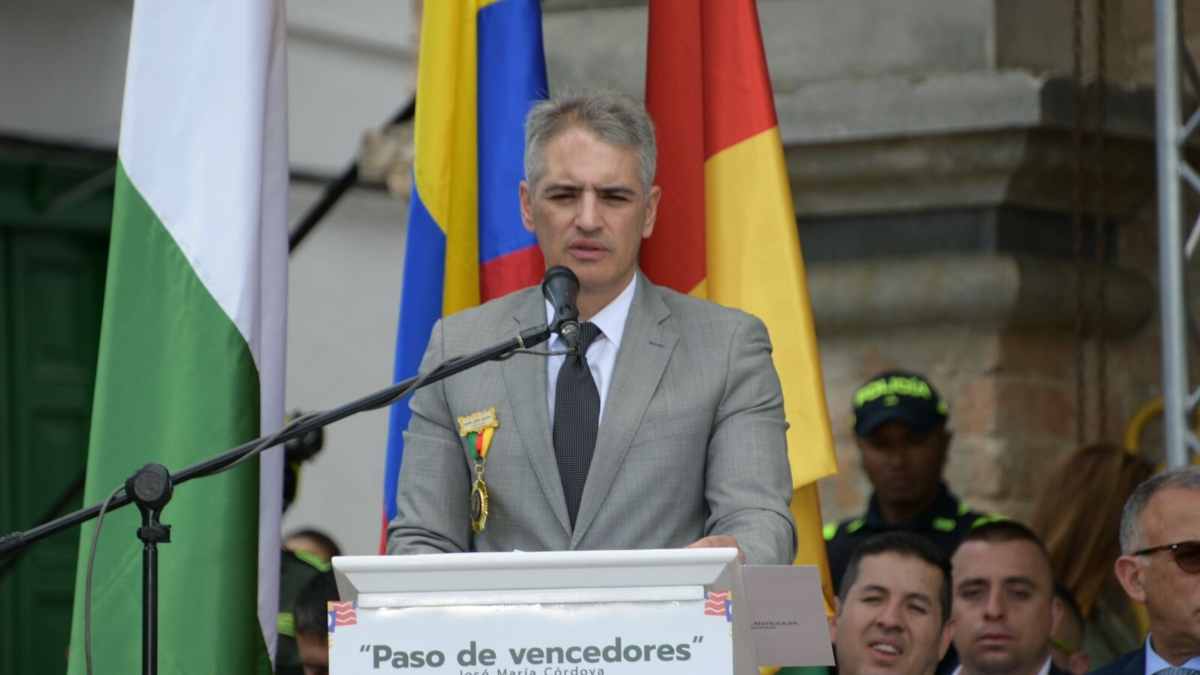
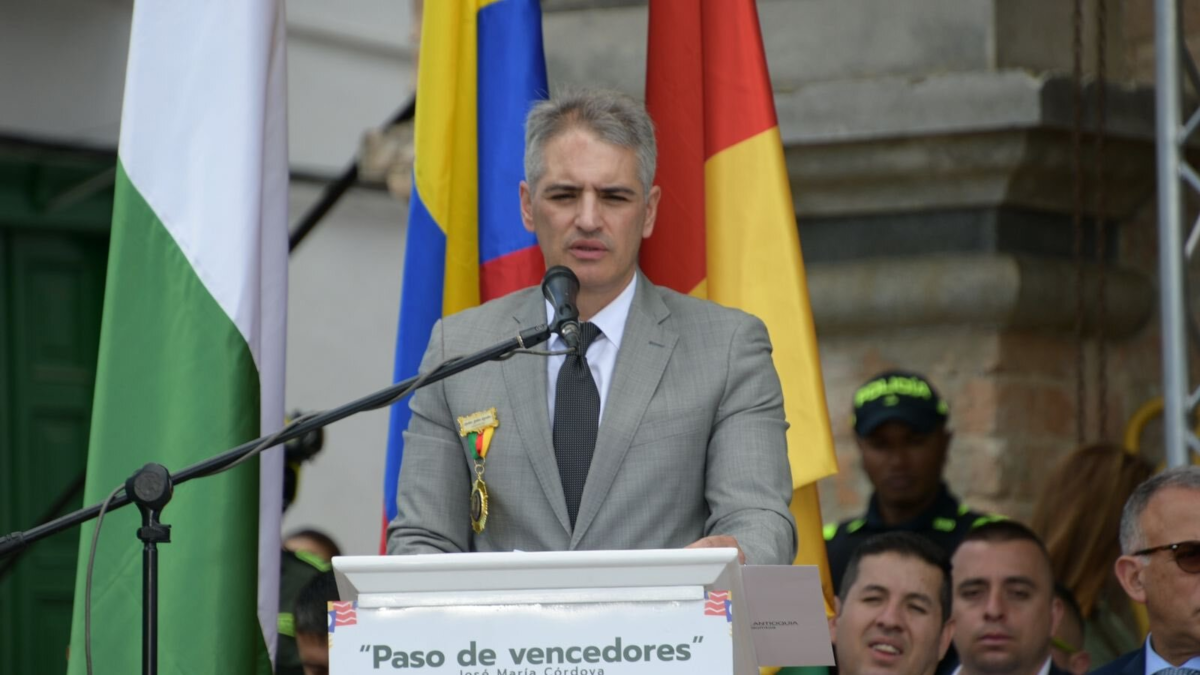
The political and institutional friction between local authorities in Antioquia and the central government reached a boiling point on Monday, April 6, 2026. Andrés Julián Rendón, the Governor of Antioquia, officially announced a robust judicial offensive targeting recent decisions made by the administration of President Gustavo Petro and the Office of the Attorney General of the Nation (Fiscalía General de la Nación).
During a high-level security council meeting alongside local mayors from the Aburrá Valley, Governor Rendón confirmed that the departmental administration will file a formal lawsuit for nullity (demanda de nulidad) before the Council of State. The core objective of this legal maneuver is to secure an emergency precautionary measure (medida cautelar de urgencia) capable of immediately halting and reversing an official resolution that suspends the active arrest warrants of 23 high-ranking leaders of criminal syndicates operating in Medellín and its surrounding metropolitan area.
The disputed resolution directly benefits the spokespersons and commanders of the region’s most dangerous urban criminal structures—factions currently participating in exploratory peace dialogues and state-sponsored negotiation tables. However, the departmental administration views this concession not as a path toward sustainable peace, but as a severe blow to regional security, institutional integrity, and the rule of law.
According to Governor Rendón, these judicial exemptions undermine the daily sacrifices made by the Armed Forces and the National Police, while constructing what he bluntly termed an "impunity highway" for violent offenders. The legal action sets the stage for a prolonged institutional battle between regional autonomy and national executive policies regarding total peace (paz total).
Chronology of Events
To understand the current legal and political crisis, it is essential to trace the sequence of events leading up to the Governor’s announcement:
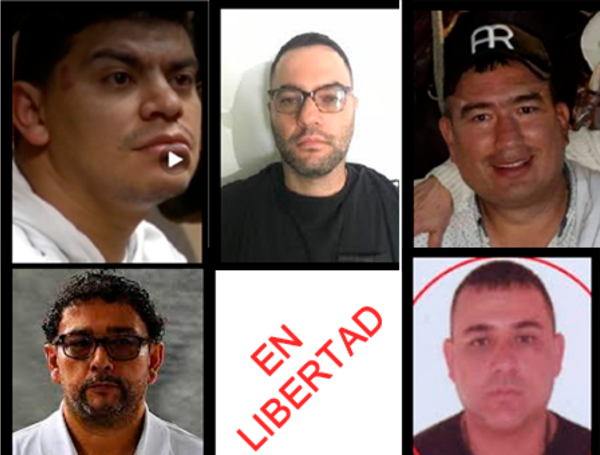
Early April 2026 (The Announcement of Beneficiaries): Public scrutiny intensifies as details emerge regarding the 23 high-profile cartel and gang leaders in Medellín whose arrest warrants have been temporarily lifted. Reports confirm that out of the 23 beneficiaries, at least 7 have already regained physical freedom to act as political or negotiating representatives in state dialogues.
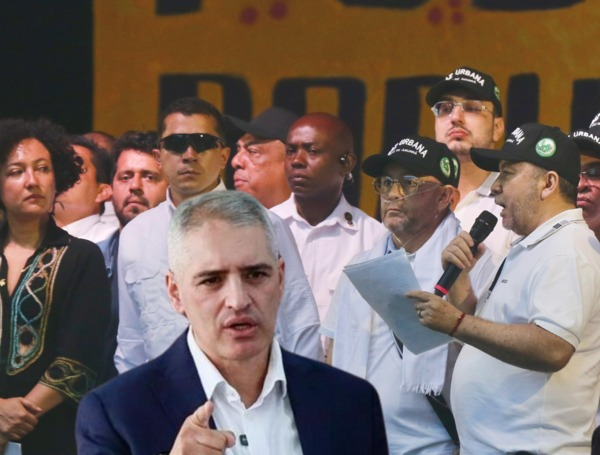
April 5, 2026 (Public Denunciation): Governor Andrés Julián Rendón takes to social media and public platforms to fiercely condemn the decision. He explicitly calls out President Gustavo Petro and the leadership of the Attorney General’s Office, accusing them of undermining public safety and betraying the victims of organized crime.
April 6, 2026 (The Security Council & Legal Action): Convening a security council with local leaders in the Aburrá Valley, Rendón formalizes his decision to challenge the government. He announces the immediate filing of the nullity lawsuit paired with an urgent precautionary measure at the Council of State.
April 6, 2026 (Afternoon Updates): Political pressure escalates as additional local leaders join the legal opposition. Projections indicate that further parallel legal actions will be filed within hours, notably by the President of the Medellín City Council, Alejandro De Bedout, who prepares a complementary lawsuit challenging the legality of the federal resolutions.
Supporting Data and Context
The controversy is underpinned by complex security dynamics within Antioquia, one of Colombia’s economic powerhouses and a historical stronghold for organized crime, drug trafficking, and urban militias.
The 23 Kingpins: The disputed administrative resolutions protect 23 key coordinators of legacy criminal structures in Medellín (often historically tied to remnants of drug cartels, Oficina de Envigado offshoots, and powerful neighborhood gangs known locally as combos).
Current Status: Out of the 23 designated leaders granted suspensions on their capture orders, intelligence and judicial reports confirm that 7 are currently moving freely across the territory to participate in government-backed peace initiatives.
Parallel Controversies: Governor Rendón’s discontent was further fueled by concurrent statements from the Attorney General, Luz Adriana Camargo, regarding potential legal benefits and the lifting of arrest orders for other high-profile national actors, such as alias "Calarcá." The juxtaposition of leniency toward violent actors alongside rigorous enforcement in other domains has created deep skepticism among regional leaders.
Escalating Litigations: The legal push led by the Gobernación de Antioquia is not isolated. It represents the spearhead of a coordinated judicial resistance by local authorities who feel bypassed and compromised by top-down security directives.
Official Responses and Political Reactions
The fallout from the suspension of the arrest warrants has triggered sharp reactions across the political spectrum, highlighting a profound ideological and operational divide between local executives and the central government.
The Regional Leadership’s Stance
Governor Andrés Julián Rendón has maintained an uncompromising posture against what he describes as concessions to criminality disguised as peace policies. In his official statements, both during the security council and via digital platforms, Rendón did not mince words:
"I am filing a lawsuit for nullity with a precautionary measure before the Council of State: Gustavo Petro and the Attorney General are releasing criminals, violating justice, and failing victims, judges, prosecutors, police officers, and soldiers who have risked their lives to capture them. They are building an impunity highway…"
Rendón argued that these measures are not only legally flawed and morally indefensible toward victims, but that they carry insidious political undertones. He warned that releasing and empowering armed actors within urban centers creates an environment of psychological coercion, ultimately threatening the democratic freedoms and electoral autonomy of the citizens of Antioquia.
The Legislative Front
Echoing the Governor’s concerns, municipal authorities have mobilized their own legal tools. The President of the Medellín City Council, Alejandro De Bedout, announced that his office would independently file a complementary lawsuit in the coming hours. This legislative backing underscores a unified front among Antioquia’s political class against what they perceive as federal overreach that compromises local safety.
The Central Government’s Perspective (Contextual Framework)
While the central administration and the Office of the Attorney General defend these legal suspensions as necessary constitutional and statutory tools to facilitate dialogue, dismantle complex criminal networks through negotiation, and achieve a negotiated end to localized violence, critics argue that the criteria lack transparency and fail to provide adequate safeguards for civilian populations. The national executive maintains that structured peace talks require temporary legal flexibility to bring hardened commanders to the negotiating table, a justification that regional leaders categorically reject.
Implications for Security, Justice, and Regional Autonomy
The legal battle initiated by the Gobernación de Antioquia carries profound implications that extend far beyond the borders of the department, signaling a potential turning point in how Colombia balances national peace policies with regional governance.
1. The Future of "Total Peace" Architectures
If the Council of State accepts the Governor’s petition and grants the emergency precautionary measures, it could temporarily or permanently paralyze the legal architecture used by the national government to grant judicial exemptions to active criminals engaged in talks. This would force the executive branch to recalibrate its negotiation strategies, potentially requiring broader legislative backing or more stringent oversight mechanisms before suspending warrants for high-value targets.
2. Strain on Police and Military Morale
One of the most recurrent arguments raised by Governor Rendón—and echoed by various police and military associations—is the psychological and operational toll that these releases take on the public force. Officers who spend months or years risking their lives in intelligence operations, tracking, and capturing violent criminals see their efforts instantly neutralized by administrative decrees. The resulting institutional frustration threatens to weaken operational enthusiasm and erode trust between local security forces and national policy-makers.
3. The Vulnerability of Victims and Local Communities
For the inhabitants of Medellín and the Aburrá Valley, the physical presence of notorious gang leaders moving freely through neighborhoods—even under the banner of peace spokespersons—generates deep anxiety. Civil society organizations and victims’ rights groups have expressed fears that these leaders maintain command and control over their illicit economies (extortion, micro-trafficking, and contract killings) while enjoying state-sanctioned immunity. The judicial challenge seeks to re-establish a legal firewall to protect these communities from localized intimidation.
4. A Test for the Council of State
The upcoming decision by the Council of State will serve as a critical constitutional test. The high court must carefully weigh the executive’s discretionary powers in matters of public order and national peace policy against the departmental rights to security, administrative legality, and the protection of constitutional rights for victims and law enforcement personnel.
As the legal papers are officially filed and reinforced by municipal allies like the Medellín City Council, all eyes remain fixed on Bogotá’s judicial tribunals. The outcome will not only determine the immediate freedom of 23 criminal kingpins in Antioquia, but will also establish a vital legal precedent for the limits of executive power in Colombia’s ongoing security and peace dynamics.
By Edwin Caicedo | Environmental and Health Journalist Updated: September 7, 2026 Main Facts For culinary enthusiasts striving to achieve a flawlessly golden, light, and shatteringly crisp crust on fried fish—rather than a heavy, grease-logged…
By: Digital Journalism Desk Published: September 5, 2026 In contemporary interior wellness and household trends, a seemingly simple practice has quietly taken center stage: placing a fresh laurel leaf into a glass of water. Far…
By Digital Scope Editorial Desk Published: October 20, 2026 Main Facts: The Intersection of Convenience, Nutrition, and Culinary Nostalgia In the fast-paced landscape of modern daily life, mornings have increasingly become a battleground against the…