Introduction and Main Facts
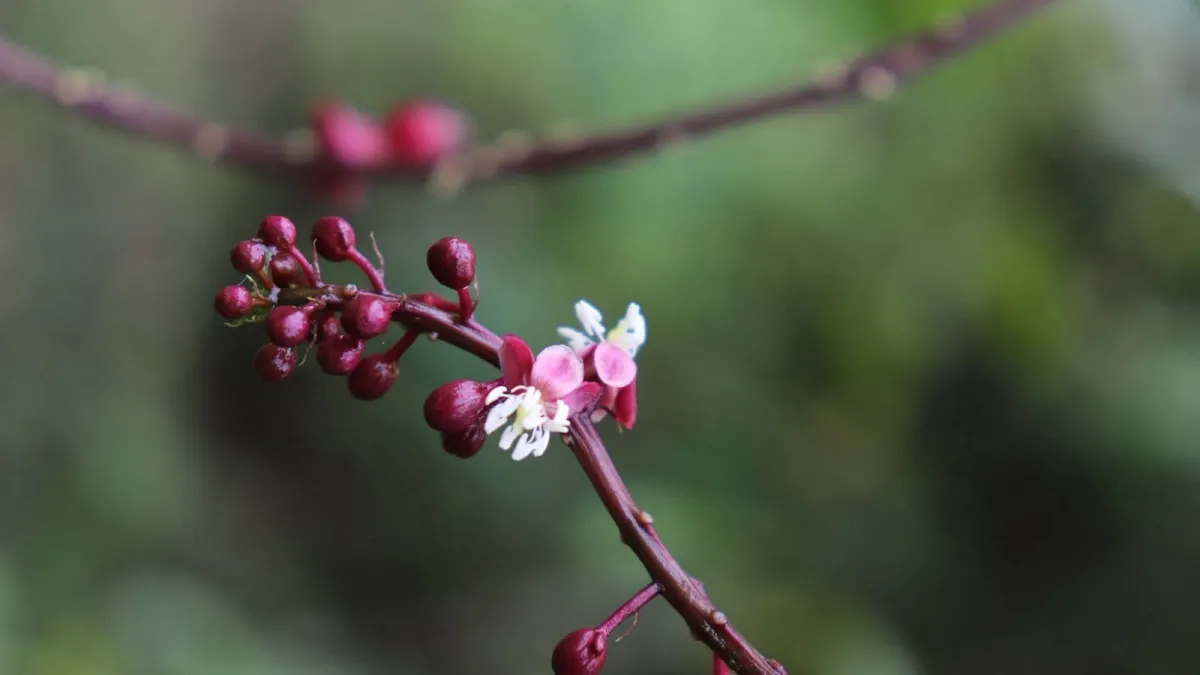
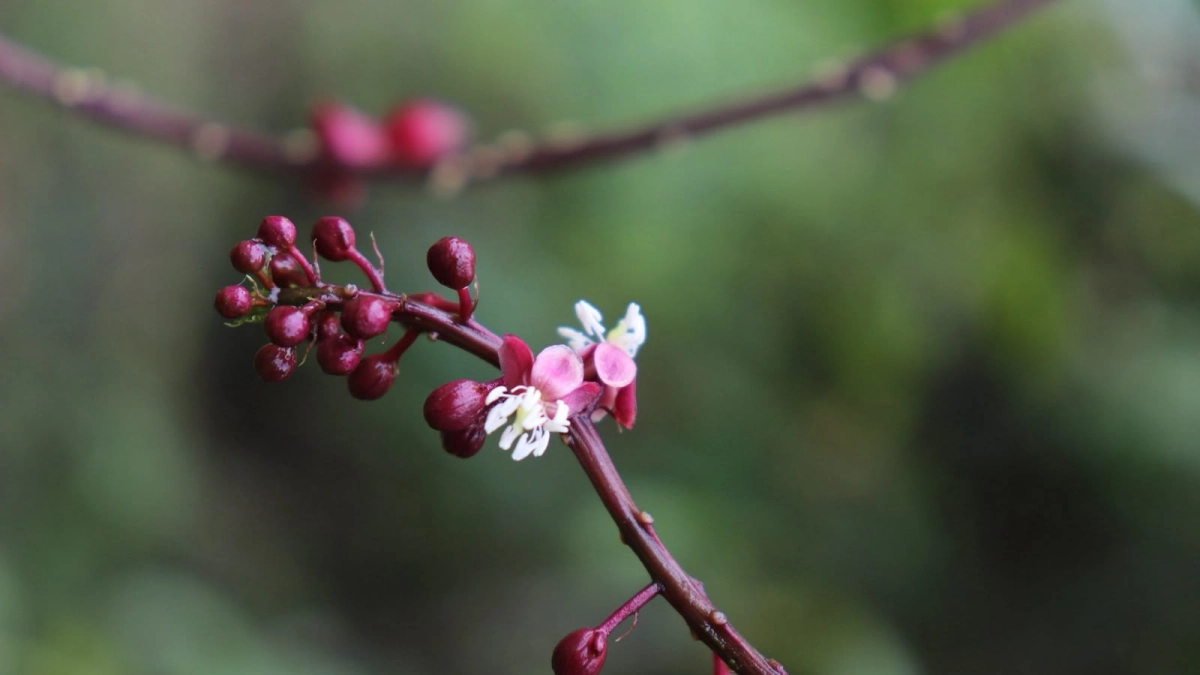
Deep within the misty, complex topography of the Colombian Andes, nature continues to reveal hidden chapters of its evolutionary history. In a groundbreaking botanical discovery, scientists have formally described a brand-new species of flowering plant native to the southern region of the country. Named Trichostigma guacharense, this elegant shrub—characterized by its vibrant, reddish-magenta blossoms—has emerged as a testament to the staggering biodiversity harbored within Colombia’s protected natural areas.
Belonging to the family Petiveriaceae, Trichostigma guacharense currently stands as an endemic botanical treasure. To date, exhaustive field surveys indicate that it is restricted exclusively to the humid montane forests of the Parque Nacional Natural Cueva de los Guácharos (Cueva de los Guácharos National Natural Park). Standing at an impressive height of approximately three meters, the shrub thrives in high-altitude ecosystems, specifically anchored between 1,800 and 2,150 meters above sea level.
What separates this newly documented taxa from its taxonomic relatives within the genus Trichostigma is a unique constellation of morphological traits. Botanists have pointed to its distinct leaf morphology, grooved petioles (leaf stalks), a specialized arrangement of stamens, peculiarly shaped fruits, and, most notably, its striking reddish-magenta inflorescences.
The formal disclosure of this species not only expands our understanding of Neotropical botany but also underscores the critical role that national parks play as living laboratories. As ecosystems face mounting pressures from climate change and anthropogenic disruption, the identification of Trichostigma guacharense offers a hopeful reminder of the undiscovered wealth resting beneath the canopy of protected forests.
Chronology of a Discovery: From Fieldwork to Scientific Formalization
The path from spotting an unusual plant in the dense Andean underbrush to having it internationally recognized as a novel species is a meticulous, years-long endeavor. The journey of Trichostigma guacharense is rooted in rigorous scientific exploration, combining traditional field craft with cutting-edge taxonomic analysis.
Phase 1: Exploration and Initial Collection
The discovery began during routine, yet meticulous, ecological and floristic expeditions in the rugged terrain of Cueva de los Guácharos. Researchers navigating the damp montane forests encountered an unfamiliar shrub bearing striking reddish-magenta flowers. Recognizing that its structural characteristics did not align with existing records of known flora, the field team collected voucher specimens following strict conservation and scientific protocols. These specimens served as the physical baseline for subsequent laboratory analysis.
Phase 2: Inter-Institutional Collaboration and Taxonomy
Back in the laboratory, a multidisciplinary team of scientists took on the complex task of taxonomic verification. The research collective was led by prominent botanists and academics, including Andrés F. Majín-Ladino, M. Alejandra Jaramillo, Laura I. Ramos, Gerardo A. Aymard, and Pablo R. Stevenson.
This scientific coalition bridged multiple institutions, drawing vital expertise from the Universidad Militar Nueva Granada and the Universidad de los Andes. Furthermore, the academic researchers worked hand-in-hand with park rangers (guardaparques) from Parques Nacionales Naturales de Colombia. These local stewards provided invaluable logistical support, technical field assistance, and deep geographical knowledge of the park’s most remote microclimates.

Phase 3: Peer Review and Publication in Brittonia
Once the morphological analysis was completed—comparing the mystery plant against historical herbarium specimens and global botanical databases—the team confirmed it as a species entirely new to science.
The findings were systematically compiled and submitted to Brittonia, a highly respected international peer-reviewed botanical journal. The published paper features the formal taxonomic diagnosis of Trichostigma guacharense, intricate and detailed botanical illustrations of the specimen, and an updated analytical identification key designed to help researchers differentiate among various species within the Trichostigma genus.
Supporting Data and Botanical Profile
To fully appreciate the scientific significance of Trichostigma guacharense, one must examine the specific ecological parameters and morphological markers that define the species. Botany relies heavily on precise measurements, micro-structures, and environmental contexts to classify plant life.
Environmental and Ecological Parameters
- Family: Petiveriaceae
- Genus: Trichostigma
- Species: Trichostigma guacharense
- Habitat: Humid montane forests (bosques montanos húmedos)
- Altitudinal Range: 1,800 to 2,150 meters above sea level
- Growth Habit: Woody shrub, reaching heights of approximately 3 meters
- Geographical Distribution: Endemic to Colombia; currently known only from the Cueva de los Guácharos National Natural Park in the south of the country.
Etymology: Honoring a Historic Park and its Iconic Bird
The scientific nomenclature chosen for the plant carries deep historical and ecological resonance. The species epithet, guacharense, is a dual homage:

- The Protected Area: It honors the Cueva de los Guácharos National Natural Park, the specific geographic cradle where the plant evolved and was discovered.
- The Oilbird: It directly references the Guácharo (Steatornis caripensis), commonly known in English as the oilbird. This nocturnal, cave-dwelling bird is famous for its unique echolocation and specialized diet of fruit. Historically, the presence of the guácharo in the region was the primary catalyst that, in 1960, led to the designation of the territory as Colombia’s very first national natural area, cementing the country’s modern conservation movement.
Morphological Distinctiveness
Within the genus Trichostigma, species are typically recognized by climbing or shrubby habits, alternate leaves, and raceme or spike-like inflorescences. Trichostigma guacharense differentiates itself through a unique suite of micro-characters:
- Inflorescences: Vivid reddish-magenta hues that stand out sharply against the deep green backdrop of the montane foliage.
- Vegetative Structure: Features specialized leaf blades paired with distinctly grooved petioles, which assist in water runoff and light capture in high-humidity environments.
- Reproductive Organs: A localized, non-random distribution pattern of stamens coupled with unique fruit morphology that sets it apart from lowland relatives.
Official Responses and Institutional Perspectives
The announcement of Trichostigma guacharense reverberated across Colombia’s scientific and environmental sectors, drawing praise from government agencies, academic leaders, and conservationists alike. The discovery is viewed not merely as an addition to a checklist of flora, but as a validation of long-term conservation strategies.
Alignment with National Conservation Agendas
Government officials highlighted how the discovery directly supports the Agenda ABC framework, a national policy initiative centered around three core pillars: Water (Agua), Biodiversity (Biodiversidad), and Communities (Comunidades).
Representatives from Colombia’s environmental sector noted that protected areas are not static landscapes locked away from human interaction, but rather dynamic, living spaces of active research, education, and national scientific sovereignty. The collaborative discovery underscores the government’s push toward "regenerative development"—a model where scientific inquiry and local community stewardship work in tandem to enrich the nation’s bio-cultural heritage.

Voices from Academia and Parks
While celebrating the publication in Brittonia, the research collective emphasized that the find highlights how little we truly know about Andean ecosystems.
"The discovery of Trichostigma guacharense is a tribute to the hidden complexities of our montane forests," noted representatives from the research teams at the Universidad de los Andes and Universidad Militar Nueva Granada. "It demonstrates that when academia, specialized researchers, and institutional park rangers unite in the field, our capacity to decode and protect our natural wealth multiplies exponentially."
Park authorities added that the local guardaparques are the unsung heroes of such discoveries. By maintaining the security and ecological integrity of Cueva de los Guácharos day in and day out, they preserve the pristine habitats required for delicate, endemic species like Trichostigma guacharense to survive and evolve undisturbed.
Implications for Conservation, Science, and Future Research
The formal description of Trichostigma guacharense carries profound implications that stretch far beyond the borders of Cueva de los Guácharos National Natural Park. It touches upon issues of global biodiversity loss, national scientific capacity, and the future of ecological preservation in the Neotropics.

1. Highlighting the Importance of Protected Areas
Colombia is recognized globally as a megadiverse country, ranking among the top nations in plant biodiversity. However, rapid deforestation, agricultural expansion, and climate change threaten countless unknown species before they can even be documented.
The fact that Trichostigma guacharense was found within an established national park validates the foundational purpose of protected areas. Parks like Cueva de los Guácharos act as vital arks for evolution. Without legal protection and active governmental oversight, habitats harboring rare endemics risk being degraded before science can record their existence.
2. Filling Gaps in Neotropical Taxonomy
The genus Trichostigma has long held the interest of botanists studying the order Caryophyllales and the family Petiveriaceae. By publishing the diagnosis, detailed illustrations, and an updated analytical key in Brittonia, the research team has provided an indispensable tool for regional herbaria and international botanists.
Taxonomists worldwide can now use these diagnostic keys to re-examine existing herbarium collections or conduct targeted field searches in adjacent Andean corridors. This could potentially reveal whether Trichostigma guacharense ranges further north or south along the Andean cordillera, or if it is a micro-endemic strictly bound to the park’s unique limestone caves and humid microclimates.

3. Fostering Interdisciplinary and Community-Based Science
The successful cataloging of the magenta-flowered shrub sets a collaborative benchmark for future ecological studies in Latin America. By weaving together:
- Academic rigor (universities providing advanced morphological and molecular tools),
- Field expertise (taxonomists spending weeks navigating rugged terrain), and
- On-the-ground protection (park rangers ensuring safety and ecological guidance),
the project showcases a holistic model for scientific discovery. Experts argue that future conservation efforts must rely precisely on this tripartite alliance—bridging policymakers, elite academic institutions, and local guardians.
Looking Ahead
As researchers continue to analyze samples and monitor the fragile ecosystems of southern Colombia, Trichostigma guacharense serves as a vibrant symbol of resilience and mystery. It reminds humanity that the Earth’s natural history book is far from closed; every shaded mountain pass and misty cloud forest may yet hold silent wonders waiting to be understood, named, and protected for generations to come.