By Global News Desk
Updated: November 1, 2026
Main Facts
A weekend of widespread, youth-led protests against the soaring cost of living, economic insecurity, and government policies has plunged several major European nations into turmoil. Spanning France, Germany, and Portugal, the demonstrations drew hundreds of thousands of participants into the streets, predominantly comprising university students, high schoolers, labor unionists, and working-class citizens.
While the vast majority of the demonstrations began peacefully, falling evening temperatures frequently gave way to intense urban guerrilla tactics, violent clashes with law enforcement, and fierce debates over police brutality and state authoritarianism.
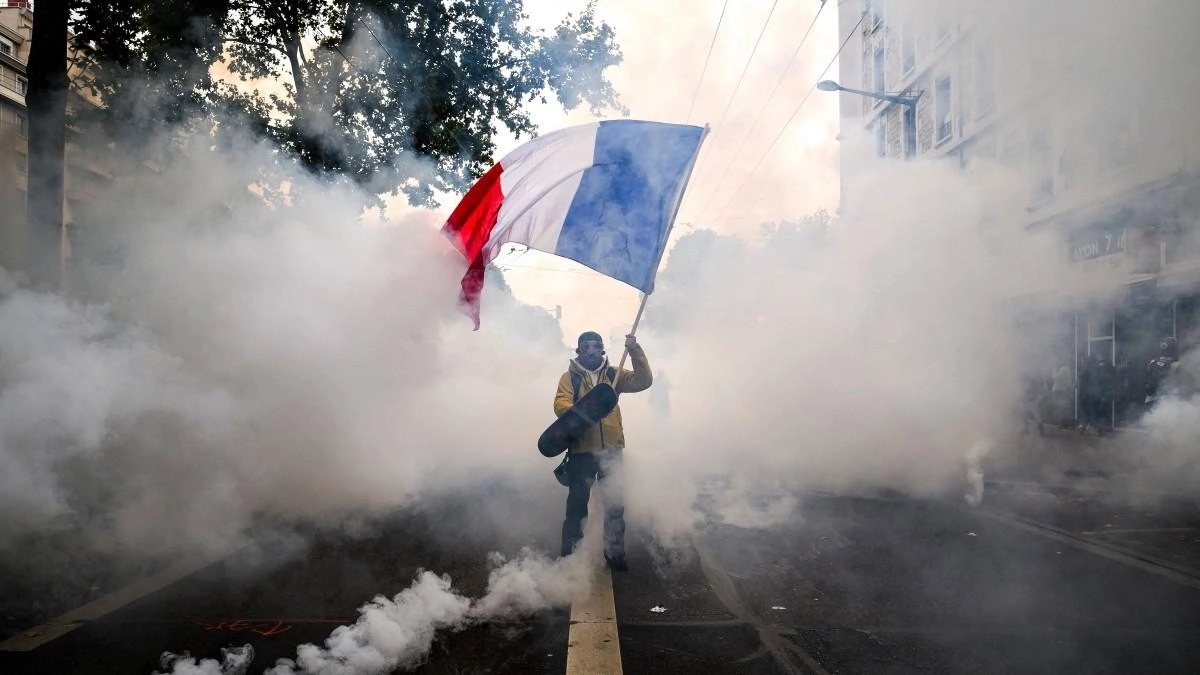
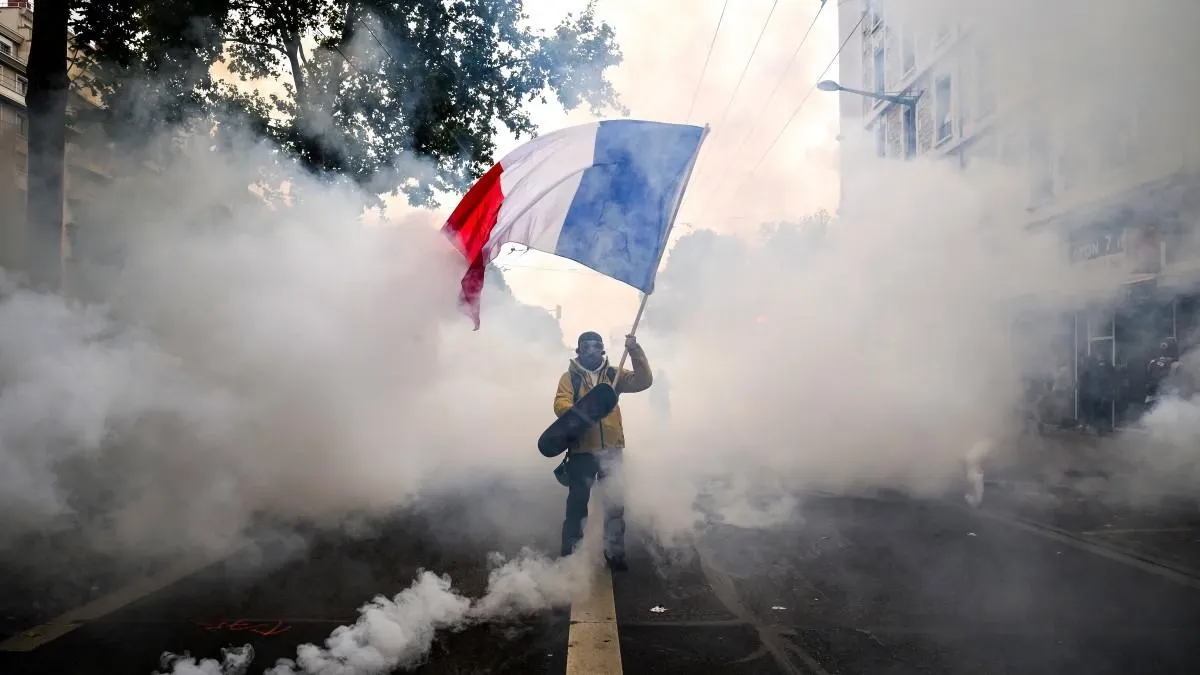
In France, which bore the brunt of the unrest, authorities reported 779 arrests and 166 police injuries following consecutive weekends of mobilization. The situation escalated dramatically when rioters deployed commercial fireworks, projectiles, and at least one Molotov cocktail directly at security forces in eastern Paris, resulting in severe burns for a gendarme. The French Prosecutor’s Office has formally opened an investigation into "attempted homicide against persons holding public authority."
Concurrently, Germany witnessed massive mobilization under the banner of the "GenZ regelt!" ("Gen Z takes charge!") movement, where roughly 120,000 young people protested inflation, crumbling educational infrastructure, and controversial proposals regarding defense spending and potential military service reforms. The protests culminated in water cannon deployments and violent skirmishes in Frankfurt.
Further south, in Portugal, riot police forcibly cleared out protest encampments in Lisbon and Oporto established in defiance of a worsening housing crisis. The overnight operations resulted in 13 arrests, dozens of injuries, and renewed accusations from citizens that the government was sliding toward authoritarian rule.

As European governments grapple with post-pandemic economic fallout, inflationary pressures, and the looming threat of recession, the weekend’s events have exposed a deep, widening generational chasm between frustrated youth and the political establishment.
Chronology of a Volatile Weekend
Friday Night into Saturday Morning: The Mobilization Begins
The weekend of unrest materialized against a backdrop of escalating socio-economic anxieties. In France, preparation for the third consecutive Saturday of widespread demonstrations had set security apparatuses on high alert. Social media channels buzzed with calls for a "general insurrection" and "revolution," prompting the French Ministry of the Interior to deploy an unprecedented 70,000 police and gendarmerie officers nationwide.
In the lead-up to Halloween, demonstrators in Paris combined socio-economic grievances with festive subversion, with several groups marching in costumes ranging from popular culture icons like Spider-Man and Mario to gothic figures like Frankenstein.
Saturday Afternoon: Peaceful Marches Give Way to Chaos
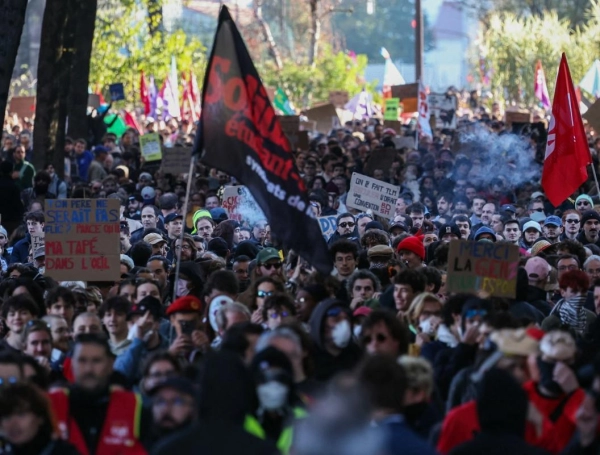
By early Saturday afternoon, crowd sizes swelled significantly. Coalition estimates from labor unions and student syndicates placed turnout in France at approximately half a million people, with 200,000 gathered in Paris alone. Official government tallies put the national figure more conservatively at 320,000, including 70,000 in the capital.
The demonstrations featured a coalition of traditional trade unionists, remaining "Yellow Vests" (gilets jaunes), and a massive influx of secondary and university students. Protesters voiced widespread frustration over stagnant wages, high inflation, and the impending 2027 French presidential elections.
However, as daylight faded, the character of the demonstrations shifted abruptly. In regional hubs such as Lyon, Rennes, Marsella, and Toulouse, localized groups splintered off from the main processions, barricading streets and engaging in cat-and-mouse games with riot police.

In eastern Paris, the violence reached a critical juncture when a coordinated group of masked individuals launched a barrage of heavy projectiles and explosive devices at law enforcement units. A Molotov cocktail detonated directly at the feet of a gendarme, inflicting second-degree burns and triggering chaos within the police line.
Saturday Evening: Water Cannons in Frankfurt and Raids in Lisbon
Simultaneously, across the border in Germany, the "GenZ regelt!" movement brought an estimated 120,000 protesters into the streets across multiple cities. While daytime rallies in Berlin, Cologne, and Hamburg remained largely disciplined, nighttime operations turned combative.
In Frankfurt, police categorized the evening disturbances as full-scale riots. Activists smashed storefront windows, looted local businesses, and hurled improvised incendiary devices at emergency response vehicles. Law enforcement retaliated forcefully, deploying water cannons and chemical irritants to clear the thoroughfares.
In the Iberian Peninsula, the focus centered sharply on housing. During the pre-dawn hours of Sunday morning, Portuguese riot police moved in to dismantle long-standing protest encampments in Lisbon and Oporto. Demonstrators had occupied public squares to protest skyrocketing rents and the center-right government’s plans to ease landlord eviction rules and eliminate rent control caps. The early-morning raids sparked fierce resistance, leading to hand-to-hand skirmishes, broken barricades, and subsequent emergency medical responses.
Supporting Data and Statistical Breakdown
The quantitative impact of the weekend’s demonstrations highlights both the scale of public discontent and the severity of the state responses:
-
France:

- Total Arrests: 779 individuals detained nationwide. While substantial, this represented a noticeable decline from previous weeks, down from 1,435 arrests on the prior Saturday and 2,628 on October 17.
- Law Enforcement Casualties: 166 police officers and gendarmes sustained injuries, continuing a downward trend from 267 the previous week and a staggering 1,144 injuries recorded during the peak mobilization on October 17.
- Turnout Discrepancies: Official estimates counted 320,000 participants nationwide (70,000 in Paris), whereas organizers claimed upwards of 500,000 participants (200,000 in Paris).
- Security Deployment: 70,000 active-duty security personnel deployed across France.
-
Germany:
- National Turnout: Approximately 120,000 participants mobilized by the "GenZ regelt!" movement.
- Hotspots of Violence: Severe clashes concentrated in Frankfurt, Berlin, Cologne, and Hamburg, requiring specialized crowd control units.
-
Portugal:
- Arrests and Casualties: 13 protesters detained during the forceful clearance of housing crisis encampments in Lisbon and Oporto.
- Injuries: 13 police officers injured by flying debris, paint, and pyrotechnics, alongside upwards of 30 protesters reported injured by the organizing collective Acampada Lisboa.
Official Responses and Political Fallout
The events of the weekend have triggered intense political recriminations across Europe, forcing leaders to walk a delicate tightrope between maintaining public order and addressing the legitimate grievances of their citizenry.
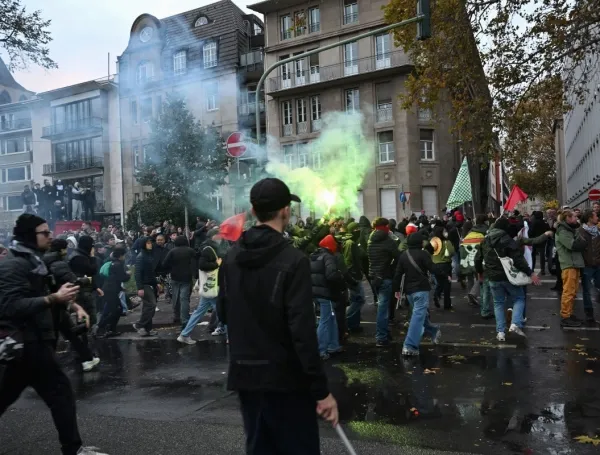
France: Condemnation of "Unheard-Of Violence"
French Interior Minister Laurent Nuñez defended the overall management of the operations, characterizing the general flow of the day as having "gone well," while simultaneously condemning the "unheard-of violence" perpetrated by radical fringe elements. Nuñez explicitly classified the Molotov cocktail attack on the gendarme as an attempted assassination, noting that investigations are actively pursuing those responsible.
The attack drew swift condemnation across the French political spectrum. Marine Le Pen, leader of the National Rally and a leading contender in the upcoming 2027 presidential race, demanded that the perpetrators be punished with the "maximum severity" permitted by law. Right-wing candidate Bruno Retailleau echoed these sentiments, calling for zero tolerance for urban guerrilla tactics.
Conversely, left-wing politicians and civil rights advocates accused the state of overreach and heavy-handed tactics. Radical left leader Jean-Luc Mélenchon denounced what he termed a dangerous "drift toward authoritarianism." Protesters voiced deep concerns over preemptive bans on inner-city marches in cities like Toulouse, with many arguing that the government was systematically dismantling democratic rights under the guise of security.
President Emmanuel Macron maintained that the administration has actively listened to the younger demographic. However, student leaders vehemently rejected this assertion. Pierre Sourzat, a prominent youth activist, dismissed government concessions—such as university access platform reforms and facility repair loans—as mere "makeup" that fails to address structural economic decay.
Germany: Blaming Extremism and Foreign Agitators
German Interior Minister Alexander Dobrindt took a hardline stance following the Frankfurt riots, asserting that decisive police action successfully prevented the "scenes witnessed in Paris" from unfolding on German soil. Dobrindt pointed the finger at violent left-wing extremist factions and "troublemakers hailing from immigrant backgrounds," accusing them of "hijacking" what was otherwise a legitimate youth-led movement.
The far-right Alternative for Germany (AfD) seized upon the unrest to condemn left-wing extremism, while mainstream progressive parties, including Die Linke (The Left) and the Green Party, walked a fine line. While unequivocally condemning the violence and property destruction, they urged Chancellor Friedrich Merz’s conservative government to urgently address the underlying socio-economic catalysts driving the youth to protest.
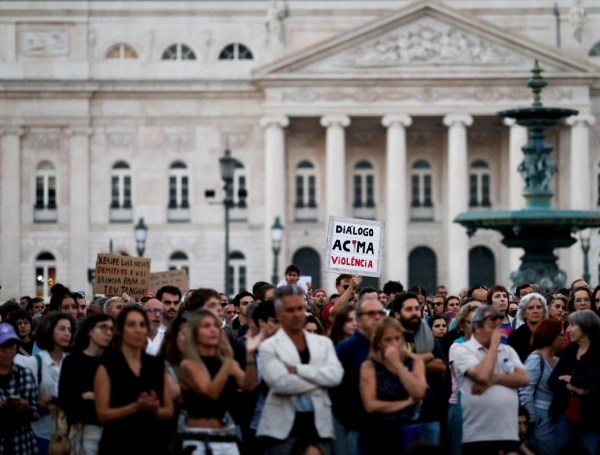
Portugal: Defending the Rule of Law
In Lisbon, the Ministry of Internal Administration defended the controversial clearance operations, stating that the police executed their duties with "rigor, balance, and respect for the rights of citizens." Officials maintained that officers exercised restraint despite facing a barrage of hostile projectiles, including bottles and fireworks.
However, housing rights groups sharply disagreed, characterizing the pre-dawn raids as an authoritarian crackdown on fundamental civil liberties. The stark contrast in narratives has further inflamed tensions, leading to emergency calls for counter-demonstrations and ongoing political friction within the Portuguese parliament.
Implications and Future Outlook
The convergence of economic hardship, housing crises, and youth mobilization points toward a protracted period of social instability across the Eurozone. As the second-largest economy in the currency bloc, France sits in an exceptionally precarious position, teetering on the edge of recession while under intense pressure from European Union fiscal frameworks to curtail national debt. This leaves the Macron administration with virtually no budgetary room to maneuver or appease restless citizens through financial subsidies.

The immediate future promises no respite for weary security forces or stressed municipal governments. In France, student organizations have vowed to escalate their campaign, announcing systematic high school blockades starting Monday morning, alongside coordinated general strikes and further mass mobilizations scheduled for Tuesday and Thursday. Meanwhile, the resilient gilets jaunes movement has called for an extended weekend of disruptive actions on November 6 and 7.
With inflation continuing to erode purchasing power, housing markets remaining aggressively out of reach for younger demographics, and trust in traditional political institutions steadily eroding, the events of this weekend serve as a volatile prelude. The core question facing European leaders is no longer simply how to manage the symptoms of civil unrest, but how to fundamentally restructure their economies to prevent a permanent alienation of the continent’s younger generations.