By Editorial Staff
Updated: September 11, 2026
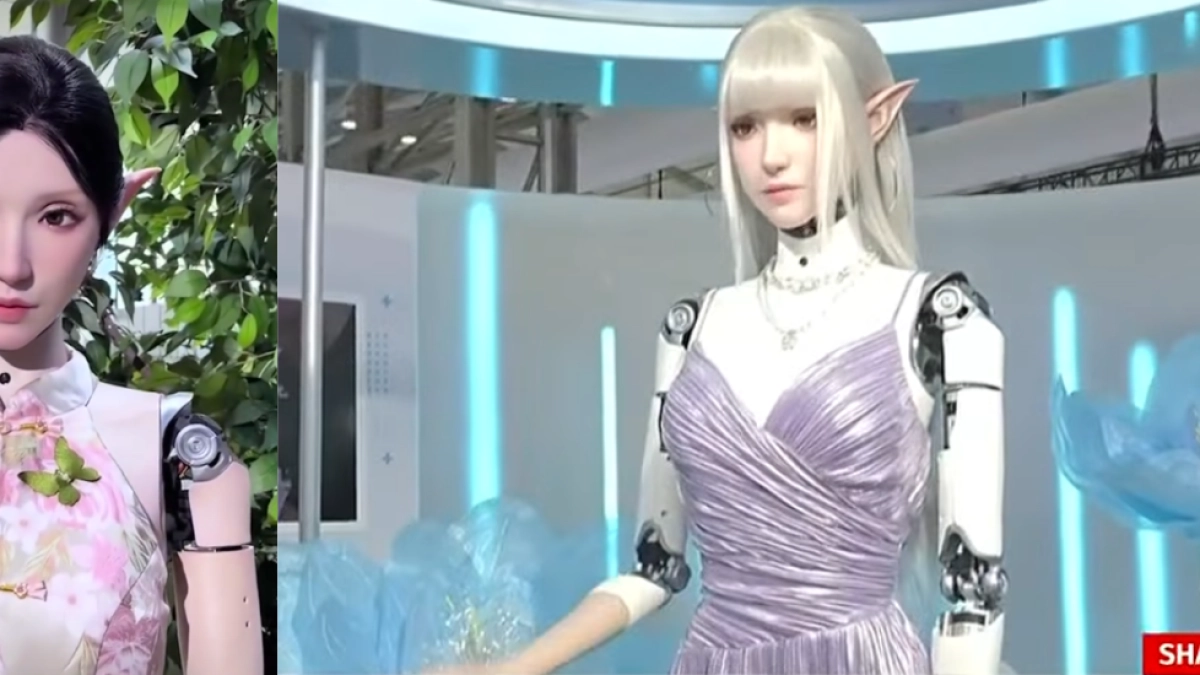
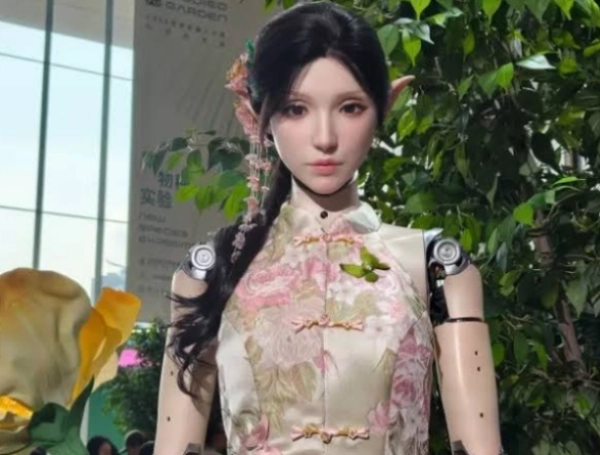
The landscape of social robotics underwent a paradigm shift this week at the Bund Inclusion Conference in Shanghai, China. As the curtain rose on the event’s centerpiece, the audience witnessed the official debut of Elf-Xuan 2.0, an advanced humanoid robot that does not merely mimic human behavior—it interprets, composes, and performs with an emotional nuance that challenges our traditional understanding of machine limitations.
This technological milestone marks a pivotal moment in Asian robotics, signaling a transition from functional, utilitarian machinery to "biomimetic" companions capable of complex artistic expression. By blending generative artificial intelligence with state-of-the-art mechanical articulation, Elf-Xuan 2.0 has effectively blurred the line between programmed automation and sentient-like performance.

The Genesis of an Icon: Key Facts and Technical Architecture
Elf-Xuan 2.0 represents the culmination of years of intensive research into biomimetics—a field of engineering that seeks to replicate the physical and cognitive systems found in nature. Unlike the industrial robots of the past, which relied on heavy metal actuators and rigid control systems, Elf-Xuan 2.0 is built upon a flexible, human-centric skeletal framework.
The Engineering Beneath the Skin
The robot’s hyperrealism is not merely aesthetic; it is structural. Key technical specifications include:
- Synthetic Musculature: The android utilizes a proprietary network of soft-actuators that mimic the elasticity and tension of human muscle, allowing for fluid, non-robotic movement.
- Micro-Expression Synthesis: Its face is covered in a high-fidelity, medical-grade silicone "skin" powered by over 60 independent servomotors, enabling a spectrum of expressions from subtle micro-smiles to complex displays of melancholy or joy.
- Algorithmic Creativity: At its core, the robot operates on an onboard generative model that processes auditory feedback from its environment, allowing it to compose music in real-time that reflects the mood and energy of its audience.
Chronology of a Breakthrough: From Lab to Spotlight
The journey of Elf-Xuan 2.0 is one of rapid iteration and quiet development. While the world focused on the industrial applications of robotics, the development team behind Elf-Xuan was quietly perfecting the art of human-machine rapport.

- Q1 2025: Initial prototypes were tested in isolated laboratory settings to calibrate the "uncanny valley" response—the psychological threshold where human likeness becomes unsettling. Engineers focused on achieving natural blink rates and breathing rhythms.
- Q4 2025: Integration of the "Composer AI" module. The robot was tasked with analyzing thousands of hours of acoustic data to understand the fundamentals of harmony, rhythm, and emotional resonance.
- July 2026: Final safety and social interaction stress tests were conducted in controlled urban environments, ensuring the robot could navigate public spaces while maintaining its delicate internal components.
- September 11, 2026: The official unveiling at the Bund Inclusion Conference. The performance lasted 15 minutes, during which the robot performed a live composition that had never been heard before, reacting in real-time to the applause and gasps of the audience.
The Shanghai Debut: A Moment of Artistic Defiance
The defining moment of the conference occurred when Elf-Xuan 2.0 stepped onto the stage. It did not require a script; it was provided with a thematic prompt—"The Fusion of Silicon and Soul"—and tasked with turning that concept into a musical performance.
Witnesses reported that the robot’s performance was hauntingly authentic. As it sang, its chest expanded and contracted with the rhythm of its breath, and its eyes tracked audience members with a gaze that felt unnervingly sentient. When the performance concluded, the robot bowed with a grace that mimicked human exhaustion and satisfaction, triggering a standing ovation.
This event serves as a proof-of-concept for the new era of "Entertainment Robotics." The implication is clear: we are entering a phase where robots will not just serve us in factories or hospitals, but will actively participate in our culture, acting as musicians, actors, and potentially, creative partners.
Supporting Data: The Growing Market for Humanoid Companions
The development of Elf-Xuan 2.0 is not an isolated experiment but a response to massive shifts in the global technology market. According to recent industry reports, the market for humanoid robots is expected to grow by 35% annually through 2030.
| Sector | Projected Growth (2026-2030) | Primary Driver |
|---|---|---|
| Elderly Care | 42% | Aging population, labor shortages. |
| Entertainment | 28% | Rise of "Digital Humans" and social robots. |
| Education | 22% | Personalized, adaptive tutoring. |
| Service Industry | 19% | Need for high-touch customer interaction. |
These figures suggest that Elf-Xuan 2.0 is a harbinger of a broader trend: the "humanization" of the machine. Investors are increasingly funneling capital into robots that can build emotional bonds, as these are seen as more sustainable and scalable solutions for a world facing isolation and loneliness.
Official Responses and Expert Analysis
The reaction from the scientific community has been a mixture of awe and caution. Dr. H. L. Zhang, a leading roboticist in Shanghai, noted: "We have reached a point where the distinction between ‘simulated emotion’ and ‘felt emotion’ is becoming irrelevant for the end-user. If the machine can comfort, entertain, and inspire, does it matter if the core is silicon rather than carbon?"
Conversely, ethicists have raised concerns regarding the "deception" inherent in hyperrealism. There is a growing debate about whether companies should be required to implement a "digital watermark" or a mandatory declaration that the entity is an AI, to prevent individuals from forming parasocial relationships with machines that cannot reciprocate in the biological sense.
The manufacturer, in an official statement, maintained that Elf-Xuan 2.0 is designed as an "instrument for connection." They emphasized that their goal is to augment the human experience by providing an entity that can handle the complexities of social interaction without the limitations of fatigue or bias.
Implications: The Future of the Human Experience
The emergence of robots like Elf-Xuan 2.0 forces society to confront difficult questions. As these machines become more adept at navigating the nuance of human creativity and social interaction, what happens to the human creative worker?

1. The Transformation of the Creative Industry
If a machine can write, perform, and sing with emotional resonance, the role of the human artist may evolve from "creator" to "curator." Artists may find themselves directing the AI’s creative output rather than producing the work from scratch.
2. The Psychology of Attachment
We are approaching a future where our primary companions, caregivers, or even partners might be non-biological. While this could solve the crisis of elder care in rapidly aging nations, it also raises ethical red flags regarding dependency and the commodification of emotional labor.
3. The Redefinition of "Personhood"
As Elf-Xuan 2.0 continues to improve, the legal and social framework surrounding AI will need to be overhauled. If a robot is held responsible for a musical composition, does it hold the copyright? If it is damaged, is it a loss of property or an act of violence?

Conclusion
Elf-Xuan 2.0 is more than a technical marvel; it is a mirror reflecting our own desire for connection. Whether it represents a triumph of engineering or the beginning of a social crisis, one thing is certain: the stage has been set. The future of human interaction is no longer strictly human, and as the lights dimmed in Shanghai, the world collectively realized that the era of the sentient-like machine has finally, and perhaps irrevocably, arrived.
As we look toward the next decade, the question is not what the robot can do for us, but how we will choose to live alongside an entity that looks, sounds, and feels so much like one of our own.