
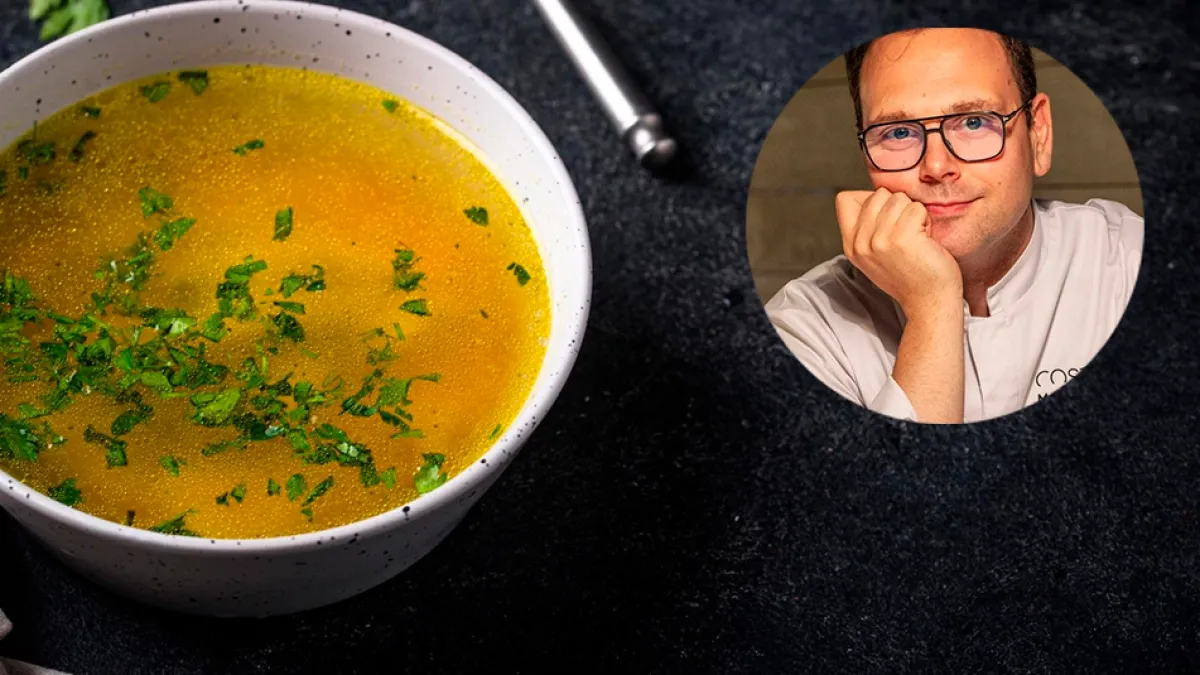
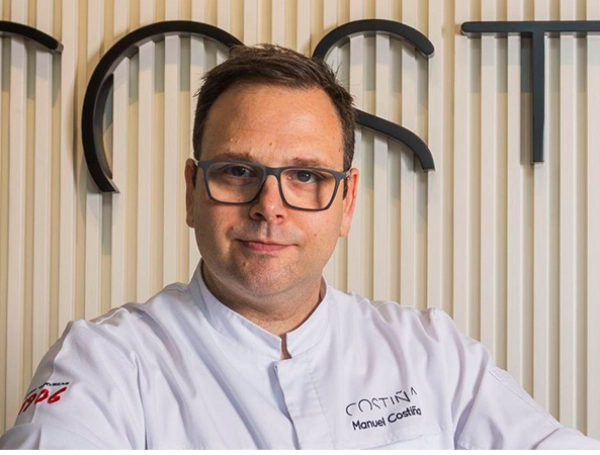
In an era defined by convenience, the humble carton of chicken stock has become a ubiquitous presence in the modern pantry. Marketed as a time-saving solution for the home cook, these industrial liquids promise the flavor of a traditional simmer without the hours of labor. However, for Manuel Costiña, a chef decorated with two Michelin stars and two Repsol Suns, the commercial stock aisle is a culinary wasteland.
Costiña, the mastermind behind the acclaimed Retiro da Costiña in Galicia, Spain, has issued a blunt warning to home cooks: stop buying pre-packaged stocks. According to the chef, these products are not merely poor imitations of the real thing; they are fundamentally different substances, lacking the nutritional density and complex flavor profiles that define authentic, slow-cooked broth.
The Mirage of Convenience: Why Industrial Stock Fails
To understand why Costiña advocates for a return to the basics, one must look at the label of a typical store-bought stock. "If you examine the ingredients list," Costiña explains, "you will often find that water, salt, and ‘natural flavorings’ dominate the profile. The actual chicken content is frequently marginal, if not negligible."
The discrepancy between the store-bought variety and the homemade version is most evident in the refrigerator. A genuine, gelatinous stock is the hallmark of a properly executed kitchen preparation. When cooled, a well-made stock should set into a firm, jelly-like consistency. This texture is the physical manifestation of collagen—a structural protein derived from slow-simmering bones, cartilage, and connective tissue.
Commercial alternatives, often thickened with gums or modified starches and heavily reliant on synthetic flavoring agents, remain liquid even at near-freezing temperatures. This lack of "body" is not just a textural issue; it is a sign that the essential proteins and amino acids that provide the depth of flavor and nutritional value are absent.
The Anatomy of the Perfect Stock: A Chronology of Technique
For Costiña, the difference between a mediocre liquid and a Michelin-grade stock lies in the methodology. He posits that the secret is not a secret ingredient, but rather the application of thermal techniques that extract maximum flavor from humble components.
Phase 1: The Maillard Reaction (Pre-simmer)
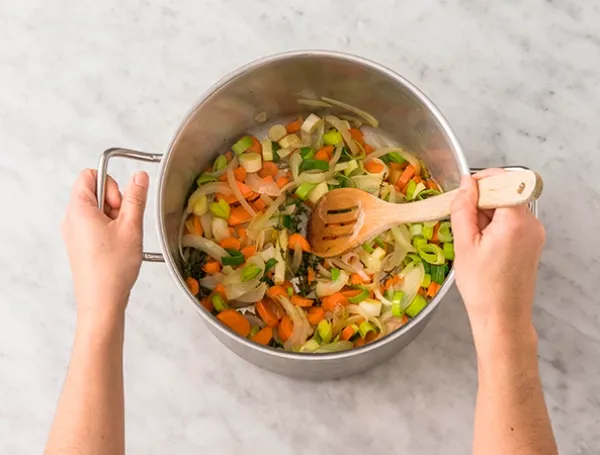
The process begins with the "Roast and Sauté" phase. Instead of simply dumping raw chicken parts and vegetables into a pot, Costiña insists on roasting the bones and chicken carcasses until they reach a deep, golden-brown hue. This triggers the Maillard reaction—a chemical reaction between amino acids and reducing sugars that gives browned food its distinctive flavor.
Simultaneously, the aromatic vegetables—carrots, onions, and leeks—must be re-sautéed or roasted. This step removes the raw, astringent notes of the vegetables, replacing them with a caramelized sweetness that creates the base note of the final stock.

Phase 2: The Gentle Extraction
Once the foundation is prepared, the ingredients are transferred to a pot with cold water. The use of cold water is a non-negotiable step in professional kitchens; it allows for the slow extraction of flavors and ensures that the fat and proteins rise to the surface gradually.
The heat must be managed with extreme care. The goal is a "gentle simmer," never a rolling boil. A rolling boil will emulsify the fat into the water, resulting in a cloudy, greasy, and potentially bitter stock. A gentle simmer, however, allows for a clear, pristine liquid.
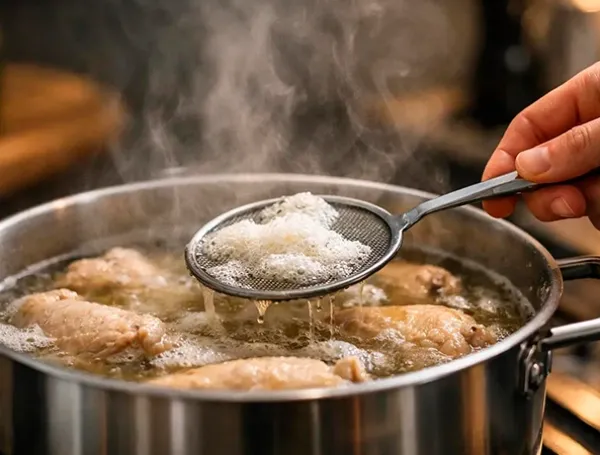
Phase 3: The Clarification and Skimming
Throughout the cooking process, which can last anywhere from four to eight hours, the chef must perform the "degreasing" ritual. Using a ladle or a skimmer, the cook must consistently remove the greyish foam and excess fat that rises to the top. This technique is what separates a professional stock from an amateur version; it ensures that the final result is elegant, transparent, and refined.
Supporting Data: Nutrition vs. Convenience
The nutritional profile of home-prepared stock is significantly superior to that of processed versions. While commercial stocks are often loaded with high levels of sodium to compensate for a lack of genuine flavor, homemade stock provides a bioavailable source of minerals, particularly calcium, magnesium, and phosphorus, which leach from the bones during the long simmer.

Furthermore, the amino acids glycine and proline, found in the collagen of the bones, are known for their anti-inflammatory properties and their ability to support gut health. By replacing a store-bought, high-sodium additive with a homemade, collagen-rich broth, the home cook is effectively upgrading the nutritional profile of every soup, risotto, or sauce they prepare.
Expert Consensus and Professional Standards
The culinary world has long held that "the sauce is the soul of the kitchen." This mantra, famously championed by French masters like Escoffier, remains the guiding principle for chefs like Costiña.

"When you buy a carton of stock, you are buying a shortcut," says Costiña. "But cooking is not about shortcuts; it is about the transformation of simple, raw ingredients into something greater than the sum of their parts."
Professional kitchens maintain a constant rotation of stocks. By keeping a base of roasted chicken, beef, or vegetable stock on hand, a chef can transform a simple meal into a sophisticated dish with a single ladle of liquid. The industry consensus is clear: the quality of the stock dictates the quality of the restaurant’s entire output.

Practical Implications for the Home Kitchen
Implementing Costiña’s method does not require a commercial-grade kitchen, but it does require a shift in mindset. Here is how to integrate this practice into a busy lifestyle:
Storage and Logistics
One of the primary reasons people purchase stock is the fear of waste. However, homemade stock is highly shelf-stable if managed correctly.

- Refrigeration: Stock can be kept in a sterile, airtight container for up to three days.
- Freezing: This is the secret to consistency. Stock can be portioned into ice cube trays or silicone bags and frozen for up to three months. This allows the home cook to use only as much as needed for a specific recipe.
- The Fat Cap: When stock is frozen or refrigerated, the fat will rise and form a solid layer on top. This is an advantage. This layer acts as a natural seal, protecting the stock from oxidation and flavor contamination. It should be left in place until the moment of use, at which point it can be easily removed with a spoon.
The "Five-Ingredient" Rule
Costiña emphasizes that one does not need an exotic pantry to create a world-class stock. The essentials are:
- Quality Chicken Bones: Ask your local butcher for "soup bones" or carcasses; they are often inexpensive.
- Onions: For depth and color.
- Carrots: For subtle sweetness.
- Leeks: For an earthy, aromatic finish.
- Water: The solvent that brings it all together.
Conclusion: A Culinary Investment
Choosing to make your own stock is more than just an act of cooking; it is an act of reclaiming the integrity of your food. While the initial investment of time may seem daunting, the result is a product that is not only vastly superior in taste but also deeply rooted in the history of culinary craft.

As Manuel Costiña concludes, "The kitchen is a place of alchemy. When you take the time to roast the bones, to watch the simmer, and to clarify the liquid, you aren’t just making dinner. You are learning the language of flavor." In a world that is increasingly disconnected from the origins of its ingredients, the simple, honest, and patient preparation of a homemade chicken stock stands as a powerful, and delicious, form of rebellion.