By Daniel Otero (Head of Editorial, Revista Motor) Published: September 11, 2026
The scope and effectiveness of automotive technology are historically measured by its democratization—how quickly features once reserved for ultra-luxury flagships cascade down to mainstream segments. Airbags, anti-lock braking systems (ABS), digital navigation, and touchscreen infotainment suites were all once elite luxuries; today, they are as ubiquitous and indispensable as pneumatic tires. Naturally, the evolution of autonomous driving follows this exact trajectory. Or does it?
To the dismay of purists who champion three-pedal manuals and physical gear selectors, the global automotive industry has taken giant strides to eliminate human drivers from the equation. The ultimate goal is clear: transition motorists into passive passengers. To a certain extent, this future has already arrived.
A quick glance at global markets reveals a proliferation of affordable models—particularly from Chinese manufacturers—offering semi-autonomous capabilities that were entirely unthinkable in lower-price tiers just a few years ago. Features like adaptive cruise control, which automatically regulates speed and maintains a safe following distance, are now widely accessible. Yet, bridging the gap between sophisticated driver-assistance systems and a vehicle that navigates entirely on its own remains one of the greatest engineering and regulatory challenges of the 21st century.
Autonomous vs. Semi-Autonomous Driving: Understanding the Technical Divide
When discussing advanced automotive technology, a critical distinction must be made between true autonomous driving and semi-autonomous operation. One category describes a vehicle that genuinely pilots itself, while the other demands the continuous attention, oversight, and intervention of a human driver.
The latter represents the core of what is increasingly common in mass-production vehicles: Advanced Driver Assistance Systems (ADAS). These technologies actively intervene in various vehicle controls, including the accelerator, brakes, and steering. Examples include adaptive cruise control, lane-keep assist (which actively corrects steering trajectory), and autonomous emergency braking, which brings the vehicle to a halt when an imminent collision is detected and the human driver fails to react in time.
True autonomous driving, however, is fundamentally different. According to industry standards, this is classified as Level 5 autonomy—the apex of self-driving technology where the human driver becomes entirely redundant, and the cabin can theoretically exist without occupants. The vehicle’s internal architecture manages every conceivable dynamic driving task.
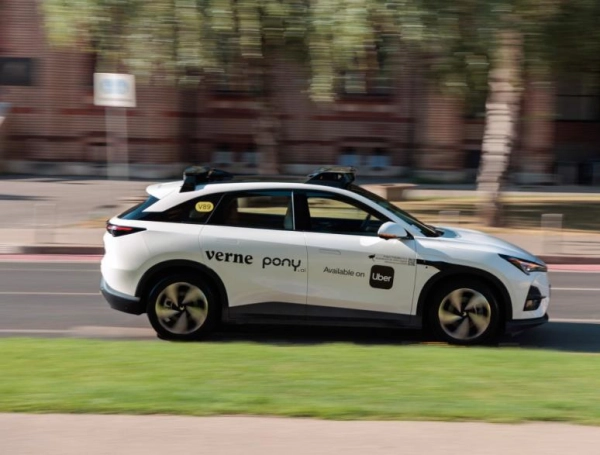
While ADAS features are already integrated into mass-market and affordable consumer vehicles, true Level 5 autonomous systems are largely developed by specialized tech firms. These systems are still undergoing rigorous testing phases, deployed primarily within proprietary fleets or in strategic partnerships with ride-hailing networks like Uber.
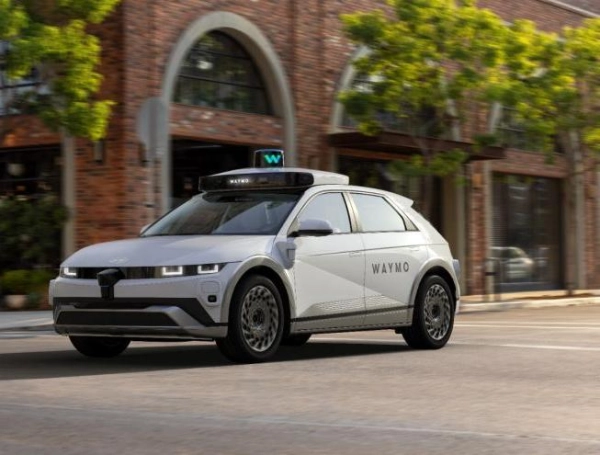
Companies like Pony.ai, Waymo, and Wayve are leading this charge. Each employs a distinct technological strategy, yet all share a unifying objective: transforming public roadways into safer environments for all users.
Safety as a Catalyst: Eliminating the Human Factor
The old adage dictates that "to err is human." When human fallibility intersects with high-speed motor vehicle operation, fatal accidents cease to be statistical anomalies and become predictable tragedies. Autonomous driving technology, conversely, is engineered and programmed with traffic safety as its foundational mandate.
Articulating this philosophy, Waymo describes its core technology:
"Based on an unmatched experience and designed with safety at heart, Waymo Driver is our autonomous driving technology that never gets drunk, tired, or distracted."
In short, autonomous systems are designed not to make the cognitive and emotional errors plaguing human drivers. However, translating this ideal from theoretical programming to chaotic asphalt has proven exceptionally difficult.
Consider the persistent controversy surrounding Tesla and its heavily marketed Autopilot function, later followed by the Full Self-Driving (FSD) suite. Following a series of high-profile accidents—some resulting in fatalities—regulatory pressure forced Tesla to append the word "Supervised" to these software packages. United States court rulings established that previous nomenclature was misleading, creating a false impression among vehicle owners that their cars could navigate independently without human oversight.
Despite legal scrutiny and skepticism, Tesla CEO Elon Musk continued pushing toward complete autonomy. In October 2024, the company unveiled the Cybercab, a dedicated robotaxi devoid of a steering wheel and pedals, designed exclusively for two passengers. By September 2026, real-world testing of the Cybercab service officially commenced in Austin, Texas. Utilizing a dedicated application, users can summon the vehicle, select destinations, lock and unlock doors, and manage cabin preferences without interacting with a human operator.
Global Regulation: The UN Framework for Automated Vehicles
As autonomous vehicles prepare to share public infrastructure with traditional automobiles, governing bodies have mobilized to establish order. To ensure these technologies genuinely improve road safety, the World Forum for Harmonization of Vehicle Regulations (WP.29)—operating under the United Nations Economic Commission for Europe (UNECE)—released the world’s first comprehensive regulatory framework for Automated Driving Systems (ADS).
Backed by major global markets including Canada, China, Japan, the United Kingdom, the European Union, and the United States, this landmark 87-page document establishes rigorous safety requirements and validation methodologies.
The framework mandates that an ADS must "equal or exceed the performance of a competent human driver." Because these systems assume total dynamic control—handling steering, acceleration, deceleration, lighting, and signaling—manufacturers must rigorously prove safety compliance. Validation must occur through a combination of computer simulation, closed-track testing, and real-world trials.
Furthermore, the WP.29 adopted amendments to approximately 90 existing UN regulations to ensure that legacy automotive safety rules remain applicable to vehicles equipped with automated systems, specifically addressing pods and robotaxis that lack traditional human controls.
Chronology of Autonomous Evolution: Milestones and Controversies
Pre-2015: Advanced safety features like ABS and electronic stability control transition from exotic options to mandatory regulatory standards globally.
2016–2019: Tesla popularizes semi-autonomous features via Autopilot, sparking consumer excitement alongside regulatory and safety debates regarding driver over-reliance.
2020–2023: Specialized tech companies (Waymo, Pony.ai) launch commercial robotaxi operations in select urban centers across the United States and China, operating under strict geofenced boundaries.
October 2024: Tesla unveils the Cybercab, a steering-wheel-free, pedal-less robotaxi designed specifically for autonomous ride-hailing networks.
Late 2025 – Early 2026: Legal frameworks evolve. UNECE adopts the world’s first international regulatory framework for Automated Driving Systems (ADS), backed by major global economies.
September 2026: Cybercab real-world testing officially begins on public streets in Austin, Texas, allowing consumers to summon autonomous rides via mobile applications.
The Ultimate Hurdle: Navigating Human Chaos
Despite technological breakthroughs and international regulatory frameworks, a fundamental question remains: How close is mass-market autonomy?
The hard truth is that the ultimate efficiency and safety of autonomous vehicles can only be realized in a utopian scenario where every vehicle on the road is autonomous, and humans are relegated exclusively to the role of passengers. As long as autonomous pods are forced to share asphalt with unpredictable human drivers, they must be viewed strictly as an alternative form of mobility rather than a universal panacea.
Consider how an autonomous algorithm would react in complex, chaotic driving environments characterized by aggressive maneuvers, unexpected pedestrian behavior, and a total disregard for traffic conventions. Placed in such hyper-volatile conditions, advanced artificial intelligence risks experiencing software paralysis or erratic behavior. For now, the chaotic reality of everyday driving continues to outpace the clinical fiction of full autonomy.
How Autonomous Systems Function
Whether relying exclusively on high-definition cameras (as championed by Tesla) or combining cameras with radar and LiDAR arrays (utilized by Waymo, Wayve, and Pony.ai), the underlying mechanics of self-driving cars remain consistent.
An arsenal of digital sensors continuously constructs a real-time 3D spatial map of the vehicle’s surroundings, identifying other vehicles, pedestrians, infrastructure, and dynamic obstacles. This data stream is transmitted to a central processing unit (CPU) and graphics processing unit (GPU). By synthesizing environmental mapping with GPS destination data and real-time traffic updates, the vehicle calculates optimal trajectories, executing steering, braking, and acceleration inputs autonomously.
The 5 Levels of Autonomous Driving
To fully comprehend the trajectory of automotive engineering, industry experts categorize automation into five distinct tiers:
Level 1 (Assisted): The vehicle can control either speed (cruise control) or steering, but not simultaneously. The human driver handles all other aspects.
Level 2 (Partial Automation): The vehicle can simultaneously control steering and acceleration/braking (e.g., adaptive cruise control combined with lane-centering). However, the human driver must remain fully alert with hands on the wheel, ready to take over instantly.
Level 3 (Conditional Automation): Under specific conditions (such as highway driving), the car can manage all dynamic driving tasks. The human does not need to monitor the road constantly, but must remain available to resume control when requested by the system.
Level 4 (High Automation): The vehicle can handle all driving operations independently within specific geofenced zones or conditions. If an emergency arises and the driver fails to respond, the car can safely bring itself to a complete stop.
Level 5 (Full Automation): The vehicle is completely autonomous across all geographic locations and weather conditions. Steering wheels, pedals, and human intervention are entirely unnecessary; occupants are strictly passengers.
Dublin, Ireland — In a landmark decision that further tightens the regulatory screws on Big Tech within the European Union, internet giant Google has been slapped with a staggering €403 million fine (approximately $462 million…
EN VIVO / LIVE UPDATES: Continuous updates as facts and sources are cross-referenced and verified. Cupertino, California — The technology world is holding its breath today as Apple hosts one of its most anticipated global…
In an era defined by rapid technological evolution, the tools we use to communicate are subject to constant refinement. WhatsApp, the world’s most widely used instant messaging platform, has announced a significant update to its…