By Global Affairs Desk
Updated: September 22, 2026
Decades after the shadow of nuclear annihilation defined the cultural and political zeitgeist of the Cold War, the world finds itself in a state of perilous amnesia. Kip Thorne, the Nobel laureate in Physics and a pivotal figure in modern scientific discourse, has issued a sobering warning: the contemporary generation, distanced by time and relative stability, has lost its visceral perception of the existential threat posed by nuclear warfare.
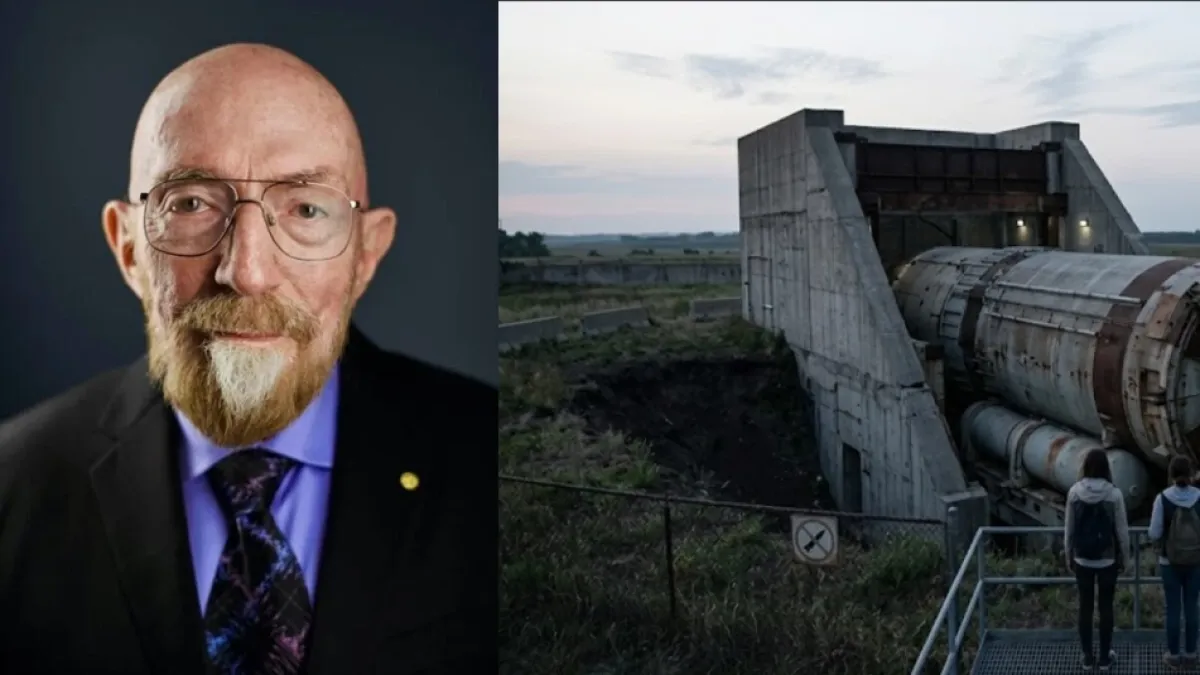
Speaking at the prestigious STARMUS festival—a global platform dedicated to the intersection of science, art, and music—Thorne engaged in a profound dialogue with visionary filmmaker Christopher Nolan and astrophysicist Garik Israelian. Their conversation transcended the boundaries of theoretical physics, grounding itself in the urgent reality of geopolitical volatility and the alarming rise of anti-scientific sentiment in the United States and beyond.
The Vanishing Memory of Armageddon: Main Facts
Thorne, whose contributions to general relativity and gravitational wave research earned him the Nobel Prize, is perhaps equally known to the public for his meticulous scientific advisory roles in films such as Interstellar and Oppenheimer. During his appearance at STARMUS, he drew a stark contrast between the atmospheric anxiety of the mid-20th century and the current apathy of the 21st.

"Back in the 1950s and 1960s, the specter of a nuclear holocaust was a constant, tangible anxiety for scientists, politicians, and the public alike," Thorne noted. "It shaped our culture, our education, and our diplomacy. Today, that collective consciousness has evaporated. The current generation is largely unaware of just how close we remain to the precipice."
This lack of awareness is not merely a social observation; it is, according to Thorne, a strategic vulnerability. The doctrine of "Mutually Assured Destruction" (MAD)—which kept the superpowers of the Cold War in a state of uneasy peace—relies fundamentally on the rational fear of the consequences. When that fear is replaced by ignorance or apathy, the psychological barriers to escalation are significantly weakened.

A Chronology of Escalation: From the Cold War to Modern Tensions
To understand the current urgency, one must look at the evolution of nuclear proliferation and the shifting landscape of global security:
- 1945–1960s: The dawn of the nuclear age, characterized by the arms race between the United States and the Soviet Union. Fear was the primary regulator of international behavior.
- 1970s–1980s: A period of détente followed by heightened tensions, eventually leading to the Strategic Arms Limitation Talks (SALT).
- 1991–2010s: The post-Cold War era saw a reduction in nuclear stockpiles and a period of relative optimism regarding nuclear disarmament.
- 2020s–2026: A sharp reversal of trends. The rise of regional conflicts, the expansion of nuclear-capable states, and the breakdown of traditional arms control treaties have returned the world to a state of high volatility.
Christopher Nolan, reflecting on his work on Oppenheimer, highlighted how this historical disconnect influenced his creative process. He recounted a conversation with his teenage son, who remarked that nuclear war was no longer a subject of significant concern among his peers. "That realization was chilling," Nolan stated. "It confirmed that we are failing to pass on the lessons of the past. If the younger generation doesn’t perceive the threat, they cannot demand the diplomacy required to prevent it."
Supporting Data: The Rising Threat
The concerns expressed by Thorne and Nolan are corroborated by independent international data. Recent reports indicate that the "Doomsday Clock," maintained by the Bulletin of the Atomic Scientists, remains at a historically unprecedented proximity to midnight.
The regional volatility is equally alarming. The enduring standoff between India and Pakistan remains a flashpoint, characterized by frequent border skirmishes and the modernization of nuclear arsenals on both sides. Furthermore, the situation in the Middle East—specifically regarding Iran’s uranium enrichment programs—has drawn harsh denunciations from Western powers at the United Nations. As France and the U.S. have recently argued, the accumulation of high-grade uranium beyond reasonable peaceful requirements serves as a catalyst for regional instability, forcing neighboring nations to reconsider their own defense postures.
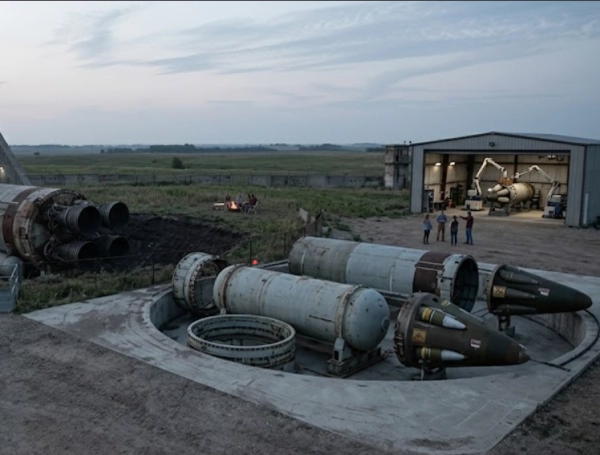
Perhaps most concerning to Thorne is the deteriorating relationship between the Russian Federation and the North Atlantic Treaty Organization (NATO). The degradation of communication channels and the dissolution of long-standing nuclear treaties have created a power vacuum where tactical miscalculations could easily spiral into global catastrophe.
Official Responses and Diplomatic Implications
The scientific community is increasingly vocal about the need for institutional intervention. Organizations such as the International Campaign to Abolish Nuclear Weapons (ICAN) have echoed Thorne’s call for a renewal of global awareness. However, the diplomatic response has been fragmented.
While international bodies continue to call for transparency, the rise of nationalist rhetoric in major nuclear-armed states has made disarmament a secondary priority. Analysts suggest that the "scorpion in the bottle" metaphor, often attributed to J. Robert Oppenheimer, remains the most accurate description of the current global state: two (or more) lethal forces trapped together, where the slightest sting from one results in the death of both.
The implication is clear: without a renewed public mandate for peace and a re-engagement with the harsh realities of nuclear physics, the diplomatic community lacks the necessary leverage to enforce stricter non-proliferation standards.

The Battle for Truth: Science, Education, and Denialism
Beyond the threat of nuclear war, Kip Thorne identified a symbiotic crisis: the growth of scientific denialism, particularly within the United States. Thorne argues that the rejection of established scientific consensus—ranging from climate change to public health—is symptomatic of a broader decay in the educational system.
"We have reached a point where scientific truth is treated as a matter of political opinion," Thorne observed. "When we stop trusting the scientific method, we stop being able to solve the existential problems that require that very method to identify and fix."

The STARMUS festival, founded by astrophysicist Garik Israelian, serves as a counter-offensive to this trend. By blending the rigor of hard science with the emotional resonance of music and art, the festival aims to reach a generation that has been alienated by dry, overly simplified, or politicized academic discourse. The goal is not merely to "teach" science, but to cultivate a deep, innate respect for the objective reality of the universe.
Future Outlook: A Call to Action
The intersection of the nuclear threat and the rise of anti-intellectualism represents a dual-pronged crisis for the modern world. Thorne’s warnings are not those of a fatalist, but of an observer who understands the delicate mechanics of both the atomic nucleus and human society.

To mitigate these risks, the following paths forward are essential:
- Re-education: Integrating the history of the nuclear age into modern curricula to ensure that the risks are understood rather than abstracted.
- Scientific Literacy: Strengthening the role of the scientific community in policy-making, ensuring that decisions regarding technology and defense are based on data rather than ideology.
- Diplomatic Renewal: Prioritizing the re-establishment of communication channels between nuclear powers to prevent accidental escalation.
As the world navigates the mid-2020s, the words of Kip Thorne resonate as a final, urgent call: "We have the knowledge to destroy ourselves, and we have the knowledge to sustain our civilization. The choice is not just a political one—it is an educational and cultural one. We must remember the danger if we are to survive it."

This article was produced with the assistance of artificial intelligence, synthesizing publicly available information and expert commentary. It has been reviewed and edited by professional journalists to ensure accuracy and adherence to editorial standards.