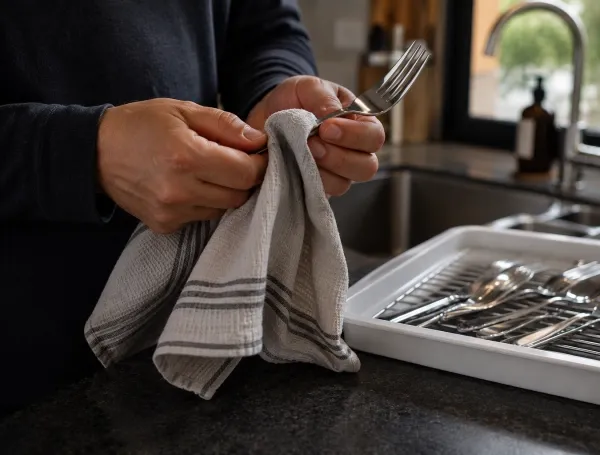
WASHINGTON — It is a common frustration for home cooks and hospitality professionals alike: you pull a set of knives, forks, and spoons from the dishwasher or dish rack, expecting a pristine, gleaming table setting, only to find them dull, cloudy, and marred by stubborn spots. Despite being freshly washed, stainless steel often loses its luster over time, plagued by an opaque film that resists routine scrubbing.
Fortunately, recent insights from home economics experts and material research organizations highlight that restoring your cutlery to a mirror-like finish does not require expensive commercial polishes or aggressive abrasives. Instead, a simple kitchen staple—acetic acid, commonly known as white vinegar—offers an effortless, highly effective remedy that fits seamlessly into your standard dishwashing routine.
Main Facts: The Science Behind Stainless Steel Stains
To understand why cutlery loses its shine, one must look beyond routine food debris. According to the Cutlery and Allied Trades Research Association (CATRA), an international organization specializing in the research and testing of cutlery and kitchen utensils, the culprit behind those unsightly blemishes is rarely leftover food.
Instead, the primary enemy is hard water. Tap water contains dissolved mineral salts—predominantly calcium and magnesium carbonates. When wet cutlery dries naturally or is exposed to heat cycles in a dishwasher, the water evaporates, leaving behind a fine, microscopic layer of mineral deposits tightly bonded to the metal surface. Over time, these mineral layers accumulate, forming a whitish film that dulls the natural reflectivity of the stainless steel. Furthermore, routine handling leaves behind fingerprint oils and everyday grease that bond with these mineral layers, creating a stubborn barrier that basic dish soap and water often fail to penetrate.

The solution lies in chemistry. White vinegar contains acetic acid, a mild organic compound capable of breaking down and dissolving these alkaline mineral deposits without compromising the integrity of the stainless steel.
[Hard Water Mineral Residue + Fingerprint Oils]
       │
       ▼ (Application of Acetic Acid / Vinegar)
[Chemical Dissolution of Calcium & Magnesium Salts]
       │
       ▼ (Rinse & Dry)
[Restored Luster & Mirror Finish]
"The acetic acid acts as a natural solvent for alkaline mineral scales," explains a domestic science researcher familiar with CATRA’s guidelines. "When applied to stainless steel, it lifts the microscopic crust left by evaporated water droplets, dissolving the bonds that trap grease and oils against the metal."
Crucially, experts emphasize that this vinegar treatment is designed to supplement, not replace, regular washing. It is a targeted corrective step to strip away accumulated mineral layers, which should always be followed by a thorough rinse with clean water and careful hand-drying to prevent new water spots from forming.
Chronology: The Evolution of Kitchen Maintenance and Metal Care
The challenge of maintaining the aesthetic appeal of metal implements is as old as metallurgy itself, though the methods of care have evolved dramatically over the centuries.

Pre-Industrial Era: Abrasive Beginnings
In centuries past, maintaining the brilliance of iron, pewter, and early steel tableware required laborious manual labor. Households relied on harsh mechanical abrasives such as finely crushed brick dust, sand, chalk, or ash combined with animal fats or natural acids (like lemon juice or crude vinegars) to scour away tarnish and rust. These methods, while effective at removing surface blemishes, frequently scratched and degraded the finish of softer metals over time.
The 20th Century: The Rise of Stainless Steel and Synthetics
The invention of stainless steel in the early 20th century revolutionized kitchenware. By alloying iron with a minimum of 10.5 percent chromium, metallurgists created a material capable of forming a passive, self-healing chromium oxide layer that resists corrosion and rust.

However, early consumers quickly learned that "stainless" did not mean "stain-proof." As automatic dishwashers gained popularity in post-war households during the 1950s and 60s, the combination of high-heat drying cycles and mineral-dense water created a brand-new phenomenon: the cloudy water spot. Chemical manufacturers responded by flooding the market with synthetic chemical brighteners, rinse aids, and heavy-duty scouring powders.
The Modern Era: A Return to Sustainable, Natural Chemistry
In recent years, rising consumer awareness regarding environmental sustainability, indoor air quality, and chemical safety has sparked a massive resurgence in traditional, eco-friendly cleaning hacks. The modern reliance on acetic acid and household pantry staples (such as baking soda and table salt) represents a full-circle evolution—merging age-old chemical wisdom with contemporary kitchen efficiency. Today, digital platforms and consumer advocacy groups regularly share these time-tested, chemical-free methodologies, empowering households to maintain their assets safely and economically.
Supporting Data: Step-by-Step Restoration Guides
While the vinegar method is the quickest approach for daily or weekly maintenance, an alternative electrochemical method involving household items yields exceptional results for deeply tarnished or profoundly dull cutlery.
Method 1: The Quick Vinegar Spray (For Routine Water Spots)
This method takes mere minutes and requires no intensive scrubbing:

- Perform a Standard Wash: Clean your cutlery thoroughly using your regular dish soap and warm water to remove grease and food particles.
- Apply White Vinegar: Transfer standard white vinegar into a spray bottle and mist the cutlery generously, or submerge the pieces in a shallow dish containing pure white vinegar.
- Allow Dwell Time: Let the acetic acid work for 3 to 5 minutes. Do not exceed 10 to 15 minutes, as prolonged exposure to acidic solutions can occasionally affect lower-grade metal alloys.
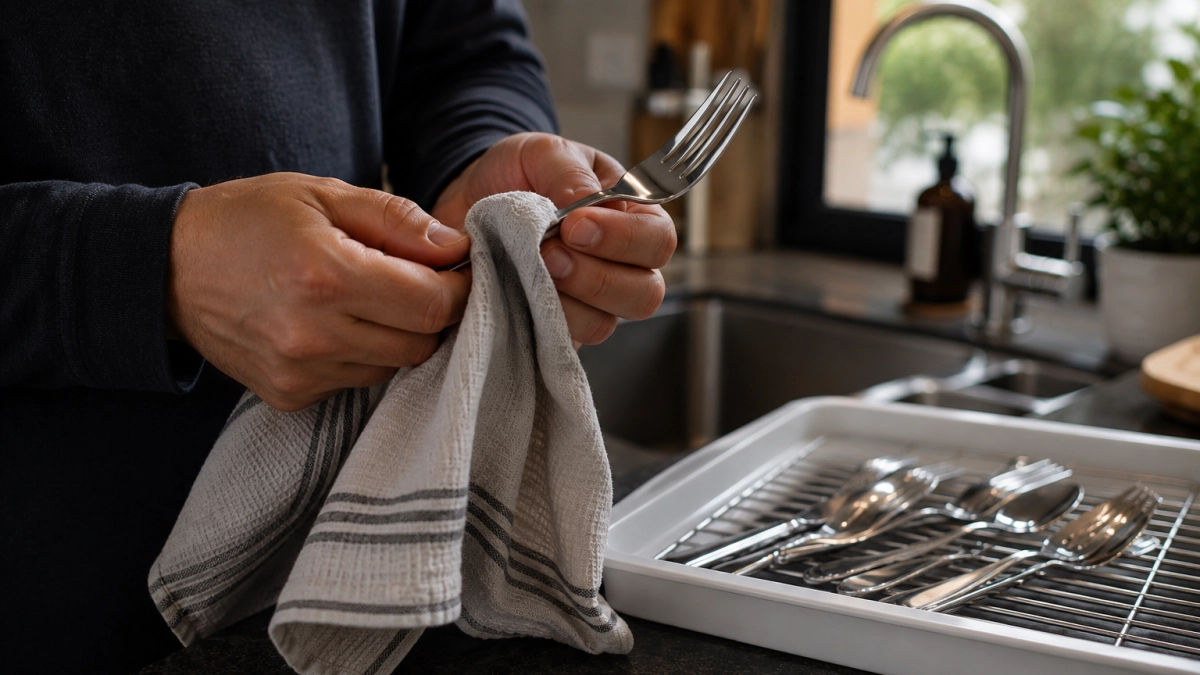
- Rinse and Buff: Rinse the utensils thoroughly under running tap water to completely neutralize and remove the acid. Immediately dry each piece with a clean, lint-free microfiber cloth to prevent new water spots from forming.
Method 2: The Aluminum Foil and Baking Soda Reaction (For Deep Tarnish)
When cutlery has suffered prolonged neglect, a simple acid spray may not suffice. A powerful electrochemical reduction method can be deployed using items found in nearly every pantry.
┌────────────────────────────────────────────────────────┐
│               THE ELECTROCHEMICAL BATH                 │
├─────────────────────────┬──────────────────────────────┤
│ Component               │ Function                     │
├─────────────────────────┼──────────────────────────────┤
│ Aluminum Foil           │ Acts as a reducing agent     │
│ Baking Soda & Salt      │ Electrolytes to conduct ions │
│ Hot Water               │ Accelerates the reaction     │
└─────────────────────────┴──────────────────────────────┘- Step 1: Prepare the Vessel: Line the bottom and sides of a heat-resistant glass or ceramic bowl with aluminum foil, ensuring the shiny side faces upward toward the interior.
- Step 2: Arrange the Cutlery: Place your dull or stained stainless steel utensils inside the bowl, making sure every piece makes direct physical contact with the aluminum foil.
- Step 3: Add Active Powders: Sprinkle two tablespoons of baking soda and one tablespoon of standard table salt directly over the utensils and foil.
- Step 4: Pour Hot Water: Pour boiling or very hot water into the container until the cutlery is fully submerged. A vigorous bubbling and fizzing reaction will immediately take place.
- Step 5: Rest and Reveal: Allow the pieces to rest undisturbed for 5 to 10 minutes. During this window, an electrochemical reaction transfers sulfur and other accumulated impurities from the stainless steel to the aluminum foil.
- Step 6: Final Polish: Remove the utensils using tongs, rinse them thoroughly under clean water, and buff them dry with a soft cloth to reveal a restored, mirror-like sheen.
Official Responses and Expert Recommendations
Culinary experts, hospitality managers, and manufacturers stress that proper preventive care is just as vital as restorative cleaning.

According to guidelines issued by major kitchenware manufacturers, several best practices can minimize the formation of water spots in the first place:
- Avoid Prolonged Soaking: Leaving stainless steel utensils immersed in water for hours—especially water containing high concentrations of salt or food acids—can pit the metal surface and weaken the protective chromium oxide layer.
- Prompt Drying: Never leave stainless steel to air-dry inside a steamy dishwasher or a closed dish rack. Manual hand-drying with a microfiber towel immediately after washing is the single most effective way to eliminate water spots.
- Dishwasher Placement: When utilizing an automatic dishwasher, ensure that cutlery is sorted loosely in the basket with handles pointing downward (for spoons and forks) to maximize water drainage and expose maximum surface area to the rinsing jets. Avoid overcrowding the cutlery basket.
- Rinse Aid Utilization: Ensure your dishwasher’s rinse aid dispenser is consistently filled. Rinse aids lower the surface tension of water, causing it to sheet off the metal smoothly rather than beading up into droplets that leave mineral deposits upon evaporation.
Implications: Economic, Environmental, and Aesthetic Benefits
The adoption of natural, pantry-based cleaning methods carries wide-ranging implications for modern households:

Economic Savings
Commercial metal polishes and specialized chemical rust-removers can be surprisingly expensive, often costing significantly more per ounce than basic household vinegar or baking soda. By utilizing items already present in the kitchen pantry, consumers can achieve professional-grade results at a fraction of the cost, extending the lifespan of their flatware investments indefinitely and eliminating the need to purchase premature replacements.
Environmental Protection
Conventional chemical cleaners frequently contain volatile organic compounds (VOCs), artificial fragrances, and harsh surfactants that wash down household drains, complicating municipal wastewater treatment processes and potentially impacting aquatic ecosystems. White vinegar and baking soda are entirely biodegradable, non-toxic, and environmentally benign, making them ideal choices for eco-conscious households seeking to minimize their chemical footprint.

Health and Safety
Harsh industrial metal cleaners often require the use of protective gloves and adequate room ventilation to prevent skin irritation or respiratory discomfort caused by chemical fumes. In contrast, organic acids like acetic acid are entirely food-safe. Even if microscopic residues remain after rinsing, they pose zero health risks—a crucial factor when dealing with utensils utilized directly for food consumption.
Aesthetic and Psychological Well-Being
Beyond the functional utility of clean flatware, the aesthetic presentation of a dining table plays a profound role in the dining experience. Gleaming, spot-free cutlery enhances the visual appeal of home-cooked meals, elevating everyday dining into a more refined, satisfying ritual. By mastering these simple, chemical-free maintenance techniques, households can effortlessly sustain a high standard of cleanliness and elegance with minimal time and effort.