Belgrade, Serbia — In what is being heralded as a monumental political earthquake in Southeast Europe, Serbia’s ruling party has suffered a definitive defeat in the snap legislative elections. The shock outcome marks the end of more than a decade of uninterrupted political dominance by veteran nationalist leader Aleksandar Vučić and his Serbian Progressive Party (SNS).
Conceding defeat directly from the party’s headquarters in Belgrade, Vučić acknowledged that early projections based on stratified samples indicated his political faction had lost control of the government. The announcement triggered an immediate and euphoric wave of celebrations across the capital, transforming the streets into a landscape of blaring car horns, weeping citizens, and jubilant chants of "Victory, victory!" near the State Election Commission and the headquarters of the newly empowered opposition.
The extraordinary ballot box reversal represents the culmination of nearly two years of relentless, nationwide anti-government protests, galvanized initially by a tragic infrastructure failure and fueled by deep-seated public frustrations over corruption, eroding democratic norms, and the pace of institutional reform.
Main Facts: The Fall of a Decade-Long Hegemony
The snap legislative elections held on Sunday, October 25, 2026, fundamentally reshaped the political architecture of the Republic of Serbia. For the first time since 2012, Vučić’s political machine faced an existential electoral threat, culminating in a historic loss to a heterogeneous, student-led protest movement coalesced into a unified electoral ticket.
Key takeaways from the historic vote include:
- The Concession: Aleksandar Vučić publicly conceded defeat to reporters and supporters at the SNS headquarters, stating, "A juzgar por una muestra estratificada, está claro que perdimos estas elecciones. La lista de bloqueo estudiantil ganó." (Based on a stratified sample, it is clear that we have lost this election. The student blockade list won.)
- Voter Turnout: Driven by an urgent desire for systemic change, the electorate turned out in record numbers. Serbia recorded its highest voter participation in legislative elections in three decades, with turnout surging dramatically just hours before the closing of the polls—a phenomenon political analysts immediately interpreted as an overwhelming mandate for opposition candidates.
- The Opposition Force: The victorious opposition is not a traditional political party, but rather a broad, grassroots coalition of civil society actors, academics, and youth movements operating under a unified student list. Devoid of a single, entrenched political heavyweight, the movement’s primary unifying philosophy was the eradication of systemic corruption and the restoration of the rule of law.
- The Geopolitical Context: Vučić had long positioned himself as an indispensable statesman capable of balancing delicate geopolitical interests between the European Union (EU), the Russian Federation, and the United States. His departure throws Serbia’s future foreign policy orientation into a period of transitional uncertainty.
Chronology of a Crisis: From Tragedy to Transformation
To understand how a dominant ruling party was unseated by a coalition of student activists, it is essential to trace the timeline of civil unrest that brought Serbia to this historic juncture.

November 2024: The Tragedy of Novi Sad
The seeds of the 2026 political upheaval were sown on a devastating day in November 2024, when a concrete canopy collapsed at the railway station in Novi Sad, Serbia’s second-largest city. The structural failure resulted in the deaths of 16 innocent people.
Public grief rapidly morphed into profound national outrage. Citizens and civic leaders directly attributed the disaster to rampant government corruption, substandard construction oversight, and systemic negligence within public infrastructure projects. The tragedy struck a raw nerve, giving birth to the most massive and sustained anti-government demonstrations the Balkan nation had witnessed since the historic fall of authoritarian leader Slobodan Milošević in 2000.
September 2025 – September 2026: Escalation and Institutional Brinkmanship
Over the course of 24 months, the student-led movement expanded from localized grief and accountability demands into a nationwide political force. Mobilizing under banners such as "¡Serbia se despierta!" (Serbia is waking up!), the movement organized continuous protests, university blockades, and massive rallies. Their final major demonstration in Belgrade brought an unprecedented 150,000 citizens into the streets, paralyzing parts of the capital and signaling the undeniable breadth of public discontent.
Recognizing the mounting pressure and attempting to regain the political initiative, Aleksandar Vučić—then serving as President—dissolved the parliament in September 2026 and called snap legislative elections, a core demand of the protest movement. In an unusual tactical maneuver designed to recalibrate his political positioning, Vučić resigned from the presidency shortly thereafter to run directly for a seat in parliament with the explicit expectation of securing the premiership.
However, this gamble backfired. Rather than neutralizing the opposition, the early elections provided the decentralized student movement with a formal vehicle to channel public fury into ballot box success.
October 25, 2026: Election Day and the Collapse of the SNS
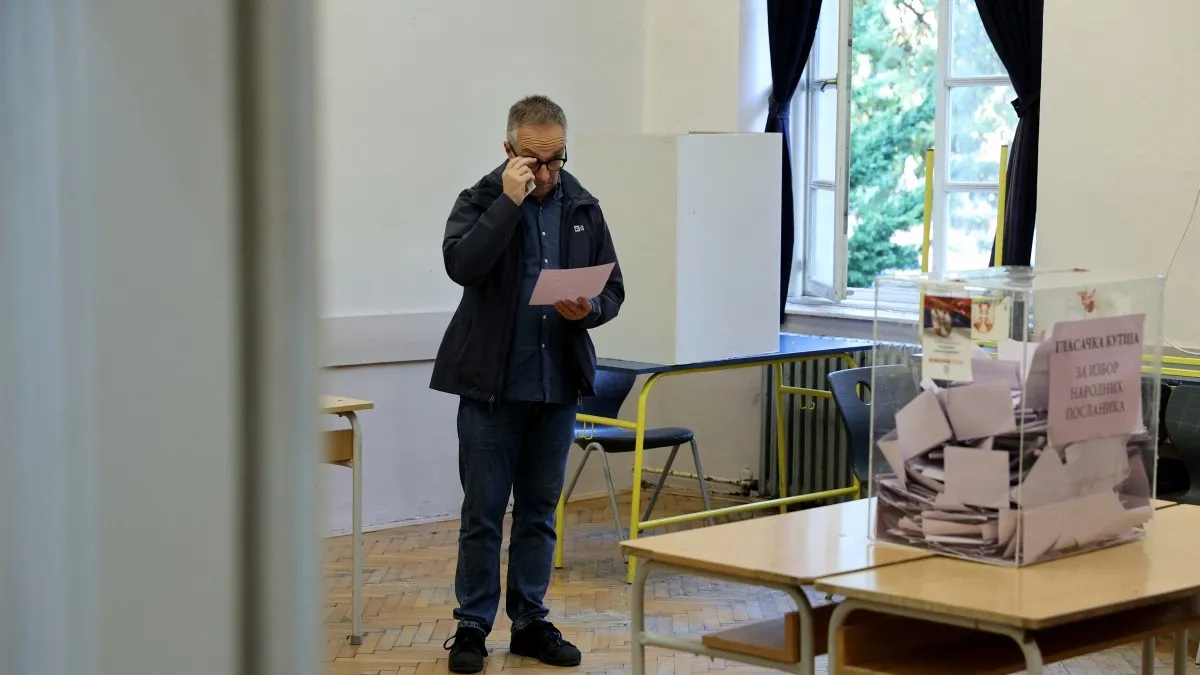
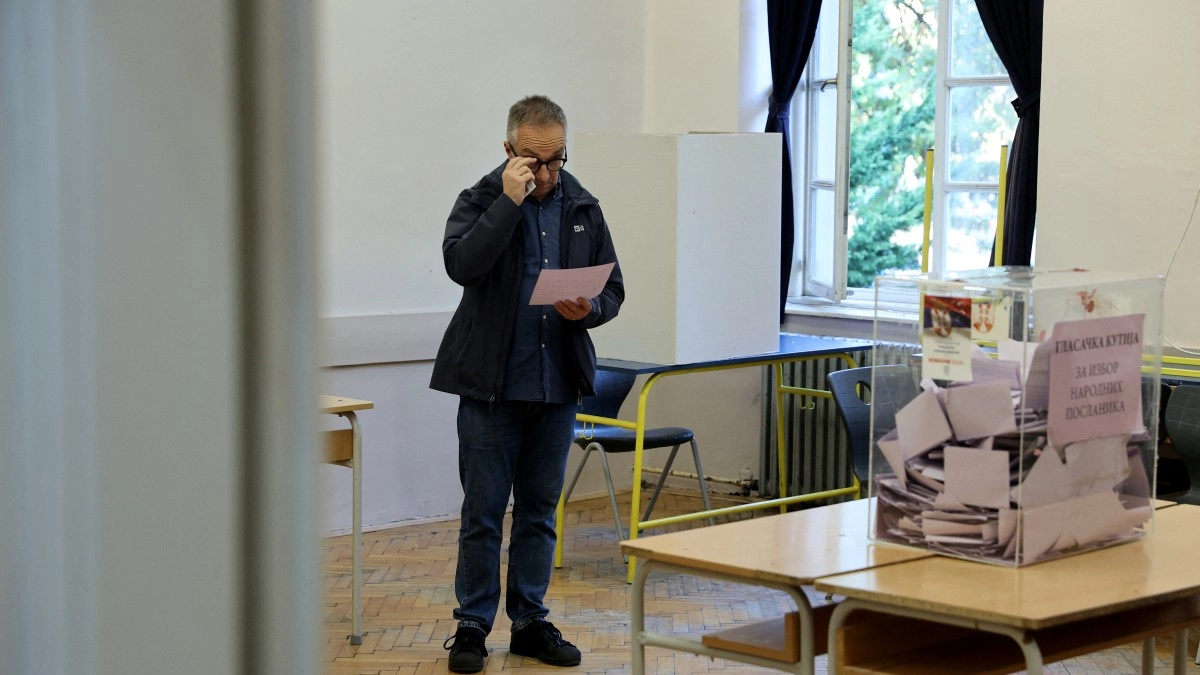
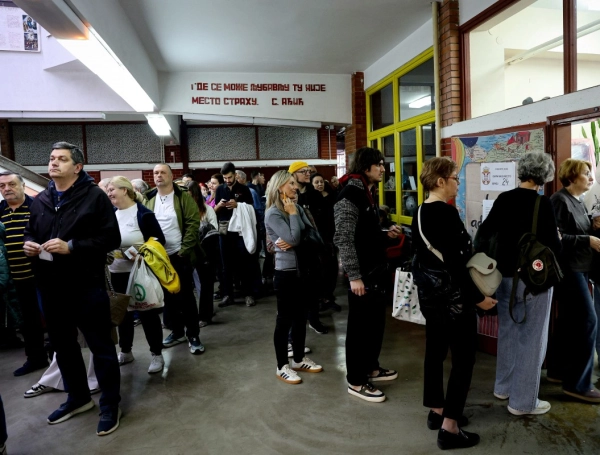
Polling stations opened under a tense political atmosphere characterized by heavy civil society scrutiny. Fearing potential electoral irregularities, the student movement deployed an extensive network of domestic volunteers to monitor voting procedures, supplementing international observers.
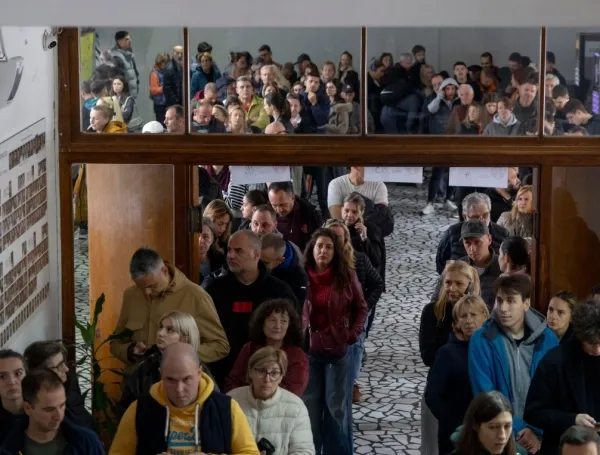
As historical turnout figures became apparent by late afternoon, celebration preparations began organically in the streets of Belgrade. By evening, Vučić’s public concession confirmed what millions of citizens had hoped for: the 14-year reign of the Serbian Progressive Party had come to an end.
Supporting Data and Polling Discrepancies
The road to the ballot box was heavily contested not only on the streets but also in the realm of public opinion research, reflecting a polarized society deeply divided over Vučić’s legacy.
- Polarized Polling: Polling data leading up to the October vote presented a chaotic and contradictory picture. A late-stage survey conducted by the right-wing think tank Nuevo Pensamiento Político Serbio (NSPM) gave the student list a narrow lead with 44.5% of the intended vote, compared to 42.7% for Vučić’s SNS. Conversely, polls published in September by Faktor Plus—an agency viewed as close to government circles—had placed the ruling majority comfortably ahead with 48.6%.
- Civil Society Warnings: In the weeks leading up to the election, a coalition of 24 Serbian non-governmental organizations (NGOs) issued stark warnings declaring that conditions did not currently exist for "free and fair" elections, citing institutional bias, media capture, and pressure on public sector workers.
- The Human Cost: The catalyst for the entire political movement remains the 16 lives lost at the Novi Sad railway station—a statistical reminder of why hundreds of thousands of citizens chose to risk political retaliation and demand systemic accountability.
Official Responses and Public Reactions
The seismic shift in Serbian politics elicited deeply contrasting emotional responses across the country, ranging from unbridled euphoria to cautious anxiety and defensive recalibration from outgoing officials.

The Voice of the Streets
For ordinary citizens who spent years organizing protests, the election night felt surreal. Mila Martic, a university student celebrating near the Electoral Commission, captured the prevailing sentiment:
"Me siento increíble. Siento como si por fin viviera en un país libre" (I feel incredible. I feel like I am finally living in a free country).
Marija Spasenovic, another voter interviewed outside a central Belgrade polling station, emphasized the foundational motivations behind her ballot:

"Yo voté esperando que haya cambios (…) no podemos seguir como en los últimos 14 años" (I voted hoping for changes (…) we cannot continue like the last 14 years). She added that combating entrenched corruption and firmly securing the rule of law were non-negotiable priorities for the nation’s future.
The Official Narrative
Throughout his tenure and during the campaign, Aleksandar Vučić framed his administration as the ultimate guarantor of Serbian sovereignty. He frequently characterized the relentless street protests as an "attempted coup d’état" orchestrated by domestic and external actors seeking to destabilize the country. Vučić maintained that his unique diplomatic balancing act—maintaining close ties with Brussels, Moscow, and Washington simultaneously—was vital for national stability.
At the same time, segments of the population continued to value the tangible infrastructure and economic stabilization efforts delivered under his governance. Vesna Ivic, a 57-year-old teacher, voiced a more reserved perspective, admitting she felt "happy" acknowledging that "many things" had been done to improve daily living standards over the past decade.

Geopolitical and Domestic Implications
The defeat of the ruling party in Serbia carries profound ramifications both domestically within the Western Balkans and internationally across Europe.
- Democratic Renewal vs. Political Instability: While the peaceful concession of defeat by Vučić represents a functional victory for democratic electoral processes, political analysts warn that Serbia is entering a highly volatile transition phase. The student-led movement, while united in its opposition to the SNS, is ideologically diverse and untested in executive governance. Constructing a stable coalition government out of a decentralized civil society movement will present immense administrative challenges.
- The Rule of Law and Anti-Corruption Mandate: The primary mandate given to the incoming administration is the dismantling of systemic corruption and the restoration of judicial independence. International observers will be watching closely to see whether the new leadership can successfully investigate past infrastructural scandals—beginning with the Novi Sad tragedy—without descending into political retribution.
- Foreign Policy Crossroads: Serbia’s formal candidacy for European Union membership has languished amid concerns over democratic backsliding and media freedom. A government born from a democratic, grassroots youth movement may find renewed momentum in aligning its domestic policies with EU standards, potentially altering Belgrade’s traditional diplomatic tightrope walk between East and West.
As the dust settles over the streets of Belgrade, Serbia stands at a definitive historical crossroads. The ghosts of the 2024 Novi Sad disaster have finally exorcised a 14-year political status quo, leaving a newly awakened citizenry to chart an uncertain yet hopeful course toward democratic renewal.