By Jhoan Sebastian Cote Lozano
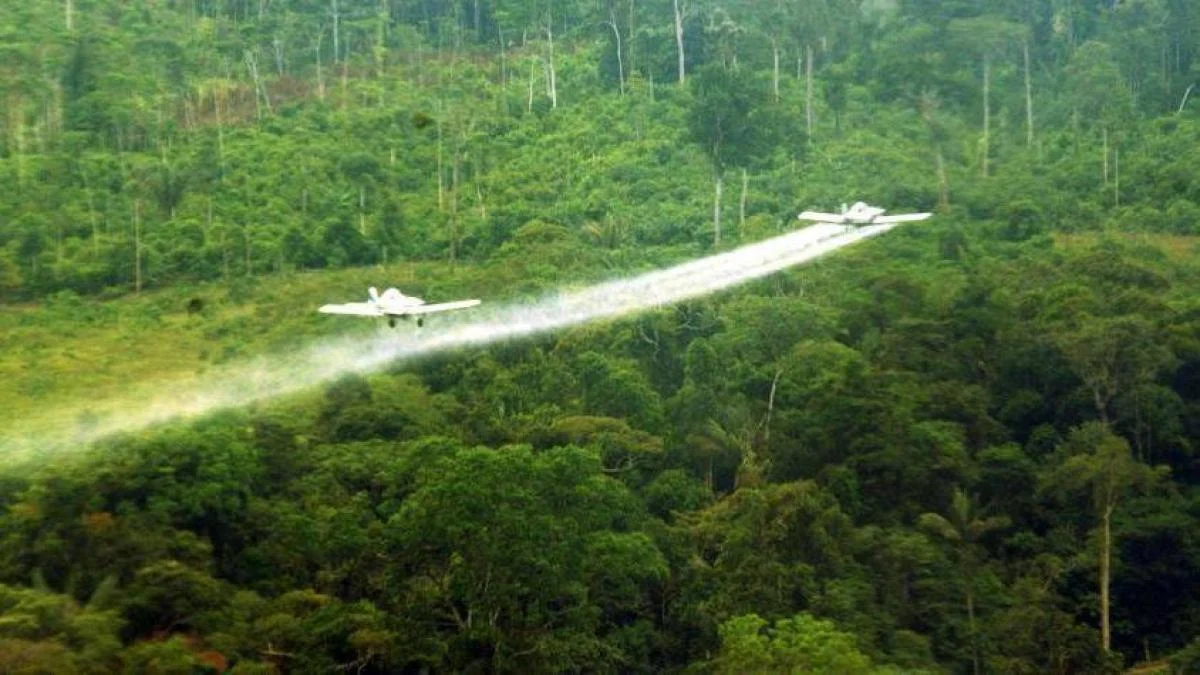
The Colombian government’s ambitious effort to resume aerial eradication of illicit crops has hit a significant legal roadblock. A judicial decision from the Third Promiscuous Court of Puerto Asís (Putumayo) has temporarily halted a pilot program designed to utilize glufosinate-ammonium as a substitute for the previously prohibited glyphosate. This development places the administration’s counter-narcotics strategy under intense judicial scrutiny, forcing a confrontation between national security imperatives and the protection of fundamental human and environmental rights.
The Core Conflict: A Shift in Strategy
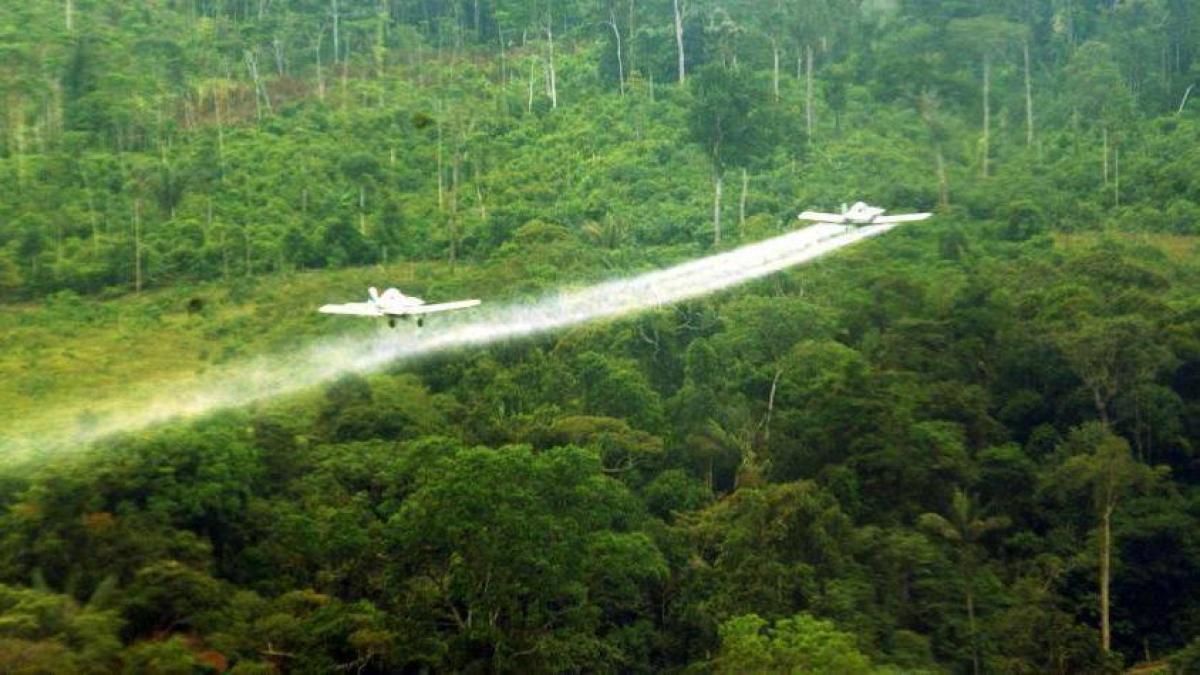
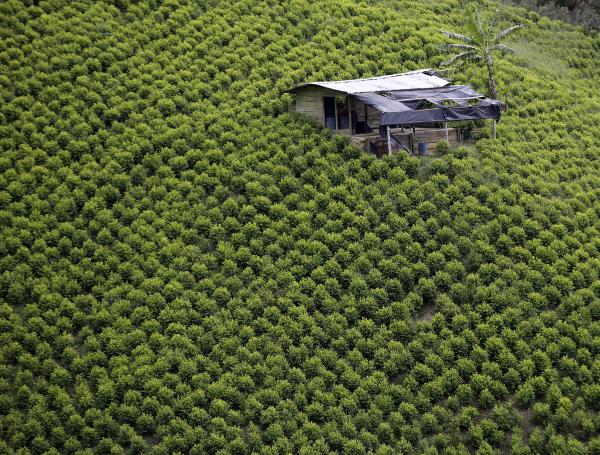
Earlier this week, the Colombian National Police officially announced the launch of a pilot project aimed at curbing the expansion of illicit crops, primarily coca, in the Putumayo region. The initiative, which proposed the treatment of up to 1,000 hectares, was designed to test the efficacy of glufosinate-ammonium, an herbicide that government officials hoped would offer a modern, more precise alternative to the controversial glyphosate.
However, the implementation of this plan was almost immediately challenged by the "Fundación Tiempo de Cambios para la Transformación Social" (Time for Change for Social Transformation Foundation). The organization filed an acción de tutela—a legal mechanism in Colombia designed to protect constitutional rights—arguing that the government’s plan lacks the necessary scientific rigor to ensure it does not cause irreparable harm to human health and the local ecosystem.
The Third Promiscuous Court of Puerto Asís accepted the petition for review and issued an injunction, suspending the pilot program until the government provides substantive, transparent, and independent evidence regarding the risks associated with the new chemical formula.
Chronology: From Glyphosate to Legal Limbo
The trajectory of aerial spraying in Colombia has been marked by decades of debate, international pressure, and constitutional limitations.

- Pre-2015: For years, the aerial spraying of glyphosate was the cornerstone of Colombia’s anti-narcotics policy. Millions of hectares were treated under the assumption that it was the most efficient way to reduce coca production.
- 2015: The Constitutional Court of Colombia ordered the suspension of aerial spraying with glyphosate, citing the "precautionary principle" following a report by the World Health Organization’s International Agency for Research on Cancer (IARC), which classified the substance as "probably carcinogenic."
- 2020-2024: Various administrations attempted to draft protocols to resume spraying, arguing that improved technology and specific application methods could mitigate the health risks. Each attempt was met with intense civil society opposition and subsequent legal challenges.
- September 2026: The current administration officially unveiled the "glufosinate-ammonium pilot" in Putumayo, positioning it as a technological evolution in the fight against illicit economies.
- September 11, 2026: The Third Promiscuous Court of Puerto Asís intervenes, suspending the program and demanding formal technical responses from the Ministry of Justice, the Ministry of Defense, and the National Police.
The Scientific and Environmental Argument
The crux of the legal challenge lies in the demand for "objective, independent, and rigorous scientific evidence." The plaintiffs argue that the government’s attempt to use Putumayo as an open-air laboratory for the effects of glufosinate-ammonium is fundamentally irresponsible.
Potential Risks to Biodiversity
The Foundation asserts that the application of herbicides on a large scale in regions as ecologically sensitive as the Amazonian piedmont—where Putumayo is located—poses a severe threat to:
- Water Sources: The drift of chemicals into local streams and rivers used by rural communities for drinking and fishing.
- Pollinators: The decline of natural pollinators, specifically bees, which are essential for the survival of local food crops and the maintenance of the rainforest’s biodiversity.
- Licit Crops: The potential for "collateral damage" where the herbicide drifts onto food crops, destroying the subsistence livelihoods of farming families who are not involved in illicit activities.
The court’s decision explicitly notes that the state has a constitutional duty to protect the right to a "healthy environment." By moving forward without a comprehensive, publicly vetted environmental impact study, the government is perceived as having bypassed its fundamental obligations.
Official Responses and Requirements
The Third Promiscuous Court of Puerto Asís has issued a sweeping mandate requiring the relevant national authorities to provide a detailed account of their operations. The entities summoned include the National Council on Narcotic Drugs, the Ministry of Justice, the Ministry of Defense, and the National Police’s Anti-Narcotics Directorate.
The Court’s Checklist for the Government:
- The Polygon of Intervention: The government must provide exact coordinates and identify the municipalities included in the target zone.
- Contractual Transparency: The court is demanding to know if any formal contracts have been signed with private companies or state entities to execute the spraying, and if those contracts have already entered the implementation phase.
- Consultation with Ethnic Communities: One of the most critical questions posed by the court is whether the government conducted, or intends to conduct, consulta previa (prior consultation) with indigenous and Afro-Colombian communities in the region, as mandated by the Colombian Constitution and international law (ILO Convention 169).
- Evidence of Safety: The authorities are tasked with presenting the specific studies that led them to conclude that glufosinate-ammonium is safe for human health in the context of aerial delivery.
The court has signaled that the injunction will remain in force until these "elements of judgment" are provided, effectively stalling the project until a deeper debate can occur.
Implications for National Policy
The suspension of the pilot program sends a strong message regarding the current state of the "War on Drugs" in Colombia.
1. The Judicialization of Public Policy
This case highlights a broader trend in Colombia where public policy, particularly regarding security, is increasingly being defined in the courts rather than in the executive or legislative branches. By asserting that the government cannot act without empirical evidence, the judiciary is placing a check on state power that emphasizes constitutional rights over political expediency.
2. The Search for Alternatives
The administration’s move to switch from glyphosate to glufosinate-ammonium was an attempt to circumvent the specific ruling against the former. However, the court’s decision suggests that the objection is not merely to the specific chemical, but to the method of aerial intervention itself. This forces the government to confront a difficult reality: the legal barriers to aerial spraying are becoming increasingly difficult to overcome, regardless of the chemical used.
3. The Human Dimension
The Fundación Tiempo de Cambios has been careful to clarify that their opposition is not to the goal of eradicating illicit crops, but to the methodology used. By framing their argument around the rights to life, water, and food security, they have successfully shifted the narrative from "security vs. crime" to "state protection vs. state-caused harm."

This puts the government in a delicate position. To continue the program, they must now engage in a public, transparent, and potentially years-long process of environmental and social evaluation. Failure to do so would likely result in a permanent injunction by the Constitutional Court, effectively ending the era of aerial spraying in Colombia for the foreseeable future.
Conclusion
The decision by the Third Promiscuous Court of Puerto Asís represents a pivotal moment in the administration’s anti-narcotics agenda. As the state waits to provide the requested information, the 1,000 hectares slated for treatment remain untouched. The outcome of this legal battle will likely set a national precedent, determining whether the Colombian state can rely on aerial intervention as a tool of the future, or whether it must pivot entirely toward manual, community-led, and alternative-development strategies.
For now, the silence over the forests of Putumayo is a testament to the power of the judicial system to pause the machinery of state policy, demanding that environmental and health safety be placed on equal footing with the urgency of law enforcement.

For more information on the evolving legal proceedings, stay tuned to our Justice section. You can also follow our live updates on Facebook, Twitter, or subscribe to our weekly newsletter for in-depth analysis on this and other critical national issues.