By Editorial Staff | September 19, 2026
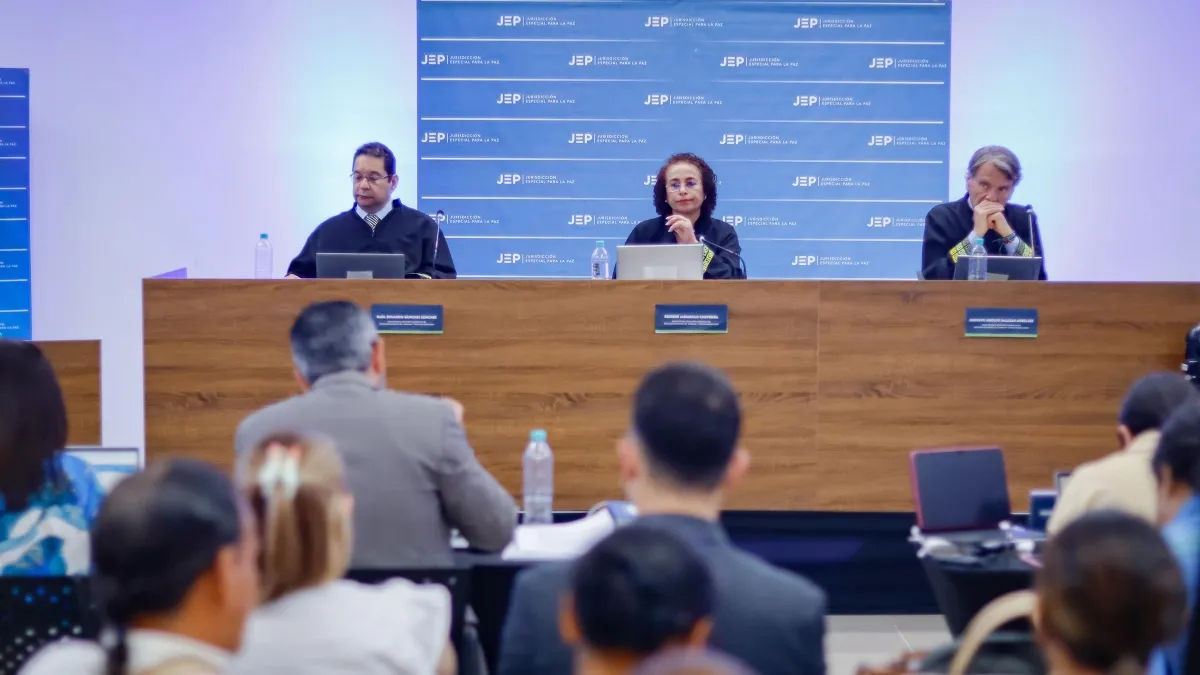
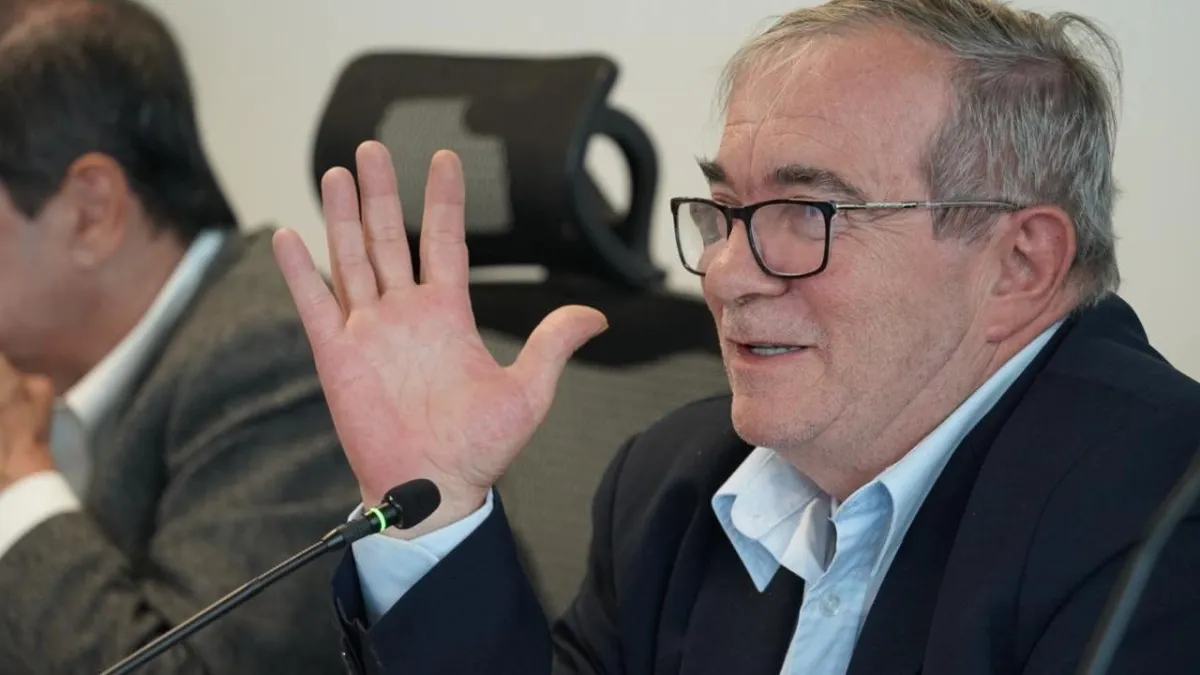
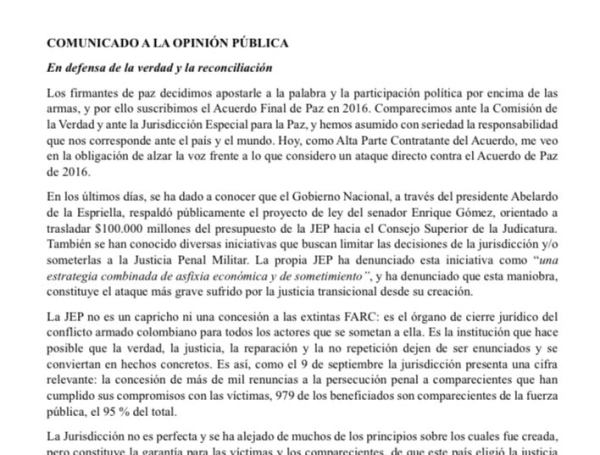
The fragile architecture of the 2016 Colombian Peace Agreement faces a new internal crisis. Rodrigo Londoño, the former commander of the FARC and a primary signatory of the historic deal, has launched a vehement public denunciation against a legislative proposal that seeks to reallocate $100,000 million pesos from the budget of the Special Jurisdiction for Peace (JEP) to the Superior Council of the Judicature.
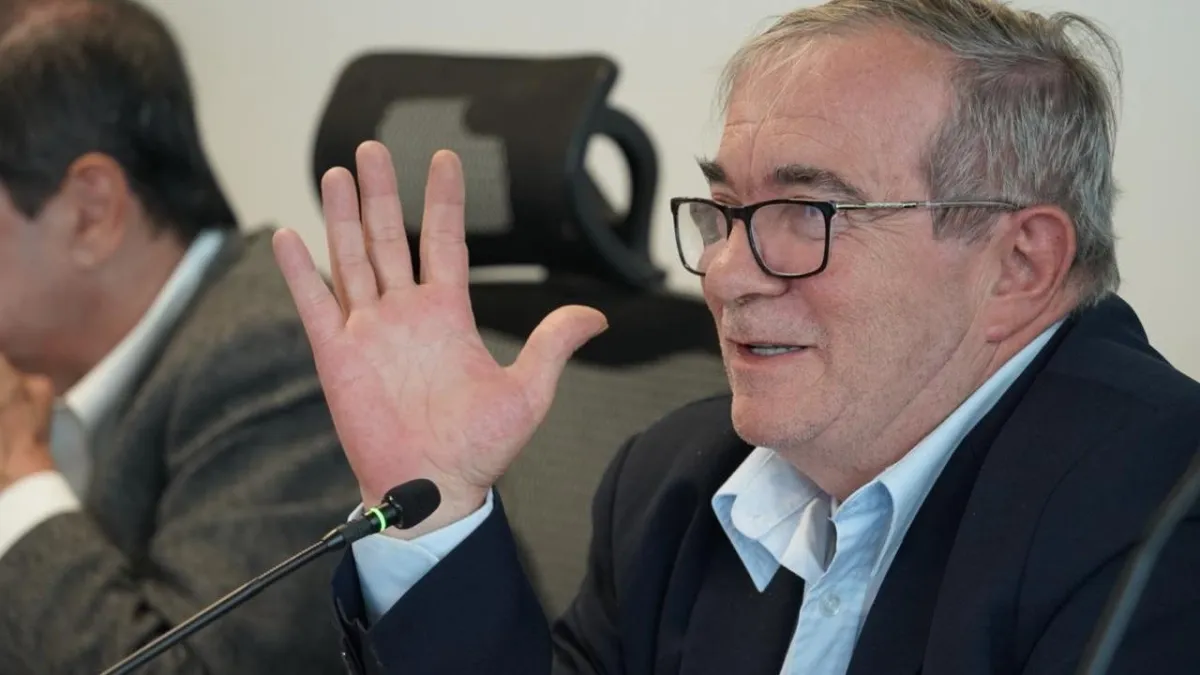
Londoño, characterizing the move as an "act of asphyxiation," argues that this budgetary shift represents a strategic, systemic attack on the transitional justice system. As the nation grapples with the complexities of long-term reconciliation, this latest development has ignited a fierce debate regarding the sustainability of the peace process and the government’s commitment to its foundational legal pillars.
1. The Core Conflict: A Budgetary "Asphyxiation"
The controversy centers on a proposed governmental reallocation of resources. According to reports, the Executive branch is seeking to move $100,000 million from the JEP’s operational budget to the Superior Council of the Judicature. For the JEP, this is not merely an accounting adjustment; it is viewed as a calculated effort to cripple its ability to deliver justice, truth, and reparation.
Rodrigo Londoño, speaking in his capacity as an "Alta Parte Contratante" (High Contracting Party) of the 2016 Peace Agreement, expressed his profound alarm via social media and official communiqués. He asserted that the JEP is not a "caprice" or a concession granted to the defunct guerrilla group, but rather the essential judicial framework intended to provide closure to the armed conflict for all actors involved.
"This is a direct attack on the 2016 Peace Agreement," Londoño stated. He warned that if the tribunal’s resources are gutted, it will inevitably lead to a paralysis of the judicial processes currently underway, ultimately denying victims the clarity they have been promised for a decade.

2. Chronology: From the 2016 Accords to the Present
To understand the gravity of the current situation, one must look at the timeline of the JEP’s establishment and its evolving role in Colombian society:
- November 24, 2016: The Final Agreement to End the Armed Conflict and Build a Stable and Lasting Peace is signed in Bogotá. The JEP is established as the judicial component of the System of Truth, Justice, Reparation, and Non-Repetition.
- 2018: The JEP officially begins its operations, tasked with investigating, clarifying, and prosecuting the most serious crimes committed during the five-decade conflict.
- 2021: The JEP issues significant rulings regarding systemic kidnappings and war crimes, with Londoño and other former FARC leaders publicly acknowledging their actions and seeking forgiveness.
- September 2026: The JEP reaches a milestone, having granted over 1,000 waivers on criminal prosecution to individuals who have fulfilled their restorative justice obligations. Notably, 95% of these beneficiaries are members of the public security forces, highlighting the tribunal’s impartiality.
- Mid-September 2026: Reports emerge regarding the government’s plan to shift $100,000 million to the Superior Council of the Judicature.
- September 19, 2026: Rodrigo Londoño issues a formal statement condemning the measure as a "strategy of economic asphyxiation and submission."
3. Supporting Data: The JEP’s Operational Reality
The JEP’s defenders argue that the tribunal is currently at its most productive stage. The data released by the court on September 9, 2026, serves as a cornerstone of their argument against the budget cuts.
Of the more than 1,000 instances where the JEP has renounced criminal prosecution, the breakdown is revealing:

- 979 beneficiaries were members of the Colombian public security forces.
- Only a small fraction were former FARC combatants.
This data point is crucial because it contradicts the common political narrative that the JEP serves exclusively to protect former guerrillas. By demonstrating that the vast majority of those benefiting from the JEP’s legal mechanisms are state actors, the tribunal reinforces its legitimacy as a neutral arbiter.
Londoño’s argument rests on this evidence: if the tribunal is currently processing the largest volume of cases in its history, a sudden withdrawal of funding is mathematically incompatible with the mandate to ensure justice. He contends that the move is an attempt to "smother" the institution, forcing it into a state of administrative collapse where it can no longer function effectively.
4. Official Responses and Institutional Tensions
The government’s position—that the funds are needed by the Superior Council of the Judicature to manage the broader, non-transitional judicial system—has met with skepticism from international observers and human rights organizations.

While the administration claims the move is a matter of administrative efficiency, critics argue it is a political maneuver designed to weaken the JEP’s independence. In his statement, Londoño highlighted that the JEP itself has characterized the legislative proposal as a form of "sometimiento" (subjugation).
The tension reflects a broader disagreement over the hierarchy of state resources. The Superior Council of the Judicature manages the daily administration of justice, but the JEP handles the delicate, high-stakes investigations into the darkest chapters of the nation’s history. By pitting one against the other, the government has created a zero-sum game that threatens the credibility of the entire judicial branch.
5. Implications: What Happens if the Budget is Cut?
The potential consequences of reducing the JEP’s budget are multifaceted and deeply concerning for the stability of Colombia’s transition to peace.
A. The Risk of Impunity
If the JEP cannot sustain its investigative teams, its ability to hold hearings, and its capacity to process evidence, the most likely outcome is a massive backlog. In such a scenario, the "truth" aspect of the Peace Agreement remains unfulfilled. Victims who have waited years for their day in court may be left in legal limbo, potentially fueling further social unrest.
B. The Threat to Legal Security
Londoño correctly points out that if the JEP is stripped of its resources, there is a risk that comparecientes (those who have submitted to the jurisdiction) could be transferred to the ordinary justice system. This would strip them of the procedural guarantees negotiated in 2016. While some political sectors might welcome this, legal experts warn it would violate the principle of "legal security" and could lead to a breakdown in the entire peace framework, as it would signal that the state is willing to retroactively alter the terms of the agreement.
C. A Message to Future Peace Processes
The current situation sends a chilling message to any future peace negotiations. If a state can unilaterally weaken a tribunal meant to guarantee peace after the conflict has ended, the incentive for armed groups to negotiate in the future is significantly diminished. The JEP was designed to be the "closing organ" of the conflict; if it is dismantled or weakened, the conflict is not truly closed.

6. Conclusion: A Call for Preservation
Rodrigo Londoño’s intervention is a reminder of the fragility of the peace process. While the debate over budget allocation is a standard feature of any democratic government, the specific case of the JEP carries existential implications for Colombian democracy.
The JEP’s role is not just to judge the past, but to lay the groundwork for a future where the rule of law prevails over violence. As Londoño emphasized, "The JEP is the institution that makes it possible for truth, justice, reparation, and non-repetition to stop being mere statements and become concrete facts."
As the legislative debate unfolds, the international community and the Colombian public will be watching closely to see whether the government chooses to prioritize short-term fiscal maneuvering or the long-term integrity of the peace process. The outcome of this struggle will likely define the legacy of the 2016 agreement and determine whether Colombia can finally move past the shadows of its internal conflict, or if it will remain trapped in a cycle of incomplete justice and recurring violence.

The path forward, according to observers, requires a transparent dialogue between the legislative branch, the judiciary, and the signatories of the peace accord to ensure that any budgetary adjustments do not undermine the very mechanisms that have kept the peace for the last decade. Without this, the risk is not just a loss of funds, but a loss of the hard-won progress that has transformed the nation since the signing of the accords in Havana.