By Juan Diego Torres
Justice Desk Correspondent
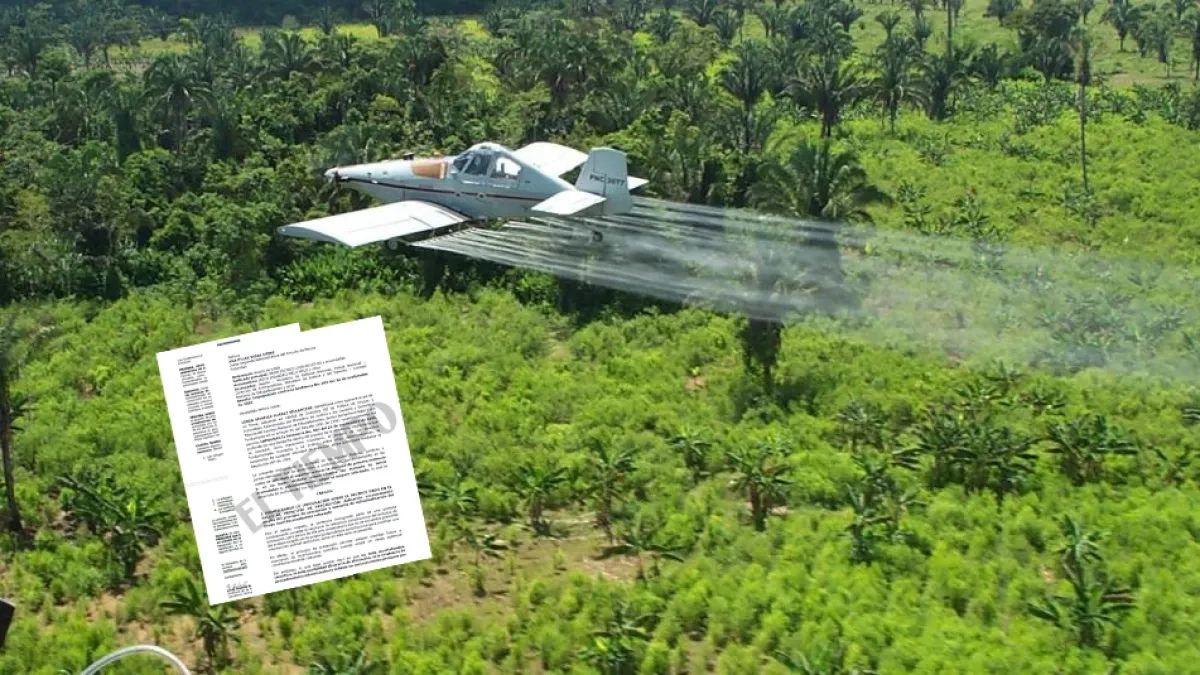
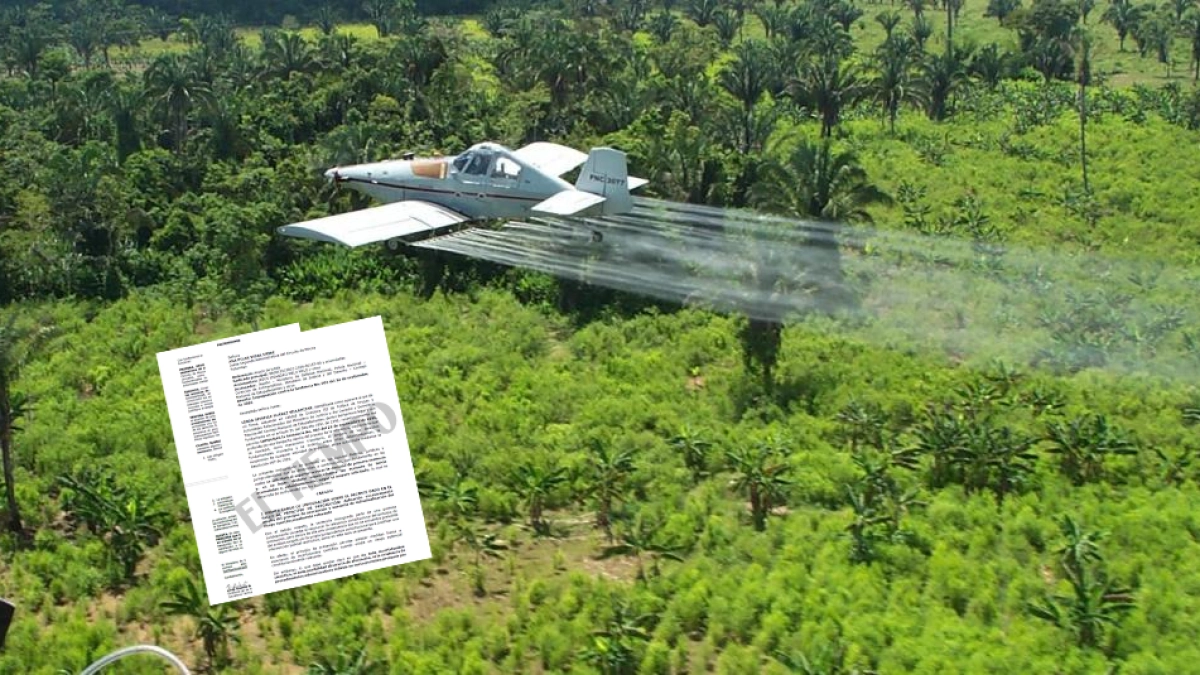
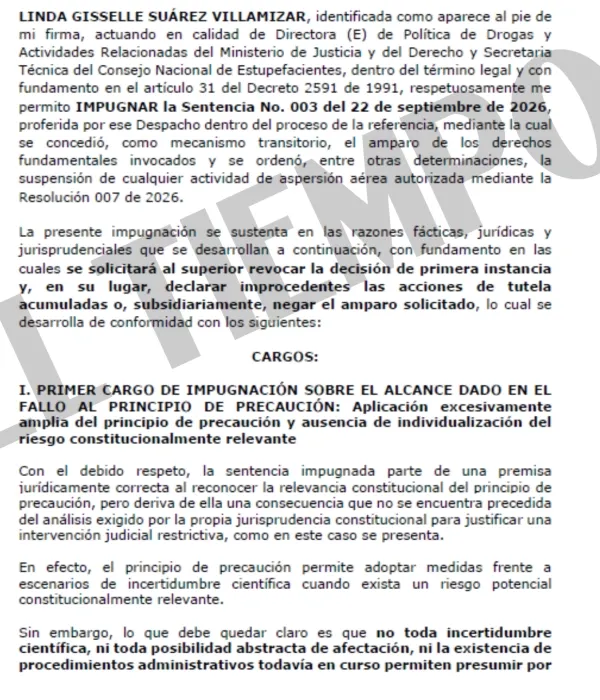
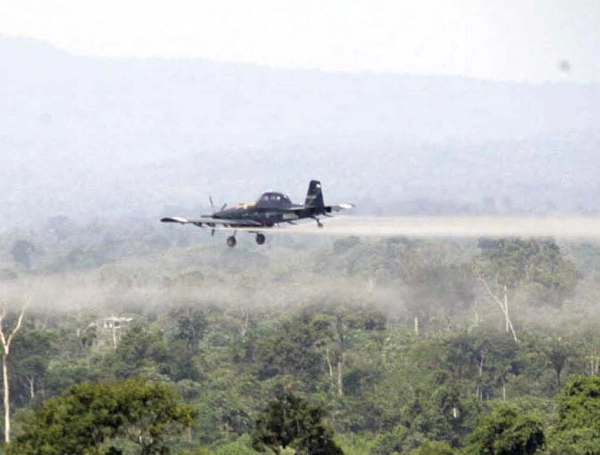
The Colombian government, through the Ministry of Justice, has officially filed an appeal against a ruling issued by the Second Administrative Court of Mocoa. The decision, which remains a focal point of national debate, maintains a stringent suspension on the government’s proposed pilot program for aerial spraying using glufosinate ammonium. This legal battle represents a critical intersection between public health, environmental conservation, and the state’s counter-narcotics strategy.
The Core of the Dispute: Precaution vs. Pragmatism
At the heart of the judicial blockade is the "precautionary principle." The Mocoa court’s ruling hinges on the argument that scientific uncertainty surrounding the long-term effects of glufosinate ammonium, when combined with potential risks to fundamental rights—such as the right to a healthy environment, access to potable water, and personal integrity—necessitates an immediate halt to the operation.
"The existing uncertainty, combined with the potential impact on fundamental rights related to health, water, personal integrity, and the environment, compels the application of the precautionary principle," the court stated in its original resolution.

Conversely, the government’s legal team argues that the court has misinterpreted the threshold for state action. According to the Ministry of Justice, scientific uncertainty alone does not constitute evidence of a grave or irreversible risk. By citing the Constitutional Court’s landmark Sentencia T-236 of 2017, the government contends that the court has applied an "extreme interpretation" of the precautionary principle, effectively paralyzing executive functions based on speculative hazards rather than empirical danger.
Chronology: A Legacy of Judicial Constraints
To understand the current impasse, one must look at the legal framework governing aerial eradication in Colombia. The history of this debate is defined by a series of high-profile rulings that have incrementally limited the state’s capacity to use chemical agents.
- 2017: The Constitutional Foundation. The Constitutional Court, through Sentencia T-236, established rigorous requirements for any aerial spraying program. These included scientific proof of safety, the absence of health risks, and robust community participation.
- 2019: Strengthening the Bar. Through Auto 387, the Court reaffirmed that these requirements are not mere suggestions but mandatory prerequisites for any governmental policy concerning aerial spraying.
- 2025-2026: The Shift to Glufosinate. Following the long-term phase-out of glyphosate, the government sought to implement a pilot program using glufosinate ammonium. The Second Administrative Court of Mocoa ruled that the criteria established in the previous decade remain fully applicable to any chemical aerial eradication program, regardless of the substance used.
- September 2026: The Impugnation. The Ministry of Justice files a formal appeal, arguing that the pilot program was intended to be an experimental phase, not a permanent or mass-scale eradication effort, and that applying the same standards as a full-scale program is legally disproportionate.
The Conflict of Interpretation: Pilot vs. Policy
A significant portion of the government’s appeal rests on the distinction between a "pilot program" and a "permanent policy." The Ministry argues that the judicial requirements cited by the court—specifically those outlined in the 2019 Auto 387—were designed for the re-initiation of a nationwide spraying program.
"The Constitutional Court rulings did not establish an abstract constitutional regime for ‘any aerial spraying program with herbicides’ indiscriminately," the government stated in its appeal. The Ministry posits that the court’s decision effectively prevents the collection of the very data needed to assess safety, creating a "Catch-22" where the government cannot prove safety because it cannot perform the experiment, and cannot perform the experiment because it hasn’t yet proven safety.
The court, however, remains unmoved by this distinction. Its ruling emphasizes that the "threat to rights" is imminent, even if the spraying has not yet commenced. The judge argued that the mere prospect of aerial application, without prior compliance with rigorous administrative and environmental protocols, constitutes a violation of the rights to participation, legitimate expectations, and due process.
Implications for Public Policy and Environmental Law
The suspension of the pilot program has profound implications for Colombia’s rural development and security strategies.
1. The Right to Participation
The Mocoa court highlighted a lack of comprehensive assessment regarding the impact on families enrolled in official voluntary substitution programs. By failing to integrate these families into the decision-making process, the government’s plan, according to the judge, creates a "certain threat" to the stability of social programs aimed at curbing illicit crop production.
2. Legal Uncertainty for Future Operations
The government’s appeal notes that the court’s order is alarmingly vague. It mandates that authorities "abstain from executing any aerial spraying activity" until they "credibly and integrally" satisfy constitutional and environmental conditions. The government argues that this order fails to provide a roadmap: it does not specify which entities must act, the exact metrics required to satisfy the "conditions," or the specific legal forum for verification. This lack of procedural clarity, the government asserts, undermines the rule of law.

3. The Judicialization of Executive Action
This case serves as a prime example of the "judicialization of politics" in Colombia. When the court justifies its intervention by citing the "inminencia" (imminence) of a state activity, it asserts its role as a safeguard against potentially risky administrative actions. The government’s counter-argument—that the judicial branch is displacing the administrative branch in the exercise of its technical and policy-making duties—highlights a classic tension in constitutional democracies.
Official Responses and Next Steps
The government maintains that the pilot was never meant to be a reckless experiment. They emphasize that the necessary paperwork and administrative procedures were in the middle of their review cycle when the court intervened.

"What was pending was not ‘non-compliance,’" a government spokesperson noted. "It was pending because the pilot had not yet begun. To rule on the basis of a non-existent breach is a procedural error."
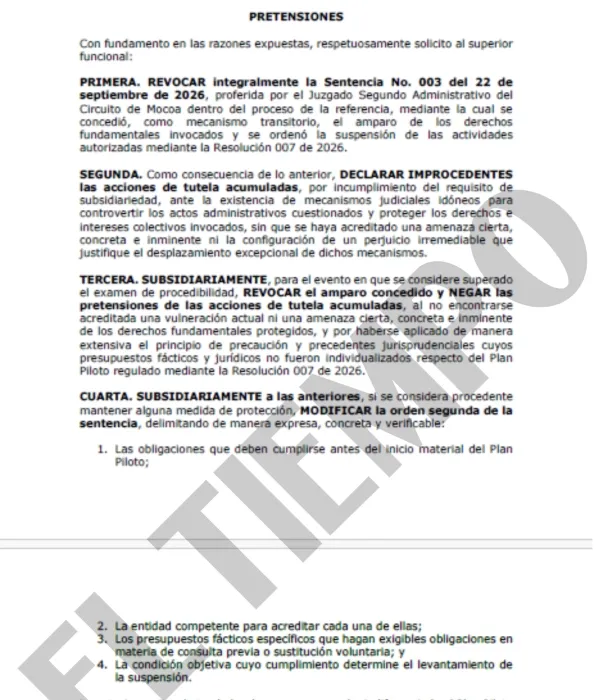
The case now moves to a second-instance tribunal. The higher court faces three potential paths:

- Confirmation: Sustaining the ruling of the Mocoa court, thereby maintaining the indefinite suspension.
- Revocation: Overturning the ruling, which would allow the government to proceed with the pilot program under its current structure.
- Modification: Leaving the suspension in place but providing clear, measurable criteria for what the government must achieve to "unlock" the pilot.
Conclusion: A Delicate Balance
As the tribunal deliberates, the suspension of the aerial spraying pilot remains in full force. The standoff between the Ministry of Justice and the judiciary underscores the immense difficulty of balancing state-led security initiatives against the stringent environmental and social safeguards that define modern Colombian jurisprudence.
Whether the government can successfully convince the higher court that its pilot program is a scientifically controlled, legally sound initiative—or whether the court will continue to hold the line based on the precautionary principle—remains one of the most significant legal and political challenges of the current administration. For now, the fields designated for the pilot remain undisturbed, waiting for a resolution that will inevitably set a new precedent for how the state interacts with the environment in its pursuit of public security.