By Mateo Chacón Orduz Subeditor of Vida de Hoy / Analysis based on SNIES and LEE Data
Introduction: The Changing Landscape of Higher Education
While traditional ivy-covered campus gates once stood unchallenged as the ultimate gateway to success, a quiet structural revolution is unfolding across the Colombian educational landscape. The nation’s youth are voting with their feet—and their mouse clicks.
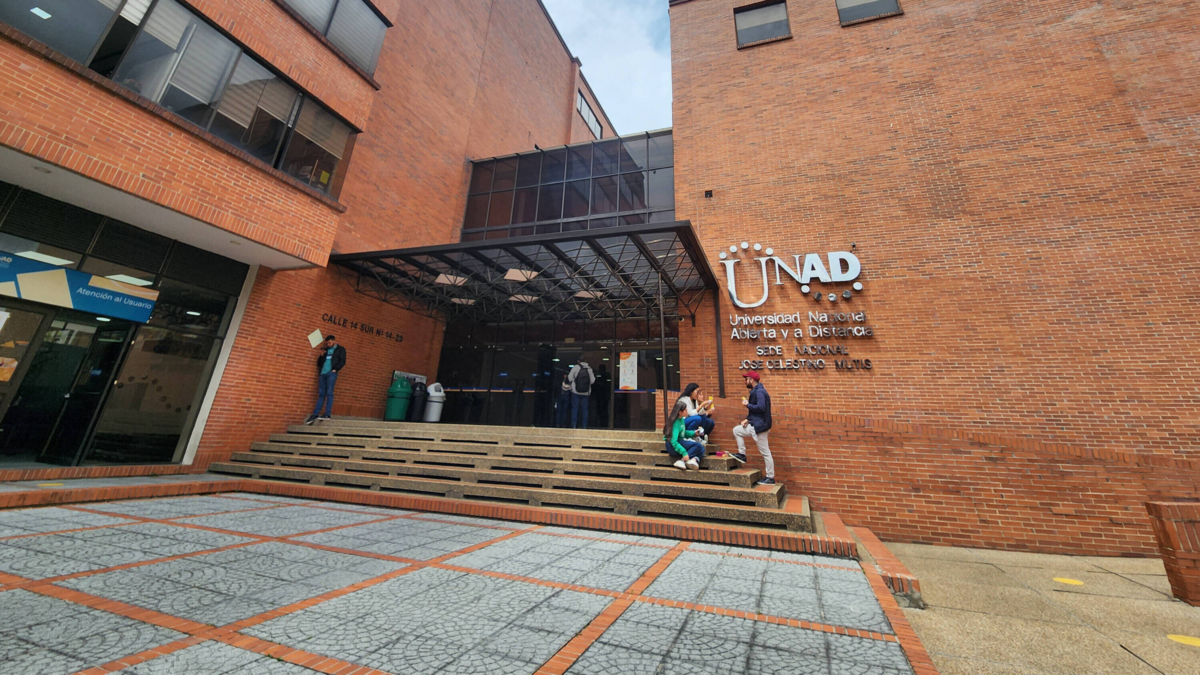
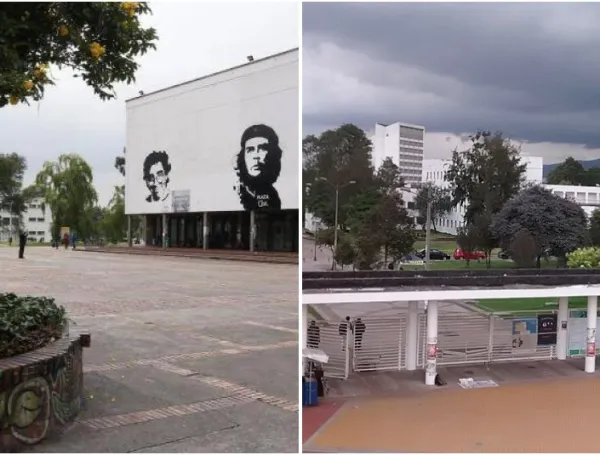
While flagship institutions like the Universidad Nacional de Colombia have seen prospective student numbers plunge to historic lows over the last two decades, public institutions anchored in virtual education and technical skill-building are experiencing unprecedented booms. The Universidad Nacional Abierta y a Distancia (UNAD) and the National Learning Service (SENA) have recorded massive influxes of new students, signaling a profound shift in consumer preference.
Far from a statistical anomaly, recent data from the Laboratorio de Economía de la Educación (LEE) of the Pontificia Universidad Javeriana—utilizing official statistics from the Sistema Nacional de Información de la Educación Superior (SNIES)—confirms a systemic migration. Students are pivoting away from rigid, multi-year, campus-bound degree programs in favor of flexible, agile, digital, and technical alternatives.
Main Facts: The Numbers Behind the Shift
The transformation of Colombia’s higher education ecosystem is grounded in hard metrics that contrast sharply across different educational modalities.
The National University Slump: The entrance examination for the Universidad Nacional’s primary semester plummeted from 75,681 applicants in 2019 to just 39,397—a striking 48 percent reduction and the lowest mark in twenty years. However, due to fixed caps, admitted enrollment has remained relatively stable (between 4,500 and 5,000 first-time enrollees).
The UNAD Surge: Between 2021 and 2025, UNAD—the country’s premier accredited public virtual university—saw a 86 percent growth in first-term undergraduate enrollment, soaring from 45,465 to 84,584 students. Overall undergraduate enrollment across the institution surged from 103,000 to 190,000.
Virtual vs. Presential Growth: First-course enrollment in virtual and distance learning modes grew by 45.7 percent between 2021 and 2025, compared to an 11 percent increase in traditional presential or hybrid models.
Postgraduate Shifts: In 2025, virtual postgraduate enrollment outpaced presential formats for the first time in history, commanding a 53.9 percent market share compared to 46.1 percent for traditional campuses.
SENA and Technical Programs: SENA maintains over 400,000 active apprentices in technological programs alone, accounting for 66 percent of all first-term technical enrollment nationwide in the SNIES system. Meanwhile, professional technical training registered a cumulative 37 percent growth over the five-year period, representing the fastest-growing relative level of education.
Chronology: A Timeline of Educational Transformation
To understand how Colombia arrived at this crossroads, it is vital to trace the compounding factors that have accelerated the decentralization of higher education over the past decade.
2018 (The Demographic Turning Point): Birth rates in Colombia begin a sustained downward trajectory. While demographers note this will drastically impact higher education in the coming decade, its immediate effect remains negligible for university-age youth, meaning current shifts are driven by cultural and economic choices rather than population shrinks.
2019 (Peak Presential Demand): The Universidad Nacional reaches a modern high-water mark with over 75,000 applicants for its admissions test, cementing the dominance of traditional, highly competitive brick-and-mortar universities.
2021–2022 (Post-Pandemic Acceleration): The COVID-19 pandemic normalizes remote learning technologies. Public demand permanently fractures, laying the groundwork for UNAD’s explosive multi-year growth trajectory.
2024 (Institutional Turmoil at the National University): A severe leadership crisis erupts between Leopoldo Múnera and José Ismael Peña for the university’s rector position. Paired with academic calendar delays and security incidents on the Bogotá campus, public confidence among prospective students takes a notable hit.
2025–2026 (The LEE Report Findings): Data compiled by the Pontificia Universidad Javeriana’s LEE reveals that official undergraduate enrollment in public institutions grew by 29.6 percent (double the private sector’s 14.2 percent), heavily driven by virtual and technical alternatives rather than elite traditional universities.
Supporting Data: Modalities, Micro-Credentials, and Market Realities
The erosion of the traditional university model is not solely a story of public sector restructuring; it is deeply tied to the evolution of the global labor market. Modern employers increasingly value targeted competencies over overarching theoretical frameworks.
The Rise of Micro-Credentials
Platforms like Coursera and institutional collaborations with elite universities (such as Universidad de los Andes and Pontificia Universidad Javeriana) have popularized micro-credentials—short, specialized programs focusing on specific IT and business skills. A recent Coursera industry survey highlights that 75 percent of regional universities believe recognizing academic credits for micro-credentials will drive future enrollment.
Public vs. Private Expansion
Official sector numbers demonstrate that public policy and economic necessity are driving students toward state-backed alternative models:
Public Sector First-Term Growth (2021–2025): +29.6%
This divergence highlights that while tuition costs remain a barrier in the private sector, public institutions are expanding primarily through digital scale (UNAD) and job-ready technical routes (SENA) rather than traditional campus construction.
Official Responses and Expert Analyses
Educational analysts and academic leaders have offered varied interpretations of these shifting paradigms, separating structural trends from temporary anomalies.
The Demand for Agility
Educational analyst Ricardo Rodríguez points to a fundamental change in student psychology:
"Young people are increasingly demanding shorter programs and are no longer willing to enroll in institutions with inflexible academic offerings."
Rodríguez argues that the modern student views multi-year theoretical degrees as a high-opportunity-cost gamble, preferring paths that offer faster entry into the workforce.
Separating Noise from Trend
While data proves a systemic migration toward digital and technical education, experts urge caution when analyzing isolated drops at specific institutions. Former professor Mauricio Restrepo notes that the historic decline in applicants to the Universidad Nacional cannot be viewed through an economic lens alone:
"The dispute over the rector’s office, academic calendar delays, and security concerns at the Bogotá campus generated deep distrust among young people and their families toward that specific institution."
Nevertheless, analysts emphasize that institutional scandals are merely a catalyst atop a structural current that was already sweeping the entire higher education ecosystem.
Implications: What This Means for the Future of Work and Society
The rapid descent of traditional campus allure and the simultaneous meteoric rise of UNAD, SENA, and digital micro-certifications carry profound implications for Colombia’s economic and social fabric.
Reimagining Social Mobility: For decades, passing the Universidad Nacional entrance exam was considered the gold standard for upward socioeconomic mobility in Colombia. As alternative pathways proliferate, the definition of academic prestige is decoupling from physical selectivity.
Employer Alignment: Companies are adjusting their hiring protocols. With technical and technological programs growing rapidly, employers are realizing that practical, hands-on competencies often yield more immediate workplace productivity than traditional four-year degrees.
The Coming Demographic Crunch: Because Colombia’s drop in birth rates began in 2018, the true demographic contraction has not yet hit higher education—it is currently working its way through primary and secondary schools. Universities that fail to adapt their infrastructure to hybrid, virtual, or modular formats risk severe obsolescence when the youth population eventually shrinks in the next decade.
Conclusion
The data compiled by the SNIES and the Javeriana’s LEE report deliver an unmistakable message: the monopoly of the traditional, physical, four-year university is fracturing. Driven by a demand for flexibility, economic pragmatism, and digital accessibility, Colombian students are forging a new educational map—one where virtual classrooms and technical workshops are no longer the exception, but the new mainstream.
BUENOS AIRES, ARGENTINA — Positioned as a cultural, gastronomic, and business hub in South America, the Colombian capital is making a formidable impression on the international stage. Led by the District Institute of Tourism (IDT),…
By: Angie Rodríguez | Medellín, Colombia As the global fashion industry converges on Medellín for the 37th edition of Colombiamoda—the premier textile and fashion showcase in Latin America—the air is thick with anticipation. Under the…
Bogotá, Colombia — In a groundbreaking fusion of avant-garde performance, historical memory, and radical social inclusion, the renowned Bogotá-based theater collective Café A Ciegas is set to stage its most ambitious project to date: El…