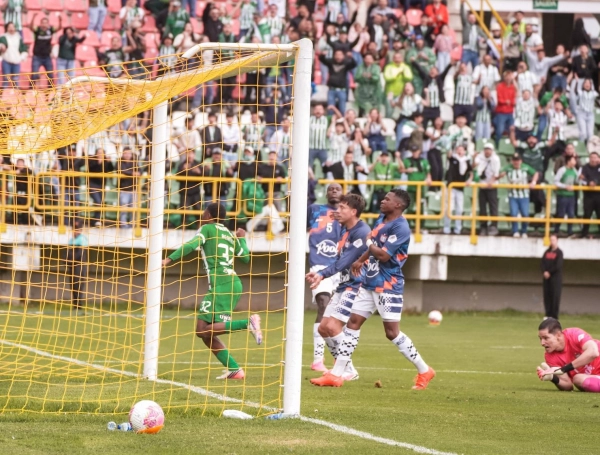
The Boyacá Chicó Football Club, a stalwart of the Colombian first division since its rise to prominence in the early 2000s, is currently staring into the abyss. Caught between a precarious mathematical battle to avoid relegation and an escalating, toxic feud with the local municipal authorities in Tunja, the club finds its very survival in the city—and the professional top flight—under existential threat.
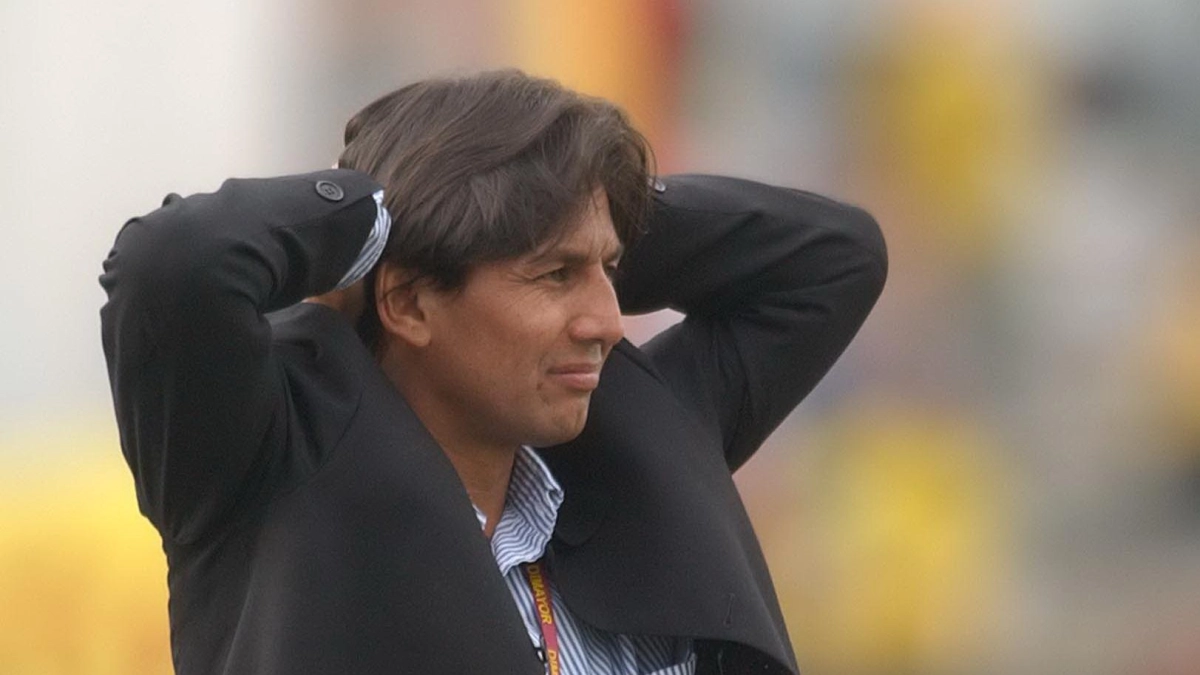
Eduardo Pimentel, the club’s maximum shareholder and outspoken leader, has signaled that the institutional stability of the team is at a breaking point. For a club that has called Tunja home since 2005, the current atmosphere is not merely one of sporting pressure, but of perceived systemic hostility.
The Breaking Point: Pimentel’s Public Outcry
The tension reached a boiling point this week when Pimentel took to social media to articulate his frustration, characterizing the club’s situation as a victim of "malicious restrictions" and "political manipulation." According to the executive, the local committee in Tunja has systematically undermined the club’s ability to operate, specifically by forcing the team to play home matches behind closed doors.
"The repeated and malicious restrictions from the local committee in Tunja, the political manipulation to which we have been subjected, and the constant grandstanding of its members put at risk the continuity of the team in this city after 22 years of struggle, commitment, and dedication," Pimentel wrote on X (formerly Twitter).

The core of the dispute lies in the repeated denial of public access to matches. Pimentel claims this is the ninth instance where the club has been forced to host games without spectators. For a team fighting for its life, the loss of gate receipts and the lack of home-field atmosphere serve as a double-edged sword. "The enemy was not on the field; the enemy was camouflaged behind the desks," Pimentel asserted, highlighting a deep-seated distrust between the club’s administration and the city’s regulatory bodies.
A Chronology of Conflict
To understand the severity of the current standoff, one must look at the historical context of the club’s tenure in Tunja.
- 2005: Boyacá Chicó relocates to Tunja, establishing the La Independencia stadium as its fortress. Over the following years, the club achieves historic milestones, including a first-division title, bringing national prestige to the Boyacá department.
- 2024-2025: Tensions begin to simmer as logistical and security requirements imposed by the local municipal committee grow increasingly stringent.
- October 2026: The crisis hits a crescendo. Following a contentious match against Atlético Nacional, where the club was forced to suspend ticket sales at the eleventh hour, Pimentel explicitly threatened to relocate the team.
- The Current Landscape: With only a handful of games remaining in the season, the club is fighting on two fronts: the pitch and the administrative boardroom.
The Mathematical "Miracle" Required for Survival
While the administrative war dominates the headlines, the sporting reality for the "Ajedrezados" (the Checkered Ones) is equally grim. The club is currently mired in the deep end of the relegation table. Their survival is no longer a matter of simple consistency; it is a matter of near-perfect execution.
Following a morale-boosting 1-0 victory over Atlético Bucaramanga last Friday, the team has kept its flickering hopes alive. However, the path forward is narrow and unforgiving.

The Requirements for Staying Up:
- Winning Streak: Boyacá Chicó must win all four of their remaining matches.
- External Dependence: They require Cúcuta Deportivo to drop points across their final five matches of the "Todos Contra Todos" phase.
The upcoming schedule represents the final stand for the squad. They are set to host Junior de Barranquilla on October 27, a match that takes on monumental importance. This will be followed by a high-stakes visit to Deportivo Cali on November 1, a final home stand against Internacional de Bogotá on November 4, and a season-closing trip to face Llaneros.

The Anatomy of the Sporting Crisis
The financial implications of the current dispute are significant. By barring fans from the stadium, local authorities have effectively cut off the club’s oxygen. Professional football is a business of margins, and in the high-stakes world of the Colombian Categoría Primera A, the absence of ticket revenue hampers the club’s ability to manage its payroll and infrastructure.
Furthermore, the psychological toll on the players cannot be ignored. A team already facing the immense pressure of a relegation battle must now contend with the uncertainty of their home base. If the administrative relationship with the city of Tunja is permanently severed, the club would be forced to seek a new host city, an logistical nightmare that would further destabilize an already fragile squad.
Official Responses and Governance
The local committee in Tunja has defended its actions by citing security protocols. They argue that the safety of the fans and the stadium infrastructure takes precedence over the club’s financial needs. However, Pimentel views these protocols as a pretext. He suggests that the "security concerns" are often raised at the last possible moment, specifically to hamper the club’s ability to generate revenue and build fan support.
This clash of interests represents a broader issue in Colombian football governance: the friction between private sports entities and municipal oversight committees. When these relationships break down, it is the fan base and the sporting integrity of the league that suffer most.
Implications for the Future of Boyacá Chicó
If the team fails to secure its spot in the first division, the consequences will be seismic. Relegation not only leads to a significant decrease in broadcasting revenue and sponsorship value, but it also triggers an institutional crisis that could see the club’s identity completely dismantled.
Pimentel’s threats to leave Tunja, while potentially tactical, signal a genuine weariness. After more than two decades of existence, the club is at a crossroads. The "miracle" they need is not just a string of favorable results from their players on the pitch, but a fundamental realignment of their relationship with the city of Tunja.

As the match against Junior de Barranquilla approaches, all eyes will be on the stands—and on the officials. The atmosphere will be charged, not just with the typical passion of a relegation dogfight, but with the tension of an institutional divorce that seems closer to reality with every passing day.
For the fans of Boyacá Chicó, the next few weeks will define the future of their club. It is a moment where the "Checkered Ones" must defy the odds, navigate the political minefield, and prove that despite the "enemies behind the desks," the heart of the team still beats for the city of Tunja. Whether this proves to be a dramatic turnaround or the beginning of the end remains to be seen, but one thing is certain: the margin for error has evaporated, and the time for miracles is now.