Introduction: The Weight of the Modern World
In an era defined by the relentless pace of information, the global collective consciousness is increasingly burdened by a sense of "ambient anxiety." From the geopolitical tremors of modern warfare to the visceral impact of natural disasters and the existential dread surrounding the rapid, often unpredictable, evolution of artificial intelligence, humanity finds itself in a state of perpetual vigilance.
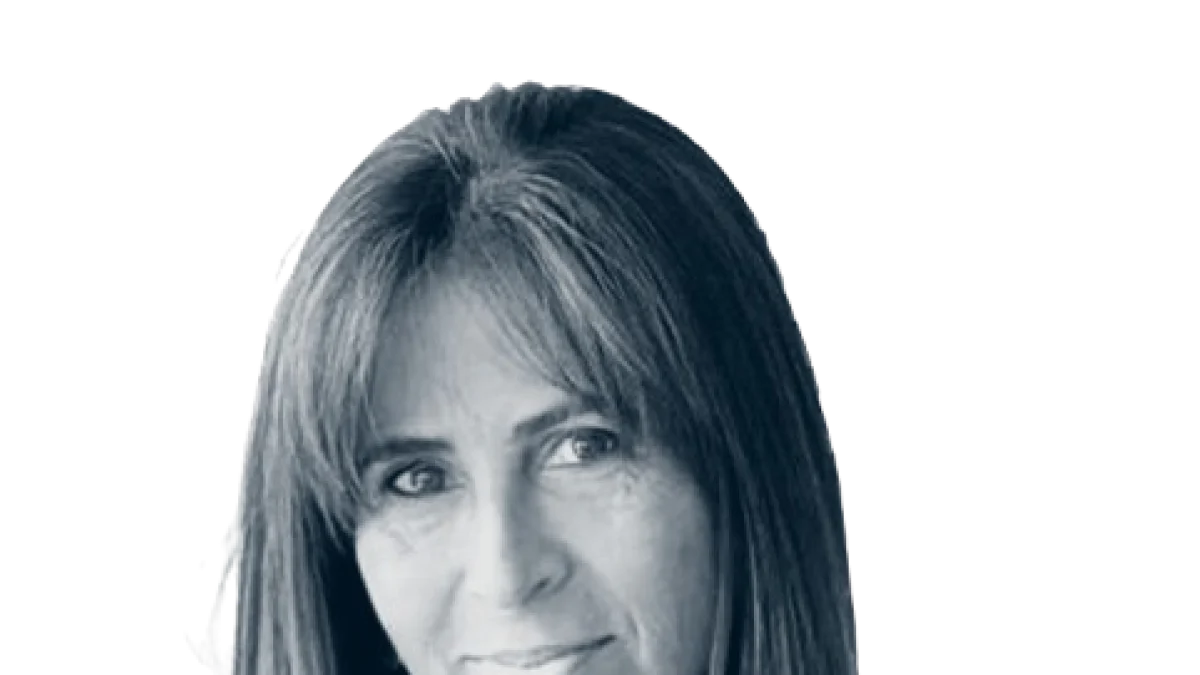
However, amidst this deafening noise, a timeless philosophy of resilience has emerged, echoed by cultural icons and personal wisdom alike: the ability to discern between what we can control and what we must learn to accept. As columnist Diana Pardo eloquently observes, while we cannot govern every event that unfolds on the global stage, we maintain absolute sovereignty over our internal response to those events.
The Genesis of "Let It Be": A Lesson in Surrender
To understand the power of this psychological anchor, one must look back to one of the most iconic songs in the history of popular music. The Beatles’ Let It Be, written by Paul McCartney, is not merely a composition of melodic genius; it is a document of human resilience.
A Chronology of Inspiration
- The Period of Turmoil: In the late 1960s, The Beatles were fracturing. McCartney faced a confluence of personal stress, including financial instability and mounting professional friction with his bandmates. The pressure was, by his own admission, overwhelming.
- The Vision: During this period of intense psychological distress, McCartney experienced a vivid dream involving his mother, Mary, who had passed away when he was only fourteen.
- The Message: In the dream, Mary offered him words of comfort that would eventually anchor millions of listeners: "Don’t worry, trust, let it be."
- The Cultural Impact: The song became an anthem for a generation, transforming a private moment of grief and confusion into a universal mantra of acceptance.
This anecdote serves as a historical case study for the psychological concept of "radical acceptance." By acknowledging the reality of a situation without adding the secondary layer of suffering caused by resistance, one can navigate even the most chaotic circumstances.

The Philosophy of "Everything is for the Best"
The sentiment behind Let It Be is mirrored in cultural wisdom across the globe. For many, this takes the form of phrases like "everything is for the best"—a sentiment Pardo notes was a constant refrain from her own mother, and later honored by her nephew, composer Felipe Durán Pardo, in his musical work of the same name.
This is not a call for passivity or a willful ignorance of the world’s tragedies. Instead, it is a call for a strategic recalibration of our energy. When the news cycle presents us with overwhelming crises—climate instability, social fragmentation, or technological upheaval—the natural human reaction is to attempt to control the outcome. When we realize that control is an illusion, we are left with two choices: despair or intentional living.

Supporting Data: The Psychology of Resilience
Modern psychological research supports the efficacy of the "Let It Be" approach. Studies in cognitive-behavioral therapy often focus on the "Locus of Control." When individuals perceive that their internal reactions are the only things they can truly govern, their levels of cortisol—the body’s primary stress hormone—tend to decrease, even when external circumstances remain volatile.
Furthermore, the act of "giving back" acts as a vital buffer against despair. Pardo highlights the phenomenon of human chains formed during natural disasters in Colombia, where communities came together to distribute aid. This is a critical data point in sociology: the transformation of individual trauma into collective action is one of the most effective ways to mitigate the helplessness that comes with observing global crises.

Implications for the Digital Age
We live in an age where the "noise of the world" is amplified by algorithms. We are perpetually "plugged in," making it difficult to find the silence required to process our emotions.
The Burden of Artificial Intelligence
The rapid integration of AI into our daily lives has introduced a new layer of existential risk. While the technology promises advancement, the uncertainty of its long-term societal impact creates a baseline of anxiety. The implication here is clear: we are the architects of this technology, yet we often feel like its victims. The wisdom of "letting it be" suggests that instead of reacting with fear, we should focus on the ethics of our own participation—deciding how we use these tools rather than simply fearing their existence.

The Power of Sensory Presence
To counteract the digital overload, experts suggest a return to sensory grounding. The act of living with one’s "senses wide open" serves as a cognitive reset:
- Nature: Reconnecting with the physical environment to ground the nervous system.
- Arts and Humanities: Engaging with music, cinema, and literature as a way to process the human condition.
- Physical Gratitude: Simply acknowledging the ability to move, hear, and touch, which shifts the focus from abstract threats to immediate, tangible existence.
Official Perspectives: The Duty of the Individual
While governments and international organizations are tasked with managing the "macro" problems—such as climate change policy or AI regulation—the "micro" responsibility lies with the individual. The implication is that a society is only as resilient as its citizens. If the citizenry is paralyzed by anxiety, the capacity for collective problem-solving is severely diminished.

Therefore, the call to "decide what to do with what we are given" is a civic duty. It implies that by maintaining our own mental health and choosing to contribute—whether through time, knowledge, or shelter—we create a ripple effect of stability that can counteract global instability.
Conclusion: Singing at the Top of Our Lungs
The synthesis of the Beatles’ legacy and personal reflection leads us to a clear conclusion: our response to the world is our final frontier of freedom. We cannot stop the tide, but we can learn to navigate the waves.

"Letting it be" is an active, not passive, state. It is a bold, courageous decision to remain hopeful in the face of uncertainty. It is the acknowledgement that while the world may be loud, chaotic, and often frightening, the human spirit possesses the unique capacity to transform that noise into something harmonious.
As we move forward, perhaps the most revolutionary act one can commit is to find beauty in the mundane, to extend a hand to a neighbor, and to trust that even in the darkest chapters of history, there is a way to move through the experience with grace. Trust, as McCartney’s mother advised, is the ultimate antidote to the volatility of our times. In doing so, we are not just surviving; we are learning how to truly live.