By Global Affairs Desk
Updated: October 26, 2026
Main Facts
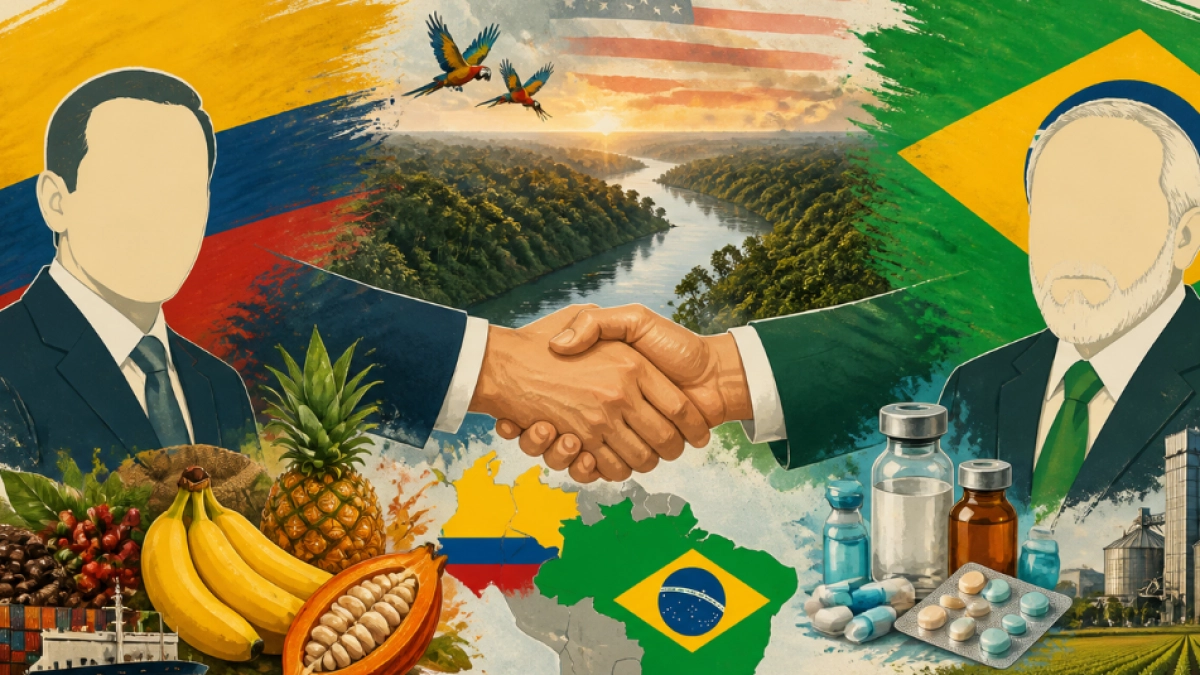
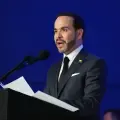
Just twelve hours after Luiz Inácio Lula da Silva secured his victory in Brazil’s presidential election—defeating Flavio Bolsonaro, whom Colombian head of state Abelardo De La Espriella had openly and vigorously supported—Bogotá’s administration signaled a decisive shift toward pragmatic diplomacy. Facing the reality of Brazil’s fourth presidential term under the veteran left-wing leader, President De La Espriella took to social media to establish the baseline for future bilateral engagement with South America’s largest economy and pivotal regional partner.

Despite deep-seated ideological and political differences, the core message emanating from the Casa de Nariño was clear: national interests and shared regional survival transcend partisan lines. The 1,644-kilometer common border cutting through the heart of the Amazon rainforest represents both an existential vulnerability and a primary arena for coordinated state action.
The immediate priorities outlined by both administrations include:

- Combating transnational drug trafficking and narcoterrorism.
- Eradicating illegal mining operations that ravage remote territories.
- Safeguarding the Amazon basin against accelerated environmental degradation.
- Optimizing bilateral commerce to bridge a historically lopsided trade deficit.
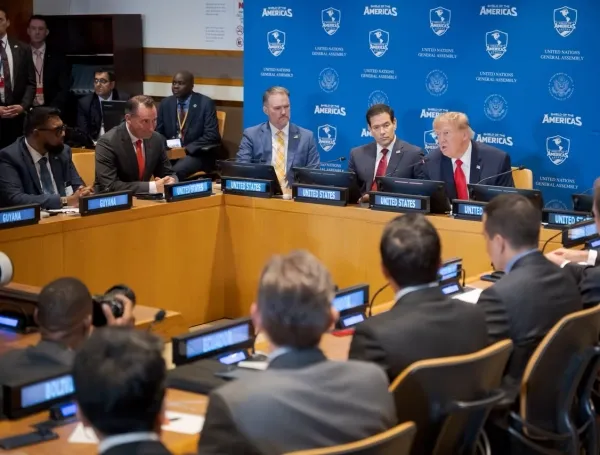
However, this nascent diplomatic thaw does not occur in a geopolitical vacuum. The return of Lula da Silva immediately reshapes broader hemispheric dynamics, most notably frustrating Washington’s vision for a unified regional security bloc—the proposed "Shield of the Americas"—which Flavio Bolsonaro had committed to joining. As international analysts note, the ability of De La Espriella and Lula to sustain a functional working relationship will be severely tested by external pressures, particularly the foreign policy posture of the United States under Donald Trump, and internal governance challenges along their shared jungle frontier.

Chronology of Events
The unfolding diplomatic dynamic between Brasília and Bogotá is rooted in a sequence of recent electoral outcomes and rapid geopolitical realignments:
- June 2026: Abelardo De La Espriella wins the Colombian presidential election, running on a conservative platform and establishing close ideological ties with right-wing movements across the region, including open support for Flavio Bolsonaro in Brazil.
- Shortly after June 2026: Upon De La Espriella’s victory, Brazilian President Luiz Inácio Lula da Silva extends a conciliatory message via social media, emphasizing that the enduring friendship between Brazil and Colombia "transcends ideologies" and must focus on poverty alleviation, organized crime, and Amazonian preservation.
- Late October 2026: Brazil holds its high-stakes presidential runoff election. Luiz Inácio Lula da Silva defeats Flavio Bolsonaro, securing his historic fourth term in power and altering hemispheric alignment projections.
- October 26, 2026 (13:11 – 16:25 UTC): Barely half a day after Lula’s electoral triumph is confirmed, President De La Espriella issues a carefully calibrated statement on X (formerly Twitter). He acknowledges profound ideological divergences while formally committing to a pragmatic state-to-state relationship centered on security, environmental defense, and mutual economic survival.
- Late October 2026: Regional analysts and trade organizations, such as Analdex, begin parsing the economic and security fallout of the Brazilian election, highlighting untapped commercial potential and the looming question of U.S. diplomatic pressure on right-leaning Latin American governments.
Supporting Data and Economic Matrix
While political rhetoric frequently dominates headlines, the economic and security architecture binding Colombia and Brazil is anchored in hard data, extensive trade volumes, and formidable geographic realities.

The Border and Environmental Security
The two nations share an immense, porous frontier stretching 1,644 kilometers across the Amazon basin. According to environmental monitoring groups and security analysts, this vast expanse has transformed into a primary corridor for transnational criminal syndicates, illegal logging, and wildcat gold mining.
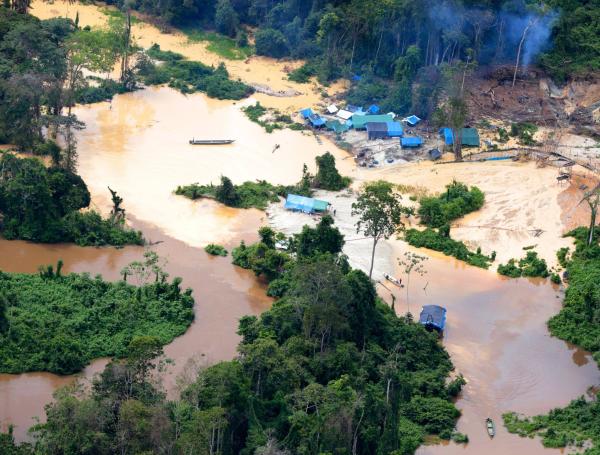
- Deforestation Metrics: Data from regional monitoring bodies underscores the scale of the threat. For instance, historical patterns show hundreds of square kilometers lost to illicit mining and land grabbing in northern Amazonian territories (such as Roraima and adjacent border zones) within single seasonal windows.
- Divergent Security Strategies: While President De La Espriella favors a hardline, heavily militarized approach to secure the Amazonian frontier and dismantle illicit economies, the Lula administration has leveraged community-led conservation frameworks—integrating indigenous populations directly with federal environmental and security forces to choke off illegal supply chains. Despite these tactical differences, both countries participate in nascent multilateral structures, including specialized regional police intelligence-sharing centers.
Commercial Ties and Trade Projections
Brazil is undeniably one of Colombia’s indispensable economic partners.
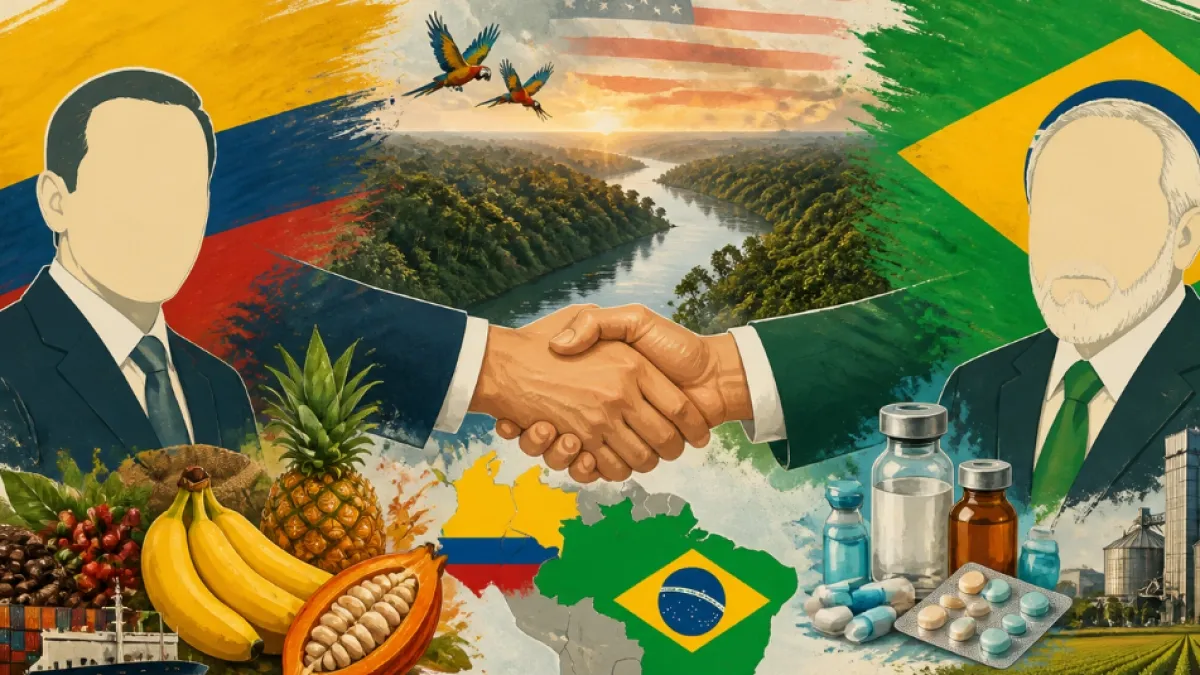
- Export Volume: In 2025, Brazil ranked as the fourth-largest destination for Colombian exports, generating approximately $1,896 million in sales.
- The Trade Deficit: Despite robust absolute numbers, the commercial exchange remains structurally disadvantageous for Colombia, resulting in a persistent trade deficit.
- Untapped Potential: Projections from the National Association of Foreign Trade (Analdex), drawing on International Trade Centre (ITC) data, indicate that Colombia holds the capacity to generate an additional $1,600 million annually in exports to Brazil. This expansion is viewed as critical for Colombia’s non-mining and energy diversification strategy.
- Key Sectors: The most significant growth gap lies within the agrochemicals sector—boasting an untapped potential of $458 million compared to current sales of $144 million. Additional growth vectors include pharmaceuticals, agro-industrial products, and metal-mechanics, which would complement established export staples such as polypropylene, PVC, and palm oil.
- Tariff Framework: Under the Economic Complementation Agreement No. 72 (ACE 72), roughly 97 percent of the bilateral tariff universe is already exempt from duties. However, realizing the full potential of this agreement requires clearing persistent non-tariff obstacles, including technical, sanitary, and administrative barriers—most notably achieving full phytosanitary admisibility for Colombian coffee.
Official Responses and Expert Perspectives
The pivot toward pragmatism has elicited nuanced reactions from academic circles, international organizations, and diplomatic observers:

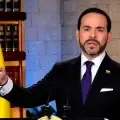
- President Abelardo De La Espriella: Emphasizing that statecraft must supersede personal or partisan animosities, the Colombian president stated: "President Lula and I have deep and profound political and ideological differences, but we agree on something fundamental: Brazil and Colombia need each other. No consideration can be above the interests of our nations." He reiterated that the fight against narcoterrorism and the defense of the Amazon remain non-negotiable state priorities.
- President Luiz Inácio Lula da Silva: Reaffirming his stance following De La Espriella’s election earlier in the year, the Brazilian leader noted that bilateral ties must remain insulated from partisan swings. Lula has consistently emphasized that joint action against poverty, transnational crime, and ecological degradation serves as the bedrock of South American stability.
- Matías Franchini (Professor of International Relations, Universidad del Rosario): Franchini suggests that while the initial messages successfully open the door to pragmatic cooperation, the long-term trajectory of the relationship remains hostage to Washington’s actions. As a doctor in International Relations from the University of Brasília, Franchini points out that Lula’s victory dealt a direct blow to Washington’s plans to rope South America’s economic superpower into its "Shield of the Americas" anti-narcotics coalition. The central unknown is how aggressively U.S. President Donald Trump will pressure right-wing governments in the region to isolate Brasília. If Washington adopts a heavy-handed containment strategy, De La Espriella may face severe political friction in maintaining smooth diplomatic channels with his neighbor.
- Elizabeth Dickinson (Senior Analyst for Latin America and the Caribbean, International Crisis Group): Dickinson highlights the Amazon as an unprecedented crucible for transnational crime. She warns that criminal actors are rapidly exploiting remote resources and illicit supply routes. While she acknowledges the utility of existing multilateral tools—such as joint intelligence and security coordination centers—she stresses that the ultimate test will be whether Bogotá and Brasília can maintain these operational mechanisms despite contrasting domestic security philosophies and shifting political tides.
Implications and Future Outlook
The evolving dynamic between Abelardo De La Espriella and Luiz Inácio Lula da Silva carries profound implications for the geopolitical architecture of South America.
1. Hemispheric Polarization vs. Sub-Regional Pragmatism
Latin America has long struggled to translate rhetorical commitments to regional integration into durable, institutionalized cooperation, even during periods of ideological alignment. With two leaders sitting on opposite sides of the political spectrum, grand regional integration initiatives are unlikely to advance. Instead, cooperation will likely manifest in narrow, transactional, and issue-specific agreements—particularly concerning border security, environmental monitoring, and commercial exchange.

2. The Washington Variable
The extent to which Bogotá can balance its traditional, historically close alliance with the United States against its immediate geographical imperative to cooperate with Brasília will define De La Espriella’s foreign policy legacy. If U.S. policy under Donald Trump seeks to penalize or diplomatically sideline Lula’s Brazil, Colombia could find itself caught in a diplomatic squeeze, forcing the Casa de Nariño to choose between ideological solidarity with Washington and vital security and economic cooperation with its largest southern neighbor.

3. Verification Through Action
Ultimately, the longevity of this pragmatic détente will not be judged by social media pronouncements or symbolic diplomatic pleasantries. The true test lies in verifiable, ground-level outcomes along the 1,644-kilometer jungle frontier: whether joint military and police operations can effectively curtail illegal mining and drug networks, whether environmental protocols can curb deforestation in the Amazon basin, and whether Colombian exporters can successfully penetrate Brazilian markets to rebalance a historically skewed trade ledger.

As both administrations settle into their respective mandates, the De La Espriella-Lula relationship stands as a critical stress test for modern Latin American diplomacy—proving whether pragmatic state interests can successfully prevail over ideological division.