By Editorial Staff
Updated July 23, 2026
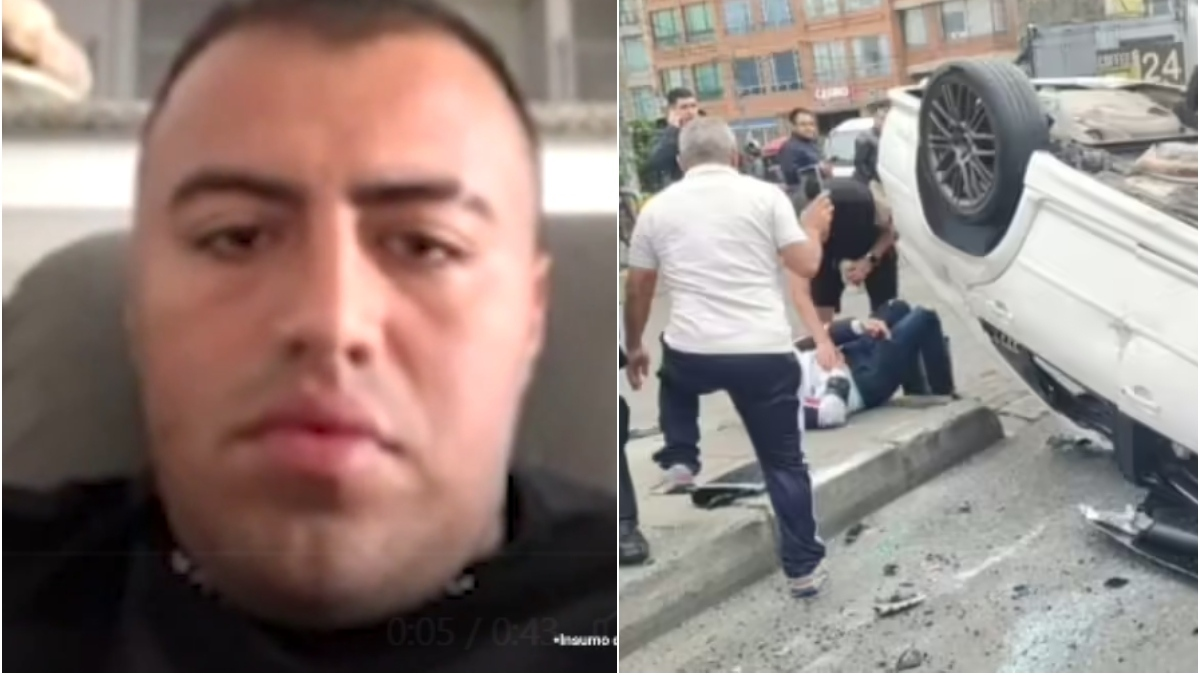
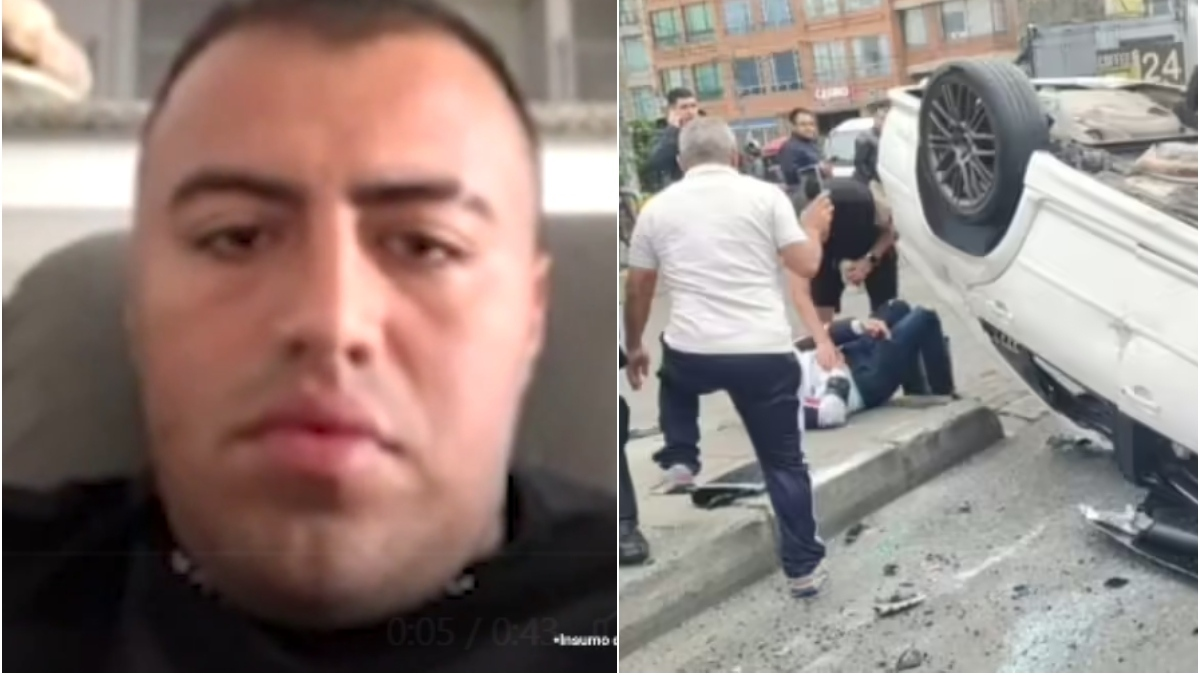
In a landmark legal development that challenges the boundaries of liability in traffic accidents, the Colombian Prosecutor’s Office (Fiscalía General de la Nación) has formally charged Edwin Leonardo Delgado Comba with homicide by omission. The case, which stems from a tragic collision on October 31, 2025, in western Bogota, has drawn national attention not because the accused was behind the wheel, but because he was the owner of the vehicle who allegedly enabled a drunken driver to take control of the car.
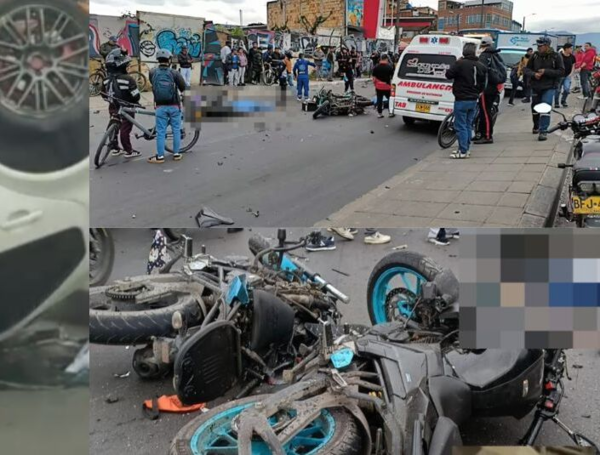
The incident, which occurred at the intersection of Avenida José Celestino Mutis and Carrera 98, resulted in the immediate deaths of two motorcyclists. As the legal proceedings move forward, the case is being closely watched by legal experts, as it establishes a significant precedent regarding the "duty of care" and the potential criminal liability of vehicle owners who witness or facilitate dangerous behavior by intoxicated drivers.
The Fatal Incident: A Night of Negligence
The events of October 31, 2025, began long before the collision at the intersection of Avenida Mutis. According to the prosecution’s investigation, Delgado Comba and the individual who eventually drove the vehicle spent approximately two hours in a local establishment, where they were seen consuming alcoholic beverages.

Witness testimony and surveillance footage analyzed by the Bogota Sectional Office of the Prosecutor’s Office suggest that the level of intoxication of the driver was evident. Despite this, investigators allege that Delgado Comba voluntarily handed over the keys to his vehicle to his companion.
The tragedy occurred shortly after they departed. The driver, unable to maintain control of the vehicle due to his impaired state, swerved, crossed into the oncoming lane, and struck two motorcyclists with devastating force. The victims, whose identities were confirmed shortly after the incident, died at the scene.

In the immediate aftermath, it was reported that the driver of the vehicle fled the country on the very same day as the accident, leaving the legal burden and the public scrutiny to rest squarely on the shoulders of the vehicle’s owner, Delgado Comba, who remained at the scene.
The Legal Strategy: Homicide by Omission
The core of the Prosecutor’s case rests on the concept of "homicide by omission" (homicidio por omisión impropia) under the theory of dolus eventualis (eventual intent). In the Colombian penal system, this is a complex legal threshold. The prosecution argues that Delgado Comba had a specific "guarantor position" over the danger created by his vehicle.
Understanding the Charge
Under the law, a vehicle owner has a duty to ensure that their property is not used to cause foreseeable harm to others. By allowing an obviously intoxicated person to operate his vehicle—and by choosing to ride as a passenger while witnessing that person’s erratic driving—the prosecution contends that Delgado Comba effectively accepted the risk that a fatal accident could occur.
A prosecutor from the Life Unit of the Bogota Seccional stated: "The accused delivered the vehicle of his property to a man in a state of drunkenness. Furthermore, he omitted his duty to prevent that person from assuming control of the automobile, a conduct that contributed decisively to the occurrence of the event."

By failing to intervene, or by failing to prevent the driver from taking the wheel, the prosecution argues that the owner became a participant in the causal chain that led to the death of the two motorcyclists.
Chronology of the Case
- October 31, 2025: A fatal collision occurs at Avenida Mutis and Carrera 98 in Bogota. Two motorcyclists are killed. The driver of the vehicle involved flees the country.
- December 2025: Investigations by the Prosecutor’s Office reveal the presence of the vehicle owner, Edwin Leonardo Delgado Comba, as a passenger during the incident.
- January 2026: Formal charges are brought against Delgado Comba. The prosecution highlights the two-hour window of alcohol consumption prior to the incident.
- January 6, 2026: Delgado Comba formally rejects the charges, leading to a trial process before a judge of knowledge.
- July 2026: The case remains in the judicial system, serving as a focal point for debates regarding traffic safety and owner accountability in Colombia.
The Implications for Traffic Law and Liability
The case of Edwin Leonardo Delgado Comba is not merely a tragedy; it is a catalyst for a broader societal conversation in Colombia regarding the responsibilities of vehicle ownership. Historically, traffic accidents in the country have been treated primarily as matters of individual negligence by the driver. This case shifts that paradigm.

The "Duty of Care"
Legal experts suggest that this indictment sends a chilling message to citizens: owning a car carries an inherent responsibility. If a car owner provides the "instrument of death" to an intoxicated party, or fails to act when they have the capacity to stop a lethal action, they can no longer hide behind the excuse that they were not the ones steering the vehicle.
Public Reaction
The public response in Bogota has been one of outrage, particularly regarding the ease with which the actual driver was able to leave the country. The fact that the owner is the one now facing the brunt of the judicial system has created a polarized discussion. Some argue that the owner is being used as a surrogate for the escaped driver, while others maintain that his accountability is absolute because he was the enabler of the tragedy.

Expert Commentary: Is This Precedent Sustainable?
Legal analysts have pointed out that the application of "homicide by omission" in traffic accidents is rare but not unprecedented in international law. However, for the Colombian judiciary, securing a conviction will require proving that Delgado Comba had both the knowledge of the danger and the capacity to intervene.
"The prosecution must prove beyond a reasonable doubt that the defendant was not just a passive passenger, but that he had a functional control over the situation," notes a legal expert from the University of the Andes. "If the court finds that he had the power to stop the driver—by taking the keys, demanding to stop, or refusing to get in the car—and chose not to, then the charge of omission holds weight."

The defense, for its part, has maintained that the owner cannot be held responsible for the autonomous, criminal actions of a third party, regardless of the circumstances of the vehicle’s loan. The rejection of the charges by the defendant signals a long, protracted legal battle that will likely go to the Supreme Court of Justice if a conviction is handed down.
Conclusion: A Turning Point
As the trial progresses, the memory of the two victims of the Avenida Mutis crash remains the central concern for their families and the community. The legal system is now tasked with determining whether the law can reach beyond the driver to those who facilitate the reckless endangerment of public safety.

For the citizens of Bogota, the case serves as a stark reminder of the dangers of drinking and driving. But more importantly, it serves as a warning: in the eyes of the law, the owner of the keys carries the same weight of responsibility as the person who turns them.
The judiciary’s final decision in the case of Edwin Leonardo Delgado Comba will undoubtedly shape the future of traffic litigation in Colombia for years to come. Whether it leads to a new standard of accountability or remains an isolated judicial experiment, the impact on the families of the victims and the legal landscape of the nation will be profound.

For ongoing updates on this case and other judicial news in Bogota, follow our justice section on our social media platforms or subscribe to our weekly newsletter for the latest developments as they happen in the courtrooms.