By Justice Desk Reporting
In a region defined by rugged topography and the persistent shadow of illegal armed groups, the Colombian military has intensified its presence in the Micay Canyon, a strategic corridor in the department of Cauca. Recent operational reports indicate a significant shift in the balance of power, with the "Carlos Patiño" structure—a faction operating under the influence of alias "Iván Mordisco"—facing a steady erosion of its ranks.
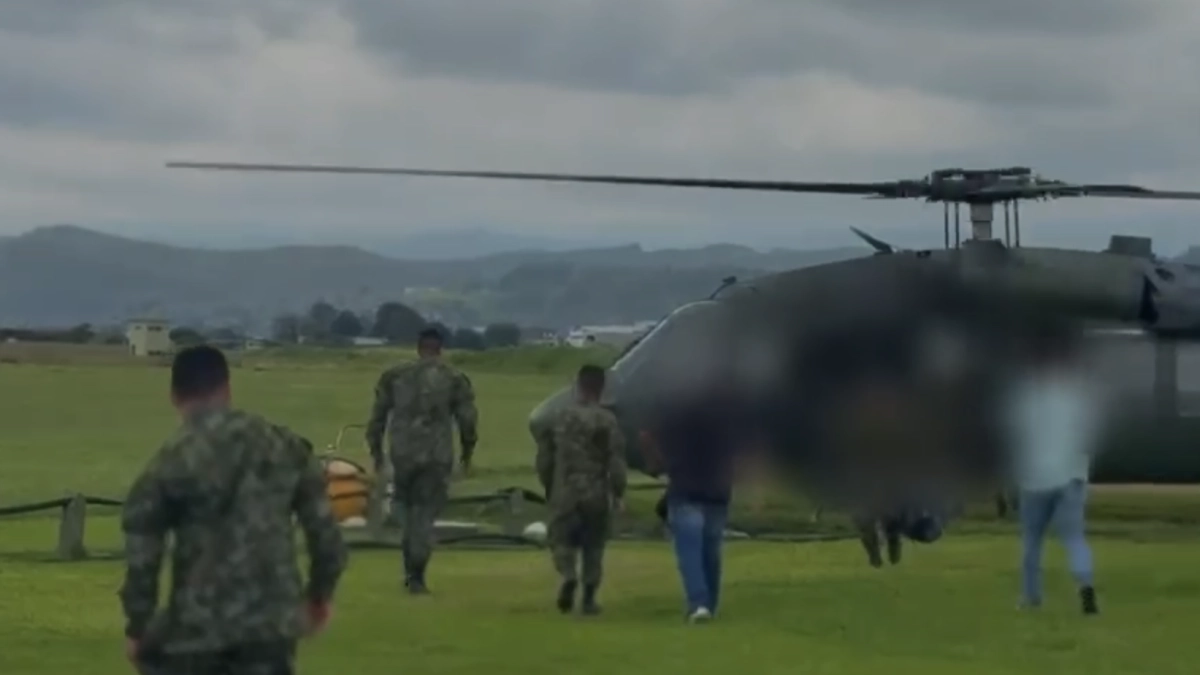
Over the past eight months, the Colombian Army has successfully facilitated the departure of 41 combatants who opted for voluntary submission to justice, while simultaneously securing the rescue of nine minors caught in the cycle of forced recruitment. This article analyzes the impact of these operations, the strategic importance of the Micay region, and the broader implications for security in southwestern Colombia.
1. The Strategic Core: Why the Micay Canyon?
The Micay Canyon is not merely a geographic landmark; it is a critical artery for illegal economies and the movement of illicit goods. Located in the municipality of Argelia, Cauca, the canyon serves as a transit point that connects the mountainous interior with the Pacific coast, making it a high-value territory for the "Carlos Patiño" structure.

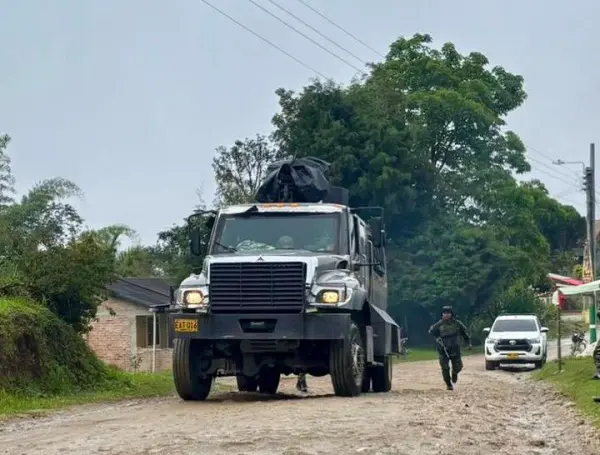
For months, the Fuerza de Despliegue Rápido N.º 4 (FUDRA 4) has maintained a constant, aggressive presence in the area. The military objective is twofold: first, to dismantle the logistical and command infrastructure of the armed group; and second, to reclaim territorial control that has historically been used to intimidate local populations. The structure has utilized this region to facilitate the movement of personnel, weaponry, and economic resources, which are essential for maintaining its operational capacity. By systematically disrupting these supply lines, the military has forced the group into a defensive posture, limiting their mobility and ability to project power.
2. Chronology of Recent Operations and Humanitarian Gains
The pressure on the "Carlos Patiño" group has been a gradual, calculated process rather than a single event. However, the cumulative effect of the last eight months has been profound.

The Recent Surge
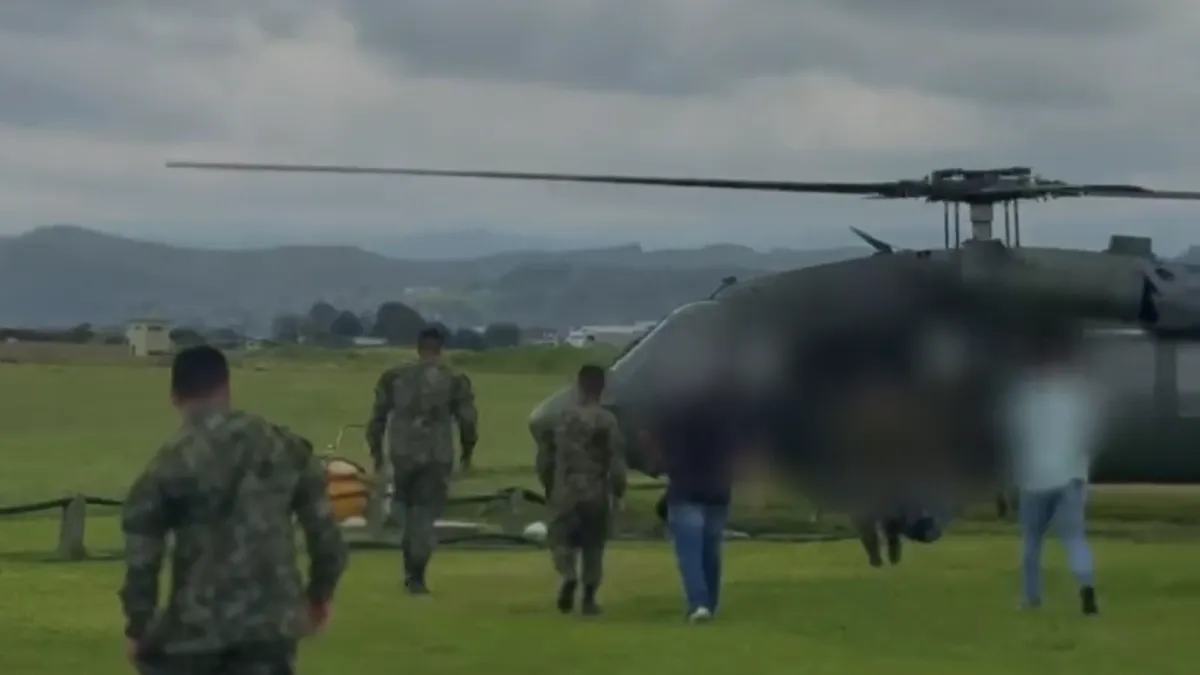
The most recent weekend saw a notable success in these ongoing efforts. Authorities reported the recovery of three minors, aged 15, 16, and 17, who were extracted from the clutches of the illegal organization. This rescue operation is particularly significant, as it highlights the ongoing use of child soldiers by the structure to bolster its ranks. Alongside the minors, three adult combatants chose to abandon the group, surrendering themselves to military units under the legal frameworks for individual submission.
Material Recovery
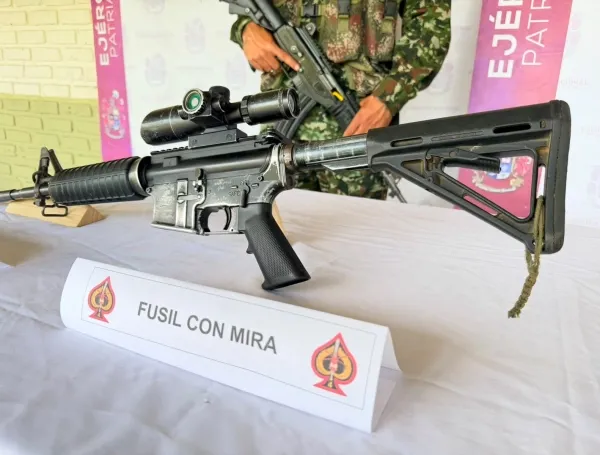
The surrender and capture operations have yielded more than just human intelligence. During these recent procedures, the Army seized a significant cache of weaponry and equipment, including a rifle, 60 cartridges of varying calibers, and a high-precision telescopic sight. These items, now in the custody of the Prosecutor’s Office and competent authorities, represent a tangible reduction in the firepower of the criminal network.
Eight Months of Attrition
When looking at the broader timeline, the 41 individuals who have left the group represent a substantial blow to the structure’s human capital. Each defection creates a "brain drain" effect: the group must divert energy from combat operations to recruit, train, and integrate new, inexperienced personnel, all while attempting to maintain its defensive perimeter in the face of continuous military pressure.
3. Supporting Data: The Mechanics of Disruption
The military’s approach in the Micay Canyon is multi-dimensional. It is not solely reliant on direct engagement, which often puts civilian lives at risk, but rather on a combination of psychological operations and persistent presence.
- Psychological Operations (Perifoneo): The Army has utilized loudspeaker broadcasts, leaflets, and direct communication to reach the hearts and minds of those still within the ranks of the Carlos Patiño. These messages focus on the paths to legal reincorporation, amnesty, and the opportunity for these individuals to return to their families.
- Intelligence-Led Operations: By mapping the movement of supplies and the locations of command nodes, the FUDRA 4 has effectively "squeezed" the structure into smaller, more isolated pockets.
- Community Engagement: Institutional presence has been bolstered through humanitarian outreach, intended to rebuild the trust of the local population, who have been subjected to constant threats and coercion by illegal actors.
The data suggests that this strategy is working. As the cost of remaining in the organization increases—due to constant military surveillance and the risk of confrontation—the incentive for desertion grows.
4. Official Responses and Institutional Stance
The Ministry of Defense has framed these operations as a necessary step toward restoring the rule of law in Cauca. A spokesperson for the Army noted that the goal is not just the elimination of threats, but the "re-institutionalization" of the Micay Canyon.

"The Carlos Patiño structure has used fear as their primary instrument of control," said a military analyst familiar with the theater of operations. "By cutting off their mobility and encouraging the surrender of their combatants, we are effectively breaking the cycle of violence that has plagued Argelia for years."
The state is currently managing the reintegration of the 41 individuals who have surrendered. This process involves legal vetting to ensure that those who have committed serious human rights violations are held accountable, while those who were forced into the ranks—particularly the minors—are directed toward the Colombian Institute of Family Welfare (ICBF) for protection and rehabilitation.

5. Implications for the Future of Cauca
The ongoing operations in the Micay Canyon carry significant weight for the stability of the Cauca region.
The Recruitment Crisis
The recovery of nine minors is a stark reminder of the humanitarian crisis in the region. The recruitment of children is a war crime, and the military’s focus on this aspect of the conflict is a priority for the current administration. By depriving the structure of this "human resource," the military is hitting the group where it is most vulnerable: its ability to regenerate its force.

The Shift in Power Dynamics
If the current trend of desertion continues, the "Carlos Patiño" structure faces a potential collapse of its operational cohesion. A group that cannot maintain its personnel is a group that cannot hold territory. If the Army can successfully consolidate its presence in the Micay, it will open the door for civilian government agencies to return to the region, providing services, infrastructure, and development—the ultimate "vaccine" against the influence of armed groups.
Challenges Ahead
Despite the successes, the situation remains volatile. The "Carlos Patiño" structure is known for its resilience and its ability to adapt to changing military tactics. Furthermore, the region remains a hotspot for illicit crop cultivation, which provides the financial oxygen necessary for these groups to survive. The military success must be followed by robust, long-term state presence, or the vacuum created by the retreat of the "Carlos Patiño" could simply be filled by other criminal actors.

Conclusion
The operations in the Micay Canyon serve as a microcosm of the broader struggle for security in Colombia. While there is no "silver bullet" to resolve the conflict in Cauca overnight, the systematic pressure applied by the FUDRA 4 is yielding undeniable results. With 41 combatants off the battlefield and nine minors rescued, the state has demonstrated that it is capable of reclaiming territory through a combination of military precision and humanitarian outreach.
The path forward, however, will require more than just the presence of soldiers. It will require a sustained commitment to social investment and the dismantling of the illegal economic networks that keep the cycle of violence in motion. For now, the people of the Micay Canyon see a glimmer of hope, as the shadow of the "Carlos Patiño" structure begins to shorten under the weight of a state that is finally reclaiming its sovereignty.