By Editorial Desk
Updated September 13, 2026
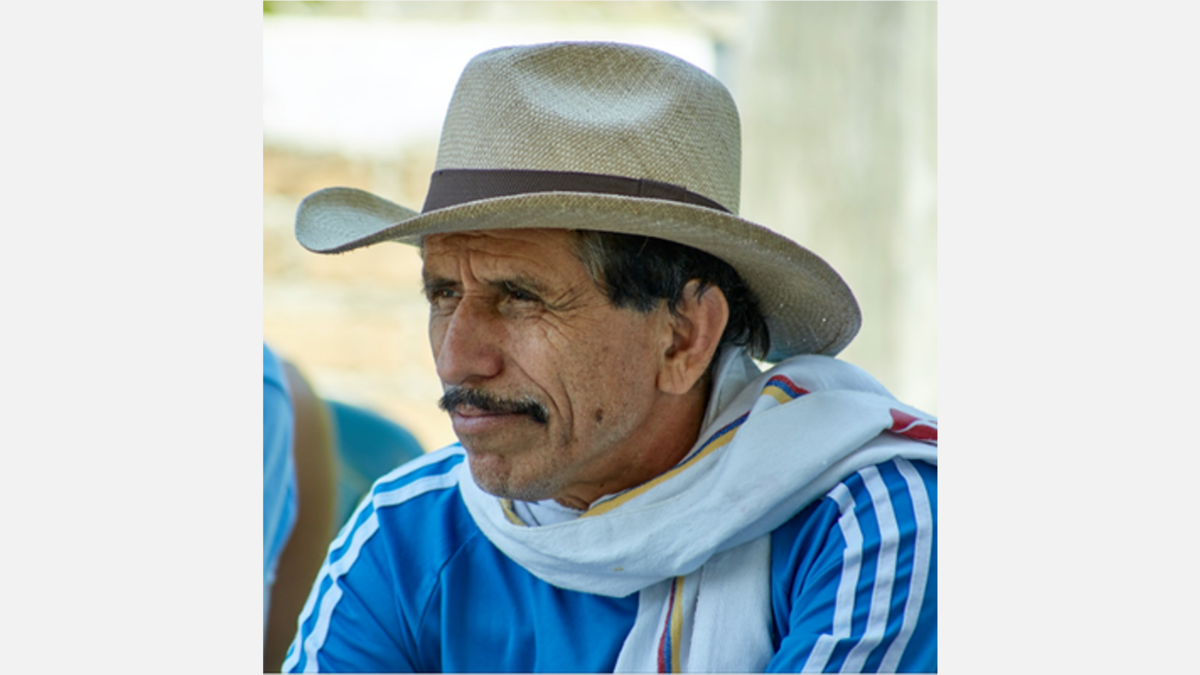
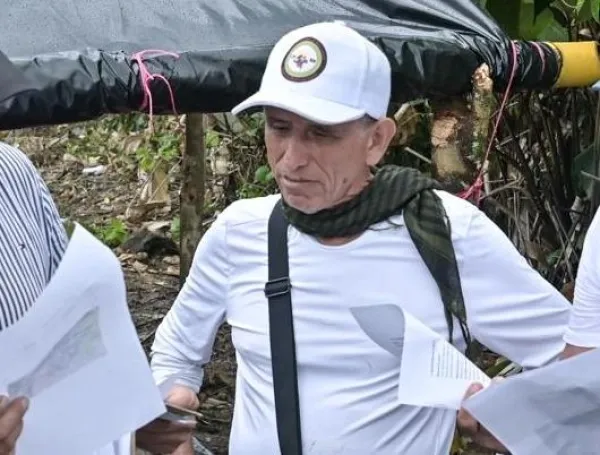
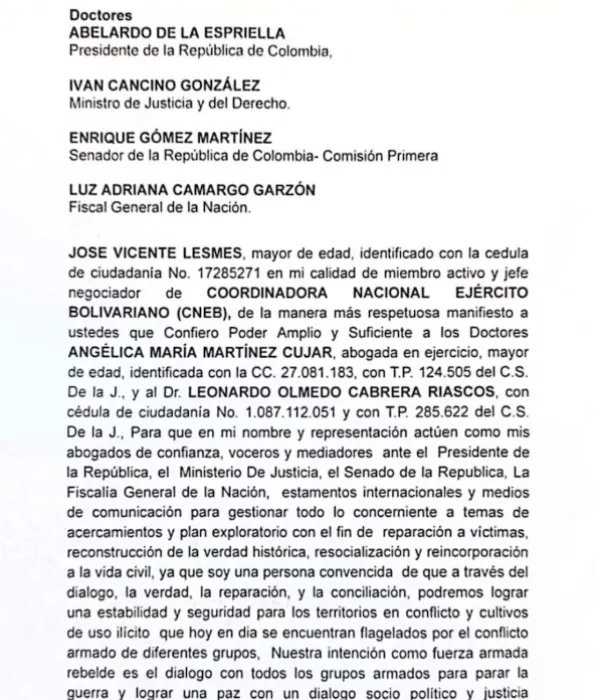
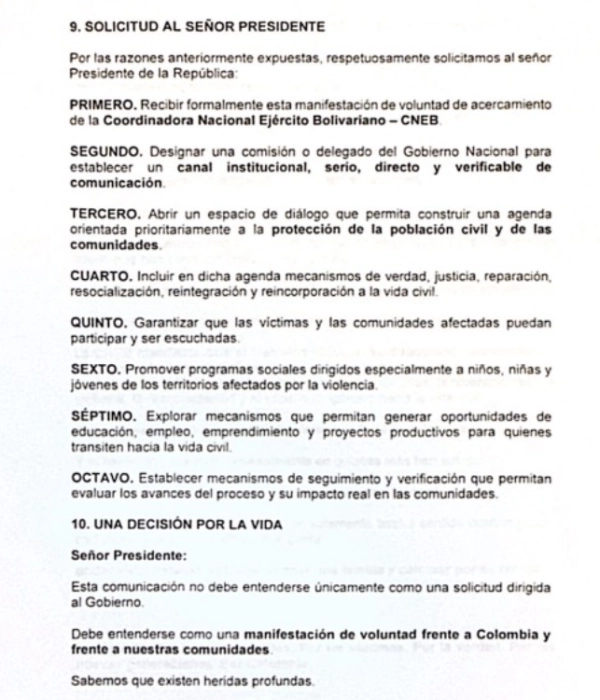
In a move that has sent ripples through the Colombian political establishment, the insurgent group known as the Coordinadora Nacional Ejército Bolivariano (Cneb) has formally requested an opening for dialogue with the administration of President Abelardo De La Espriella. The request, delivered via a formal letter dated September 3, 2026, was signed by José Vicente Lesmes, better known by his alias "Walter Mendoza," a high-ranking figure and former commander within the defunct FARC-EP.
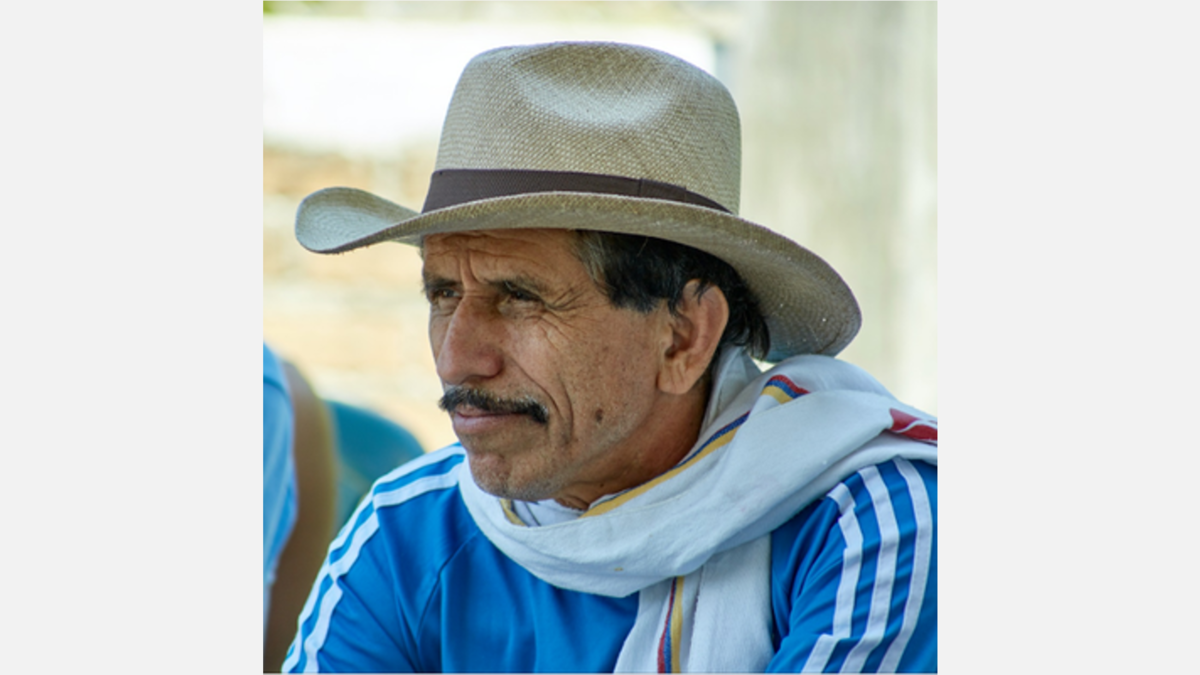
This overture comes at a highly delicate time for the De La Espriella government, which has recently signaled a pivot away from the "Total Peace" policies of the previous administration, opting instead for a more assertive, security-focused approach to the country’s persistent armed conflicts.
The Core Proposal: Seeking a Seat at the Table
In the three-page document, which has been circulated widely among government circles and media outlets, alias Walter Mendoza positions himself as the chief negotiator for the Cneb. He explicitly invites the national government, including the Ministry of Justice, the Office of the Prosecutor General, and legislative leaders, to establish an "institutional channel of communication."

The proposal is not merely a request for a ceasefire; it is a structural plan that advocates for a multi-sectoral peace agenda. Mendoza’s document outlines eight primary demands, the most significant of which is the formal recognition of the Cneb as a valid interlocutor and the subsequent appointment of a government delegate to initiate a "serious, direct, and verifiable" dialogue.
"This communication should not be understood solely as a request directed to the Government," the document states. "It must be understood as a manifestation of will directed at Colombia and our communities."
Chronology of Tensions: From "Total Peace" to "Zero Tolerance"
To understand the weight of this request, one must analyze the recent trajectory of the Colombian conflict:
- Early 2026: The De La Espriella administration begins a systematic review of all ongoing peace negotiations, citing a lack of progress and continued criminal activities by armed groups.
- September 9, 2026: President De La Espriella makes a definitive statement at a cabinet meeting, declaring an end to what he termed "false peace" processes, emphasizing that the state would no longer tolerate armed groups using dialogue as a shield for illicit activities.
- September 12, 2026: The Ministry of Defense, led by Jorge Mora, reports successful military operations against the "Frente 36" in Antioquia, resulting in casualties and arrests. This serves as a clear message that the government’s military pressure is escalating.
- September 13, 2026: The letter from alias Walter Mendoza enters the public sphere, acting as a direct counter-narrative to the government’s aggressive stance.
Key Pillars of the Cneb Proposal
The Cneb’s manifesto for dialogue is wide-ranging, covering both high-level political goals and localized social projects. The proposal centers on several key thematic areas:
1. Protection of the Civilian Population
The document prioritizes the mitigation of humanitarian crises in areas where the Cneb operates. Mendoza argues that the primary objective of any dialogue must be the reduction of civilian harm, particularly in territories contested by multiple armed actors.
2. Justice and Truth Mechanisms
Mendoza proposes an integration of "truth, justice, and reparation" mechanisms. While the proposal is light on technical details, it suggests a shift toward "restorative justice," aiming to address the needs of victims and the families of the disappeared—a persistent wound in the Colombian social fabric.
3. Socio-Economic Reintegration
The proposal acknowledges the need for a roadmap for combatants to transition to civilian life. It suggests the implementation of projects focused on education, entrepreneurship, and rural development. Crucially, it highlights the need for programs specifically targeting children and youth in high-risk zones, seeking to break the cycle of recruitment.
4. Verification and Monitoring
Perhaps sensing the government’s skepticism, the document calls for the creation of independent, multi-sectoral mechanisms to monitor any potential progress. The Cneb proposes that international observers and civil society organizations be included in this oversight, ensuring that any commitment made is kept by both sides.
Official Responses and Political Climate
The government’s response to this overture has been guarded and, in some corners, overtly dismissive. President De La Espriella, known for his firm conservative stance, has maintained that his administration will not negotiate under the threat of violence.
Defense Minister Jorge Mora, speaking on the heels of the recent operations in Antioquia, reinforced the government’s position: "There will be no impunity and no permissiveness. The state’s duty is to restore order in every corner of the country, not to provide political legitimacy to those who continue to challenge the rule of law."
Meanwhile, legal experts note that the letter is carefully drafted to avoid the "belligerent status" language that often complicates Colombian peace processes. By focusing on "dialogue for stability and security," Mendoza attempts to circumvent the legal barriers that have hindered previous negotiations.
Implications: The Strategic Dilemma
The Cneb’s proposal presents a profound strategic dilemma for the Casa de Nariño (the presidential palace).
The Case for Dialogue:
Supporters of a potential negotiation argue that military solutions alone have historically failed to eradicate the underlying causes of violence in Colombia. They contend that engaging with groups like the Cneb could provide a "relief valve" in volatile regions, potentially leading to a de-escalation of violence that benefits thousands of civilians trapped in the crossfire.
The Case for Hardline Pressure:
Conversely, critics of the "dialogue" model—and many within the current governing coalition—argue that previous attempts at negotiation have only served to allow insurgent groups to reorganize, rearm, and expand their influence over drug trafficking routes. They argue that any sign of weakness will be interpreted by the Cneb as an invitation to increase their criminal footprint.

Humanitarian Concerns and the "Victims" Narrative
One of the most emotive aspects of the document is its focus on the "profound wounds" of the victims. By highlighting the families still waiting for information on their loved ones, Mendoza is clearly attempting to gain the moral high ground in public opinion.
However, the lack of a concrete plan for reparations or a mechanism for truth-telling leaves many observers skeptical. "A letter is not a peace process," noted one analyst from the Bogotá Center for Conflict Studies. "Without an explicit agreement to halt illegal activities—such as kidnapping, extortion, and drug cultivation—this proposal remains a political gesture rather than a genuine step toward peace."

Future Outlook
As the dust settles on the announcement, all eyes are on the Presidential Palace. Will the government appoint a "high-level envoy" to explore the validity of the Cneb’s intentions, or will the letter be relegated to the archives of failed peace attempts?
For the residents of the territories most affected by the conflict, the stakes could not be higher. They remain caught between the state’s drive for security and the insurgents’ drive for legitimacy. The coming weeks will likely see an intensification of both military operations and diplomatic posturing, as the De La Espriella administration decides whether to engage in the most dangerous game of all: talking to the enemy.

The proposal by alias Walter Mendoza is a calculated gamble. Whether it leads to a historic de-escalation or is dismissed as a tactical distraction remains to be seen. What is clear, however, is that the Colombian conflict is entering a new phase—one where the old methods of confrontation are being tested against a new, more volatile, and highly uncertain political reality.
For further updates on this developing story:
Follow EL TIEMPO’s specialized coverage on the conflict and justice sector through our digital platforms, including our weekly newsletter and dedicated live blogs on X and Facebook.