By Jhoan Sebastian Cote Lozano
Justice Correspondent
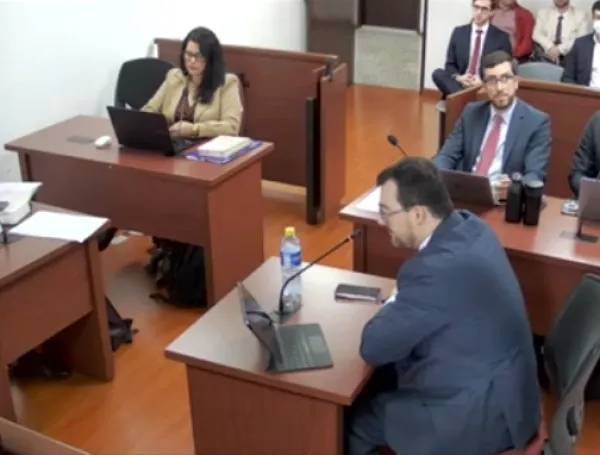
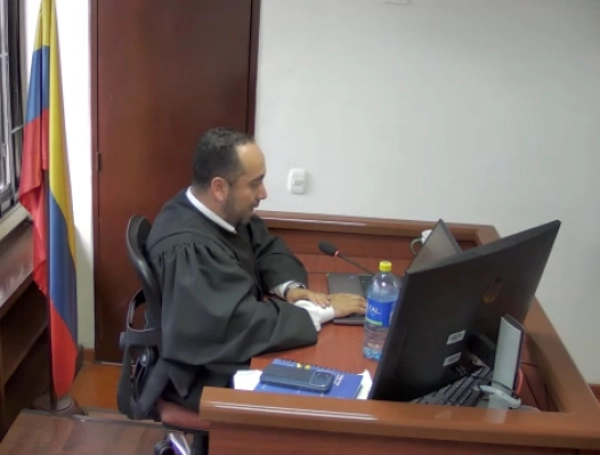
In a judicial proceeding that underscores the fragility of academic and professional ethics within the public sector, the fate of Juliana Andrea Guerrero, a former government official, was sealed on September 9, 2026. The 46th Penal Judge of Bogotá with Knowledge Function formally approved a plea agreement reached between Guerrero and the Office of the Attorney General of the Nation (Fiscalía General de la Nación), resulting in a three-year prison sentence.

Guerrero, who once aspired to hold the high-ranking position of Vice Minister of Youth within the now-defunct Ministry of Equality, admitted to orchestrating a sophisticated scheme to bypass academic requirements through the acquisition of fraudulent credentials. This case not only highlights a personal failure of integrity but also exposes deep-seated vulnerabilities in the verification processes for high-level government appointments.
The Verdict and Legal Sanctions
The sentencing of Juliana Andrea Guerrero marks the culmination of a rigorous investigation into the falsification of documents and the integrity of public service appointments. Under the terms of the approved pre-agreement, Guerrero pleaded guilty to the charge of procedural fraud.

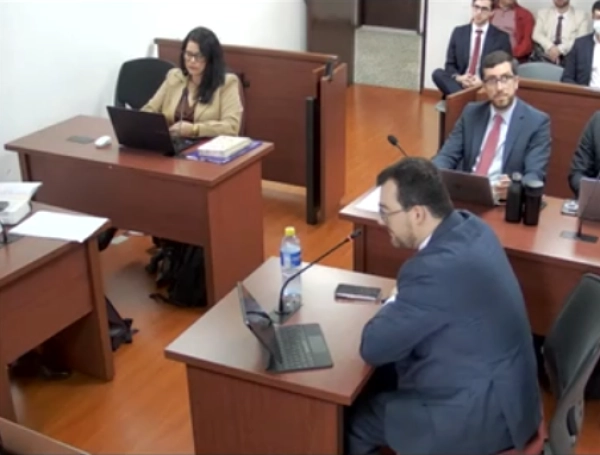
The judicial decision, handed down in a heavily attended hearing in Bogotá, imposes a multi-faceted penalty:
- Custodial Sentence: A fixed term of three years of imprisonment.
- Financial Penalty: A mandatory fine equivalent to 100 current legal monthly minimum wages.
- Professional Disqualification: An absolute prohibition from holding any public office or exercising public functions for a period of two and a half years.
The judge presiding over the case clarified that while the agreement was reached between the defense and the prosecution, it remains subject to standard legal resources and appeals, though the defendant’s admission of guilt serves as a significant turning point in the proceedings.

Chronology: A Path Built on Deception
The investigation into Guerrero’s credentials revealed a systematic avoidance of the rigorous academic path required to become a certified public accountant and a technology specialist in accounting management.
The Fabricated Academic Record
During the court proceedings held this past Wednesday, the prosecution laid out a damning timeline. The investigating fiscal prosecutor noted that Guerrero had "never attended a single class, never sat for an examination, and never completed the mandatory ICFES state exams."
The evidence suggests that Guerrero had previously completed eight semesters of study at a university in the Department of Cesar. Upon relocating to Bogotá, rather than completing her education, she allegedly initiated a series of irregular maneuvers to "homologate" (transfer) credits that did not exist.
The Role of the Fundación Universitaria San José
The investigation identified the Fundación Universitaria San José as the epicenter of this credential scandal. According to the prosecution, the institution facilitated the issuance of two diplomas—one for a technologist degree and one for a public accountant degree—despite the fact that Guerrero failed to meet any of the established academic milestones.
The Political Ambition
The gravity of the offense is magnified by the purpose behind the fraud: the pursuit of the Vice Ministry of Youth. By including these fraudulent degrees in her professional curriculum vitae, Guerrero sought to deceive the personnel vetting offices of the Ministry of Equality. Her actions not only constituted a personal crime but also a direct assault on the institutional trust required for high-level government service.
Supporting Data: The Systematic Failure
The case of Juliana Andrea Guerrero is not an isolated incident but part of a broader network of administrative malpractice that has sent shockwaves through the Colombian education and public administration sectors.

A Pattern of Institutional Complicity
The connection between Guerrero and the university is solidified by the previous conviction of Luis Carlos Gutiérrez Martínez, the former Secretary-General of the Fundación Universitaria San José. Gutiérrez was also sentenced to three years in prison for his active role in the illicit issuance of diplomas. His conviction provided the prosecution with the necessary leverage to dismantle the mechanism by which unqualified individuals were able to "purchase" professional legitimacy.
The Shift in Legal Strategy
Initially, during the preliminary hearings, Guerrero adopted a posture of defiance, formally declaring herself innocent of the charges brought by the State. However, as the prosecution presented an overwhelming volume of evidence—including digital records, testimonials from university staff, and the audit of the Ministry of Equality’s hiring processes—Guerrero chose a strategic pivot.

In a move to secure the three-year sentence, the prosecution agreed to degrade her level of participation in the criminal enterprise from "author" to "accomplice." This concession was instrumental in expediting the judicial process, avoiding a lengthy trial, and ensuring a swift resolution for the justice system.
Official Responses and Judicial Implications
The Office of the Attorney General has maintained that the case against Guerrero serves as a warning to all public officials regarding the sanctity of their academic documentation. The prosecutor assigned to the case was explicit in her assessment of the defendant’s intent:

"Guerrero possessed full knowledge that she had never fulfilled the prerequisites for those titles, yet she consciously chose to deceive the public servants tasked with evaluating her application for the Ministry of Equality."
Implications for Public Administration
The case has sparked a national conversation regarding the vetting protocols for government appointments. Critics and legal analysts have raised concerns about why these fraudulent degrees were not detected during the initial screening process. This has prompted calls for:

- Stricter Verification: Mandatory cross-referencing of academic titles with the National Ministry of Education’s database (SNIES) for all high-level appointments.
- Institutional Audits: A broader investigation into the accreditation processes of private universities that have been flagged for similar irregularities.
- Enhanced Background Checks: The implementation of more robust background investigations that go beyond the verification of documents to include an assessment of the candidate’s actual educational history.
Conclusion: A Lesson in Accountability
The sentencing of Juliana Andrea Guerrero serves as a stark reminder that the pursuit of political power through illicit means inevitably leads to personal and professional ruin. By attempting to bypass the rigor of the Colombian university system, Guerrero not only forfeited her career but also became a symbol of the corruption that can plague public institutions.
As she prepares to serve her sentence, the case remains an open wound for the administration she sought to join. For the public, the resolution of this case is a victory for the rule of law, demonstrating that even those who operate within the highest spheres of influence are not immune to the consequences of their actions.

The judiciary’s firm stance in this matter reinforces the principle that professional credentials are not merely pieces of paper; they are the bedrock of competency upon which the governance of a nation rests. With the case of the Fundación Universitaria San José continuing to yield legal consequences, the focus of the authorities now shifts to ensuring that the loopholes that allowed for this systemic fraud are permanently closed.
For more information on this case and ongoing developments within the Justice sector, follow El Tiempo’s digital coverage, sign up for our weekly newsletter, or join our official WhatsApp channel for real-time updates.