By Digital Scope Desk
Published: November 11, 2026
Main Facts: The Discovery of iOS’s Hidden Lexical Restrictions
In the architecture of modern mobile operating systems, convenience and automation are often pitched as neutral utilities designed to streamline human communication. However, a groundbreaking independent investigation has laid bare a contentious aspect of Apple’s ecosystem: the iPhone keyboard utilizes a deeply embedded “gray list” comprising approximately 100,000 words, phrases, and structural variations that the operating system (iOS) systematically avoids suggesting through predictive text and swipe-to-type features.
While users maintain the technical autonomy to manually type any of these blocked terms letter by letter, the predictive engine deliberately bypasses them. More intriguingly, when users attempt to utilize the swipe-to-type function—a method where users trace a continuous path across letters without lifting their finger—the system frequently intercepts the gesture, dynamically replacing the intended expression with benign semantic alternatives or entirely unrelated words.
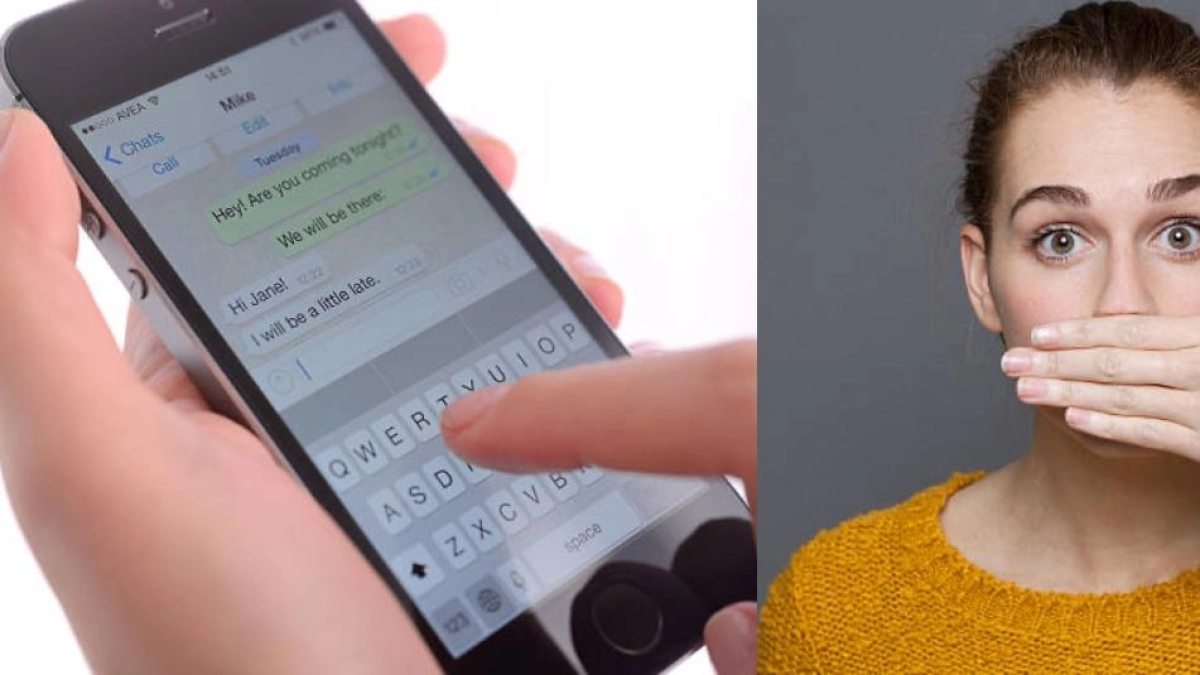
The discovery, initially brought to light by independent researcher Derik Kauffman and subsequently verified by cybersecurity specialists and major international news agencies, transcends simple profanity filters. While the lexicon certainly catalogs standard vulgarities, explicit sexual content, violence, and drug-related terms, a vast and politically sensitive subset spans global socio-political debates, territorial disputes, religious issues, immigration discourse, and prominent public figures across multiple languages.
This revelation has reignited an intense global debate regarding corporate content moderation, the invisible architecture of digital gatekeeping, and the ethical implications of technological monopolies shaping public discourse at the foundational level of human-to-device interaction.
Chronology: How the "Gray List" Was Uncovered
The trail that led to the exposure of Apple’s expansive predictive filter began as an intuitive observation by a tech-savvy user and quickly evolved into a multi-national digital forensics investigation.

September 2026: The Initial Anomaly
The sequence of events commenced in September 2026, when independent researcher Derik Kauffman noticed persistent frustrations while typing on his iPhone. Using the sliding gesture keyboard, Kauffman observed that his device repeatedly failed to recognize or accurately predict specific combinations of common words.
Curious about these recurring friction points, Kauffman isolated a few linguistic pairs. He noticed, for instance, that while the keyboard processed and suggested phrases like "bad girl" or "black man" with effortless precision, it experienced severe resistance or outright predictive failure when prompted with phrases like "bad boy" or "white man." Recognizing that these discrepancies could not be attributed to standard algorithmic learning or frequency-based predictive modeling, Kauffman decided to audit the device’s internal mechanics.
Algorithmic Extraction and Forensic Verification
Leveraging advanced artificial intelligence tools and forensic code-examination techniques, Kauffman dissected the internal codebases of Apple’s iOS keyboard dictionaries. Buried deep within the system binaries, he uncovered a massive, structured compendium of restricted terms. Upon tallying the entries, Kauffman estimated that the catalog encompassed roughly 100,000 distinct terms, phrases, and linguistic variations (a figure that notably excludes complex Chinese character variations).

To ensure the findings were not an isolated software glitch or a misinterpreted cache file, the discovery underwent rigorous independent verification. Matt Suiche, a prominent security researcher at the cybersecurity firm Tolmo, independently analyzed Apple’s internal system data. Suiche successfully reconstructed a list practically identical to Kauffman’s, confirming the systemic existence of the internal exclusion registry.
Public Exposure and Media Testing
Following the technical validation by cybersecurity experts, international news organizations—most notably Reuters—conducted empirical testing. Journalists across multiple desks tested a randomized selection of the identified expressions. The tests confirmed that the keyboard systematically resisted predicting or rendering specific phrases via automated tools, often mutating the inputs into completely different words mid-keystroke.
Supporting Data: What Content Does the Filter Target?
A granular analysis of the nearly 100,000 terms reveals a complex hierarchy of restrictions. While a significant percentage of the catalog is dedicated to traditional moderation categories—such as hate speech, explicit sexual acts, illegal substances, and graphic violence—a deeply controversial portion intersects directly with geopolitics, ideological debates, and public figures.
Geopolitical and Ideological Friction Points
The gray list does not confine its filtering to unambiguous profanity; it aggressively navigates sensitive international and domestic political flashpoints. Among the identified entries are expressions carrying heavy political weight, including:
- "Dictator Trump"
- "Sleepy Joe"
- "Tibetan independence"
- "United Ireland"
The mechanics of the predictive engine often manifest bizarre linguistic substitutions when these phrases are attempted via swipe-typing. For example, when a user attempts to glide-type "United Ireland," the system frequently autocorrects or substitutes the phrase with "United Iceland." Similarly, the colloquial political jab "Sleepy Joe" has been documented mutating into "Sleepy hope."
Further analysis reveals inclusions touching upon deeply polarized social issues, including debates over immigration policy, LGBTQ+ discourse, and various ideological stances.

Cross-Lingual Nuances: Global Censorship Patterns
Crucially, Apple’s gray list is not restricted to the English language. Kauffman’s deep dive into the system files revealed localized and culturally tailored restriction sets across several major languages, including Hindi, French, and Hebrew.
- In Hindi: Users navigating the predictive keyboard encounter algorithmic friction when attempting to type phrases critical of prominent political figures, including current Indian Prime Minister Narendra Modi and opposition leader Rahul Gandhi.
- In French: The restricted catalog includes specific phrasing tied to contentious national debates surrounding immigration policy and the legal framework of abortion.
- In Hebrew: The system flags and restricts geo-political terminology, including phrases directly referencing "occupied territories."
This multi-lingual deployment suggests that the restrictions are not accidental artifacts of automated machine learning datasets, but rather structured, intentional localization parameters implemented within the operating system’s predictive dictionaries.
Official Responses: Apple’s Stance and Corporate Defense
Faced with mounting scrutiny following the publication of the investigations, Apple issued measured statements clarifying the structural intent behind its predictive text architecture, though the corporation refrained from explicitly detailing the exact composition, sizing methodology, or curation criteria of the gray list.
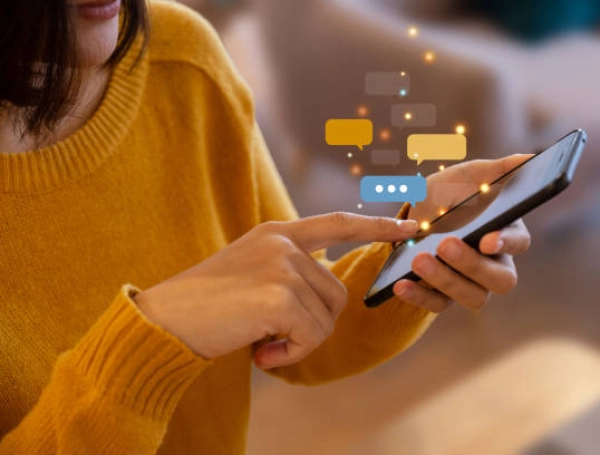
In an official response provided to Reuters, Apple defended the presence of the filtering mechanism by emphasizing that the iOS keyboard is intentionally engineered to prevent predictive suggestions that could be construed as inappropriate, offensive, or harmful. The tech giant underscored that the system acts as a preventative safeguard rather than a total prohibition.
Furthermore, Apple highlighted the fundamental user override mechanism: the operating system does not physically block users from typing any word or phrase. Individuals retain complete manual control to spell out any term letter by letter, and they possess the autonomy to manually reject, override, or delete predictive recommendations generated by the system.
Despite these assurances, privacy advocates and digital rights experts argue that corporate justifications relying on "user offensiveness" fail to establish a transparent, objective standard for deciding which political slogans, historical references, or ideological viewpoints deserve algorithmic suppression.

Implications: The Subtle Architecture of Digital Censorship
The exposure of Apple’s 100,000-term gray list has opened a Pandora’s box regarding the ethics of invisible moderation in consumer electronics. As billions of people rely daily on smartphones as their primary interface for communication, journalism, and personal expression, the lines between user autonomy and corporate curation are increasingly blurred.
The Threat of Ambient Censorship
Derik Kauffman and other digital rights advocates characterize this mechanism as a form of "subtle censorship." Unlike overt censorship—such as state-enforced internet shutdowns or platform bans—algorithmic predictive friction operates quietly in the background of everyday life.
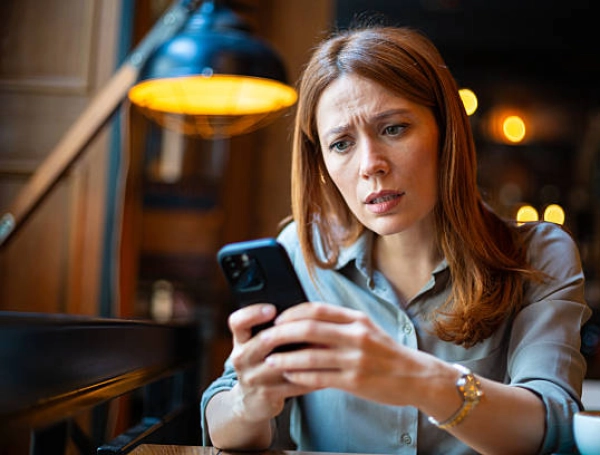
When a user’s phone repeatedly autocorrects a political critique into a neutral or nonsensical word, a subtle psychological friction is introduced. Over time, users may unconsciously alter their vocabulary to match what the device permits easily, leading to a phenomenon where technology actively shapes and homogenizes human discourse.
Transparency and Accountability in Big Tech
The incident underscores a broader structural crisis in the technology sector: the opaque nature of algorithmic governance. Major multinational corporations routinely implement content policies, safety filters, and predictive parameters behind closed doors, largely shielded from democratic oversight, public consultation, or independent regulatory auditing.
As mobile operating systems continue to integrate advanced artificial intelligence and predictive capabilities deeper into their foundational software layers, the demand for algorithmic transparency has never been more urgent. The Apple keyboard controversy serves as a stark reminder that the digital tools we hold in our hands are never truly neutral; they are coded reflections of corporate priorities, legal risk management, and geopolitical sensitivities.
The debate sparked by the "gray list" will undoubtedly force regulators, technologists, and civil society to re-examine where the boundaries of digital curation begin—and where individual freedom of expression must be preserved.