By Luisa Fernanda Gutiérrez Henao Breaking News Desk Published: November 1, 2026
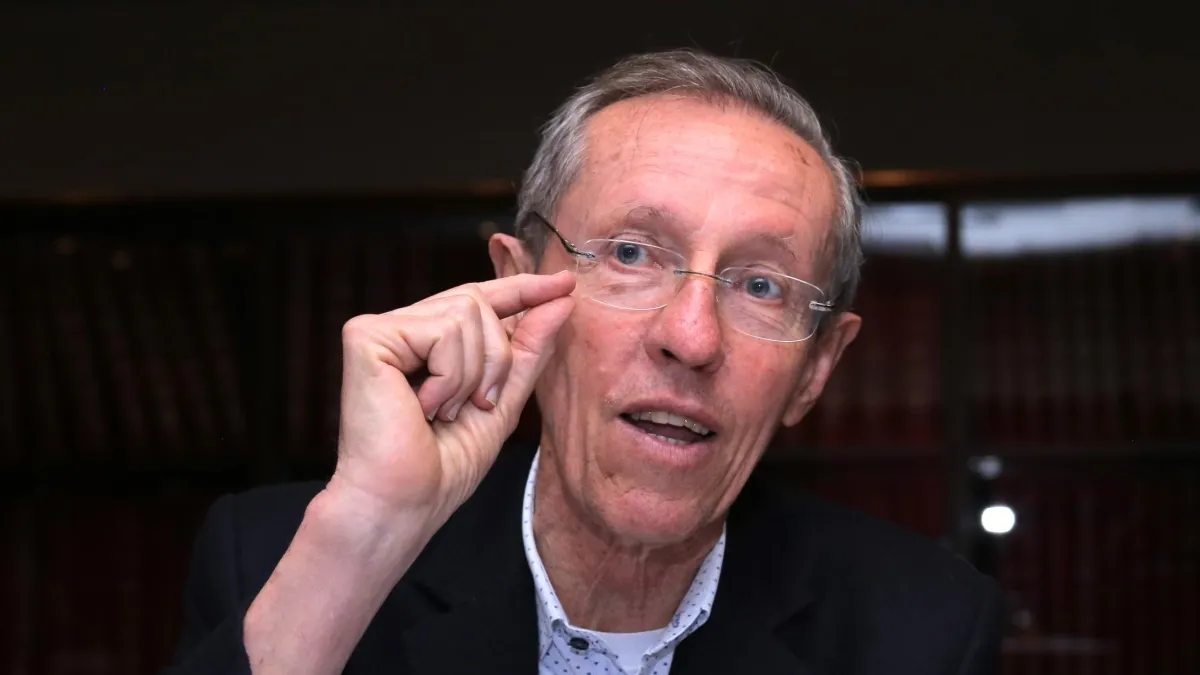
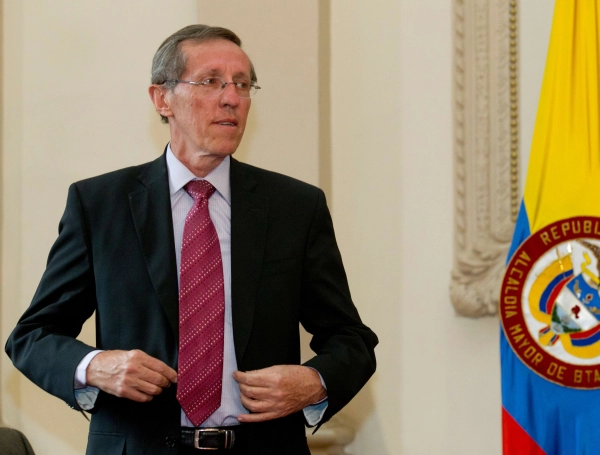
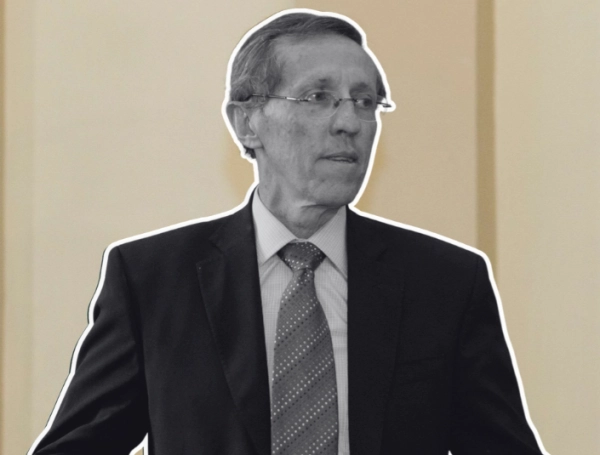
Colombia’s political arena woke up to profound grief on Sunday, November 1, 2026, following the passing of Antonio Navarro Wolff at the age of 78. A quintessential figure of modern Colombian history, Navarro Wolff’s life traced the turbulent and ultimately transformative arc of the nation’s late-20th-century trajectory—transitioning from revolutionary guerrilla combatant to institutional architect, constitutional visionary, and dedicated public servant.
His family confirmed the passing through an official statement, choosing to keep the private medical details surrounding his death confidential while expressing deep gratitude for the outpouring of national condolences. As leaders, colleagues, and citizens reflected on his legacy, Navarro Wolff was remembered not merely as a politician, but as a central pillar of peace, reconciliation, and democratic renewal in Colombia.
Main Facts: The Passing of a Statesman
Antonio Navarro Wolff’s death marks the end of an era for Colombian politics. Born in Nariño, his career defied simple categorization. He was a man defined by resilience, surviving severe physical trauma to help steer Colombia out of decades of internal conflict and into the constitutional modern era.
While his official cause of death was not disclosed by his grieving family, his final years were characterized by a quiet dignity, interspersed with occasional public reflections on his extraordinary life. From his days as a prominent leader of the M-19 guerrilla movement to his pivotal role in laying down arms, signing peace agreements, and co-authoring the historic 1991 Political Constitution alongside figures like Horacio Serpa Uribe and Álvaro Gómez Hurtado, Navarro Wolff’s imprint on the nation’s institutional framework remains indelible.
Throughout his career, he served in multiple high-profile capacities, including Minister of Health, constituent assembly member, mayor, governor, and senator. Yet, beyond his titles, he remained an enduring symbol of what was possible when fierce ideological conviction yielded to democratic dialogue and national reconciliation.
Chronology of a Tumultuous Life
To understand Antonio Navarro Wolff’s profound impact on Colombia, one must trace a life forged in the crucible of historical upheaval, personal tragedy, and political reinvention.
The Guerrilla Years and the Transition to Peace
During the 1970s and 1980s, Navarro Wolff became a high-ranking member of the Movimiento 19 de Abril (M-19), an urban guerrilla group that emerged following the disputed 1970 Colombian presidential election. However, as the decade progressed, Navarro Wolff—alongside other progressive intellectuals within the movement—recognized the futility of perpetual armed struggle and championed a negotiated political exit.
This vision culminated in the historic peace agreement signed between the M-19 and the Colombian government in March 1990, under the administration of President Virgilio Barco. The demobilization of the M-19 is widely regarded as one of the most successful peace processes in modern Latin American history, transforming a rebel insurgency into a legal political party, Alianza Democrática M-19 (AD-M19), which Navarro Wolff prominently led.
The 1985 Cali Atentado: Surviving Against the Odds
Long before the peace accords, Navarro Wolff’s life was nearly cut short by a brutal act of violence that would permanently alter his physical existence and become a defining narrative of his resilience.
In May 1985, while sitting in a cafeteria in Cali, Valle del Cauca, in the company of former Senator Carlos Alonso Alucio, Navarro Wolff was the target of a targeted bombing. An assailant hurled a grenade directly into their vicinity.
"The grenade exploded against my left foot, and I was left as if a scoop of ice cream had been carved out of my foot with an ice cream scoop. The hole was big enough for my fist to fit inside," Navarro Wolff later recounted in a candid and deeply personal interview with Bocas magazine.
The attack left him with more than 100 metal shrapnel fragments embedded throughout his body. Among the severe injuries was a severed hypoglossal nerve, which permanently altered his speech patterns, leaving him with what he frequently described as speaking "a media lengua" (half-tongued). Furthermore, he suffered a severe, life-threatening anaphylactic shock from which he was saved only by the quick thinking of his medical cousin who was accompanying him at the scene.
Amid the chaos, legendary Colombian author Gabriel García Márquez ("Gabo") played a crucial behind-the-scenes role in assisting with emergency logistics, facilitating Navarro Wolff’s urgent transfer to Mexico. It was in Mexico City that medical teams were forced to perform a below-the-knee amputation of his left leg.
Reflecting on this decades later with characteristic humor and poetic irony, Navarro Wolff remarked:
"In Mexico they amputated my foot, so I tell the Mexicans that I have more roots there than they do themselves, because I have a foot buried in that country."
By 1990, he was fitted with a German prosthetic limb, which he maintained and wore for the rest of his life, likening it to a comfortable pair of old shoes that one never wants to discard.
Supporting Data and Political Legacy
Navarro Wolff’s survival of the 1985 bombing did not deter his commitment to public life; rather, it seemed to fuel an extraordinary sense of civic urgency.
Following the demobilization of the M-19, Navarro Wolff emerged as a dominant force in the National Constituent Assembly of 1991. Alongside co-presidents Horacio Serpa Uribe and Álvaro Gómez Hurtado, he spearheaded the drafting of a new constitution that replaced the aging 1886 charter. The 1991 Constitution radically modernized Colombia, introducing fundamental rights, tutela actions, multicultural recognition, and structural democratic checks and balances.
His subsequent career spanned numerous critical administrative and legislative roles:
Minister of Health: Implemented key administrative reforms.
Mayor of Pasto: Demonstrated executive governance at the municipal level.
Governor of Nariño: Fostered regional development and security.
Senator of the Republic: Acted as a respected voice for constitutional integrity, progressive policy, and environmental protection.
Official Responses and National Condolences
Following the announcement of his death, politicians across the ideological spectrum united in grief, issuing statements that underscored Navarro Wolff’s unifying presence in Colombian public life.
Current and former government officials, civil society organizations, and ordinary citizens took to digital platforms to share tributes. Fellow peace advocates and political adversaries alike noted his unmatched ability to bridge divides. Tributes highlighted his sharp intellect, his unwavering sense of humor in the face of physical adversity, and his steadfast belief that Colombia’s future lay in peace, inclusion, and strict adherence to the 1991 Constitution.
The family’s statement, while brief, resonated deeply with a nation mourning a foundational political figure: "We thank all Colombians for their messages of solidarity, love, and condolence during this moment of profound sorrow. Antonio’s life belonged to Colombia, and his heart remained with its people."
Implications for Colombia’s Political Future
The passing of Antonio Navarro Wolff arrives at a delicate juncture in contemporary Colombian politics. As the nation continues to grapple with ongoing security challenges, polarization, and the implementation of subsequent peace accords, the loss of historical figures who successfully transitioned from armed conflict to state-building is acutely felt.
Navarro Wolff served as a living bridge between the darkest chapters of Colombia’s internal conflict and its democratic aspirations. His life proved that radical ideological shifts could be reconciled within institutional frameworks, and that former combatants could become exemplary architects of the republic.
As Colombia bids farewell to Antonio Navarro Wolff, his legacy leaves behind an enduring blueprint for democratic resilience. His journey—from the underground networks of the M-19 to the halls of the Constituent Assembly and the ministerial cabinet—remains a testament to the transformative power of dialogue, forgiveness, and an unshakeable commitment to the rule of law.
MEDELLÍN, ANTIOQUIA – July 4, 2026 – Colombia’s forthcoming Independence Day celebration on July 20, 2026, is set to be a momentous occasion, marked by a powerful convergence of national pride, regional ambition, and a…
Analysis — Based on factual events, incorporating journalistic context, interpretation, and strategic evaluation. Main Facts As the clock ticks down on the state of economic, social, and ecological emergency declared in the wake of the…
By Raúl Andrés García Suárez Last Updated: September 30, 2026 Main Facts In a decisive move that breaks decades of institutional precedent, Colombian President Abelardo De La Espriella has officially appointed Lucas Eduardo Ariza Buitrago…