By Juan Sebastián Lombo Delgado Political Desk Analysis
Main Facts
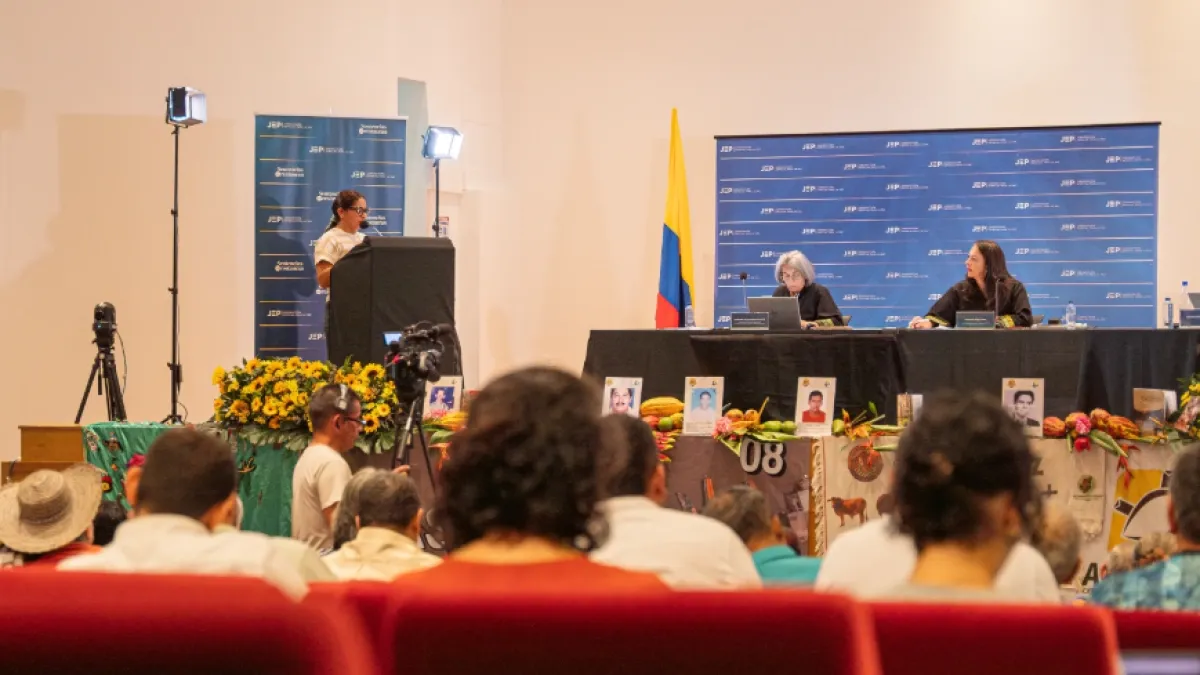
The political landscape in Colombia is facing a high-stakes legislative confrontation as the debate over the national budget reaches a critical juncture. With the mandatory deadline for the first debate fast approaching, a fierce controversy has erupted surrounding the financing of the Special Jurisdiction for Peace (JEP), the transitional tribunal established under the 2016 peace accord.
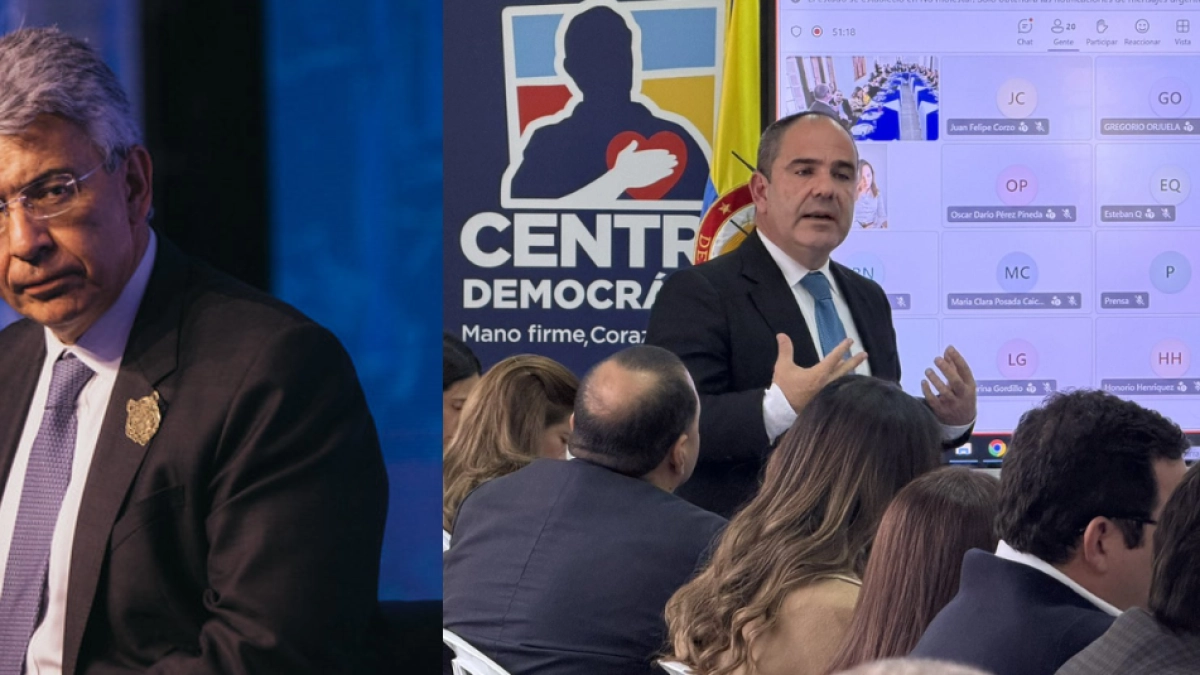
The epicenter of the dispute is a legislative proposal spearheaded by Senator Enrique Gómez of the Salvación Nacional party. Gómez announced his intention to introduce a formal budgetary provision aimed at stripping 100 billion pesos from the JEP’s allocation and redirecting those funds toward the ordinary justice system.
What might have remained a routine fiscal disagreement rapidly transformed into a national political storm when President Abelardo De La Espriella publicly endorsed the measure via social media. Replying with the emphatic declaration, "Publish it, communicate it, and comply with it!" the president signaled what many in Congress interpret as tacit executive alignment with an initiative designed to severely constrain the tribunal’s operational capacity—a goal long championed by conservative factions opposed to the peace framework.
Despite the president’s public endorsement, the Ministry of Finance notably omitted the proposed budget reallocation from the official text socialized with congressional coordinators and economic committees ahead of the first round of debates. This has created a complex political gray area: while the Executive has stopped short of directly sponsoring the cuts within its primary bill, the proposal is poised to become a central battleground during upcoming congressional sessions through parliamentary amendments (proposiciones).
The stakes extend far beyond domestic fiscal policy. The potential defunding of the tribunal has triggered international alarms, drawing sharp rebukes from the JEP’s leadership and threatening to fracture the legislative coalitions currently supporting the De La Espriella administration.
Chronology of Events
The unfolding budgetary crisis and the renewed assault on transitional justice did not materialize in a vacuum; they represent the culmination of escalating tensions between the conservative administration and post-accord institutions.
Pre-Budget Formulation (Early September 2026): As the Ministry of Finance finalized the national budget parameters for the upcoming fiscal year, rumors began circulating regarding potential adjustments to post-conflict funding agencies.
Monday, September 21, 2026 (Morning): Senator Enrique Gómez formally announced his legislative strategy to slash 100 billion pesos from the JEP’s budget, framing it as a necessary reallocation to strengthen the overburdened ordinary judicial system.
Monday, September 21, 2026 (Midday): President Abelardo De La Espriella amplified the proposal on digital platforms, publishing an unequivocal message of support that electrified both political allies and detractors.
Monday, September 21, 2026 (Afternoon): Congressional sources confirmed to journalistic outlets that the Ministry of Finance had chosen not to incorporate Gómez’s proposal into the official text presented to economic committee coordinators, setting the stage for an independent legislative fight via floor amendments.
Monday, September 21, 2026 (Late Afternoon): Escalating the push from the right, Senator María Clara Posada of the Centro Democrático party dismissed a 100-billion-peso reduction as insufficient, publicly demanding a much steeper 50 percent cut to the JEP’s overall budget.
Monday, September 21, 2026 (Evening): In response to the legislative threats, JEP President Alejandro Ramelli took unprecedented diplomatic action, dispatching an urgent formal communication to the International Criminal Court (ICC) warning of an imminent institutional crisis.
Current Status (September 2026): Economic committees in Congress are bracing for intense deliberations ahead of the Friday deadline for the first budget debate, where the fate of the JEP’s funding will be fiercely contested.
Supporting Data and Fiscal Context
To understand the gravity of the current legislative push, it is necessary to examine the fiscal and political architecture surrounding the JEP. Created as a cornerstone of the historic peace agreement between the Colombian state and the defunct FARC-EP guerrillas, the tribunal is tasked with investigating, judging, and meting out restorative justice for grave human rights violations committed during the half-century internal conflict.
The Proposed Cut: Senator Gómez’s initial proposal targets 100,000 million pesos (approximately $25 million USD depending on exchange rates), shifting these resources directly to ordinary courts.
The Escalated Demand: The Centro Democrático, acting as the second-largest political force in Congress alongside allies from Salvación Nacional, has raised the bar significantly. Senator María Clara Posada argued that after seven years of operation, the tribunal’s structural expenditures are disproportionate, asserting that the legislative coalition should target a 50 percent reduction in the JEP’s operational budget.
Operational Constraints: Legislative experts, including Senator Christian Garcés of the Centro Democrático, have acknowledged the legal and logistical hurdles of executing such maneuvers. Because a significant portion of the JEP’s budget falls under mandatory operational expenditures—covering physical infrastructure, digital security, administrative staffing, and victim-protection programs—funds cannot simply be excised without collapsing core institutional functions.
Broader Economic Realities: Colombia currently navigates a constrained macroeconomic landscape characterized by mounting fiscal deficits, pressures to service foreign debt, and ongoing debates over fiscal sustainability. Conservative lawmakers have weaponized these budgetary pressures, arguing that transitional justice mechanisms represent an unsustainable financial burden that yields insufficient punitive results.
Official Responses and Institutional Reactions
The looming threat of financial strangulation has elicited swift, sharp reactions from domestic judicial authorities, international watchdogs, and political leaders across the ideological spectrum.
The JEP and the International Criminal Court
Judge Alejandro Ramelli, President of the Special Jurisdiction for Peace, adopted a posture of direct institutional defense. Recognizing that domestic political majorities could override judicial autonomy through budgetary attrition, Ramelli formally alerted the International Criminal Court (ICC).
In his communication to the Hague, Ramelli underscored that any unilateral, politically motivated defundment constitutes a direct breach of the Colombian state’s international obligations.
"The transfer of 100,000 million pesos, publicly backed by the Government, directly ignores the commitment to allocate the necessary budget for the implementation of the JEP," Ramelli stated. He further warned that compromising the tribunal’s physical and technological infrastructure directly undermines witness protection systems, impairing the state’s capacity to prevent interference with judicial operations and guarantee the safety of judges, prosecutors, and participating victims.
The Executive Branch
While President De La Espriella’s enthusiastic social media endorsement left little doubt regarding his ideological preferences, his administration has maintained a calculated institutional distance during the formal drafting phase. By omitting the cuts from the Ministry of Finance’s initial text, the Executive has avoided direct ownership of the controversial amendment while allowing allied lawmakers to spearhead the legislative offensive. This maneuver provides the government with plausible deniability should international pressure mount, while still catering to its conservative base.
The Opposition and Pro-Peace Factions
Progressive blocs and defenders of the 2016 peace accords have mobilized to defend the tribunal, labeling the budgetary initiative as a back-door strategy to dismantle transitional justice. Critics point out that while the administration pledged institutional stability during its campaign, starving the JEP of operational funds achieves the identical objective of a formal repeal—rendering the court paralyzed and incapable of issuing landmark restorative sentences.
Implications
The current legislative confrontation carries profound implications for Colombia’s legal stability, international standing, and political future.
1. The Weaponization of the Budget Process
The strategy employed by right-wing lawmakers mirrors parliamentary tactics utilized in past legislative periods. By withholding absolute certainty over quorum and leveraging strategic amendments during economic committee debates, opposition and allied conservative blocks can force compromises. Even if the government technically commands a nominal majority in Congress, deep ideological fractures remain regarding the legacy of the peace process. Parties that initially supported the JEP are increasingly sensitive to its shifting public image, creating an opening for fiscal rollbacks.
2. Jeopardizing Transitional Justice and Victim Reparations
Should a budget cut of 100 billion pesos—or the more radical 50 percent reduction proposed by the Centro Democrático—materialize, the immediate casualties will be investigative capacity and victim security. Transitional justice relies heavily on forensic analysis, witness relocations, secure digital archiving, and regional outreach. Crippling these systems risks leaving hundreds of high-profile cases unresolved, thereby violating domestic legal mandates and international human rights conventions.
3. International Scrutiny and Sovereignty
By elevating the dispute to the International Criminal Court, the JEP has internationalized the domestic fiscal debate. The principle of complementarity under the Rome Statute dictates that the ICC intervenes only when a state is unwilling or unable genuinely to carry out investigations or prosecutions. If the Colombian state deliberately starves its own transitional tribunal of the resources necessary to function, it risks triggering active ICC oversight, severely damaging the country’s legal reputation abroad.
4. A Litmus Test for the De La Espriella Administration
For President Abelardo De La Espriella, the upcoming debates in the economic committees represent a critical test of legislative control and political signaling. How the administration navigates the tension between its conservative electoral promises and its constitutional obligation to uphold institutional frameworks will define the trajectory of its governance. As Wednesday and Thursday’s sessions approach, the Colombian Congress remains the crucible where the fate of transitional justice—and the financial integrity of the 2016 peace accord—will be decided.
Bogotá, [Assumed Date, e.g., July 20, 2026] – President-elect Abelardo De La Espriella has embarked on a distinctive political journey, signaling a profound shift in governance philosophy by pledging to lead "with and from the…
By Juan Pablo Penagos Ramírez / Political Desk Analysis Published: September 14, 2026 Main Facts The political landscape of the Colombian right is undergoing a profound and turbulent restructuring. Months after the presidential triumph of…
BOGOTÁ, Colombia — In a move that underscores a distinct division of labor within Colombia’s executive branch, President Abelardo De La Espriella has finalized preparations with Vice President José Manuel Restrepo for the upcoming United…