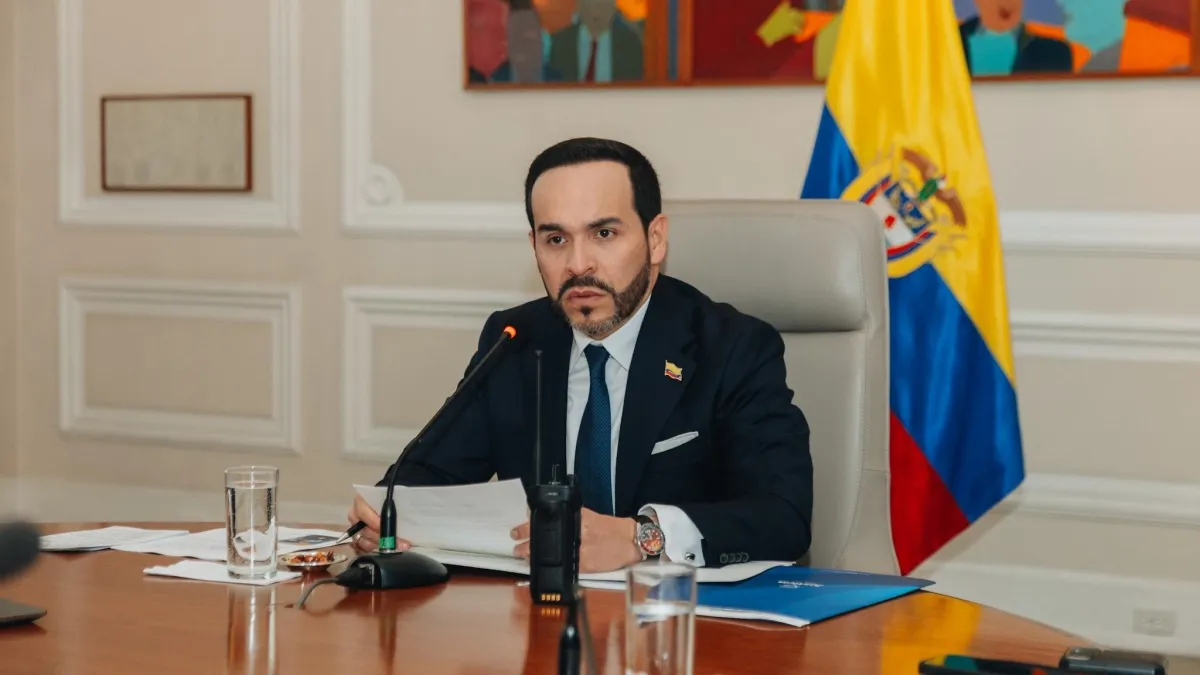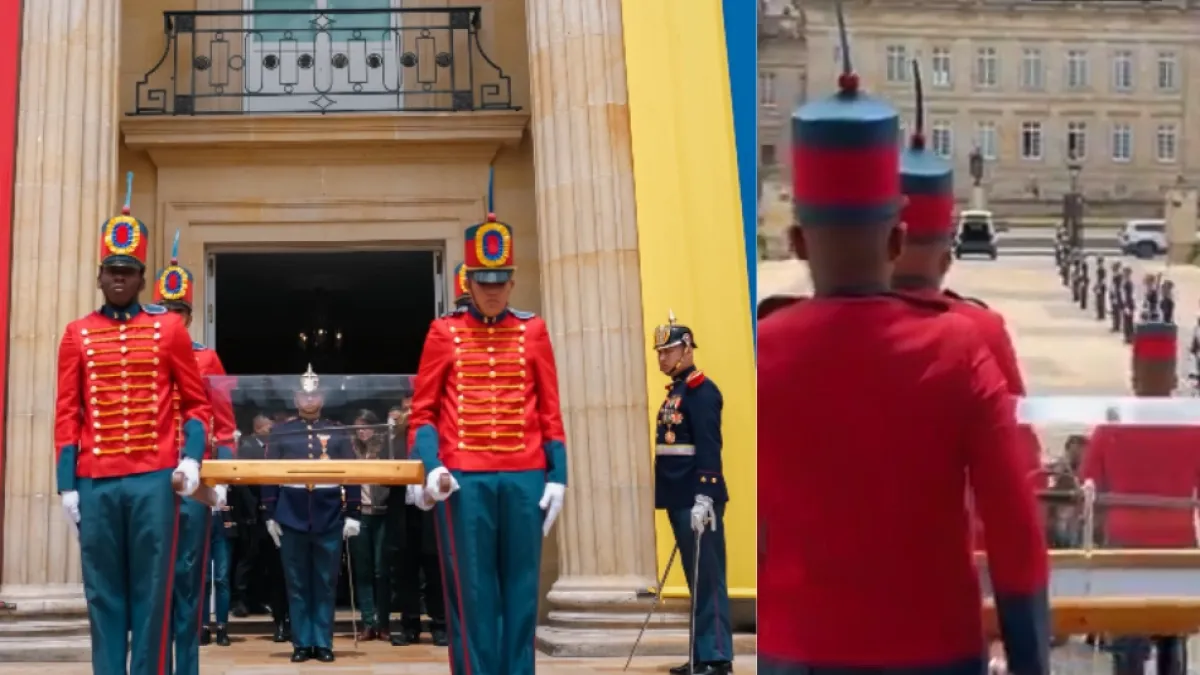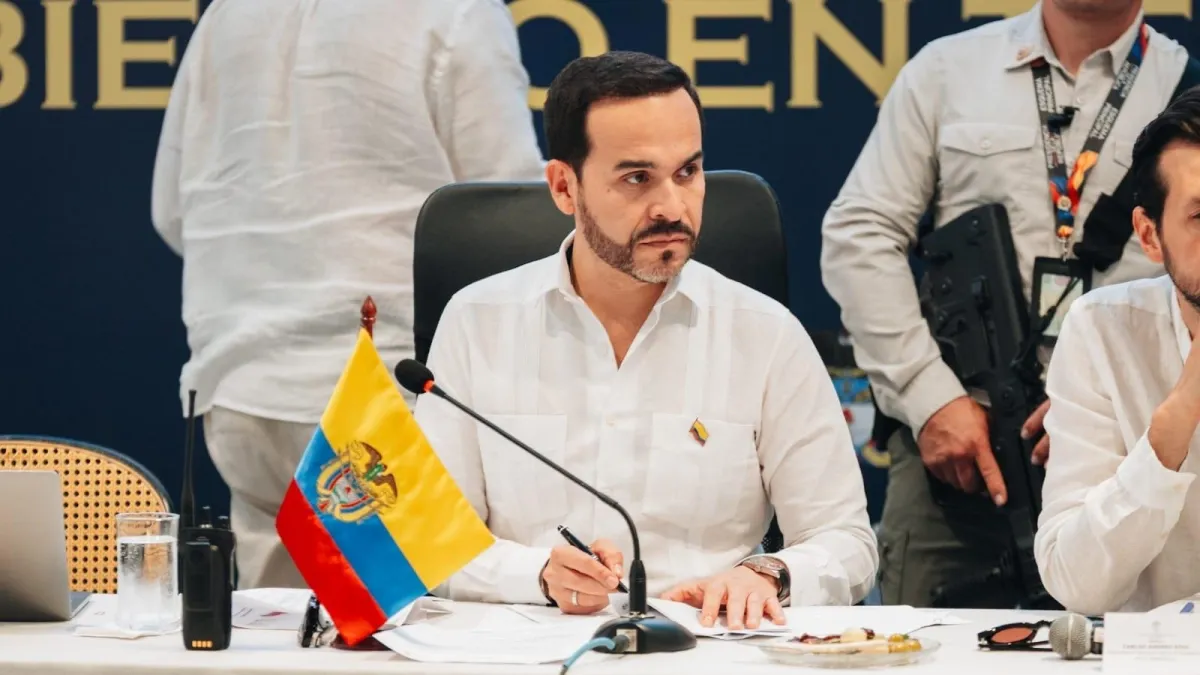
BOGOTÁ, Colombia — In a move that underscores a distinct division of labor within Colombia’s executive branch, President Abelardo De La Espriella has finalized preparations with Vice President José Manuel Restrepo for the upcoming United Nations General Assembly (UNGA) in New York. The high-stakes diplomatic mission highlights a two-pronged governance strategy: a domestically anchored presidency focused on internal institutional reform and regional consolidation, paired with an outward-facing economic diplomacy drive spearheaded by the Vice President to capture international capital.
The high-level meeting between De La Espriella and Restrepo in Cartagena solidified the exact contours of the administration’s message to the international community. Central to this strategy is a firm reaffirmation by President De La Espriella that he will honor his campaign promise to remain within national borders for the entirety of his four-year term, delegating international representation to his vice president and cabinet.
Main Facts
The core objective of Vice President Restrepo’s upcoming journey to the United States is twofold: to deliver the official address on behalf of the Colombian government before the 193-member plenary of the United Nations General Assembly, and to execute an aggressive, investment-focused economic agenda in New York.
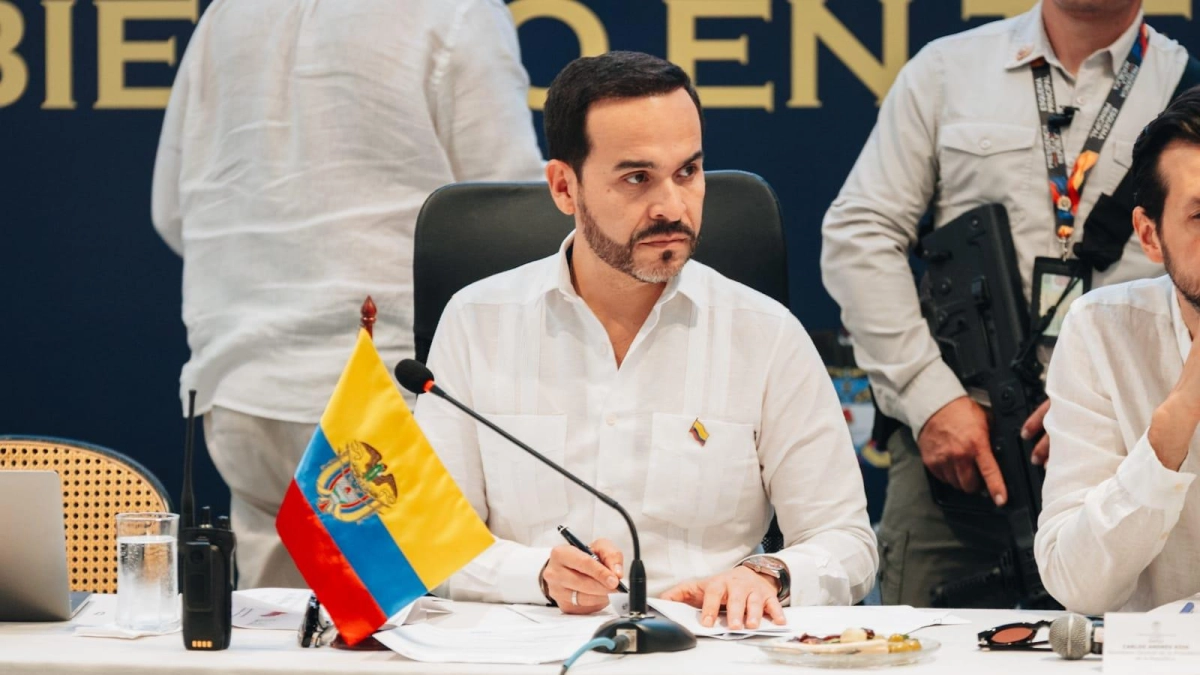
- The UN Address: Vice President Restrepo is scheduled to take the podium at the UN headquarters on Thursday afternoon, September 24, reading a highly anticipated address prepared by President De La Espriella.
- Domestic Governance Policy: President De La Espriella has doubled down on his pledge not to travel abroad during his administration. In a statement addressing the division of duties, the President emphasized his reliance on his vice president to project the nation’s new direction globally.
- Economic Diplomacy: Restrepo’s mission extends well past standard diplomatic pleasantries. Acting on direct instructions from the presidency, the Vice President will target sovereign wealth funds, multilateral organizations, multinational corporate leaders, and international venture capitalists to court foreign direct investment (FDI).
- Strategic Sectors: The outreach campaign is specifically targeted at high-impact sectors designed to generate immediate employment and structural modernization, including energy transition, infrastructure, advanced technology, and modern agro-industry.
- Diplomatic Groundwork: Mauricio Gaona, Colombia’s Ambassador to the United Nations, has spent weeks laying the groundwork, organizing vital bilateral meetings and synchronizing the delegation’s schedule ahead of its arrival in Manhattan.
Chronology of Events
The road to the 2026 UN General Assembly has involved structured preparation by the Colombian executive branch, marked by distinct milestones leading up to the high-level week in New York.
- August 2026 (Preliminary Planning): Following the inauguration of President Abelardo De La Espriella, initial administrative frameworks are established. The administration explicitly codifies its foreign-representation doctrine, establishing that the Vice Presidency will handle major multilateral summits to allow the President to concentrate entirely on domestic security, governance, and the "Patria Milagro" (Miracle Fatherland) initiative.
- Early September 2026 (Diplomatic Groundwork): Ambassador Mauricio Gaona initiates preliminary bilateral discussions at the UN headquarters in New York, coordinating with international stakeholders, multilateral financial entities, and diplomatic counterparts to map out Colombia’s participation in the upcoming UNGA session.
- September 17, 2026 (Finalizing the Agenda): Vice President José Manuel Restrepo finalizes his travel preparations and regional economic briefs, coordinating with national business associations (such as Acolgén) regarding private-sector expectations for international capital attraction.
- September 18, 2026 (The Cartagena Summit & Public Announcement): President De La Espriella and Vice President Restrepo hold a high-level, closed-door meeting in Cartagena to fine-tune the final wording of the presidential address for the UN. Following the meeting, the administration publicly confirms the details through official channels and social media, reiterating De La Espriella’s domestic-only travel policy.
- September 24, 2026 (Scheduled UN Address): Vice President Restrepo is slated to step before the UN General Assembly plenary in New York during the Thursday afternoon session to officially deliver the Colombian government’s policy platform to the international community.
Supporting Data & Institutional Context
To fully understand the gravity of Vice President Restrepo’s mission to New York, it is necessary to examine the structural mechanics of the United Nations General Assembly and the economic metrics driving Colombia’s current push for foreign capital.
The United Nations General Assembly Framework
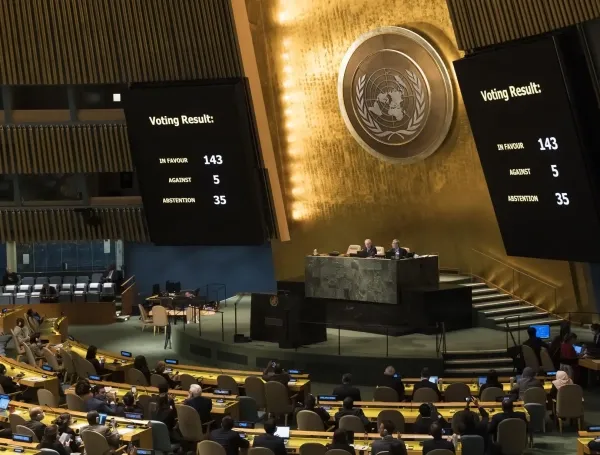
The United Nations General Assembly represents the main deliberative, policymaking, and representative organ of the UN. Currently comprising 193 Member States, it serves as a universal multilateral forum for multilateral debate on international issues covered by the UN Charter.

- The Plenary and Committees: Each of the 193 Member States holds equal weight in the General Assembly plenary. Below the plenary level, work is distributed among six Main Committees (Disarmament and International Security; Economic and Financial; Social, Humanitarian and Cultural; Special Political and Decolonization; Administrative and Budgetary; and Legal), which draft resolutions and review global mandates.
- The High-Level General Debate: Held annually every September, this period brings together heads of state, heads of government, and high-ranking ministers (such as Vice Presidents) to address critical global challenges. Colombia’s choice to send Vice President Restrepo rather than the head of state places the country in a category of nations utilizing high-ranking deputies to execute targeted executive diplomacy.
Economic Targets and Investment Sectors
The De La Espriella administration’s economic blueprint relies heavily on private-sector capital inflows to stimulate post-inflationary recovery and sustainable growth. Restrepo’s New York agenda focuses on four key pillars:
- Energy Transition & Clean Tech: Attracting foreign capital to accelerate non-conventional renewable energy projects, reducing carbon dependency while expanding grid stability.
- Infrastructure Development: Promoting public-private partnerships (PPPs) in regional connectivity, highway construction, and port optimization.
- Agro-Industrial Expansion: Transforming Colombia’s vast arable lands into high-yield, export-oriented agricultural hubs through the introduction of advanced agritech and capital-intensive supply chains.
- Digital Economy & Technology: Positioning Colombian urban centers as emerging tech hubs capable of absorbing venture capital and scaling local software and digital service enterprises.
Official Responses and Statements
The division of labor between the presidency and the vice presidency has elicited significant commentary from both the administration and political observers across the nation.
In his remarks following the Cartagena strategy session, President Abelardo De La Espriella was unequivocal about his adherence to his domestic mandate:
"You all know that I promised not to leave Colombia, and I am going to keep that promise. For that, I have a great vice president and a great team. He is going to read some words before the UN plenary that will surely generate a major impact, because this is about doing things right and building awareness."
President De La Espriella’s steadfast refusal to board international flights marks a distinct departure from recent presidential traditions in Colombia, where heads of state routinely logged hundreds of hours in foreign airspace. By anchoring himself to national territory, De La Espriella seeks to project an image of absolute hands-on administrative control over internal security, fiscal discipline, and institutional oversight.
Meanwhile, Vice President José Manuel Restrepo emphasized the pragmatic, economic nature of the upcoming diplomatic mission, framing the UNGA not merely as a political forum, but as an indispensable marketplace for international investment:
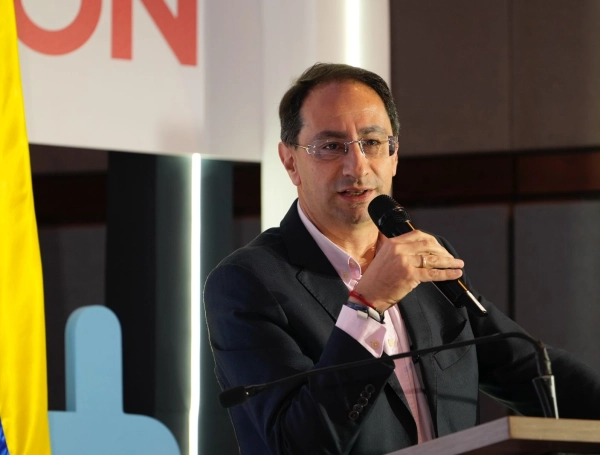
"The purpose is to build the ‘Patria Milagro’ [Miracle Fatherland] from the world stage, and that is achieved through investment. We are going to present Colombia’s opportunities to those seeking places to invest, and to understand firsthand their needs and expectations. We want to consolidate a dynamic, agile investment climate with concrete projects focused on strategic sectors such as energy, infrastructure, technology, and agro-industry."
Restrepo’s background as a seasoned economist and former cabinet minister lends institutional gravity to his mission, reassuring international markets of Colombia’s macroeconomic stability and regulatory transparency.
Implications
The deployment of Vice President Restrepo to the United Nations General Assembly, paired with President De La Espriella’s self-imposed domestic confinement, carries profound political, economic, and diplomatic implications for Colombia over the next four years.

1. Redefining Executive Power and International Representation
For decades, modern Latin American presidencies have operated under the assumption that foreign policy and international summitry must be personally conducted by the head of state to carry diplomatic weight. De La Espriella’s strategy directly challenges this convention. By delegating high-level multilateral representation to a trusted, technically competent vice president, the administration attempts to institutionalize a division where executive presence is maximized at home while global outreach is efficiently handled abroad.
2. Economic Pragmatism over Rhetorical Diplomacy
By shifting the focus of the UNGA mission away from ideological posturing and toward targeted economic matchmaking, the Colombian government is signaling a clear shift toward pragmatic diplomacy. The scheduled meetings with multilateral development banks, investment funds, and global corporate leaders are designed to bypass traditional diplomatic friction and directly court the capital required to meet national employment and infrastructure goals.
3. Domestic Consolidation
Domestically, President De La Espriella’s refusal to travel serves a potent symbolic and practical function. By remaining inside the country, he insulates his administration from criticisms of detachment or absenteeism, allowing him to maintain continuous pressure on regional bureaucracies, legislative bodies, and security apparatuses. Whether this inward-looking governance model can successfully coexist with an increasingly complex and interconnected global economy will depend heavily on the efficacy of Vice President Restrepo’s missions abroad and the seamless coordination between the two leaders.

As the global community gathers in New York for the high-level week of the UN General Assembly, all eyes will turn to the rostrum on Thursday afternoon, September 24, when Vice President Restrepo delivers the voice—and the economic vision—of the De La Espriella administration to the world.