By Mateo Chacón Orduz Subeditor of Vida de Hoy (Enriched and Adapted for International Audiences)
Main Facts
In a cultural landscape often dominated by blockbuster pop icons, global sports legends, and corporate titans, true scientific innovation rarely commands mainstream headlines. Yet, the latest edition of Latino Leaders Magazine shattered that paradigm by publishing its prestigious list of the 101 most influential Latinos in the United States.
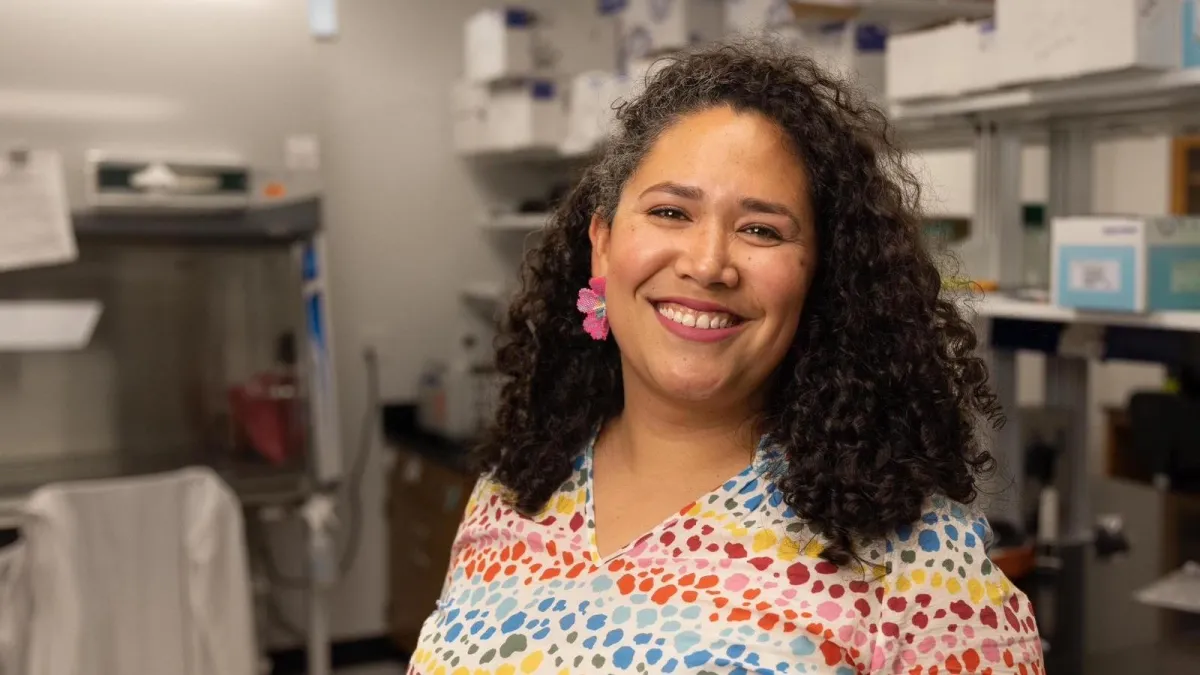
Sharing digital and print space with entertainment powerhouses like Bad Bunny, sporting royalty such as Lionel Messi, Hollywood heavyweights like Pedro Pascal, judicial icons like U.S. Supreme Court Justice Sonia Sotomayor, and business magnates like PepsiCo CEO Ramón Laguarta, stands a singular trailblazer. She is not a pop star, an executive, or an Oscar-winning actor. She is a scientist: Ana María Porras, a biomedical engineer and associate professor born in Bucaramanga, Colombia.
Porras, who currently serves as an associate professor of biomedical engineering at the University of Florida, represents a growing echelon of Hispanic academics reshaping global health. Armed with a Ph.D. from the University of Wisconsin-Madison and postdoctoral training from Cornell University, Porras investigates the intricate crosstalk between human health, engineered tissues, and the microscopic universe residing within us: the microbiome.
Her influence, however, extends far beyond university laboratories and high-impact journals. Recognized internationally for her creative science communication—most notably utilizing hand-crocheted microbes to explain immunology during the COVID-19 pandemic—Porras is also a fierce advocate for diversity in STEM. Her impact on representation is so profound that the Smithsonian Institution honored her in 2022 by featuring her as one of 120 life-sized statues of contemporary women scientists across the United States.
Chronology: From Bucaramanga to the Forefront of Global Biomedicine
The trajectory of Dr. Porras’s career bridges foundational family roots in Colombia with elite academic training in the United States.
2005: Porras graduates from high school in Colombia. At a time when local offerings in biomedical engineering were scarce and heavily geared toward electronic medical devices rather than cellular biology, she looks abroad for a curriculum bridging biology and engineering. Bolstered by family support and a scholarship from Ecopetrol, she sets her sights on North American academia.
The Academic Asccent: Porras completes her undergraduate studies, subsequently earning her Ph.D. at the University of Wisconsin and undertaking a rigorous postdoctoral fellowship at Cornell University. During her time at Cornell, she conducts groundbreaking comparative studies on human microbiomes across vastly different cultural and geographical landscapes, including populations in the United States, Guatemala, and the Fiji Islands.
2018: Seeking a creative way to engage skeptical or disinterested audiences at public science festivals—where heavily funded institutions like NASA and Discovery Channel routinely draw crowds—Porras utilizes her crochet skills to knit microscopic pathogens and bacteria. This innovative approach sparks a prolific journey in science communication.
2020–2022 (The Pandemic Era): During the global COVID-19 health crisis, Porras leverages her crocheted creations and multilingual communication platforms to demystify mRNA vaccines and virology. Her dedication to equity and inclusion culminates in her co-founding of Latinx in BME (Latinos in Biomedical Engineering) alongside Dr. Brian Aguado. Furthermore, she receives monumental recognition when the Smithsonian Institution selects her as one of 120 premier women scientists to be immortalized in statue form.
September 2026: Porras is officially named to Latino Leaders Magazine’s list of the 101 most influential Latinos in the United States, cementing her status as a titan of modern scientific inquiry and cultural representation.
Supporting Data: The Science of Microbes and the Latin American Microbiome Gap
While social media feeds are routinely flooded with unverified wellness trends, quick-fix "detoxes," and generalized probiotic recommendations, Dr. Porras’s laboratory dives deep into empirical mechanics.
The Microbiome-Vascular Axis
The human gut houses trillions of microorganisms that process ingested foods, converting them into fundamental molecular byproducts known as metabolites. These metabolites are small enough to breach biological barriers, entering the bloodstream and traveling to distant organs.
Porras’s research group specifically examines how specific metabolites—such as TMAO (trimethylamine N-oxide), which has been linked to atherosclerosis—impact the aortic valve. Laboratory models indicate that when aortic valve cells are exposed to these microbial metabolites, they begin to express pathological, disease-like behaviors. Beyond cardiovascular health, the gut microbiome synthesizes neurotransmitters and vital vitamins, establishing a biochemical bridge directly influencing human mood and neurological function.
The Geographic Blind Spot
A core pillar of Porras’s critique of contemporary wellness culture is the lack of demographic diversity in microbiome datasets. The vast majority of published microbiome literature relies on cohorts from the United States and Europe. However, Latin American populations exhibit distinct microbial profiles driven by unique genetic backgrounds, diverse traditional diets, high urban population densities, and differing interactions with nature and domestic animals.
Comparative studies led by Porras—such as those analyzing populations in Fiji, the U.S., and Guatemala—reveal that microbial communities vary wildly across cultures. Consequently, universal probiotic treatments or dietary interventions cannot be assumed to yield identical health outcomes worldwide.
Official Responses and Perspectives: An Exclusive Interview with Dr. Ana María Porras
In an extensive interview regarding her recognition, her scientific philosophy, and the state of global research, Dr. Porras shared critical insights into the realities of modern science.
On National Recognition and Cultural Impact
Reflecting on her inclusion alongside figures like Lionel Messi and Sonia Sotomayor, Porras admitted initial surprise:
"When I saw the magnitude of influence wielded by the others on that list—Supreme Court Justice Sonia Sotomayor, Bad Bunny, Leo Messi, Pedro Pascal, Lido Pimienta—I realized it was a deeply gratifying honor."
On the Realities of Scientific Literacy vs. Social Media Misinformation
Addressing the rampant commercialization of unverified wellness advice online, Porras expressed profound concern:
"It’s not just misinformation; in many cases, content creators are actively trying to sell products to people. They take advantage of individuals who have genuine health doubts or concerns, leaving them deceived by claims that hold no scientific truth."
What do we know with absolute certainty? According to Porras, the fundamentals remain dietary diversity:
"Consuming a wide variety of fruits, vegetables, and fermented foods is profoundly beneficial for maintaining a diverse and healthy microbiota. We also know we have an oral microbiome; maintaining good oral hygiene is critical because those bacteria can travel to the gut and other parts of the body, correlating with systemic diseases."
When asked about immediate, evidence-based dietary shifts, Porras recommends focusing on structural nutrition:
"Above all, consume fiber: vegetables rich in fiber, legumes generally, and whole grains. It’s also wise to diversify the vegetables you eat. And, if possible, consume fermented foods like kumis, kefir, or yogurt. In Colombia, unfortunately, that isn’t as normalized in our diet as kimchi is in South Korea, but incorporating fermented items introduces beneficial live microorganisms daily."
Bridging the Gap: Academic Cooperation and Latin American Talent
As the co-founder of Latinx in BME, which now connects over 600 biomedical engineers across the U.S., Colombia, and Latin America, Porras emphasizes the importance of transnational networks:
"When you arrive in the United States, you are often the only Latino in your academic department. Creating this virtual community allowed us to exchange research ideas, support one another, connect with mentors, and make our contributions visible."
Furthermore, Porras actively fosters bilateral academic pipelines through virtual global health courses with the Pontificia Universidad Javeriana in Bogotá and her involvement with Clubes de Ciencia Colombia, bringing immersive STEM weeks to rural children.
Evaluating the current state of Colombian science, she remains optimistic yet pragmatic:
"There is an incredible amount of talent in Colombia. Every time I host a visiting Colombian student, I am deeply impressed by how hard professors and scientists try within our ecosystem. What we lack is greater investment in research and development, alongside stronger articulation between industry and academia. We have brilliant minds who want to return to the country but struggle to find positions. That is a systemic issue we must resolve, because talent is certainly not lacking."
Implications: The Future of Global Health and Inclusive Academia
The recognition of Dr. Ana María Porras among the 101 most influential Latinos in the United States signals a vital cultural shift: society is beginning to acknowledge that scientific discovery is just as culturally and socially transformative as art, music, or politics.
Her work carries profound implications across multiple domains:
Precision Medicine and Equity: By pushing for microbiome research that incorporates diverse Latin American cohorts, Porras is helping dismantle a Eurocentric bias in medical databases, paving the way for truly personalized, regionally tailored nutritional therapies.
Public Scientific Literacy: Through unorthodox communication methods—such as crocheted bacteria—she proves that complex biological concepts can be democratized, serving as a bulwark against predatory wellness scams and health misinformation.
The Brain Drain Reversal: Through collaborative academic initiatives like Latinx in BME and her ongoing partnerships with Colombian universities, Porras is actively building bridges that help stem the professional brain drain, proving that global excellence does not require severing one’s cultural roots.
As the field of biomedical engineering continues to evolve at the intersection of tissue design and microbial ecology, leaders like Ana María Porras ensure that the path forward is not only scientifically rigorous, but radically inclusive.
The global landscape of luxury retail is undergoing a seismic shift. No longer confined to the pristine, marble-floored flagship boutiques of Paris, Milan, or New York, the hunt for high-end fashion has moved to digital…
By Edwin Caicedo Environmental and Health Journalist Updated: September 10, 2026 Main Facts: The Human Face of Devastation in Las Terrazas One month after a powerful 7.4-magnitude earthquake shook Colombia’s Chocó department, the city of…
Bogotá, Colombia — In a groundbreaking fusion of avant-garde performance, historical memory, and radical social inclusion, the renowned Bogotá-based theater collective Café A Ciegas is set to stage its most ambitious project to date: El…