By Laura Nathalia Quintero
Breaking News Desk
Published: September 20, 2026
Main Facts
An unprecedented institutional standoff has erupted between the executive branch of Colombia and the nation’s transitional justice system. President Abelardo De La Espriella has issued a scathing public rebuttal to Alejandro Ramelli, the President of the Special Jurisdiction for Peace (JEP). The friction stems from an official letter dispatched by Ramelli to the Office of the Prosecutor of the International Criminal Court (ICC) on September 18, 2026.
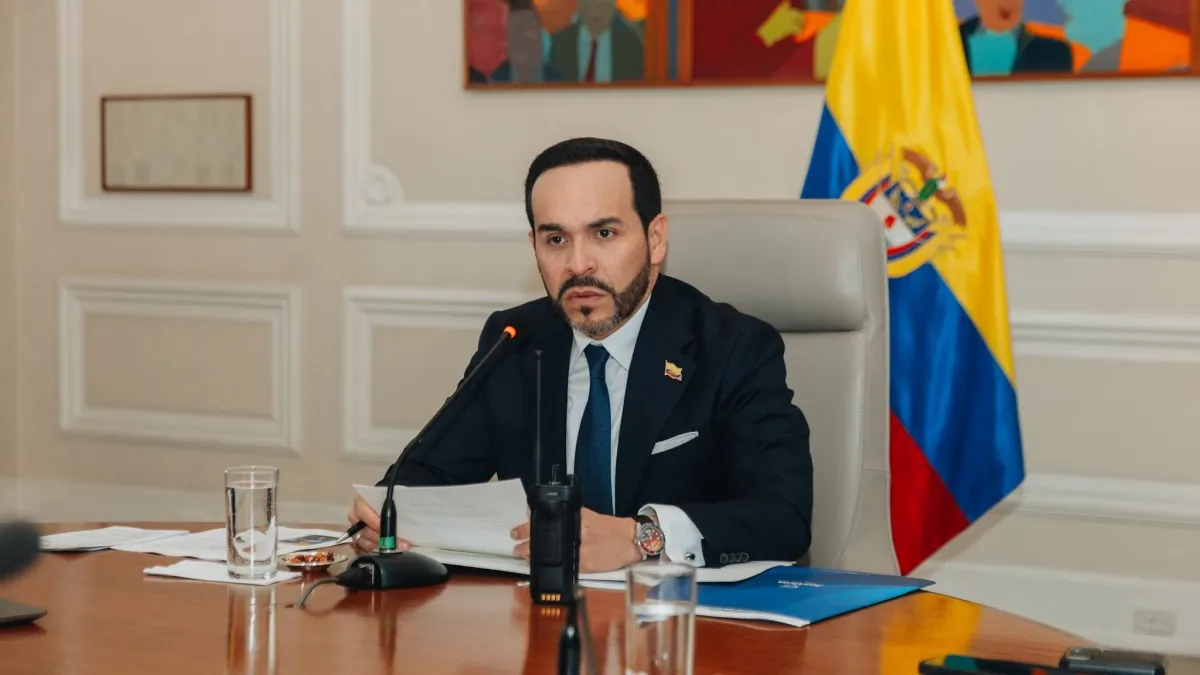
In his communication to ICC prosecutors, Ramelli formally denounced two legislative and budgetary initiatives advanced by the current administration. According to the JEP’s leadership, these proposals pose a "threat of special gravity" to the tribunal’s functional autonomy, independence, and structural integrity.
Specifically, the government’s controversial measures entail:

- A Budgetary Reallocation: The transfer of approximately COP $100,000 million from the JEP’s designated budget directly to the ordinary justice system to bolster funding for judges, prosecutors, and investigators.
- A Constitutional Reform: Implementing an automatic review mechanism by the Military Penal Justice system for sentences issued by the JEP when the prosecuted individuals are members of the Public Force.
President De La Espriella vehemently rejected Ramelli’s intervention, condemning both the tone and the international escalation of domestic policy debates. The head of state asserted that legislative budget deliberations and fiscal governance do not equate to judicial harassment or threats against the rule of law. Furthermore, De La Espriella challenged the tribunal to provide rigorous accountability regarding its historical spending, efficiency, and judicial output relative to its massive operational costs.
Chronology of Events
To fully understand the gravity of the current diplomatic and legal confrontation, it is necessary to trace the sequence of events leading up to the public clash in September 2026:

- October 28, 2021: The Government of Colombia signs a formal Cooperation Agreement with the Office of the Prosecutor of the ICC, cementing the state’s obligations to safeguard transitional justice mechanisms and prevent undue interference.
- 2025: The JEP issues its first major restorative judicial decisions, marking a historic milestone that nonetheless attracts heightened public and political scrutiny regarding the prolonged timeline required to produce formal sentences.
- July 2026: Alejandro Ramelli assumes a prominent role as President of the JEP, inheriting a complex institutional landscape marked by ongoing debates over fiscal sustainability and bureaucratic sizing.
- September 18, 2026: Citing fears of structural dismantling and violations of the 2021 ICC agreement, JEP President Alejandro Ramelli dispatches official communication PRS-239-2026 to ICC prosecutors Nazhat Shameem Khan and Mame Mandiaye Niang.
- September 19, 2026: President Abelardo De La Espriella leads security councils and governmental evaluations while preparing a comprehensive administrative defense.
- September 20, 2026: De La Espriella publishes a broad, highly critical response via social media and official government channels, explicitly rejecting Ramelli’s allegations, defending the executive’s budgetary priorities, and demanding fiscal transparency from the tribunal.
Supporting Data and Financial Metrics
At the heart of the executive branch’s argument is an appeal to fiscal responsibility and a strict examination of public expenditure. President De La Espriella’s office released detailed figures contrasting the historical funding of the JEP against the severe logistical constraints faced by Colombia’s ordinary judicial system.
JEP Funding Breakdown:
- Cumulative Funding (Since 2018): Over COP $3 trillion.
- 2025 Fiscal Allocation: COP $777,069 million.
- 2026 Operational Budget: Approximately COP $744,659 million.
- 2027 Budget Request: COP $947,642 million requested by the JEP.
- 2027 Government Project Allocation: COP $821,803 million assigned in the proposed national budget.
- Proposed Budgetary Shift: COP $100,000 million slated for movement toward the ordinary justice branch.
Administrative Costs and Individual Compensation:
- 2026 JEP Payroll Estimate: COP $404,477 million dedicated exclusively to internal staffing and administrative payroll.
- Judicial Salaries: Public debate highlighted that the compensation of the JEP president escalated from approximately COP $32 million monthly in 2018 to over COP $55 million, accumulating an estimated total income of roughly COP $4.5 million throughout their tenure as a magistrate.
By contrast, the administration highlighted the plight of the ordinary branch of the judiciary, which struggles under the weight of millions of delayed cases, inadequate technological infrastructure, and severely overworked judges and prosecutors who lack comparable budgetary security.

Official Responses
The confrontation has exposed deep ideological and administrative fault lines within the Colombian state, prompting sharp reactions from both sides of the aisle.
The JEP’s Position (Alejandro Ramelli)
In his letter to the ICC, Ramelli emphasized that shifting $100,000 million away from the tribunal directly breaches the state’s commitment to ensure adequate financial backing for transitional justice. Regarding the military penal oversight proposal, Ramelli argued:

"It would introduce the intervention of an external jurisdiction into the decisions of the JEP and undermine its autonomy and independence… This situation denotes, furthermore, a non-compliance with the commitments expressly assumed by the Government of Colombia in the Cooperation Agreement signed with the Office of the Prosecutor of the International Criminal Court."
The Executive’s Position (President Abelardo De La Espriella)
In his extensive public response, President De La Espriella refused to back down, characterizing the JEP’s international outreach as an unjustified political maneuver designed to evade fiscal oversight:
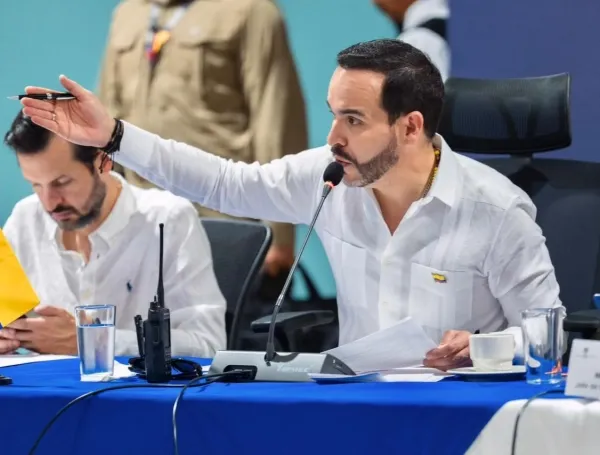
"I neither share nor accept the content, scope, or tone of that communication… That my Government establishes a position and that Congress debates the General Budget of the Nation does not constitute a threat against any judge: it is the Constitution functioning."
De La Espriella further challenged the narrative of institutional suffocation:

"That is not asphyxia nor vengeance: it is fiscal responsibility. I do not accept that every unapproved peso is presented as a punishment. Public resources are not infinite… Before denouncing institutional asphyxia, I demand that the JEP explain how it plans, how it executes, what it prioritizes its resources on, and why it needs more money when the country faces a tight fiscal reality."
Broader Implications
This high-profile dispute carries profound implications for Colombia’s domestic governance and its standing in the international community.

- Relations with International Tribunals: By taking domestic budgetary disputes directly to the ICC, the JEP leadership has raised the stakes of legislative oversight, forcing international legal monitors to evaluate whether routine economic adjustments in a developing nation constitute a violation of transitional justice pacts.
- The Future of Transitional Justice: The debate taps into a persistent social polarization within Colombia. While proponents of the 2016 peace accords view the JEP as an irreplaceable pillar for reconciliation and truth, critics—amplified by the current administration—argue that the tribunal has operated as an expensive bureaucratic apparatus with disproportionate compensation structures relative to its tangible output of restorative sentences.
- Redefining State Priorities: President De La Espriella’s insistence on redirecting capital toward the ordinary justice system signals a major shift in resource allocation. By prioritizing congested ordinary courts over specialized transitional tribunals, the executive is attempting to redefine the social contract surrounding public safety and institutional efficiency.
As the National Budget continues its rigorous debate through Congress, the outcome of this clash will not only determine the financial future of the JEP but will also set a definitive precedent for the boundaries of executive authority, judicial independence, and accountability in Colombia.