INTERNATIONAL DESK
Updated: October 24, 2026 – 11:23 AM (CET)
Main Facts
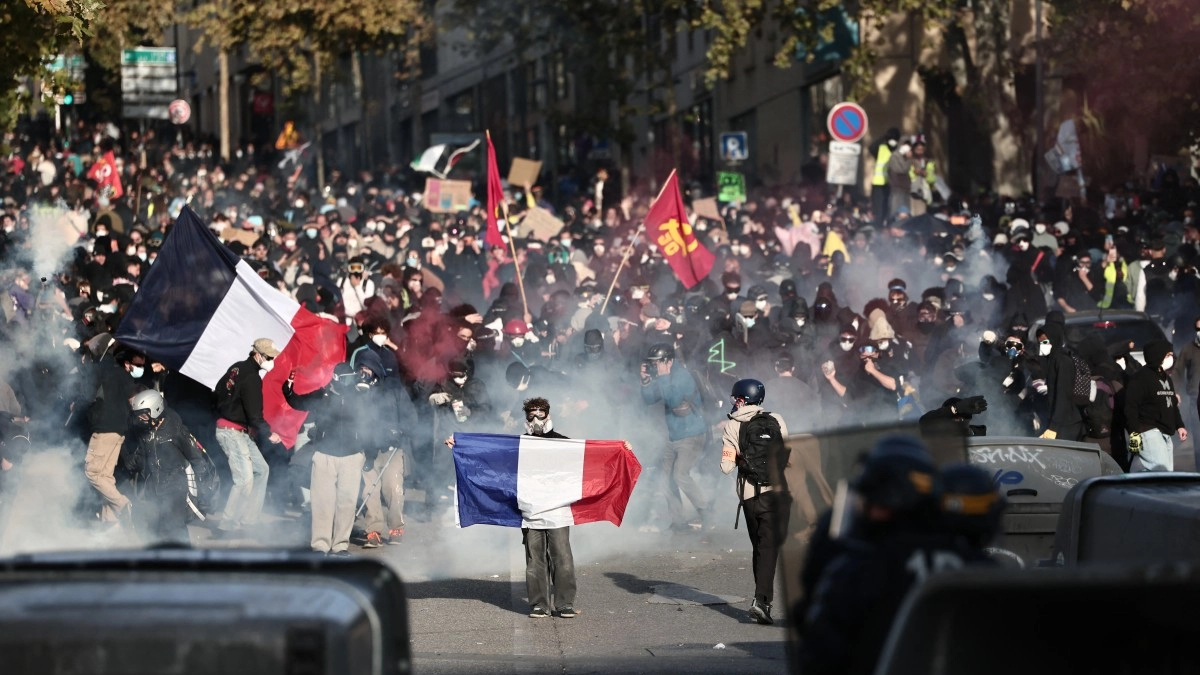
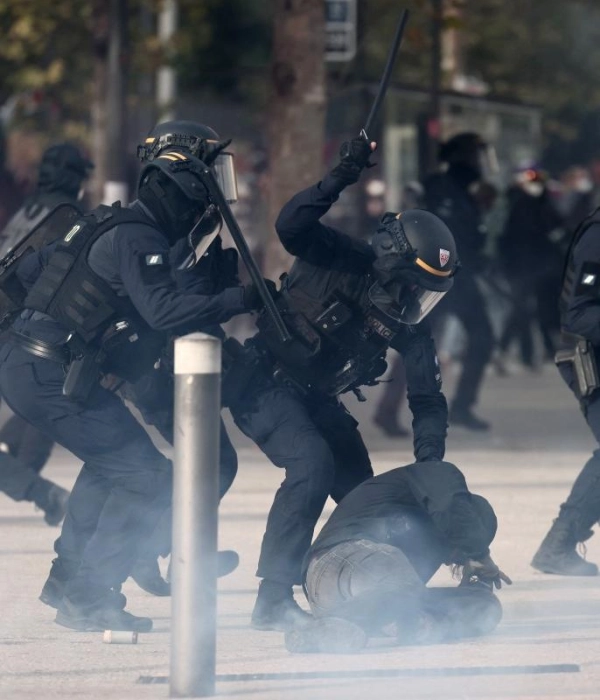
France found itself plunged into an atmosphere of severe civic unrest this Saturday, October 24, 2026, as thousands of citizens poured into the streets of major urban centers. The demonstrations, organized under the banner of the resurgent "yellow vest" (gilets jaunes) movement alongside student unions, erupted despite preemptive government bans and stringent restrictions implemented in the wake of violent riots the previous week.
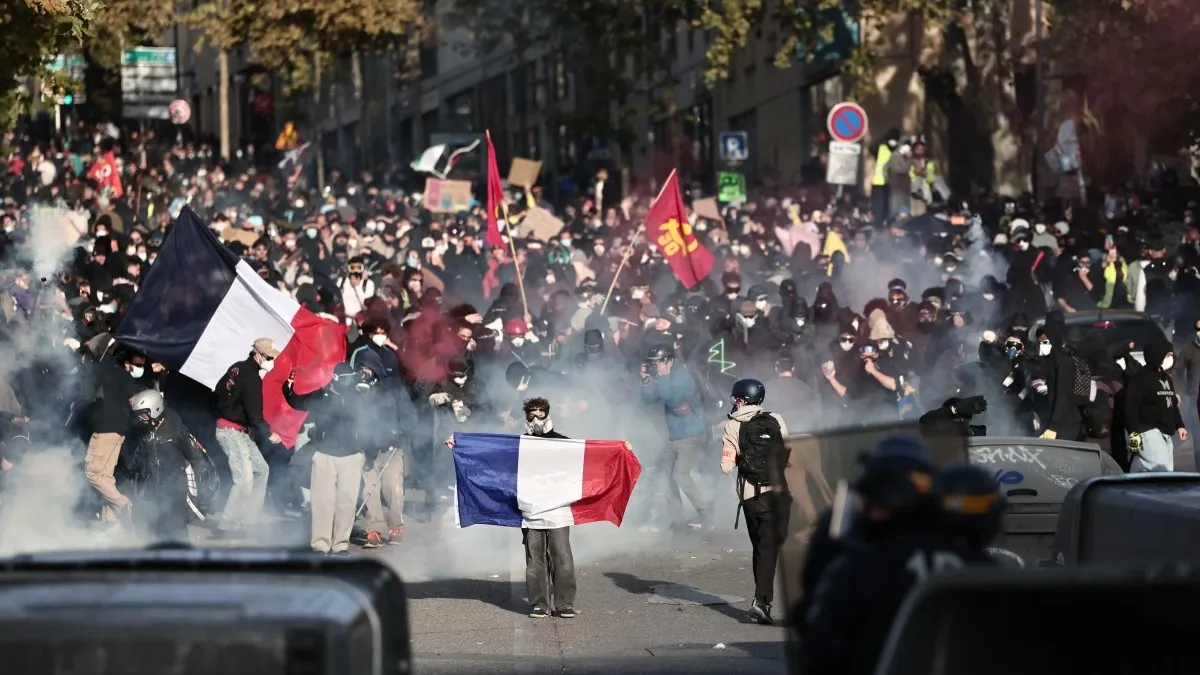
The administration of center-right President Emmanuel Macron—whose final presidential term is slated to conclude in May—faced immense domestic and international pressure to prevent a recurrence of the chaos that drew widespread global commentary a week prior. Security forces maintained an unprecedented posture across the country, utilizing armored vehicles, elite tactical units, and tear gas to contain localized outbreaks of violence.
While the majority of demonstrations throughout the nation remained largely peaceful or tightly managed, flashpoints emerged in several major cities. In Lyon, riot police deployed tear gas grenades during the morning hours to disperse a crowd of approximately 150 individuals attempting to blockade traffic in a restricted zone. In Nice, authorities utilized water cannons to clear a public plaza, while minor skirmishes were reported in Toulouse, Lille, Montpellier, Nantes, and the outskirts of Paris.

Despite these flashpoints, Interior Minister Laurent Nuñez confirmed during a midday briefing that law enforcement had preempted broader chaos. By early afternoon, authorities reported the nationwide arrest of 135 individuals. Police seized dangerous contraband, including metal balls, industrial-grade fireworks, and even a katana, underscoring the volatile nature of the gatherings.
Simultaneously, the political landscape was further complicated by simultaneous events, including a high-stakes national congress held by Marine Le Pen’s far-right party, Rassemblement National (National Rally), in Orléans, which drew counter-protests. Compounding the national crisis, the unrest unfolded less than 24 hours after a deadly shooting near Paris that authorities designated as a racist terrorist attack, leaving one person dead and five others injured.
Chronology of Events
The escalation leading up to Saturday’s events followed a meticulously planned government response designed to avert the widespread devastation witnessed the week prior, when between 550,000 and 800,000 people marched, resulting in widespread looting across nearly 3,000 commercial establishments.
The Buildup and Preemptive Measures (Monday, October 19 – Friday, October 23)
- Monday, October 19: Following consecutive weekends of severe rioting, the French government enacted emergency measures, decreeing nighttime curfews in targeted neighborhoods across major cities and banning unsanctioned protests.
- Friday, October 22: Interior Minister Laurent Nuñez announced a monumental security mobilization involving 70,000 police officers, elite tactical squads, military personnel from the Sentinelle anti-terrorism mission, gendarmerie armored vehicles, and surveillance helicopters.
- Friday Evening, October 23: A 39-year-old suspect carried out a fatal shooting near Paris, described by President Macron as a "racist terrorist attack," which heightened national security alert levels to an absolute maximum. Concurrently, Moody’s rating agency provided minor economic relief to the government by affirming France’s sovereign debt rating, signaling confidence that the 2027 state budget—featuring severe fiscal adjustments—would pass.
The Day of Protests (Saturday, October 24)
- 8:00 AM – 10:00 AM: Heavy security perimeters were established around critical state infrastructure in Paris, including the Élysée Palace and the National Assembly, shielded by armored gendarmerie units. Cultural landmarks, including the Louvre, the Musée d’Orsay, the Picasso Museum, and the Paris Opera, announced exceptional closures.
- 10:30 AM (Lyon): Police intervened to disperse roughly 150 demonstrators attempting to blockade traffic in a prohibited zone in Lyon, utilizing tear gas canisters.
- 11:00 AM (Nice & Paris): In Nice, law enforcement deployed water cannons to clear a public square. In Paris, organizers and police clashed over a last-minute route alteration that shifted the starting point of the march away from the symbolic Place de la Bastille toward a secure, peripheral zone near the capital’s ring road.
- 1:00 PM (National Briefing): Interior Minister Laurent Nuñez delivered his first formal update, confirming 135 arrests nationwide, the seizure of weapons, and noting that outside of regional incidents, no major structural breakdown of public order had occurred.
- Afternoon: Protests peaked in major cities. Union estimates and police counts diverged sharply regarding attendance, while international watchdogs expressed growing concern over fundamental freedoms.
Supporting Data and Statistics
The scale of both the civil unrest and the corresponding state apparatus is reflected in official figures, estimates, and economic impacts provided by governmental, union, and international bodies:
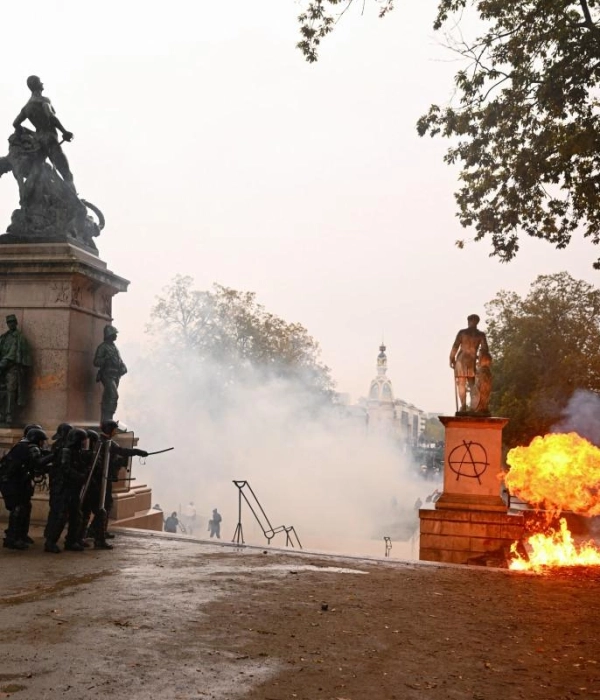
- Security Deployment: 70,000 law enforcement and military personnel deployed nationwide, supplemented by gendarmerie armored vehicles, tactical helicopters, and the Sentinelle military force.
- Crowd Estimates (Paris):
- Police estimates: Approximately 110,000 participants in the capital.
- Union estimates (CGT): Roughly 250,000 participants in Paris, and up to 800,000 nationwide.
- Orléans Counter-Protest: At least 11,000 individuals marched in opposition to the far-right National Rally congress.
- Law Enforcement Actions: 135 individuals detained nationwide by early afternoon. Confiscated items included industrial fireworks, metal balls, and a katana.
- Historical Comparison: The previous weekend’s protests drew between 550,000 and 800,000 participants nationwide, resulting in property damage to nearly 3,000 businesses.
Official Responses and Stakeholder Positions
The confrontation in the streets mirrored a deep ideological and political battle lines drawn across French society.
The Government and Law Enforcement
The central government adopted an uncompromising stance, framing the restrictions not as an infringement on civil liberties, but as an essential defense of public order against radical elements. Interior Minister Laurent Nuñez repeatedly emphasized a policy of absolute intolerance toward violent agitators.

"We will be intransigent," Nuñez stated while detailing the vast security umbrella cast over French cities.
Authorities assigned direct blame for the preceding week’s chaos to fringe groups of the extreme left—including anarchists, "black bloc" elements, and anti-fascist militants—who were allegedly joined by opportunistic delinquents and suburban youths intent on widespread looting. President Macron’s administration maintained that while peaceful expression authorized by legitimate bodies like traditional trade unions would be protected, unauthorized actions threatening public safety would be decisively stamped out.
Protestors and Labor Unions
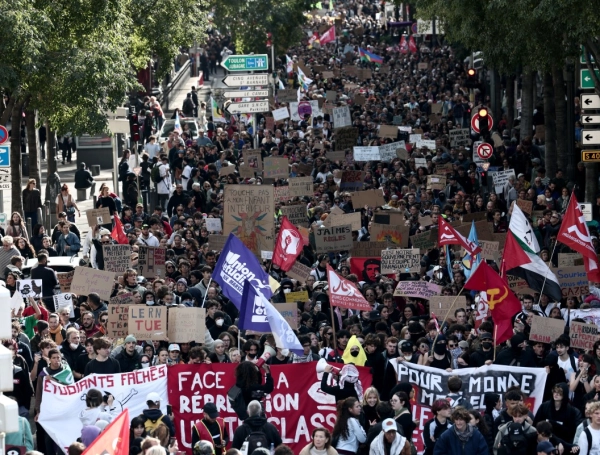
Protestors, students, and union leaders condemned the government’s tactics as an authoritarian overreach designed to stifle legitimate grievances over inflation, the cost of living, and deteriorating conditions in secondary schools (lycéens).
Ryad Rani, leader of the Union of High School Students, sharply criticized the interior ministry’s relocation and restriction of marches:
"What kind of country are we in, where the power decides who can demonstrate and where? It is scandalous."
Demonstrators chanted slogans calling for President Macron’s resignation ("Macron dimission") and brandished placards reading "Macron, to the corner" and "Everyone hates the police." Many participants noted they were marching specifically to defend the right to protest for those silenced by recent government decrees.

International Watchdogs
The heavy-handed tactics and preemptive bans drew scrutiny from international human rights monitors. Michael O’Flaherty, the Council of Europe’s Commissioner for Human Rights, issued an urgent appeal to European governments facing similar domestic friction—including France, Spain, Italy, and Albania—urging them to strictly uphold the right to peaceful assembly and prioritize "de-escalation" strategies over confrontational police maneuvers.
Implications and Outlook
As France navigates this acute socioeconomic and political crisis, the ramifications extend across multiple vectors:
- Political Vulnerability for Macron: With President Macron scheduled to leave office in May following the conclusion of his second term, the persistent social unrest undermines the legacy of his centrist governance. The simultaneous rise of Marine Le Pen’s National Rally—showcased during their high-security Orléans congress while leading national presidential polls—positions anti-establishment politics to dominate the upcoming electoral cycle.
- Economic Resilience vs. Social Strain: Despite the physical damage to commerce and the exceptional closure of world-renowned institutions like the Louvre and the Paris Opera, financial markets demonstrated cautious resilience. Moody’s decision to maintain France’s sovereign debt rating relies on the assumption that the government will successfully pass its austere 2027 budget and that social temperatures will eventually cool. However, persistent labor strikes and recurrent "yellow vest" mobilizations threaten to derail fiscal projections.
- The Civil Liberties Debate: The normalization of curfews, protest route alterations, and mass administrative bans has triggered a profound constitutional debate within France regarding the balance between national security and the constitutionally enshrined right to protest. With the gilets jaunes already announcing fresh nationwide mobilizations for the coming week to protest what they term "authoritarian drift," France remains a nation walking a tightrope between democratic expression and state-enforced stability.