By Edwin Caicedo
Environmental and Health Journalist
Published: September 15, 2026
Main Facts: A Precise and Iniquitous Geography of Violence
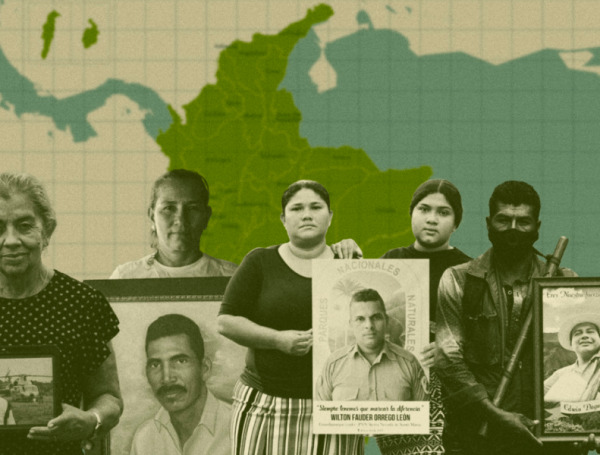
Behind the 39 environmental and land defenders murdered in Colombia during 2025 lies a geography and a demographic profile that repeat themselves with unsettling precision. According to the annual report published on September 15 by the international watchdog Global Witness, Colombia has clinched the top of the global list of the most dangerous places for land and environmental defenders for the fourth consecutive year.
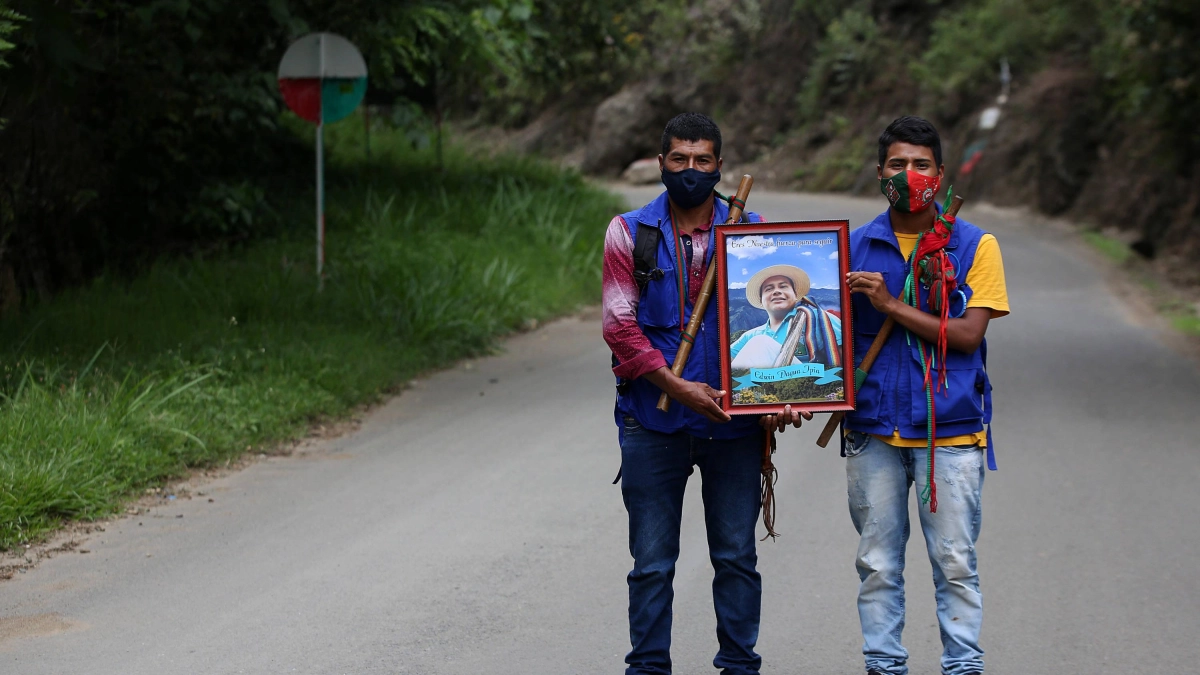
The data tells a stark story: out of 124 documented fatalities globally in 2025, nearly a third occurred in Colombia. But the violence is not distributed evenly across the national territory. It is hyper-concentrated. Almost half of the 39 victims were indigenous people, another 15 were campesinos (small-scale farmers), and a staggering one-third of all national assassinations—13 cases—took place in a single department: the Cauca.
The overarching catalyst for this bloodshed remains the relentless struggle for territorial control. Global Witness linked 35 of the 39 Colombian homicides directly to land and resource conflicts. Far from being random acts of local criminality or collateral damage from broader geopolitical conflicts, these murders are calculated eliminations designed to break community resistance against drug trafficking corridors, illegal mining cartels, and organized crime syndicates.

As international funding for human rights monitoring dries up and state protections falter, Colombia’s most biodiverse regions have effectively transformed into open-air execution grounds for those striving to protect them.
Chronology and Evolution: Over a Decade of Systemic Bloodshed in Cauca
To understand why the Cauca department remains the epicenter of environmental violence in 2025, one must look at a timeline spanning more than a decade. The crisis is neither new nor transient; it is deeply structural.
2012–2016: The Post-Agreement Vacuum
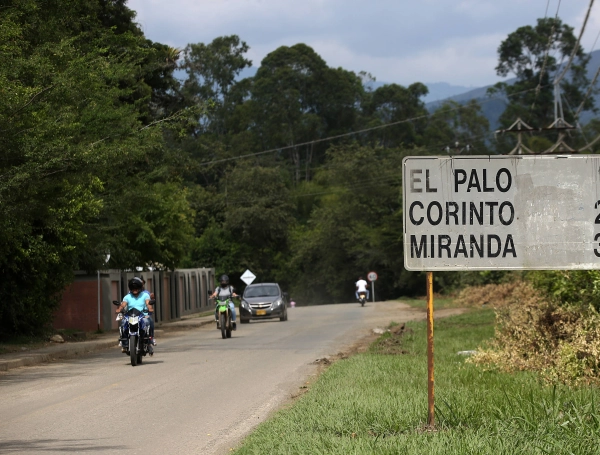
When Global Witness began systematically tracking global murders of environmental defenders in 2012, Cauca immediately emerged as a hotspot. During the negotiation and subsequent signing of the 2016 Peace Agreement between the Colombian government and the FARC-EP guerrillas, hope flickered that the silencing of the state’s oldest insurgency would bring relief to rural communities.
Instead, a vacuum of power materialized. As FARC units demobilized, criminal factions, dissident groups, and transnational cartels rushed into the rich, isolated ecosystems of the Cordillera Occidental to seize abandoned coca cultivation routes and illegal gold-mining sites.
2017–2021: The Intensification of Drug Economies
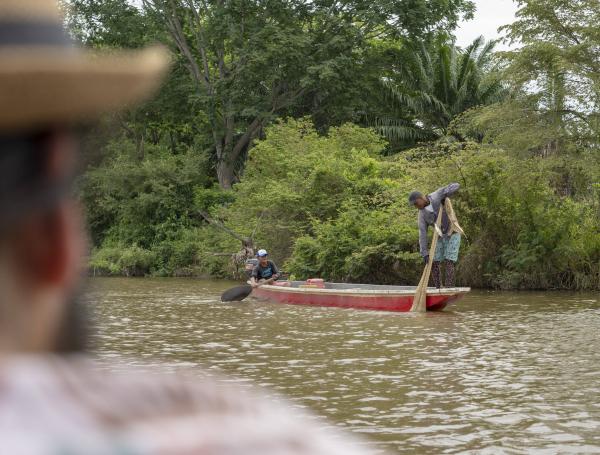
By the late 2010s, coca crops in Cauca and its neighboring southwestern departments had quintupled. The convergence of domestic armed groups and Mexican drug cartels turbocharged the commercialization of illegal economies.
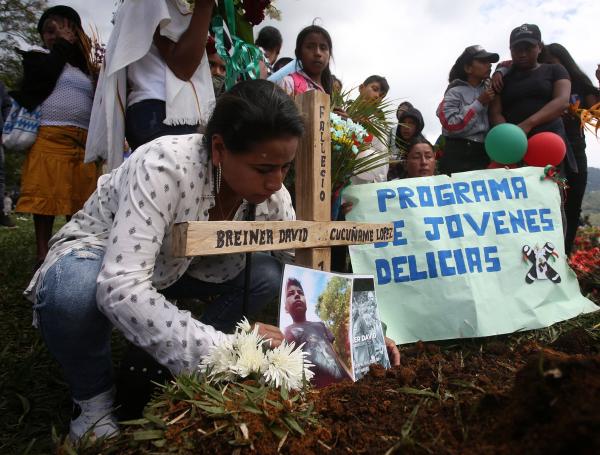
During this period, indigenous guardias (community guards)—who utilize traditional, non-violent methods to patrol their ancestral lands—became direct targets. Between 2017 and 2021, dozens of community leaders attempting to halt the expansion of illicit crops and chemical dumping into local rivers were systematically hunted down.
2022–2024: Four Years at the Global Peak
Colombia solidified its status as the world’s most lethal nation for environmental defenders consecutively from 2021 onward. Despite shifting domestic governance, increased military operations, and the implementation of varied protection budgets, the structural dynamics remained unbroken. The violence adapted, evolving from localized clashes into sophisticated campaigns of targeted assassinations orchestrated by powerful syndicates seeking unimpeded access to global illicit trade routes through the Pacific basin.
2025: The Current Crisis
With the 13 murders recorded in Cauca in 2025, the department’s cumulative death toll since 2012 climbed to a staggering 171 assassinations—the highest of any department in the country. The violence has successfully resisted shifts in national administration, proving that localized governance breakdown and powerful economic incentives outweigh any single government’s security strategy.
Supporting Data: Numbers That Reveal the Anatomy of the Crisis
The Global Witness report provides quantitative metrics that lay bare the identity of the victims and the mechanics of their demise:
- 39: The total number of environmental and land defenders killed in Colombia in 2025. While this represents a marginal numerical decrease from the 48 cases recorded in 2024, experts warn that underreporting remains high due to geographical isolation and fear of retaliation.
- 13: The number of assassinations concentrated in Cauca, accounting for over 10% of all global fatalities documented worldwide (124).
- Almost 50%: The proportion of Colombian victims belonging to indigenous communities (along with 15 campesinos), reflecting a global pattern where nearly three-quarters of worldwide attacks target indigenous and rural populations.
- 4: The number of indigenous guards killed in Cauca alone in 2025. Globally, 44 indigenous individuals were killed, including 7 members of community protection guards. This means more than half of all murdered indigenous guards on planet Earth in 2025 died in a single Colombian department.
- 35 out of 39: The overwhelming majority of Colombian homicides directly tied to land disputes.
- 17 & 5: The number of deaths explicitly linked by Global Witness to organized crime syndicates (17) and hired contract killers (5), placing Colombia alongside Mexico and Honduras as countries where corporate-style illicit networks operate with near-total impunity.
- 23%: The historic drop in international aid recorded by the OECD in 2025, which directly decimated human rights monitoring organizations and forced agencies like the UN Human Rights Office in Colombia to cut nearly half their field staff.
Official Responses and Institutional Blind Spots
The release of the Global Witness report has triggered sharp debate over the efficacy of Colombia’s public policy and protection mechanisms.
The Call for Comprehensive and Collective Protection
Civil society organizations and the report’s authors have issued a direct, unequivocal recommendation to the Colombian state: sign and fully implement the Comprehensive Public Policy of Guarantees for the Work of Human Rights Defense, a civil-society-driven framework designed to shift state focus from reactive, individual measures toward proactive, preventive protection.
Current state models—reliant on panic buttons, armored vehicles, and bulletproof vests assigned to individual leaders—have repeatedly proven inadequate. In 2025, two Mexican environmental defenders were assassinated despite active enrollment in state protection programs, and five members of a Honduran campesino cooperative were killed despite holding precautionary measures from the Inter-American Commission on Human Rights (IAHRC).

The Role of Indigenous Guards and the Escazú Agreement
Global Witness emphasizes that collective defense models, such as the indigenous guards of Cauca, are the frontline defense mechanism for threatened ecosystems. Rather than viewing these community-led patrols as parallel authorities or potential security liabilities, the state must officially recognize, fund, and integrate them into national safety architectures.
This imperative is explicitly tied to Colombia’s ratification of the Escazú Agreement and the rollout of its national implementation roadmap. For the state, acknowledging that the indigenous guards of Cauca are not auxiliary actors but the foundational shield of the nation’s biodiversity is long overdue.

Implications: A Shrinking Safety Net Amid Unabated Risk
The implications of the 2025 Global Witness report extend far beyond statistics; they threaten the ecological and social fabric of Colombia.
The Paradox of Biodiversity
Colombia faces a cruel irony: its most biodiverse, carbon-rich, and ecologically pristine territories—such as the Andean-Amazonian transition zones, the Pacific rainforests of Nariño and Putumayo, and the valleys of Cauca—are simultaneously the most lethal for their guardians. The convergence of ecological wealth and illegal economies (including cocaine production, illegal alluvial gold mining, and transnational wildlife trafficking) ensures that conservation is treated by criminal entities as a direct threat to their balance sheets.

The Retreat of International Oversight
Compounding this domestic vulnerability is an external crisis: the unprecedented withdrawal of international funding and humanitarian presence. With global aid shrinking by nearly a quarter in 2025 and United Nations human rights field offices drastically downsizing due to budget cuts, the international community’s capacity to shine a light on remote regions has contracted precisely when local actors face maximum exposure.
A Call to Action
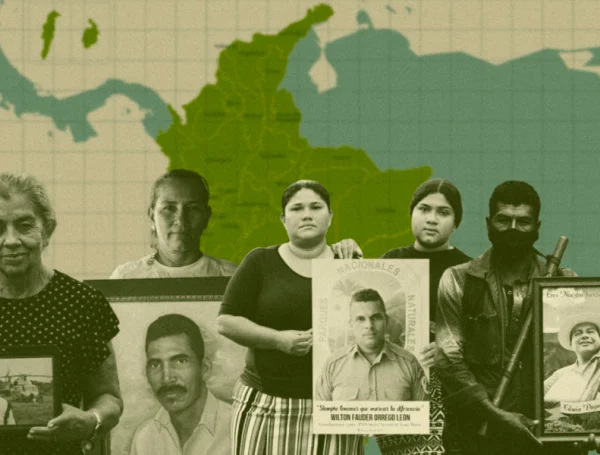
The names of the 39 defenders killed in Colombia in 2025 occupy a solemn, permanent place in the memorial section of the Global Witness report. Their deaths were mapped out along predictable geographic lines, committed by familiar criminal actors, and driven by the same foundational motive: the seizure of land.

The challenge facing the Colombian state no longer lies in diagnosing the problem or identifying the patterns. The data is clear, the corridors of violence are mapped, and the profiles of the victims are undisputed. The ultimate test for the nation is whether political will can finally dismantle the machinery of impunity before the last defenders of its natural heritage are silenced.